
The Winnipeg Jets are not the sort of team that fires a head coach after one bad season. Other teams do that.
Fifteen years into their existence, the Jets aren’t the sort of team to fire a general manager at all. They’re renowned for being patient, criticized for being too loyal, and they wear the strengths and weaknesses that come with their approach. The Jets would never take the Vegas Golden Knights’ ruthless approach to asset management, firing Jack Adams Trophy and Stanley Cup winners despite their winning records.
But what if they did act that ruthlessly?
What if the Jets believed head coaches have a shelf life? What if it took at least one Stanley Cup win to justify making a GM the second-longest tenured person at his position in the NHL? What if the Jets took a ruthless approach with their players, too?
Today, we’re going to look back at 10 of Winnipeg’s biggest decisions from the past 10 years, wave our ruthless wand and compare the path Winnipeg took to what may have happened if it had been willing to step outside its existing paradigms. Not every game-breaking decision changes for the better. Read on to see how Winnipeg’s history unfolds in our alternate universe.
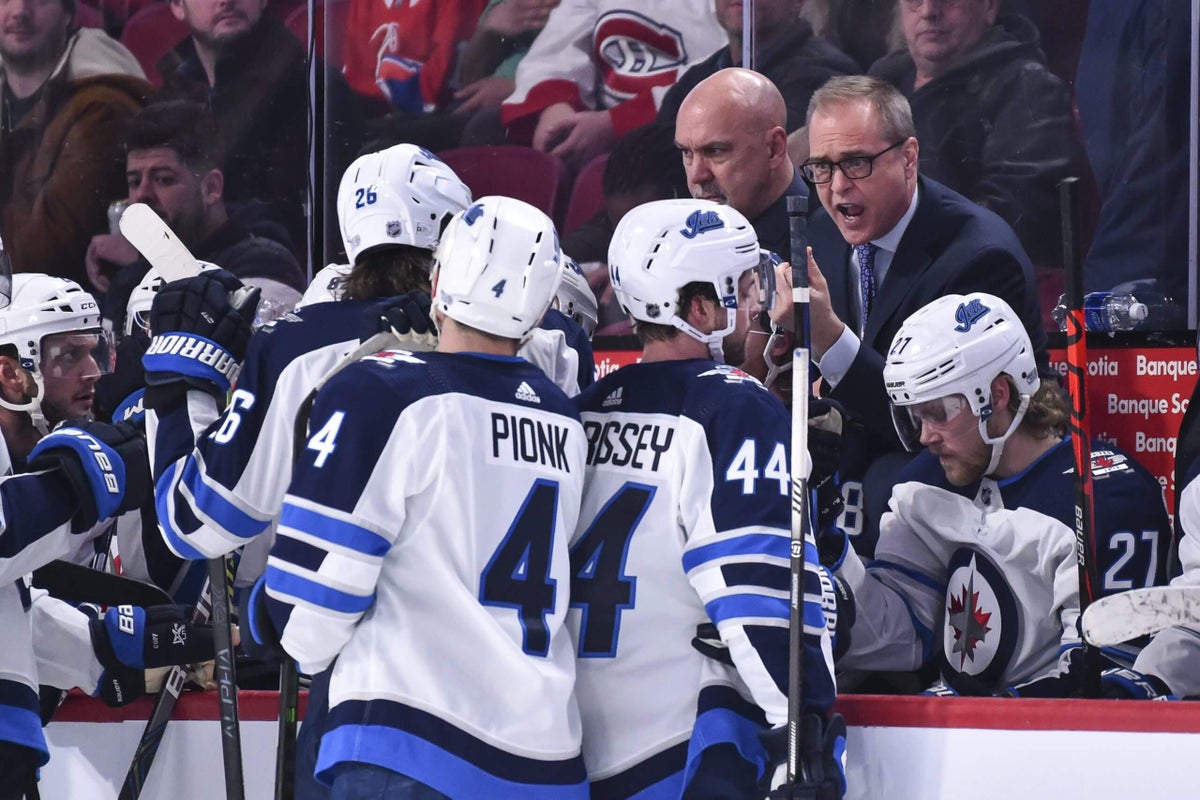
1. Paul Maurice’s resignation: 2021-22
The backstory: Paul Maurice approached Jets management with misgivings about returning for the 2021-22 season. GM Kevin Cheveldayoff and chairman Mark Chipman ultimately convinced him to stay, but Maurice resigned in December 2021 anyway. He said at the time that Winnipeg would be better without him — and eventually, when Rick Bowness was hired, he was proven right — but the Jets missed the 2022 Stanley Cup playoffs.
Dave Lowry was unable to guide a team with Mark Scheifele, Pierre-Luc Dubois, Blake Wheeler, Kyle Connor and Josh Morrissey, supplemented by Neal Pionk, Brenden Dillon and Nate Schmidt on defence and Nikolaj Ehlers, Paul Stastny, Adam Lowry and Andrew Copp up front.
A more ruthless approach: Have Maurice resign in summer 2021.
The theoretical outcome: The most idealistic outcome is that Bowness is hired and Winnipeg’s leadership group is shaken up early, thereby allowing a quality 2021-22 Jets roster to make the playoffs. Bowness wasn’t available, though. He was still coaching Dallas.
Top coaches available in 2021 include Gerard Gallant, Bruce Boudreau and Jay Woodcroft — none of whom still occupy a head coaching role in the NHL. Would any of those men have had the courage that Bowness did to remove Wheeler’s captaincy?
I believe the most probable outcome is that Winnipeg’s 2021-22 season would have been saved, sparing Lowry the awkward and untenable situation of coaching his son’s team. That said, Bowness turned out to be exactly the right coach for the Jets, making changes that outlasted him when he left.
2. Dustin Byfuglien’s sudden retirement: 2019-20
The backstory: Dustin Byfuglien was a once-in-a-generation combination of heavy hits, offensive ability and defensive strength. His on-ice abilities were paired with an off-ice personality that couldn’t have been less interested in the spotlight. Byfuglien walked away from the NHL before camp in 2019, had ankle surgery and never returned.
The outcome: Winnipeg hoped Byfuglien would decide he wanted to return. The Jets waited until April to terminate his contract, leaving $7.6 million in cap space unavailable for use. Cheveldayoff used the limited space Winnipeg had left to acquire Dylan DeMelo and Cody Eakin. Winnipeg went on to lose to Calgary in the 2020 playoff qualification round.
A more ruthless approach: Suspend Byfuglien without pay. Alternately: Convince him to accept mutual termination earlier in the process. Anything that cleared Byfuglien’s cap hit early enough for Winnipeg to upgrade upon Anthony Bitetto, Luca Sbisa, Nathan Beaulieu, Carl Dahlstrom and Sami Niku on defence would have been a win.
The autumn trade market was likely quite a bit different than the one from which Cheveldayoff plucked DeMelo. Still, here’s a partial list of defencemen who moved during the 2019-20 season:
Justin Faulk
Joel Edmundson
Erik Gudbranson
Brenden Dillon
Alec Martinez
Brady Skjei
Would Winnipeg have qualified for the 2020 playoffs had it taken the ruthless route? It wouldn’t have taken an all-star upgrade; such was the lack of quality on the team’s blue line that season. But there’s no paradigm shift wherein Byfuglien was ever going to return to the NHL — and that’s the biggest loss.
3. The Seattle expansion draft: 2021
The backstory: Winnipeg got fooled by Logan Stanley’s on-ice save percentage in the 2021 season and playoffs, despite sheltered minutes, and protected Stanley from Seattle expansion. This left DeMelo exposed from the defence, despite signs that he could become a good partner for Morrissey.
The outcome: Seattle took Mason Appleton.
A more ruthless approach: There isn’t one. Protecting DeMelo over Stanley wouldn’t have been more or less ruthless. If the Kraken selected Stanley, then there’s a chance Johnathan Kovacevic, Declan Chisholm or Ville Heinola would have found a role on Winnipeg’s blue line. It seems likely Winnipeg would have signed a veteran for its third pair the following season.
4. The Vegas expansion draft: 2017
The backstory: Toby Enstrom waived his no-movement clause such that Winnipeg could protect Byfuglien, Jacob Trouba and Tyler Myers. Winnipeg then sent Vegas the 13th pick in the 2017 draft for the 24th pick and the assurance that Vegas would select Chris Thorburn.

If the Jets had handled the Vegas expansion draft differently, they might have been able to select Nick Suzuki in the 2017 entry Draft. (Photo by Minas Panagiotakis/Getty Images)
The outcome: Vegas selected Nick Suzuki with the 13th pick and Winnipeg chose Kristian Vesalainen at No. 24. Enstrom went on and was hurt during the 2018 playoffs and then retired. Marko Dano remained with the Jets but did not grow into a feature role.
A more ruthless approach: Let the Golden Knights take who they will and keep pick No. 13.
Winnipeg might not have selected Suzuki, but hindsight dramatically favours giving Winnipeg a swing at Suzuki (or Josh Norris or Robert Thomas, who went later in the first round.) It’s interesting to contemplate Suzuki or Thomas as Winnipeg’s second-line centre, while acknowledging that Vegas exploited a lot of teams at that draft.
5. The Patrik Laine trade to Columbus: 2021
The backstory: Winnipeg drafted Patrik Laine second in 2016 and enjoyed his 140 goals and 110 assists in 306 games for the Jets. He wasn’t as obsessed with self-improvement, fitness and diet as Wheeler or Scheifele was, nor was he as mature as they were. Friction developed, so Laine asked for a trade and was sent to Columbus along with Jack Roslovic for Dubois and the pick that became Danil Zhilkin.
The outcome: Dubois was a short-term solution who didn’t want to stay in Winnipeg. He did the team a favour, however, by requesting a trade that Cheveldayoff went out and won.
A more ruthless approach: The alternate reality here is Winnipeg waiting out Laine’s trade demands, trying to bully him into a decision between playing or holding out. Dubois’ desire to leave Columbus was fortuitous, though, and it’s hard to imagine Laine gaining value by sitting out. The approach Winnipeg took probably maximized its assets.
6. The Pierre-Luc Dubois trade to Los Angeles: 2023
The backstory: Dubois never wanted to be in Winnipeg, orchestrating his way to the Kings after 2 1/2 seasons with the Jets.
The outcome: Gabriel Vilardi is a key piece of Winnipeg’s current success, scoring more often than Dubois has done for Los Angeles or Washington since the deal was made. Alex Iafallo has been a diligent worker for Winnipeg, moving up and down the lineup as needed. Rasmus Kupari left Winnipeg to play in Switzerland, while the Jets drafted defenceman Alfons Freij with the Canadiens’ second-round pick. The Kings moved Dubois to Washington after one season.
A more ruthless approach: There wasn’t one. Winnipeg was backed into a corner and Cheveldayoff did brilliantly to get out of it.
7. Adding veterans Brenden Dillon and Nate Schmidt: 2021
The backstory: Winnipeg swept the Edmonton Oilers in the 2021 playoffs, despite getting outshot and outchanced. Then the Jets were swept by a Canadiens team that didn’t let Winnipeg get close enough to Carey Price to overcome Scheifele’s Game 1 suspension.
The outcome: Derek Forbort, Tucker Poolman, DeMelo, Stanley and Jordie Benn were Winnipeg’s Nos. 3 through No. 7 defencemen. Winnipeg needed an upgrade and acquired Brenden Dillon and Nate Schmidt for two second-round picks and a third-round pick. The veteran defencemen helped get Winnipeg into the playoffs in 2023, but not without taking minutes that could have gone to Dylan Samberg, Stanley or a prospect of choice. They were also leaders in the dressing room.
A more ruthless approach: This was the ruthless approach. They bought Schmidt out in 2024, freeing him up to win the 2025 Stanley Cup with Maurice in Florida. Had the Jets been obsessed with loyalty, they would have played the defencemen they’d drafted or tried to extend Dillon midseason instead of waiting it out and letting him walk.
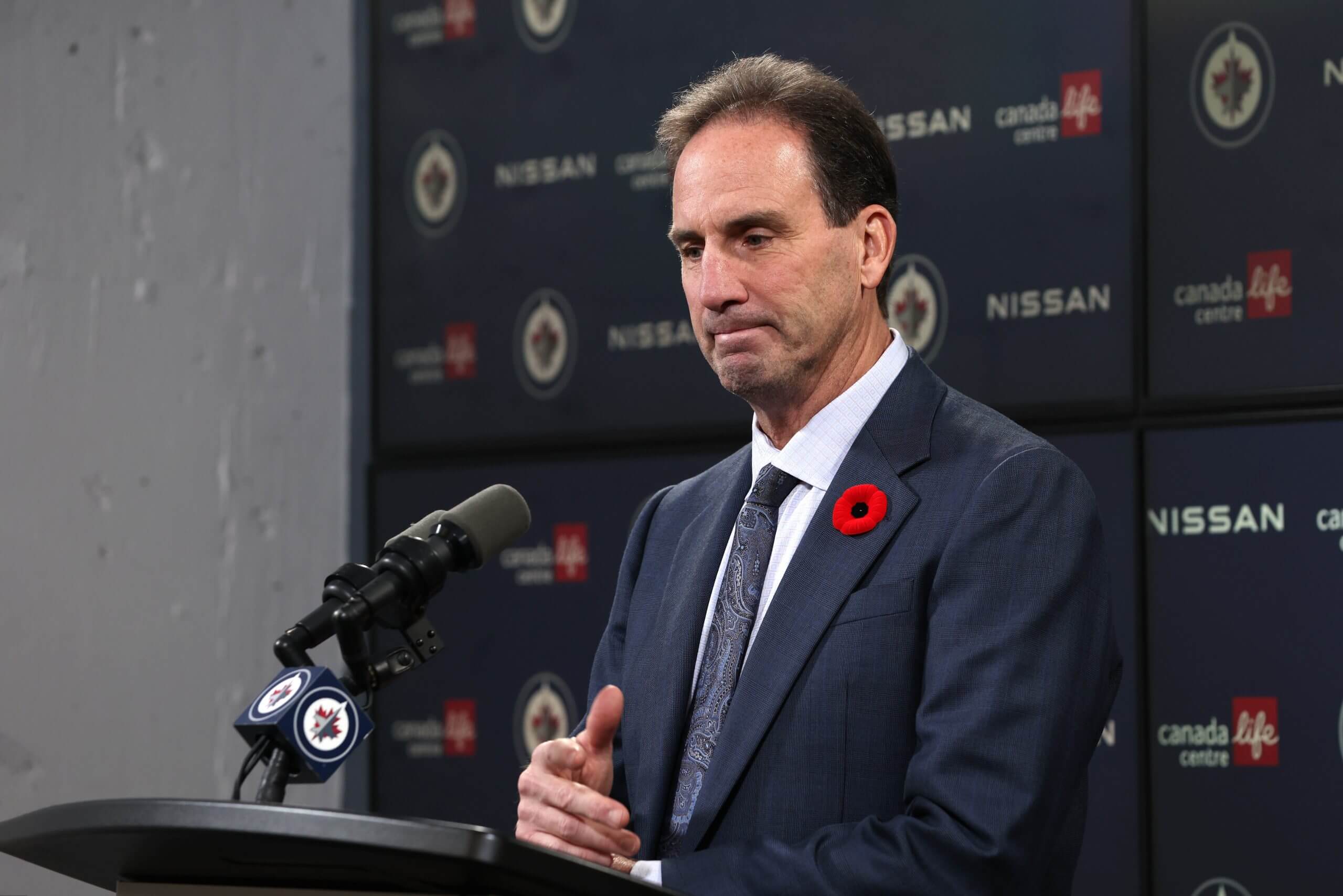
The Jets’ choosing Scott Arniel to succeed Rick Bowness could be viewed as a loyalty hire. (James Carey Lauder / Imagn Images)
8. Hiring Rick Bowness (and Scott Arniel): 2022
The backstory: We covered it in the Maurice section. The Jets carried out a league-wide search for honest critiques about their team. They then chose loyalty-informed hires in Bowness and Arniel to take the reins. Bowness had coached the original Jets franchise in the 1980s, while True North had hired Arniel for the Moose twice.
The outcome: Bowness worked out spectacularly, establishing a team-first culture and creating a greater sense of accountability than previous editions of the Jets. Then, when Bowness retired and Arniel replaced him, Winnipeg won the Presidents’ Trophy while giving up the fewest goals for the second straight season. This year, they haven’t been nearly that good.
A more ruthless approach: Loyalty won this round. A ruthless team such as Vegas would fire Arniel after missing the playoffs, but I think Arniel’s first season as head coach earned him another look beyond this year.
9. Extending Connor Hellebuyck, Mark Scheifele and Kyle Connor: 2023, 2025
The backstory: Winnipeg’s franchise goaltender and No. 1 centre were essential signings for a Jets team that sought to avoid a rebuild. Connor is a 90-point scorer who wanted to re-sign in Winnipeg, so the Jets re-signed him.
The outcome: Winnipeg is a threat to make the playoffs for as long as Hellebuyck, Scheifele, Connor and Morrissey deliver star performances. Signing them extended whatever Cup window Winnipeg was ever going to have, and the Jets have avoided a rebuild as a result.
A more ruthless approach: Trade Connor while his offensive powers are at an all-time high. An analytical look at his game reveals an outsized association with scoring chances against the Jets. The most ruthless move is to sell high, before Connor ages into his 30s, he loses his explosiveness and his offence deteriorates. Would that help Winnipeg win? Maybe, but you’d need the Jets to get an outstanding return.
Would it get Winnipeg out of a buyout-proof, bonus-laden $12.0 million average annual value contract that could be an anchor before it’s over? Yes.
10. Keeping Nikolaj Ehlers: 2025
The backstory: Nikolaj Ehlers was a dynamic winger whose relative lack of ice time diminished his ability to turn first-line talent into point-per-game seasons. Faced with Ehlers’ expiring contract and the knowledge his time in Winnipeg had likely come to an end, the Jets held on to him at the 2025 trade deadline.
We praised them for the self-rental, reasoning that acquiring a similar player for Winnipeg’s playoff run would cost a pile of assets. He played a key role in the “Manitoba Miracle” goal that propelled Winnipeg into the second round but then signed an $8.5 million AAV contract in Carolina in the summer. Winnipeg misses his offence.
A more ruthless approach: Walking a valuable trade asset to unrestricted free-agent status is ruthless, through a certain lens. It would have been better asset management to move him when the Jets had a chance — or extend him, if he were more open to it. There may even be an alternate reality wherein Martin Necas became a Jet for one season, via a trade with Carolina, but I don’t think Necas would have extended in Winnipeg as he did in Colorado.
Are the alternate-reality Winnipeg Jets a stronger team than the one that plays tonight? Did we miss key moves or important ramifications? Make sure to have your say in the comments.