
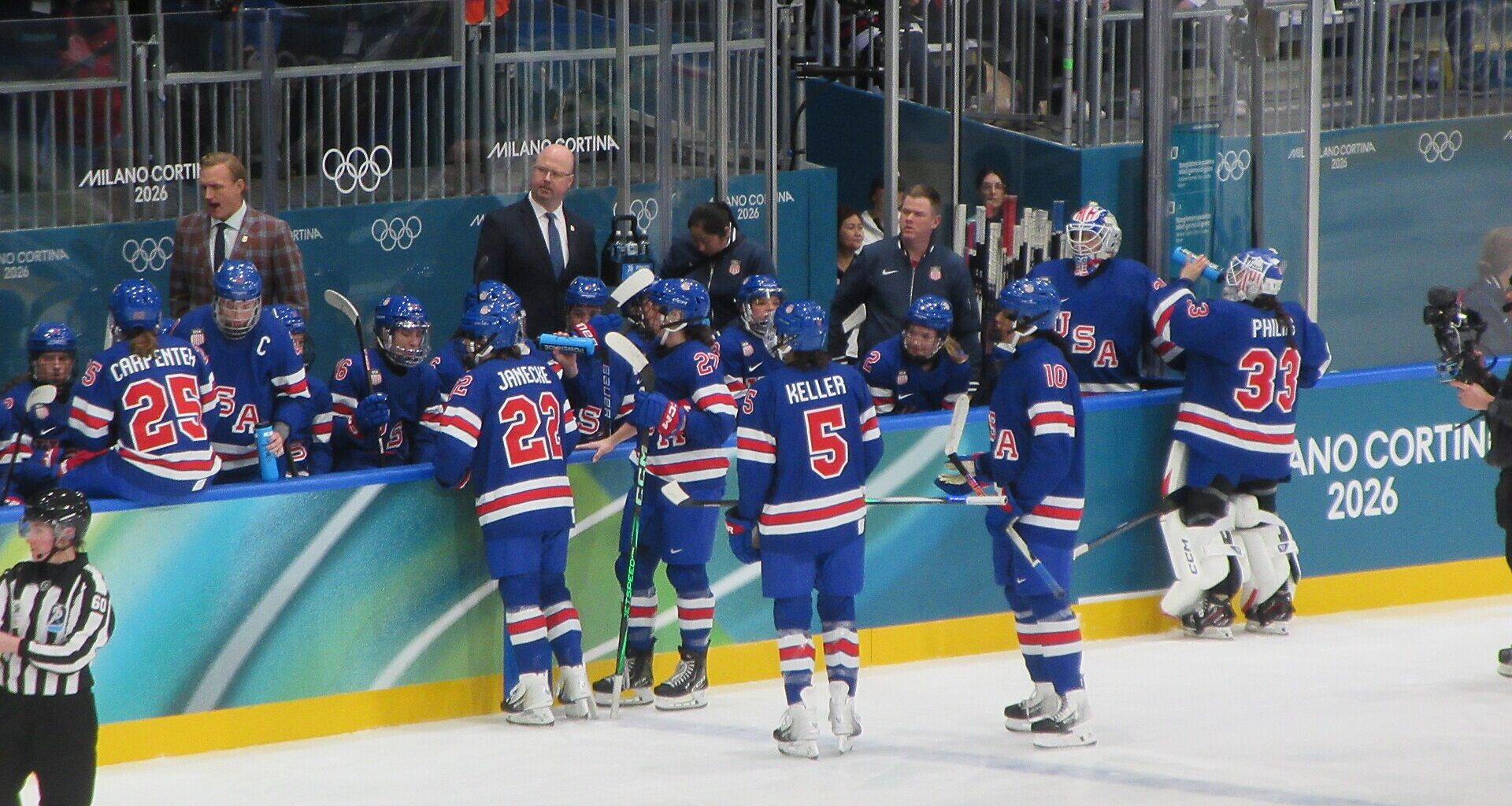
In recent years following the #MeToo movement, the culture women have always navigated in hockey has finally started making headlines. The sexual assault charges against five members of the 2018 Canadian World Junior Championship team, the criminal sexual conduct charges against former NHL player Ryan Kesler, and, of course, the infamous Team USA locker room video with FBI Director Kash Patel, just to name a few.
To many outside the sport, these stories feel shocking—a prominent display of sexism, ignorance, and victim blaming unacceptable in any and all athletic environments. But for the women who grew up in the sport, we’ve always known how the culture that builds in the locker room shows up outside of the rink.
Over the past few weeks, the only thing out of my mouth has been “I wish I was surprised, but I’m not.”
Flashback to growing up in the rink, Olympic gold medalist Kendall Coyne passed her first three medals around the room as she sat in front of 10-year-old me. I held her first gold medal in my hands as she discussed growing up as a girl playing hockey in Chicago—being cut from top programs because of her gender and being ridiculed by her all-male team.
Although I could happily rag on Team USA for hours about their actions since their recent win, they are products of their environment. They grew up in the same raucous locker rooms that Coyne and I did, and while those locker rooms gave me some of the most important people in my life, they also created the culture that many people outside of the hockey world are just learning about for the first time.
That culture didn’t suddenly appear with one locker room video or one Olympic celebration. It has been built, reinforced, and normalized in rinks for decades. The difference this time is that what once stayed behind closed locker room doors is now clawing its way out.
I rarely see myself represented in my sport. As a kid, I didn’t have the privilege to watch people who looked like me play on television every night. The only time women could shine was every four years during the Winter Olympics. Watching women’s hockey was sacred, and players like the U.S.’ Jocelyne Lamoureux and Hilary Knight gave me some of my greatest inspiration. Unfortunately, their names remain obscure to the great majority of people, even hockey fans.
With women’s hockey visible only once every four years, NHL players became my default role models—guys like Patrick Kane, whose game I studied nightly for the love of the sport. The internet wasn’t a part of how I came to know the players I admired. Now that I’m older and see these players in headlines, I know that to admire these men, though, requires ignoring not only their violent acts, such as Kane’s assault of taxi driver Jan Radecki. It also means overlooking their violence against women, such as the sexual assault allegations filed against Kane just months after his third Stanley Cup, though the prosecutors ultimately opted not to press charges. I no longer have the privilege of avoiding these news articles.
But despite my heartbreak at the nature of these new conversations, I can’t help but be a little bit grateful they’re finally spreading; more voices can lead to change, ones that center women in the sport.
As I work toward my dream of working in the NHL, I can’t expect the sport to be perfect. As of 2024, only 10 percent of NHL data analysts were women. I plan not only to open doors for myself to change that number, but also to open doors for the women who come after me—the women who become scouts, coaches, and general managers. And beyond my own plans, I hope the current moment of attention forces hockey to confront the habits it has long ignored, so the sport I love can love me back.