
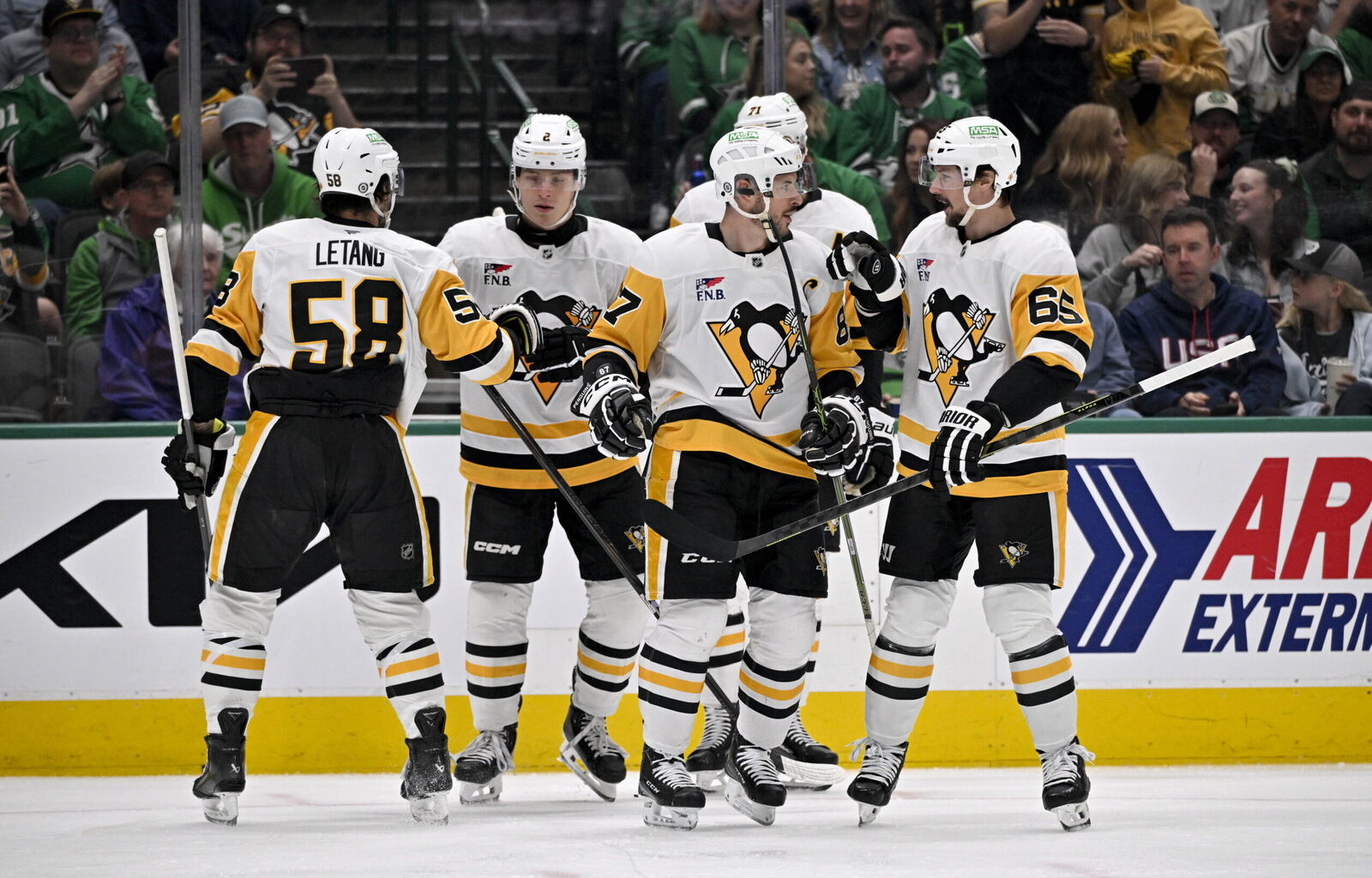
It’s now been a decade since the Pittsburgh Penguins hoisted their fourth Stanley Cup, and ten years later, the team is looking to recapture that magic once more.
Only four members remain from the 2015-16 team: Sidney Crosby, Evgeni Malkin, Kris Letang, and Bryan Rust. Four guys who not only know what it’s like to lift the Cup but also know what it’s like to do so multiple times. The leadership of these four will be quintessential to the team. Especially for the young players learning to deal with the atmosphere of the Stanley Cup Playoffs.
Taking a look back at that magical 2016 Stanley Cup run for the Penguins, what could this 2026 team learn to help propel them towards the ultimate goal again?
Round 1: Depth Scoring Defeats Rangers
After a rocky start to the season, the Penguins fired head coach Mike Johnston and promoted the head coach of their AHL affiliate, Mike Sullivan. Sullivan led the team to a 33-16-5 record the rest of the way en route to a 104-point season. It was good enough for second in the division, and a first-round date with their longtime rival: the New York Rangers.
To keep it simple, the 2015-16 Rangers weren’t a great team. Their leading scorer, a then-28-year-old Mats Zucarello, only had 61 points on the season. However, when you have a guy like Henrik Lundqvist in the net, you usually don’t need a lot of goals to win.
Lunqvist was peppered all season, stemming from the poor defense the Rangers had put in front of him. He faced more shots than any goalie in the league that season — and, subsequently, had more saves than any goalie in the league. However, it was the first time since 2008 that he had a goals saved above average (GSAA) below 10.
Despite showing some fight early and even stealing Game 2, the Penguins made quick work of the Rangers, eliminating them in five games. The common trait that both teams shared was scoring depth. Seven players scored multiple goals in this series, and 11 players had three or more points in the five games.
The MO of the 2026 Penguins has been bringing in guys that maybe wouldn’t get a shot elsewhere around the league, and turning them into guys that can consistently produce in a new system. Mid-season acquisitions played a key role in 2016 — guys like Carl Hagelin, Trevor Daley, and Justin Schultz. Similarly, the Penguins of this year have guys like Egor Chinakhov, Elmer Soderblom, and Sam Girard.
Round 2: HBK Line Handles Capitals
It wouldn’t be a Penguins Stanley Cup Playoff run if it didn’t feature Alex Ovechkin and the Washington Capitals.
Every time these two teams met, it was must-see TV. Sidney Crosby and Alex Ovechkin, two of the greatest athletes the sport has ever seen. These two teams met in the playoffs back in 2009, on the way to the Penguins’ third cup in franchise history. Now? It was the Capitals’ turn. They were the President’s Trophy winners that year and had the greatest goal scorer in the history of the sport on their side.
The series was hyped up to be one of the best of the playoffs, and it delivered on all fronts. All but one of the six games were decided by just one goal, with three of them going to overtime. The Penguins eliminated the Capitals in one of those overtime games in Game 6.
This series was a “coming out party” of sorts for the line of Hagelin, Nick Bonino, and Phil Kessel — or the “HBK Line” as they are more affectionately known. The three members of the line were the top three scorers on the Penguins in that series, and it was that line that ended the series, another testament to the depth of the team.
Within the building, that line was also known as the team’s “energy line.” The current iteration of the team, while maybe not of similar production, has an energy line of its own. The line of Noel Acciari, Blake Lizotte, and Connor Dewar has been that line that can deliver a spark when the team needs one. Lizotte is currently out injured, but Soderblom has stepped into the role well.
Round 3: Young Rusty Razor Slices Through Tampa
The Eastern Conference Finals. One round away from going dancing with Lord Stanley. All that stood in the way was Nikita Kucherov, Victor Hedman, and the Tampa Bay Lightning. This time, it was the Penguins who had the advantage on the injury front.
Tampa was without its captain, Steven Stamkos, for a majority of the series, and starting goalie Ben Bishop went down in Game 1, paving the way for a young 21-year-old Andrei Vasilevskiy to make a name for himself.
After six hard-fought games, Pittsburgh and Tampa faced off for a win-or-go-home Game 7 in Pittsburgh. The biggest stage makes names, and Bryan Rust made his in Game 7. In his first taste of playoff hockey, he stepped up in what was then the biggest moment of his life. Two goals in Game 7 to lift the Penguins to the Final.
Ten years later, the Penguins have that youth again that can step up in big moments. Since January 21, Egor Chinakhov has 14 goals and 26 points, producing at a 41-goal, 76-point pace over an 82-game season. Rookie Ben Kindel has also shown a knack for rising to the occasion. In a game with massive playoff implications, Kindel stepped up and netted a game-winner against Linus Ullmark and the Senators.
Round 4: Penguins Hoist Their Fourth Stanley Cup
The biggest stage. The biggest moment. Pittsburgh Penguins vs San Jose Sharks. Sidney Crosby, Evgeni Malkin, and Kris Letang against Joe Thornton, Joe Pavelski, and Patrick Marleau. Three of the greatest players in each of these franchises’ histories squared off for the Stanley Cup.
Despite both teams having top-five offenses in the regular season, this series was a grueling, defensive battle, with one team scoring more than three goals only once. For the Sharks, it was the first time in franchise history that they had made it to the Final.
The Penguins battled through a hard-fought six-game series, much like their matchup against Washington. The HBK Line showed up again this series, with Hagelin leading the team in scoring, and Bonino delivering the winner in Game One, marked by an all-time call from announcer Harnarayan Singh.
The Penguins eliminated the Sharks in six games, winning the franchise’s fourth Cup in franchise history. In Game 6, of course, Crosby had to factor in on the Cup-winning goal, notching the primary assist on the Letang goal that would serve as such.
How Can the 2026 Penguins Recreate the 2016 Magic?
The 2026 Penguins mirror the 2016 Penguins, with scoring production spread across the roster and a similarly effective energy line. An area where the team of this year lacks in comparison, however, is the goalie room. In comparison, the 2016 team had a noticeably better goalie room than this year’s team, and could come back to bite Pittsburgh in the playoffs.
With leadership from the veterans like Crosby, Malkin, Letang, and Erik Karlsson, all guys who have been on this stage plenty of times, the young players on the team can learn to deal with the strains of playoff hockey, especially after a full season.
The one certain thing is that the Penguins will be back in the dance, and once you get in, there’s no telling what can happen.