
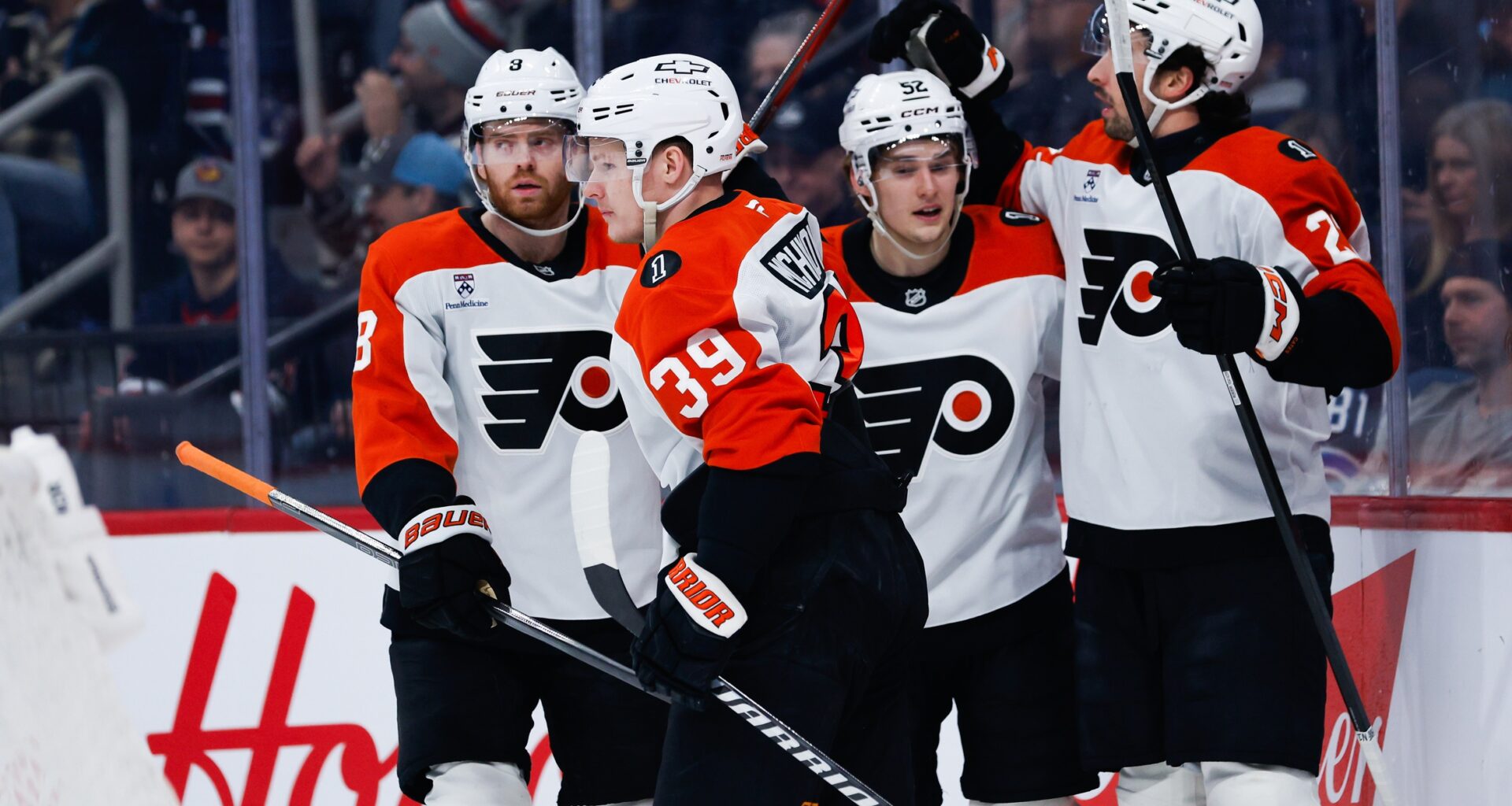
When the 2020 Stanley Cup playoffs began, the Flyers were months beyond a rather good run in February and March. However, the pandemic put an end to many things, including the regular season. In August, the playoffs began, with a three-game round-robin leaving Philadelphia as the top seed in the Eastern Conference. The seeding meant the Flyers had a first-round bye, waiting for their opponent to emerge from a best-of-five series. Montreal defeated Toronto, and the Flyers opened the playoffs on Aug. 12, 2020, defeating the Canadiens 2-1 before a crowd of nobody.
It’s nearly six years since that game one for the Philadelphia Flyers. And it would’ve been seven if not for a torrid sprint down the stretch to clinch a playoff spot. But looking at the lineup for that 2020 game, it’s clear that the Flyers have made a lot of changes. Three players who participated in that 2-1 victory are still with the team: Travis Konecny, Sean Couturier, and Travis Sanheim. Everyone else is gone: retired, traded, or not quite good enough to stick around the National Hockey League and are in the minors. To see the two rosters is proof that Flyers general manager Danny Briere is in charge now. The team is younger, arguably much deeper, and with far more high-end talent across the board.
Flyers’ 2026 playoffs lineup:
Tyson Foerster — Trevor Zegras — Owen Tippett
Travis Konecny — Christian Dvorak — Porter Martone
Denver Barkey — Noah Cates — Matvei Michkov
Luke Glendening — Sean Couturier — Garnet Hathaway
Travis Sanheim — Rasmus Ristolainen
Cam York — Jamie Drysdale
Nick Seeler — Emil Andrae
Dan Vladar
(Sam Ersson)
This time, the Flyers don’t have as much experience
To put it in perspective, the Flyers entered that 2020 game with just four players having no previous National Hockey League playoff experience: Nic Aube-Kubel, Joel Farabee, Philippe Myers, and the former goaltender now playing in Vegas. This year’s team? Well, where do you start? Including those who are injured, the following Flyers on this year’s roster have not played a NHL playoff game: Rodrigo Abols, Denver Barkey, Alex Bump, Noah Cates, Tyson Foerster, Nikita Grebenkin, Porter Martone, Matvei Michkov, Trevor Zegras, Emil Andrae, Jamie Drysdale, Rasmus Ristolainen, Cam York, and Sam Ersson. That’s 14 players, or well over half of your roster, most of them experiencing their first game in the different season together. Some may grip the stick tighter, some might flourish, but to have such a raw roster is vastly different than the Chuck Fletcher designed roster in 2020.
To follow up on that inexperience, the Flyers 2025-26 lineup have a played a total of 218 playoff games, led by Luke Glendening (a waiver claim) with 50 games and Sean Couturier second (39). Sidney Crosby and Evgeni Malkin have 357 games between them. But let’s go back to the 2020 Flyers. The 2020 lineup for game one had 589 games of playoff experience, led by Matt Niskanen (125 games) and Justin Braun (84 games). Up front, Claude Giroux led all forwards (69) but Nate Thompson (62) and James van Riemsdyk (59) weren’t too far behind. In goal, Brian Elliott also had 45 games before generally being the backup goalie in the 2019-20 playoffs.
Flyers’ 2020 playoffs lineup:
Joel Farabee — Sean Couturier — Claude Giroux
Scott Laughton — Kevin Hayes — Travis Konecny
Nicolas Aube-Kubel — Derek Grant — Jakub Voracek
James van Riemsdyk — Nate Thompson — Tyler Pitlick
Ivan Provorov — Matt Niskanen
Travis Sanheim — Phlippe Myers
Shayne Gostisbehere — Justin Braun
Carter Hart
(Brian Elliott)
Age difference also quite apparent
This year’s roster might look younger, but they actually have more players 30 or over than on the 2020 roster (nine as opposed to eight, but this includes the injured Rodrigo Abols, and black ace Garrett Wilson). Derek Grant, Nate Thompson, Kevin Hayes, Jakub Voracek, Justin Braun, and Brian Elliott were some who were several years from their rookie seasons. The key difference is the 2020 lineup was generally much older than this year’s playoff roster. Only three forwards were 24 or under: Aube-Kubel, Farabee, and Travis Konecny. Three defensemen also fit the same demographic: Travis Sanheim, Philippe Myers, and Ivan Provorov. And, of course, the former Flyers goaltender currently with Vegas. The 2025-26 Flyers has six forwards 24 or under: Tyson Foerster, Matvei Michkov, Porter Martone, Alex Bump, Denver Barkey, and Nikita Grebenkin. And two in the same age range on the blueline in Jamie Drysdale and Emil Andrae.
Perhaps the biggest difference between the two rosters are the ages of those who are proverbially driving the bus. Back in 2020, the Flyers were led by Konecny, Giroux, van Riemsdyk, Couturier, Jakub Voracek, and Kevin Hayes. That quintet primarily were the go-to players to generate offense. Yet all of those players outside of Konency were 28 or older, guys who were either in their prime or on the downside of that. This year? Well, Konecny is 29 and still creating offense, but his helpers are generally years from hitting their prime. Heck, a few of them are years from finishing their entry-level contracts. This includes Martone, Michkov, Foerster, Barkey, Bump, Trevor Zegras, and Owen Tippett. Meanwhile Tippett and Noah Cates don’t quite fall into either age range, but are definitely assets in terms of production.
This shift has given Philadelphia fans a sense of hope. They are building with youth, and building primarily from within. That’s not to say this year’s team will have a long playoff run guaranteed, but this year will be a building block for next season. The experience can only help those youngsters moving forward, whether the games are laughers or nail-biting overtime thrillers.
As a result, not much playoff production with 2026 roster
Going into the 2020 playoffs, Giroux was the leading point-getter in terms of post-season production. He had 65 points (24 goals, 41 assists) with van Riemsdyk the only other player with more than 15 playoff goals in his career (18). The second highest point-getter was Matt Niskanen, who had 5 goals and 35 assists for 40 points. Giroux, van Riemsdyk, and Niskanen combined accounted for 134 of the combined 219 playoff points the 2020 team had heading into game one against Montreal. Kevin Hayes had only four goals in 40 playoff games prior to 2020, three fewer than Nate Thompson scored in 62 playoff games. In short, a lot of experience compared to 2026, but not a heck of a lot of scoring depth.
The 2026 Flyers enter the Penguins series with Couturier leading all with, er, 13 points (eight goals, five assists) in 24 games. He and Glendening are the only players who have scored five playoff goals. In fact, Carl Grundstrom, Christian Dvorak and Glendening — the trio of players Flyers general manager Danny Briere acquired prior to and during the 2025-26 season — account for almost half of the team’s goal-scoring playoff output (13 of 29 goals). Garnet Hathaway has three while Sanheim has a pair. Konecny, Tippett, and Wilson all have one goal each. Noah Juulsen and Nick Seeler? Well both are looking for their first, like a glut of the youngsters Philadelphia will be using.
In terms of overall points for the 2026 lineup, the total is 63 points, or two than the amount Giroux had in his career heading into game one against Montreal back in 2020.
Youth movement in full swing
While some might argue with the Christian Dvorak extension, the Konecny and Couturier contracts, and extending Owen Tippett for that among of time was foolish, Briere and Philadelphia are about to take the first step towards their ultimate goal. And primarily doing it or getting it done with young talent. They most likely won’t get 16 post-season wins this year, but the fact they’re there at all is a win for the club. The youth infusion in the second half of the season provided the team a huge lift, and the additions of Martone and Foerster galvanized the club. Whatever happens the rest of the season is gravy or house money. Philadelphia clinched a playoff spot with a lot of promising talent just starting to emerge, and a lot of youngsters still in the pipeline if the victory over Montreal was any indication. They’re going in the right direction. It will be fun to see how far down that road they go this year.
The lineup in 2020 seemed good at the time, but compared to the level of young talent wearing a Flyers jersey now (and in the coming years), it’s clear Briere is doing things the right way. It’s been painful to watch at times the last few years. But this playoff series should make the recent lean years worth it.