
Minnesota Wild coach John Hynes shocked many by announcing on Friday that he would start rookie goaltender Jesper Wallstedt in Game 1 of the first-round series against the Dallas Stars on Saturday.
It’s a bold move to play Wallstedt, who will make his playoff debut, over Filip Gustavsson, who has been entrenched as Minnesota’s starter for years. It carries risk, but it also makes sense — not just because Wallstedt has outperformed Gustavsson down the stretch, but because his specific strengths as a goalie are a better matchup for how the Stars attack.
We’ll get into those details shortly. The exercise here is to look at how the goalies for each playoff team performed down the stretch of the regular season to gauge what type of form they’re in. We’ll also look at how each has performed against their playoff opponent, and how they match up stylistically.
Goaltending is likely to play a disproportionate role in the fates of the 16 teams in this tournament. Several coaches face difficult decisions in the crease, while others are locked into their workhorse starter from here out. Here’s how each matchup sets up in the crease.
Minnesota Wild vs Dallas Stars
Starting Wallstedt is a gutsy decision, but there’s plenty of data that says it’s the correct one. Gustavsson has been the 1A of the tandem all season. He’s the veteran, has started the majority of the games and has playoff experience. However, Wallstedt has been much better since the Olympic break.
Since Feb. 25
GoalieRecordSave %GSAx
8-6-0
.895
-3.05
4-4-2
.919
6.97
Gustavsson’s -3.05 goals saved above average since the Olympics rank 55th in the NHL during that span. Meanwhile, Wallstedt has been excellent. He won four of his last five starts and had a save percentage north of .900 in his last six.
Gustavsson played all four games against Dallas this season for the Wild, going 2-2-0 with a .879 save percentage. In his career, he has won seven of 12 starts against Dallas with a .926 save percentage (his sixth-highest against any opponent). Wallstedt has played against the Stars only once, and allowed seven goals on 34 shots.
But perhaps more importantly, stylistically, Wallstedt is better equipped to combat how the Stars score most of their goals.
No team in the NHL scored more from the high-danger area (within 29 feet of the goal in the slot) than the Dallas Stars. Their roster is overflowing with the combination of size and skill it takes to get the puck into those areas and convert at an exceptional rate. The biggest challenge for Minnesota’s talented but undersized blue line will be protecting that area, and it won’t be easy.
That’s where Wallstedt comes in. He has an .830 save percentage on high-danger shots this season, ranking just outside of the top-10 league-wide, while Gustavsson’s .811 save percentage on those shots is right at the league average. Wallstedt’s patience on his edges and ability to win in one-on-one situations with shooters could come up big against a team that is elite at generating chances from in tight.
On the other end, things are pretty simple. Jake Oettinger didn’t have his strongest season for the Stars, but he should play every minute of this postseason, and he will if coach Glen Gulutzan learned anything from the end of Pete DeBoer’s tenure in Dallas.
Oettinger ranked 23rd in save percentage (.899) and 22nd in GSAx (8.98) this season, but played better than those stats suggest. Specifically, Oettinger had a knack for making huge saves near the end of close games, and won the third-most games in the NHL because of it.
This season, Oettinger went 2-1-1 against the Wild with a .915 save percentage. He has enjoyed success against Minnesota over the entirety of his career, going 9-1-4 in the regular season with a .920 save percentage.
In his lone playoff series against the Wild, in 2023, Oettinger was great. He finished the six games with a .929 save percentage, including a 27-save shutout in the pivotal Game 5 that swung the series in Dallas’ favor.
Vegas Golden Knights vs Utah Mammoth
Perhaps the biggest change coach John Tortorella made after taking over the Golden Knights with eight games remaining in the regular season was naming Carter Hart the starting goalie. Hart started six of the eight games under Tortorella, and won all six with a .930 save percentage and 3.75 GSAx.
It was a rocky season for Adin Hill, who missed time with a lower-body injury and ranked near the bottom of the league in nearly every metric.
Hill has the playoff experience, including backstopping Vegas to the Stanley Cup in 2023, when he finished third in voting for the Conn Smythe Trophy, but Hart is in better form at the moment. In Hill’s lone start against Utah this season, he allowed goals on each of the first three shots of the game and was replaced by Akira Schmid.
Hart has never played a game against the Mammoth since their relocation, but his style could be a better fit against a Utah squad that plays fast and makes a lot of lateral passes. Hart is a good skater with the athleticism and explosion to make the types of backdoor saves often needed against Utah.
On the other end, Karel Vejmelka continues to prove himself as one of the league’s true workhorses. He led the league with 63 starts and finished second behind only the Vezina Trophy favorite, Andrei Vasilevskiy, with 38 wins.
Vejmelka is a big goalie who understands angles well. He’s tough to beat clean with shots from distance, but isn’t the most agile on plays around the front of the net. The Golden Knights scored the third-most goals from that area this season, so perhaps they can take advantage of that.
Vejmelka was outstanding against Vegas this season, going 2-1-0 with a .947 save percentage, a 1.67 goals against average and a shutout on March 19.
Colorado Avalanche vs Los Angeles Kings
How good has Scott Wedgewood been for the Avalanche this season? He accomplished something that even Patrick Roy never did in Colorado, leading the NHL in both save percentage (.921) and goals against average (2.02).
Wedgewood’s numbers have been even better since the Olympic break. Whether it’s simply a new environment, playing behind the most talented team in hockey, or something clicking in his game, he’s one of the NHL’s best at the moment. His feet are fast, he gets to his spots early and sets his feet to make saves look easy.
Even more terrifying for the Kings: If Wedgewood does somehow falter, the Avalanche have the ultra-talented Mackenzie Blackwood waiting on the bench. He hasn’t been quite as good as Wedgewood this year, but plenty of playoff teams would be happy with him as their starter. Here’s how they each fared against the Kings this season:
2025-26 vs Los Angeles
GoalieRecordSave %GAA
1-0-0
.960
1.00
2-0-0
.913
2.00
Los Angeles coach D.J. Smith has an interesting goalie decision on his hands. Does he start Darcy Kuemper against the team he won the Cup with in 2022, or does he give 33-year-old Anton Forsberg the first playoff action of his NHL career?
Kuemper is having a down year and especially struggled down the stretch. Meanwhile, Forsberg came on strong after the Olympic break, started five of the last six games for Los Angeles, and made a good argument to be their starter in the postseason.
Since Feb. 25
GoalieRecordSave %GSAx
5-3-6
.867
-7.52
7-5-0
.914
2.00
Neither goalie fared well against Colorado this season. Few goalies have, but Forsberg’s .850 save percentage on high-danger shots (which ranks second in the NHL behind only Ilya Sorokin) could play a factor against an offense as good as Colorado’s.
Edmonton Oilers vs Anaheim Ducks
It seems the Oilers have settled on Connor Ingram as their starter, giving him the net in 13 of the last 16 games. He hasn’t been great, but has certainly outperformed Tristan Jarry, who has the worst save percentage in the NHL since he was traded to Edmonton on Dec. 12. Ingram also fared much better against Anaheim this season.
Vs Anaheim
GoalieRecordSave %GAA
1-1-0
.919
2.48
1-1-0
.851
4.71
Ingram has been better on shots from the point this season, which the Ducks create a lot of. Anaheim took the third-most shots from long range this season. The Ducks also ranked third in the total number of slap shots they took, and fifth in shots by defensemen. The Ducks have four defensemen (Jacob Trouba, Jackson LaCombe, John Carlson and Olen Zellweger) with more than 100 shots on goal.
Ingram’s biggest strength statistically is how he’s fared on those shots. His .972 save percentage against long-range shots is well above league average, and significantly better than Jarry’s (.934). He allowed only four goals on 142 long-range shots.
On the other end, Lukáš Dostál will be facing a barrage of high-danger chances, but that’s nothing new. He faced the seventh-most high-danger shots this season (452), and posted a save percentage above league average on them (.816).
Dostál is great at anticipating passes, especially in transition, and he will have to be at the top of his game to slow down Connor McDavid and Co. If the Ducks win the series, it will likely be because of their advantage in net.
Tampa Bay Lightning vs Montreal Canadiens
Similar to Dallas, the Lightning are elite at creating scoring chances in front of the net. Fortunately for the Canadiens, both of their young netminders – Jakub Dobeš and Jacob Fowler – have excelled at stopping those shots this season.
Dobeš is a big goalie who maximizes that by playing with more aggressive depth than you’d expect for someone his size. His quick feet allow him to play that style, and his long legs are great at stretching for backdoor saves – which explains his strong numbers against high-danger shots.
Dobeš also enters the playoffs in great form, leading all goalies with 13.36 goals saved above expected since March 16. That stretch included two wins over the Lightning, in which he stopped a combined 53 of 55 shots (.964 save percentage).
As good as Dobeš has been, he will need to elevate his play in his first postseason action to match the goalie on the other end of the ice, who is a heavy favorite to win his second Vezina Trophy.
Vasilevskiy led all goalies in wins, and saved 23.57 goals above expected this season. The Big Cat is looking for playoff redemption, coming off three straight postseasons with a save percentage below .900. There isn’t much to say about Vasilevskiy’s style. He’s massive, but has the skating, athleticism and explosion of a much smaller goalie. It’s tough to find a weakness in his game.
While Vasilevksiy did lose both of his matchups with Montreal this season, he has been great against the Canadiens over the course of his career, with a 16-5-2 record and a save percentage of .929.
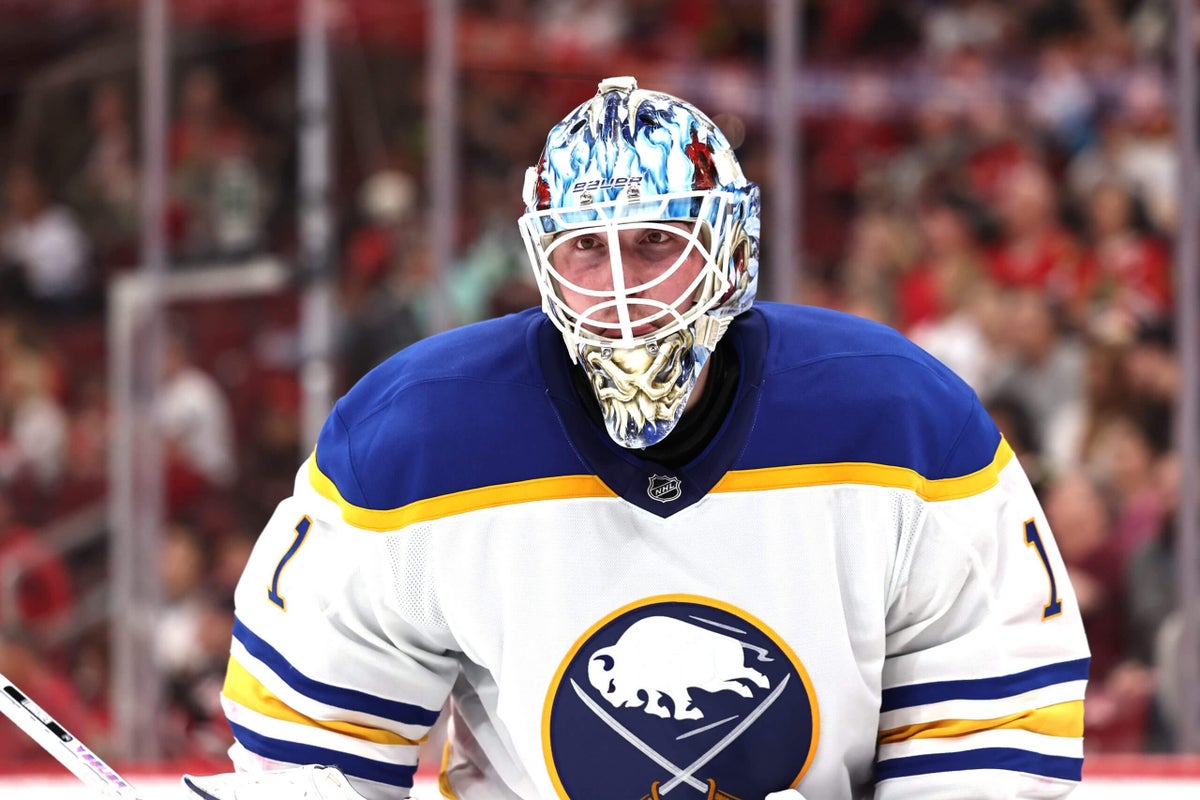
Boston Bruins vs Buffalo Sabres
Both of these teams exceeded expectations this season, largely on the back of strong goaltending.
Jeremy Swayman saved more goals above expected (26.5) than any goalie in the playoffs. His quiet, technical style is a perfect match for the chaos that often unfolds in front of him, and with how the Sabres’ offense has looked, it will be needed in this series. Swayman is great at maintaining his balance and structure, which allows him to make saves on rebounds better than just about anyone. It’s why Boston allowed the third-most rebound attempts in the NHL this season, but the fourth-fewest goals on rebounds.
Swayman has also been a Sabre-killer throughout his career, going an impressive 8-1-1 against Buffalo with a .925 save percentage and 1.87 GAA. In the lone matchup this season, Swayman stopped 21 of 22 shots in a 3-1 win back in October.
It could be because he’s exceptional at stopping mid-range shots (29 to 43 feet from the net, in the slot), which is the area Buffalo attacks most from. The Sabres took the eighth-most mid-range shots this season, and scored the third-most goals in the NHL from that area. Meanwhile, Swayman’s .928 save percentage on those shots ranks second in the NHL.
On the other end, it appears Ukko-Pekka Luukkonen will begin the series, with Alex Lyon just returning to the ice from a lower-body injury. The good news for Buffalo is that Luukkonen is in excellent form. His 7.88 GSAx since the Olympic break rank eighth in the NHL.
Both over his career and this season, Luukkonen has been average against the Bruins. Something worth noting – especially with how hot the Bruins’ power play can get at times – is that Luukonen had the fourth-highest save percentage in the NHL this season while killing penalties.
Carolina Hurricanes vs Ottawa Senators
One of the biggest questions entering this postseason is whether or not Carolina’s breakout star, Brandon Bussi, can recapture the magic that he had over the first half of the season. Just look at his number before and after the Olympic break.
RecordSave %GSAx
Pre-Olympics
23-3-1
.906
9.66
Post-Olympics
8-3-1
.865
-6.85
If Bussi can return to form, the Hurricanes are a threat to win it all. If he doesn’t, they’re destined for yet another early playoff exit.
This matchup is fascinating from a stylistic point of view. Few teams generate more havoc in front of the net than the Ottawa Senators, and few goalies play as aggressively when the puck is in tight as Bussi. There won’t be much space between he and the traffic, which could lead to chaos, and dare I say it … goalie interference reviews.
On the other end, Linus Ullmark turned things around and finished the season strong after a slow start, but there are major concerns with this specific matchup. As a big, blocking goalie who isn’t the fleetest of foot, it will be interesting to see how Ullmark handles the consistent pressure Carolina brings.
No team spends more time in the offensive zone or fires more shots than the Hurricanes. They take a lot of shots from distance, and Ullmark is outstanding from that range. He allowed only three goals on 238 long-range shots this season. The biggest question will be how he handles the follow-up opportunities. Carolina thrives off rebounds and second chances, and for all of Ullmark’s strengths in reading the play and eliminating shooting angles, he doesn’t have the quickest recoveries. His ability to make athletic saves on off-schedule shots could be the difference in the series.
Pittsburgh Penguins vs Philadelphia Flyers
The Penguins are another team with a goalie decision to make, and head coach Dan Muse has yet to announce who will start between Stuart Skinner and Artūrs Šilovs. Skinner has improved over his time with Pittsburgh, while Šilovs cooled off over the second half of the season after a hot start. Here’s how they’ve each fared since the Olympic break.
Since Feb. 25
GoalieRecordSave %GSAx
4-5-4
.884
4.01
8-5-0
.871
-7.35
Skinner has the edge in form and playoff experience after backstopping Edmonton to back-to-back trips to the Cup Final, and should be the starter – at least to begin the series. This is also a great matchup for Skinner, who is a big goalie who relies on positioning to take away angles, but who struggles with plays in tight because he’s not the most athletic.
Philadelphia scored the second-fewest high-danger goals in the NHL this season, so the Flyers aren’t built to exploit Skinner’s biggest weakness. They rely much more on shots from further out, with the eighth-most goals scored from mid-range. Skinner’s mid-range save percentage (.889) isn’t just his strongest area this season; it’s consistently been his best metric (in relation to the rest of the league) throughout his career.
On the other end, Dan Vladař is arguably the biggest reason the Flyers are in the playoffs. The 6-foot-5 Czech netminder saved 11.42 goals above expected this season, and was at his best when Philadelphia needed him most.
In his final two starts of the season, with the Flyers still desperate for points to clinch a playoff berth, Vladař stopped 51 of 54 shots (.944 save percentage) to lead Philadelphia to two crucial wins.
Unlike the Flyers, the Penguins do the majority of their damage offensively from close to the net. They led the NHL with 740 shots from inside 29 feet this season, and should pose a stiff test for Vladař, whose .822 high-danger save percentage was well above league average.
Shot location data via NHL Edge, Goals saved above expected data from HockeyStats.com