

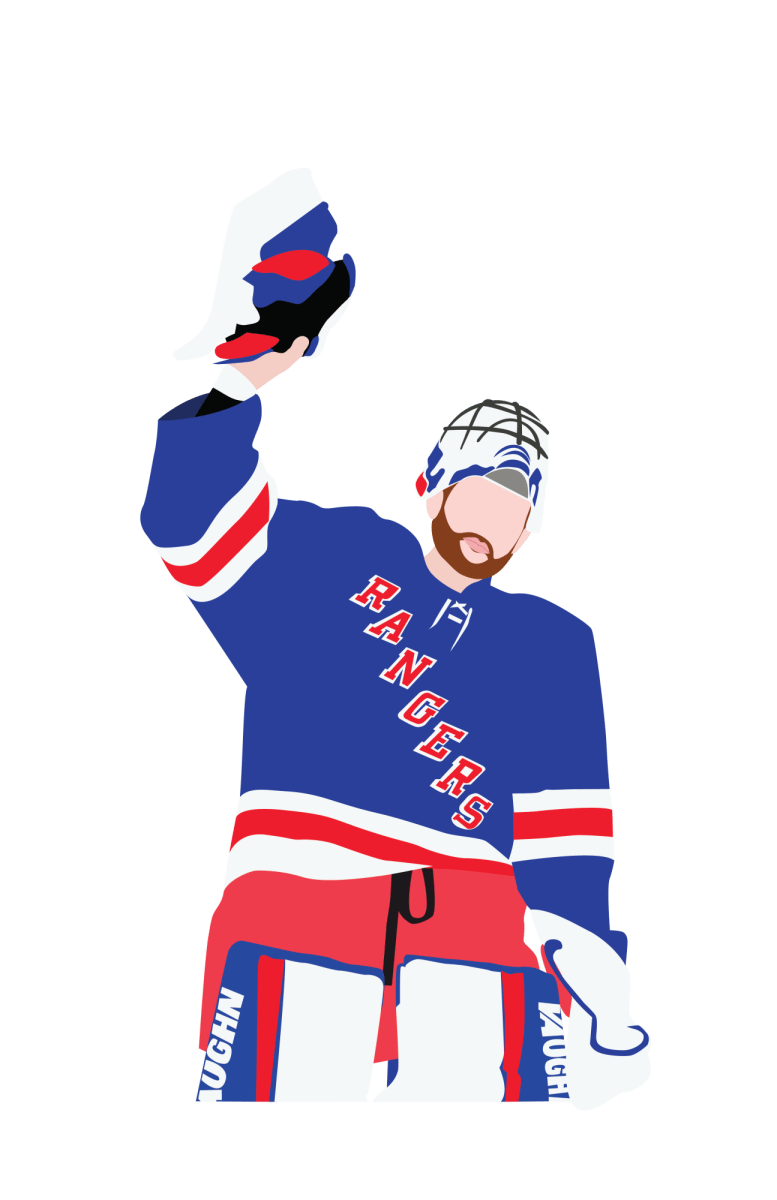
When goaltender Jonathan Quick was drafted in the third round of the 2005 NHL Draft by the Los Angeles Kings, no one knew what to expect from him. Fast forward 21 years and Quick is the winningest American goaltender and is a lock for the NHL Hall of Fame.
Before Quick jumped to the NHL and college, he attended Hamden High School before transferring to Avon Old Farms School where he was a standout. He was recruited to the UMass Amherst Minutemen holding a .926 save percentage and 54 wins over two seasons.
Quick led the Minutemen to their first ever NCAA tournament appearance in the 2006-07 season before departing for the bright lights of Los Angeles.
Quick’s first real season of action for the Kings saw him start 41 games, posting a .914 save percentage and a 2.48 goals against average. From then on he was the all-and-out starter for the Kings and widely considered a top goaltender in the league for years to come.
Starting in the 2009-10 season the Kings found themselves to be a playoff regular making five consecutive appearances. In the 2009-10 and 2010-11 seasons the Kings were bounced in the first round as Quick’s performance just wasn’t enough to propel the Kings further. A goaltender’s performance is the number one thing a team needs in order to make a deep playoff run and in the 2011-12 season, something switched in Quick.
Quick and the Kings barely got into the playoffs as the No. 8 seed with 95 points. Quick kept a .929 save percentage and a 1.95 goals against average showing he was the main reason the Kings found themselves in the playoffs for the third consecutive year.
Their offense was pitiful, ranking second worse in goals scored, however their defense was ranked second best with Quick to thank.
The Kings dismantled the Vancouver Canucks in five games in the first round, the same team who went to game seven of the Stanley Cup Final just a year prior.
Next was the No. 2 seed St. Louis Blues who were swept in four games. The Kings were 8-1 in very unfamiliar territory against the No. 3 seed Phoenix Coyotes, who the Kings beat in five games again.
The Kings met the New Jersey Devils in the Stanley Cup Final where the Kings won in six games, earning Quick his first Stanley
Cup. During the playoffs, Quick posted a .946 save percentage and 1.41 goals against average earning him the Conn Smythe Trophy as the MVP of the playoffs.
Two years later, the Kings were in the Stanley Cup Final once again despite having had their backs to the wall in the first round.
The Kings were down 3-0 in the seven game series yet miraculously won the next four games comfortably.
The Kings and Quick were pushed to their limits in the 2014 NHL playoffs as each series went to seven games against the Anaheim Ducks and defending champion Chicago Blackhawks.
The Kings then made light work of the New York Rangers in the Stanley Cup final in five games, winning Quick his second cup
in three years.
In the next four seasons, Quick remained a rock between the pipes for the Kings and remained their starter up until the 2021-22 season.
Quick was dealt to the Columbus Blue Jackets in May 2023, then traded again to the Vegas Golden Knights as the backup to Adin Hill where he won yet another Stanley Cup.
Quick played the last few seasons of his career with the New York Rangers and helped them largely when starter Igor Shesterkin
wasn’t at his best.
Quick posted a .911 save percentage and a 2.62 GAA as a 37 year old, something very few goaltenders ever did apart from the greats.
During his time with the Rangers, Quick attained his 392nd career win making him the winningest American-born goaltender in NHL
history, passing goaltender Ryan Miller who retired a few years prior.
Quick was able to notch his 400th career win in late February becoming the next big name to chase for American goaltenders Connor Hellebuyck and Jake Oettinger.
Three Stanley Cups, a Conn Smythe, 829 games played, 410 wins, 65 shutouts, a career 2.51 goals against average and a career .910 save percentage are Quick’s final career stats. He led Team USA in the 2010 and 2014 Olympics and continues to be an inspiration to thousands of American goalies who now play in his wake.