
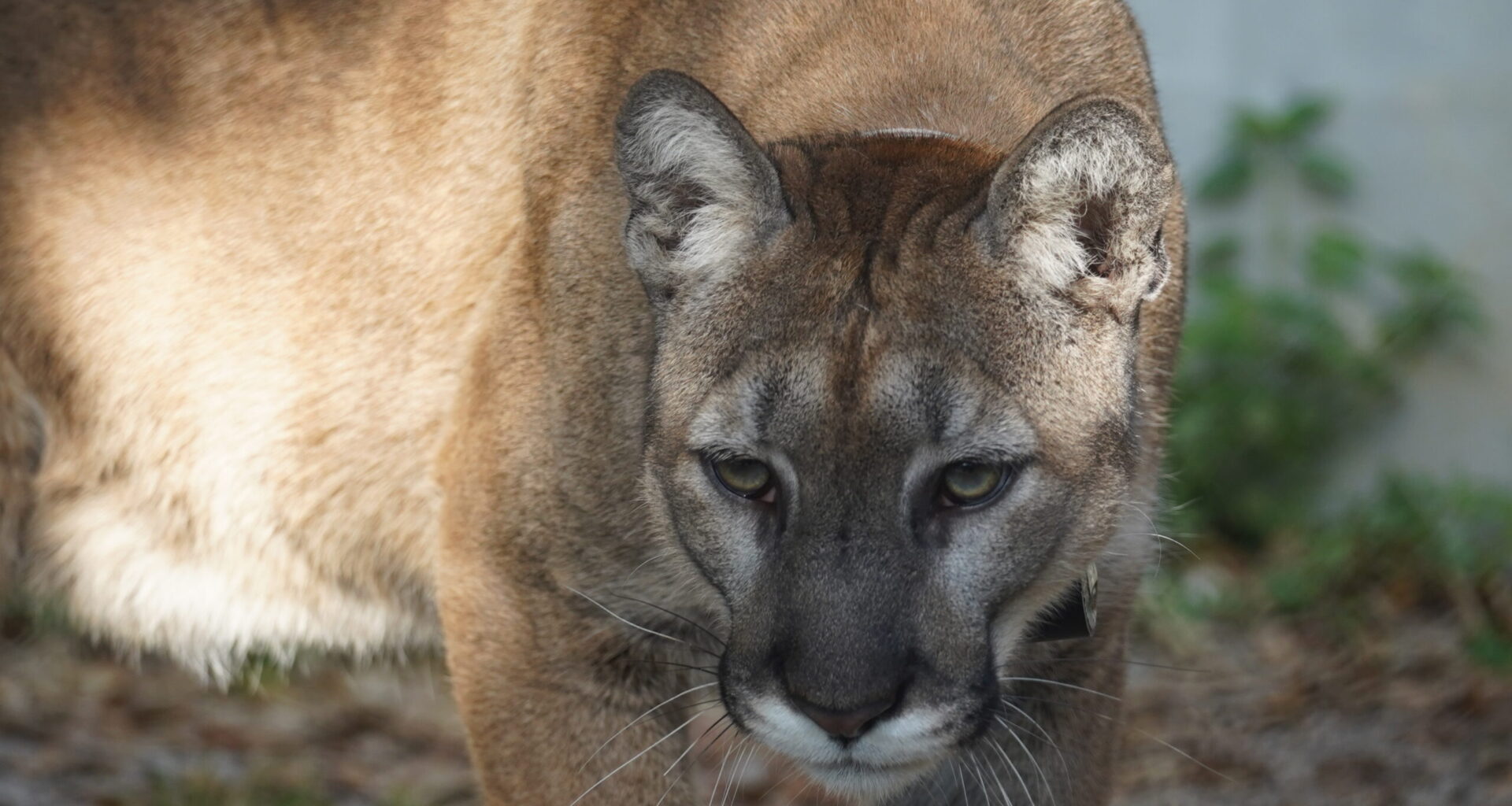
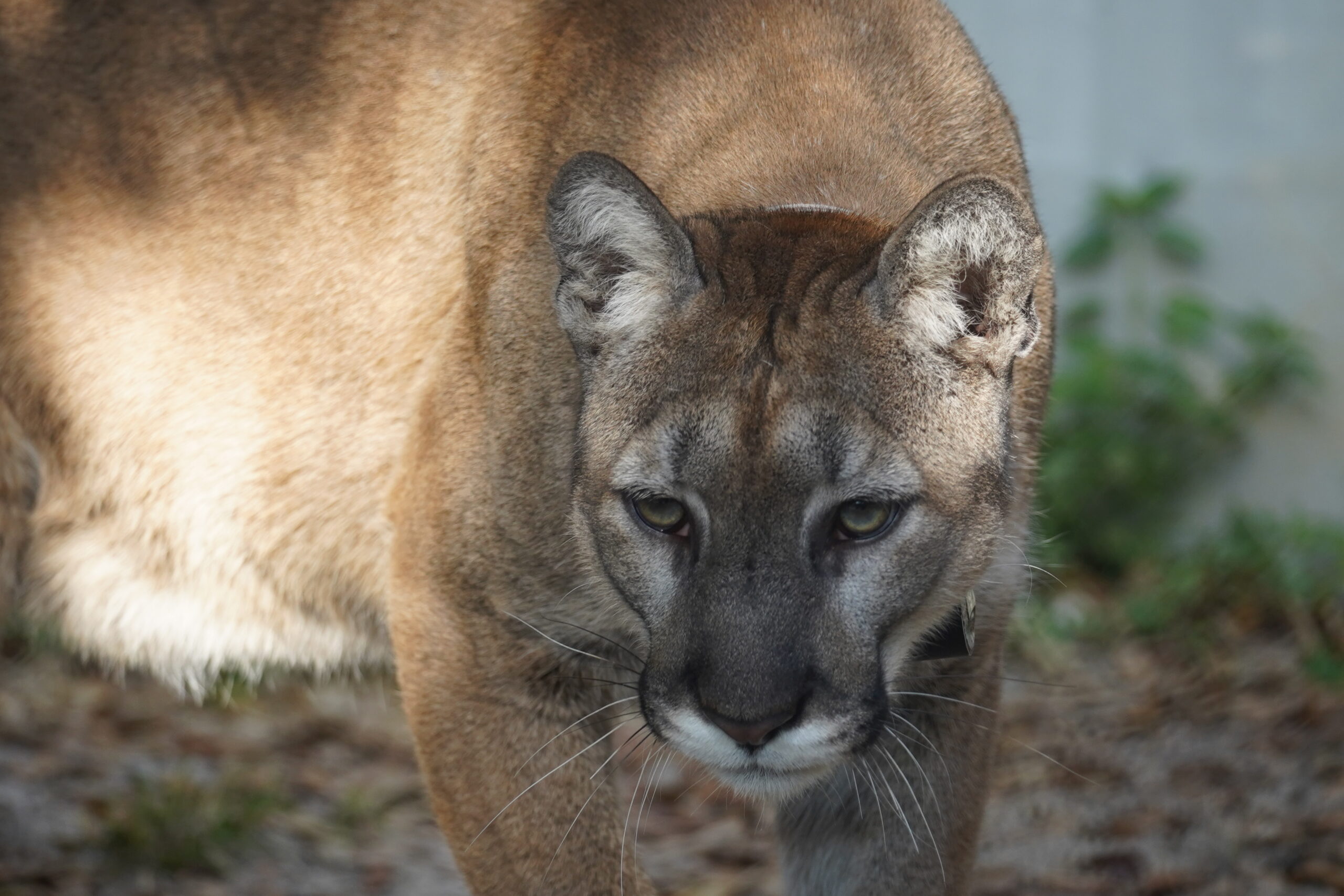
Loper, the Florida Panther recovering at ZooTampa after vehicle accident. Courtesy of ZooTampa, photo by Vanessa Lyons.
Listen:
A new federal lawsuit argues that a major development project in Southwest Florida could drive the endangered Florida panther toward extinction by threatening its critical habitat.
The South Florida Wildlands Association, the Sierra Club, and the Center for Biological Diversity filed a lawsuit challenging the U.S. Fish and Wildlife Service’s approval of the Town of Big Cypress development near the Florida Panther National Wildlife Refuge.
The project would clear about 5,000 acres for three villages and thousands of homes on land designated as critical panther habitat. The lawsuit claims regulators failed to fully assess how development is shrinking the panther’s limited territory.
Matthew Schwartz, executive director of the South Florida Wildlands Association, says the lawsuit is about more than one development project.
“The lawsuit covers the deficiencies and failures by the U.S. Fish and Wildlife Service to accurately portray the status of the Panther in all the biological opinions they write for these different projects coming in,” Schwartz said. “They’re not looking at all the cumulative impacts for all the projects that have come in already, plus projects that will be coming in in the future.”
Schwartz says the agency has approved projects in panther habitat without determining if the species is already at risk.
Habitat loss
The panther’s breeding population centers on Southwest Florida, mainly in eastern Collier and parts of Lee and Hendry counties. Panthers rely on large wilderness areas such as Big Cypress National Preserve, Fakahatchee Strand, Picayune Strand, and the Florida Panther National Wildlife Refuge.
Schwartz explained that, unlike adaptable predators such as coyotes or bobcats, panthers cannot survive in residential areas.
“It’s not a bobcat. It’s not a coyote,” Schwartz said. “Coyotes live in every county in Florida. Bobcats are found with a widespread distribution as well. They give birth in people’s backyards. Panthers are mountain lions. They’re pumas. They don’t live with us.”
Panthers need large, roadless lands with prey and safe denning spaces. Schwartz says these habitats disappear rapidly as development spreads.
Young panthers must leave their mothers around age two to establish new territories. Males cannot stay in areas controlled by dominant adults.
“If that young male panther stays in her range, papa’s going to find him and kill him,” Schwartz explained. “So, he’s got to create a new territory.”
Many young males head north across the Caloosahatchee River in search of territory. But only a few establish stable populations because habitat corridors are vanishing.
“There’s been some recordings of camera captures of kittens being born,” he said. “No evidence of recruitment, no evidence of a kitten being born in Central Florida growing into part of a breeding population.”
Conservationists say secondary habitat – often ranchlands or agricultural land near preserves – gives young panthers room to disperse, but these lands are increasingly being converted to housing.
“If they move out and they just start walking around through suburbia, they’re dead cat walking,” Schwartz said. “Eventually they’re going to get nailed.”
Roadkill Data
Roadkill is the top cause of panther death. Schwartz warns the Town of Big Cypress could add roughly 18,000 vehicles to the habitat.
In 2025, 17 of 18 panther deaths came from vehicle strikes. On May 4, a 2-to 3-month-old cub was killed in Collier County, marking the sixth roadkill in 2026.
How much is enough
The lawsuit contends the federal government reviews projects separately, failing to address the overall impact of continued development on panther survival in Southwest Florida.
“Bottom line, how much is enough?” Schwartz said. “How much development of the panther’s limited habitat can we have before the panther is simply extinct?”
Schwartz says the lawsuit’s central question is how much habitat loss panthers can withstand. He argues that federal regulators approve projects individually, ignoring the cumulative threat to the species.
The federal Panther Recovery Plan calls for three breeding populations of at least 240 panthers each, but Schwartz points out that Florida does not have one that large. The Florida Fish and Wildlife Conservation Commission estimates 120 to 230 adult panthers remain in the wild.
Conservation groups filed the complaint this spring after issuing a 60-day intent to sue. Schwartz says the government did not respond before the lawsuit proceeded.
“This is the place where it’s going to kill off our state animal,” Schwartz said. “That’s why this is getting more attention.”
To learn more about the South Florida Wildlands Association and the Florida panther, visit their official website.