
NHL free agency got off to a frenzied start on Wednesday, July 1.
Big-ticket players John Carlson (Tampa Bay Lightning), Sergei Bobrovsky (Toronto Maple Leafs), Boone Jenner (Washington Capitals), Jacob Trouba (San Jose Sharks), Mario Ferraro (Winnipeg Jets) and Mason Marchment (Sharks) found new homes.
MORE: Biggest winners and losers in NHL free agency day 1
The best free-agent signings are the ones that change a franchise’s trajectory and still look like a bargain years later.
Every team has at least one move like that on the books, from dynasty-making summer coups to quiet signings that turned into cornerstone pieces. Sometimes, a team deciding to re-sign its own free agent is the best move of all.
MORE: Alex Ovechkin sends message after signing one-year Capitals contract
Here is one pick for the best free-agent deal in each NHL team’s history, focusing on value, impact and hardware, not just cap hits on paper.
Anaheim Ducks: Scott Niedermayer (2005)
The Ducks landing Scott Niedermayer on a four-year, $27 million deal remains the defining free-agent win of the franchise. Coming off a Norris Trophy and three Stanley Cups with the New Jersey Devils, Niedermayer chose Anaheim and immediately gave a talented but incomplete roster a Hall of Fame No. 1 defenseman. He became captain, logged massive minutes in all situations and was the backbone of the 2007 Stanley Cup run, winning the Conn Smythe Trophy along the way. That is the textbook example of paying top dollar for a star and getting every ounce of value back in banners and rings.
Boston Bruins: Zdeno Chara (2006)
Zdeno Chara signing in Boston for five years, $37.5 million turned a middling team into a perennial contender. The Bruins handed him the captaincy almost immediately and built their identity around his size, reach and defensive dominance. Over 14 seasons in Boston, Chara won a Norris, anchored a 2011 Stanley Cup champion, captained two more Final teams and became the face of the franchise’s culture shift. For sheer length and impact, it is one of the most successful UFA deals of the cap era.
Buffalo Sabres: Chris Drury (2003)
Buffalo’s mid-2000s surge back into relevance hinged on adding Chris Drury. Signed as a free agent to a four-year, $12.8 million contract after the Sabres secured negotiating rights in a trade with the Colorado Avalanche, Drury became the heartbeat of those 2006 and 2007 Eastern Conference finalist teams, delivering clutch goals and stabilizing the room during a transition from the old guard. His overall point totals do not scream superstar, but the timing and leadership made this deal one of the smartest moves the franchise has ever made in the open market.
Calgary Flames: Mark Giordano (2004)
The Flames actually signed Mark Giordano twice before he became one of the franchise’s most consistent defensemen. Calgary inked Giordano as an undrafted free agent in 2004. Then, after he made it to the NHL during the 2005-06 and 2006-07 seasons, Giordano left to play in Russia’s KHL. But he returned to the Flames under a new deal in 2008-09. He ended up becoming team captain and playing 15 seasons with the Flames, recording 509 total points and winning a Norris Trophy.
Carolina Hurricanes: Rod Brind’Amour (2001)
Rod Brind’Amour is 1 of 1:
2006 – Stanley Cup Champion as a Hurricanes player 🏆
2026 – Stanley Cup Champion as a Hurricanes coach 🏆 pic.twitter.com/ltKnxnaxo3
— BetRivers Sportsbook (@BetRivers) June 15, 2026
Rod Brind’Amour arrived via trade, but the free-agent money Carolina invested to keep him in Raleigh paid off for years and continues to benefit the newly minted Stanley Cup champions. Brind’Amour’s contracts with the Hurricanes gave them a two-way center who set the standard for fitness, compete level and accountability. He captained the 2006 Cup champions and remains the organizational north star even now as head coach. It is rare that re-signing your own player has this kind of decades-long payoff, but the Hurricanes have been riding the Brind’Amour effect ever since.
Chicago Blackhawks: Marian Hossa (2009)
Chicago poaching Marian Hossa in a 12-year, $62.8 million deal was the last piece of a championship core. After back-to-back Final losses with two other teams, Hossa chose the Blackhawks and became the perfect two-way winger for Jonathan Toews and Patrick Kane. Over the life of his 12-year contract, he played Selke-caliber defense from the wing, scored at a top-six rate and helped Chicago win three Stanley Cups. On a per-dollar basis, it might be the single best long-term deal of the entire cap era.
Colorado Avalanche: Ian Laperriere (2004)
The Avalanche have leaned more on trades and drafting than on massive free-agent signings, but Ian Laperriere’s arrival as an unrestricted free agent gave them a culture carrier in the bottom six. A relentless forechecker and shot blocker, Laperriere became a fan favorite and a tone-setter, helping Colorado remain a tough out during years when their star core was in flux. For the money, getting that much identity and work rate from a depth signing was a win.
Columbus Blue Jackets: Sergei Bobrovsky (2013)
Columbus has rarely splurged on outside UFAs, so the best free-agent money the franchise spent was on locking up Sergei Bobrovsky once they had him. The contracts that followed his emergence as a Vezina-level goaltender effectively functioned as big UFA-style commitments. In return, the Blue Jackets got a second Vezina Trophy, their first playoff series win and several seasons where Bobrovsky singlehandedly pulled a middling roster into respectability.
Dallas Stars: Ed Belfour (1997)
The Stars signing Ed Belfour gave them exactly what they needed to finish the job. Dallas already had a strong defensive structure and a deep forward group, but they needed a proven playoff goaltender. Belfour gave them elite goaltending right away, backstopping the 1999 Stanley Cup champion and 2000 Western Conference champion teams. It is hard to find a cleaner example of a free-agent goalie walking in and delivering the final push to a championship.
Detroit Red Wings: Brett Hull (2001)
Detroit’s best free-agent signing could go a few different ways, but Brett Hull at a discount price for the 2001–02 season is tough to top. A pure goal scorer joining an already loaded roster, Hull slotted into a secondary scoring role and thrived, helping drive the 2002 Stanley Cup run. The deal worked because he bought into being one star among many, and the Red Wings extracted Cup-level production for relatively modest term and dollars given his pedigree.
Edmonton Oilers: Dwayne Roloson (2006)
The mid-2000s Oilers leaned on trades and rentals, but signing Dwayne Roloson to a new deal after acquiring him from the Minnesota Wild was one of the rare times they turned a short-term move into a foundational piece. Roloson stabilized a crease that had been in constant churn and nearly dragged the 2006 team to a Cup, then continued to give Edmonton competent goaltending on a club that struggled to defend. For a market that has swung and missed on goalie solutions, Roloson’s contract looks better in hindsight every year.
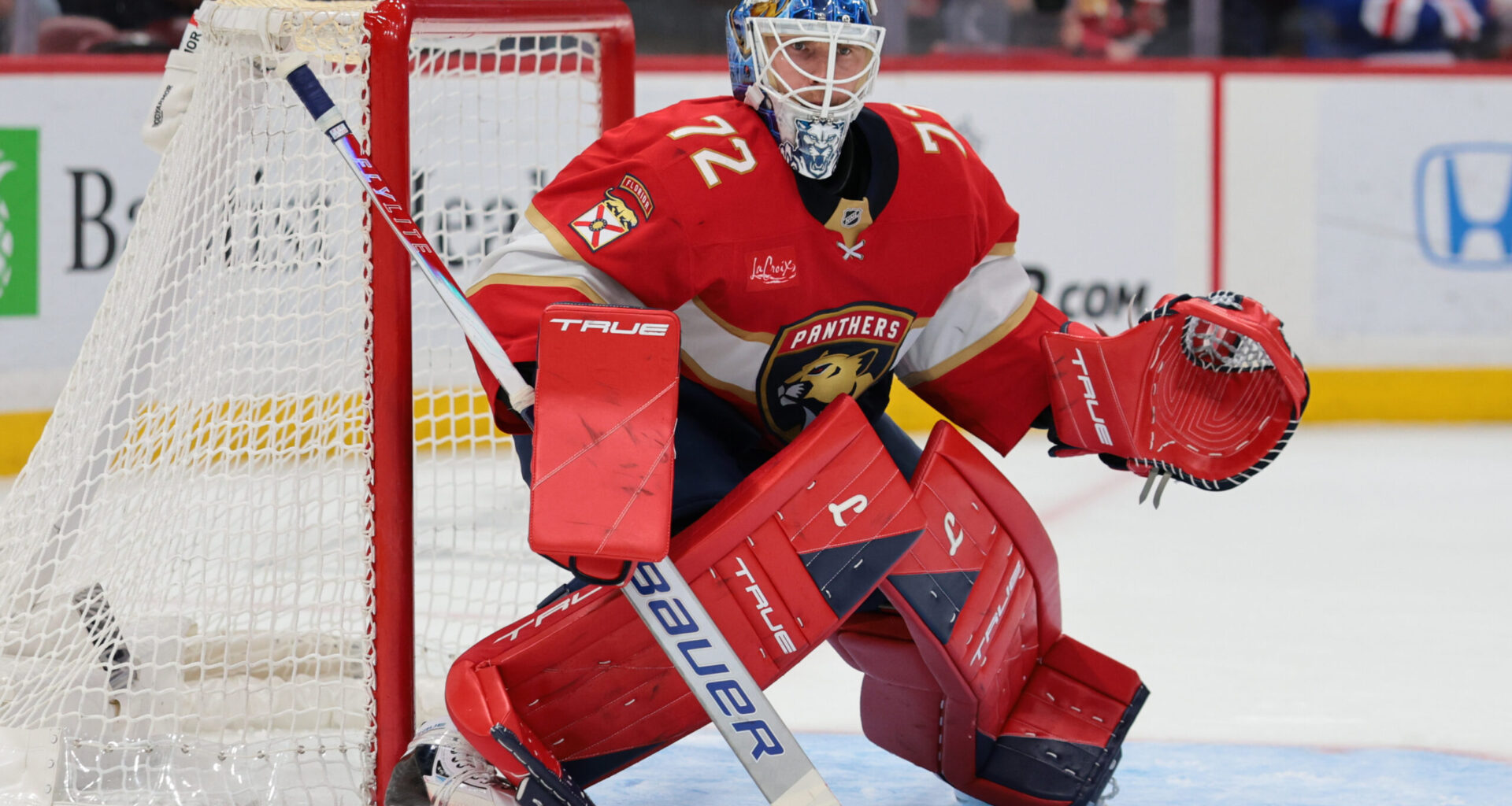
Florida Panthers: Sergei Bobrovsky (2019)
It wasn’t popular initially, but Bobrovsky’s seven-year, $70 million contract with Florida after leaving Columbus led the Panthers to a pair of Stanley Cups. Two Vezina Trophies with the Blue Jackets justified the price on paper, but early inconsistency invited scrutiny. Bobrovsky, who signed another free-agent deal with the Maple Leafs, ended his Florida run with a poor season that mirrored the team’s struggles.
Los Angeles Kings: Rob Scuderi (2009)
Rob Scuderi arrived in Los Angeles on a four-year, $13.6 million deal with a Stanley Cup ring and a reputation as a stay-at-home specialist, and that is exactly what the Kings needed. He became a stabilizing partner for Drew Doughty and helped LA build the suffocating defensive identity that fueled their 2012 and 2014 Cup runs. On a relatively modest deal, the Kings got top-four reliability, penalty killing and championship experience that paid off far beyond the cap hit.
Minnesota Wild: Ryan Suter (2012)
The Wild pulled off one of the loudest free-agent days in league history when they landed both Ryan Suter and Zach Parise on matching 13-year deals. Suter gets the nod here because he immediately stabilized the back end, logging massive minutes, driving possession, and helping drag Minnesota from middling to consistently relevant in the Western Conference. He finished top 10 in Norris voting five times during his Wild tenure and was the metronome of their defense for nearly a decade.
Even as the contract eventually became a cap headache that ended in a buyout, the front half of the deal delivered exactly what Minnesota paid for: a franchise defenseman who made them a playoff regular again.
Montreal Canadiens: Brian Gionta (2009)
Montreal’s free-agent history is loaded with big names, but Brian Gionta’s arrival on a five-year, $25 million deal gave the franchise something it badly needed at the time: stability. He signed the deal after leaving New Jersey and quickly became captain, providing professionalism and scoring touch as the Canadiens retooled around Carey Price and P.K. Subban. Gionta delivered multiple 20-goal seasons and playoff runs on a contract that aged reasonably well for a shorter, post-lockout deal.
He was never a superstar in Montreal, yet the leadership and production he supplied at a fair cap hit makes his signing one of the most quietly successful moves of the Canadiens’ modern era.
Nashville Predators: Paul Kariya (2005)
Nashville’s early years were built on smart drafting and defensive structure, but the signing of Paul Kariya to a two-year, $9 million contract was the moment the Predators announced they were done being an anonymous expansion outfit. Coming out of the lockout, Kariya chose Nashville and instantly became the offensive focal point, piling up back-to-back 80-point seasons and helping push the Predators into contention territory in the Western Conference.
The term was reasonable, the production was elite, and the signing helped sell fans and future free agents on Nashville as a legitimate destination, not a temporary stop.
New Jersey Devils: Brian Rafalski (2000)
New Jersey found a gem when it brought in Brian Rafalski from Europe as an undrafted free agent. Slotted next to Scott Stevens and Scott Niedermayer at various points, Rafalski provided puck movement, power-play skills, and a calm outlet under pressure. He was a crucial part of two Stanley Cup winners in 2000 and 2003 and consistently logged heavy minutes in every situation.
For a player acquired with almost no fanfare and no draft capital, Rafalski delivered borderline top-pair value for years, making his signing one of the most efficient moves in Devils history.
New York Islanders: Michael Peca (2001)
The Islanders’ path back to respectability in the early 2000s hinged on adding legitimate, two-way, veteran talent, and Michael Peca provided exactly that when he arrived in a trade with the Sabres and signed a new deal before the 2001–02 season. A former Selke winner, Peca gave the Isles a shutdown center, leadership voice, and playoff credibility. He helped the team end a long postseason drought and pushed a heavily favored Maple Leafs squad to the brink in a memorable first-round series.
He was not a high-scoring free-agent splash, but in terms of impact on standards and expectations, Peca’s signing stands out as a culture-setting move.
New York Rangers: Artemi Panarin (2019)
The Rangers have never been shy about chasing big names in July, but Artemi Panarin is the rare superstar signing who has lived up to the enormous seven-year, $81.5 million contract. Joining New York in 2019, Panarin instantly became the engine of their offense, posting elite point totals, lifting the power play, and anchoring the team’s climb back into the playoff picture. He delivered Hart Trophy-level seasons while the club transitioned from a soft rebuild into contention.
The cap hit was sizable, yet the production and star power he brought have justified the cost, making Panarin arguably the most successful big-money free-agent signing in Rangers history.
Ottawa Senators: Clarke MacArthur (2013)
Ottawa has done some of its best work finding value rather than chasing headlines, and the deal for Clarke MacArthur is a textbook example. Coming off a down year in Toronto, MacArthur signed on a modest contract and promptly turned into one of the Senators’ most reliable forwards, meshing in line with Kyle Turris and providing steady two-way play. His production relative to cost helped Ottawa stay competitive despite budget constraints.
Concussions shortened his tenure, but in terms of pure value in the seasons he was healthy, MacArthur was a massive win for the Senators’ pro scouting department.
Philadelphia Flyers: Daniel Briere (2007)
Daniel Briere arrived in Philadelphia on an eight-year, $52 million deal and quickly became the heartbeat of the Flyers’ offense, especially when the stakes were highest. While his regular-season numbers were strong, his playoff production is what makes this contract stand out. Briere, now the team’s GM, was a force during the Flyers’ 2010 run to the Stanley Cup Final, leading the postseason in scoring and delivering big goal after big goal.
The back end of the deal was less friendly cap-wise, but Briere’s clutch performance and role in a deep playoff push give his signing a special place in Flyers history.
Pittsburgh Penguins: Matt Cullen (2015)
When you think of Penguins free agents, the mind jumps to marquee names, but the Matt Cullen signing is the kind of under-the-radar move that wins championships. Brought in on a cheap, short-term deal in his late 30s, Cullen anchored the fourth line, killed penalties, and brought veteran savvy to a locker room that went on to win back-to-back Stanley Cups in 2016 and 2017.
For the cost, the return was enormous: reliable depth, faceoff wins and a stabilizing presence that allowed Pittsburgh to roll four lines at playoff tempo while their stars did the heavy lifting higher in the lineup.
San Jose Sharks: Joel Ward (2015)
Oct. 24, 2015:
Against the Hurricanes at the Shark Tank, #SJSharks forward Joel Ward scored 81 seconds into the game for his 100th NHL goal, and finished the night with his 102nd goal – completing his second career hat trick.
📸 Sharks social media
🚨 CAR 2, SJ 5 🚨 pic.twitter.com/hTT86O7NN0
— San Jose Sharks History (@sjsharkshistory) October 24, 2025
The Sharks have historically leaned more on trades than splashy free-agent additions, but the signing of Joel Ward stands out as a clean UFA win. Coming off strong playoff performances in Washington, Ward joined San Jose on a three-year deal and immediately gave them secondary scoring, net-front presence, and big-game poise.
He played a key role in the Sharks’ run to the 2016 Stanley Cup Final, chipping in timely goals and heavy minutes in a middle-six role. For a mid-range cap hit, San Jose got exactly what it needed: durable, playoff-ready depth that pushed an already good team over the hump in the West.
Seattle Kraken: Philipp Grubauer (2021)
Seattle’s free-agent history is short, but the Philipp Grubauer signing to a six-year, $35.4 million deal was the first major swing. Coming off a Vezina finalist season, he signed a long-term deal to become the expansion club’s franchise goaltender. The early returns were bumpy, though he helped backstop the Kraken to their first playoff appearance and series win in just their second season, giving the young franchise much-needed stability in net.
Given the small sample size of options here, Grubauer’s importance to Seattle’s early identity nudges him into the top spot among their early free-agent adds.
St. Louis Blues: David Perron (2018)
St. Louis has often improved via trade, but the free-agent signing of David Perron was a masterclass in value. Returning to the Blues on a mid-range deal after a breakout season in Vegas, Perron provided consistent top-six production, power-play punch and a veteran presence.
He was a key offensive driver during the Blues’ 2019 Stanley Cup run, delivering clutch goals and point-per-game stretches in the postseason. Relative to his cap hit, Perron’s scoring impact and fit with the team’s heavy, forechecking style made this one of the smartest UFA bets of the Cup era.
Tampa Bay Lightning: Anton Stralman (2014)
The Lightning are known for drafting Nikita Kucherov, Brayden Point and Andrei Vasilevskiy, but their run of dominance also needed the right veterans in support roles. The signing of Anton Stralman to a five year, $22.5 million contract did exactly that. On a five-year deal, Stralman paired beautifully with Victor Hedman, providing elite transition play and defensive reliability as Tampa Bay surged into perennial contender status and reached the 2015 Stanley Cup Final.
For a mid-tier cap hit, the Lightning got first-pair performance in the meat of the deal, and his impact on the way Tampa exited its zone and defended leads helped define their style for years.
Toronto Maple Leafs: Curtis Joseph (1998)
Toronto’s signing of Curtis Joseph to a four-year, $24 million deal turned what had been a floundering club into a serious playoff threat. Coming off success in Edmonton, Cujo arrived and immediately provided top-end goaltending on a team that badly needed structure at the position. He backstopped the Leafs to multiple deep playoff runs, including conference finals appearances, and delivered highlight-reel saves that still live in franchise lore.
The deal was pricey for its era but more than justified by performance and impact. Joseph gave Toronto a chance in every big game he played, and you cannot ask much more of a free-agent goaltender in a Canadian market.
Utah Mammoth (Arizona Coyotes): Radim Vrbata (2011)
Whether you label the franchise by its current home or its Arizona roots, the best free-agent value came in the form of Radim Vrbata. His three-year, $9 million contract extension in the desert after coming over in a trade from Tampa Bay was modest in cost and big in payoff, as Vrbata produced multiple 30-goal caliber seasons and became a go-to finisher on a team that often struggled offensively. He played a central role in the Coyotes’ surprise run to the 2012 Western Conference Final.
In a low-revenue market, landing a reliable, top-six scoring winger at that price point was a massive win and one of the few true success stories in the Coyotes’ free-agent record.
Vancouver Canucks: Alex Burrows (2005)
This day in Vancouver #Canucks history, June 4, 2011:
Alex Burrows scores 0:11 into overtime of Game 2 to give the Canucks a 2-0 lead over the Boston Bruins in the Stanley Cup Final.
🎥: CanucksHD / YouTube pic.twitter.com/fXRh9E7Txm
— Vancouver Canucks History (@canuckshistoryx) June 4, 2026
Technically an undrafted free-agent signing, Alex Burrows is the kind of story every front office dreams about. Signed out of the ECHL, he ground his way up from fourth-line energy player to a mainstay on the Sedin twins’ wing at the height of Vancouver’s powers. Burrows scored clutch goals, killed penalties and embodied the feisty identity that helped the Canucks reach the 2011 Stanley Cup Final.
From a pure value perspective, finding a top-line contributor essentially off the scrap heap and then keeping him on reasonable deals throughout his prime might be the best bit of pro scouting and contract work in franchise history.
Vegas Golden Knights: Paul Stastny (2018)
Vegas has weaponized cap space and trade capital as well as any team, but their early free-agent win was the signing of Paul Stastny to a three-year, $19.5 million contract. Coming off a run to their inaugural Stanley Cup Final, the Golden Knights added Stastny down the middle, giving them another playmaking center who could handle tough matchups and power-play duties. He fit seamlessly with their up-tempo style and helped keep the expansion magic alive into a second and third year.
His presence also helped set the tone for Vegas as a destination where veteran players believed they could win quickly, which mattered as the club continued to add big names.
Washington Capitals: Brooks Orpik (2014)
The Capitals’ deal with Brooks Orpik for five years and $27.5 million was widely panned at the time for term and dollars, yet inside the organization it is often credited as a turning point. Orpik brought physical play, shot blocking, and standards to a blue line that needed structure. While his advanced numbers were mixed, his influence on the development of players like John Carlson and the overall defensive mindset set the stage for Washington’s 2018 Stanley Cup win.
On raw cap efficiency, there may be leaner deals in Capitals history, but in terms of changing habits and finally getting Alex Ovechkin over the hump, Orpik’s signing looms large.
Winnipeg Jets: Dustin Byfuglien (2011)
Winnipeg’s most important contract decision in the modern era came when Dustin Byfuglien chose to stick around long term, signing a five-year, $25 million deal just before the franchise relocated from Atlanta. Byfuglien brought unique size, shot power and physicality, eventually moving back to defense and becoming the matchup nightmare that drove the Jets’ identity for much of the decade.
He was not a traditional external free-agent addition, but the commitment functioned like a marquee signing for a market that historically worried about players leaving. Byfuglien’s deal gave the Jets legitimacy and a true franchise pillar at a time when they needed one most.