

Connor McDavid and Leon Draisaitl will remain the foundation of the Edmonton Oilers under new head coach Mike Babcock. However, Edmonton’s path back to Stanley Cup contention should not involve asking its superstars to carry an even heavier workload.
McDavid averaged 22:59 per game during the 2025-26 season, while Draisaitl averaged 21:35. McDavid played all 82 games and recorded 48 goals and 138 points, but Draisaitl missed 17 contests after suffering a late-season injury. Zach Hyman also appeared in only 58 games.
Injuries cannot always be connected directly to ice time, but Edmonton should recognize the cumulative effect of long regular seasons and deep playoff runs. The Oilers reached consecutive Stanley Cup Finals before being eliminated in the opening round in 2026. Preserving McDavid and Draisaitl for the postseason must therefore become a priority.
That begins with removing McDavid from regular penalty-killing duty.
McDavid Should Not Be Killing Penalties
McDavid averaged approximately 1:03 per game on the penalty kill last season, while Draisaitl averaged 27 seconds. Those numbers may appear insignificant, but one minute per game adds up to more than 80 minutes across a full season.
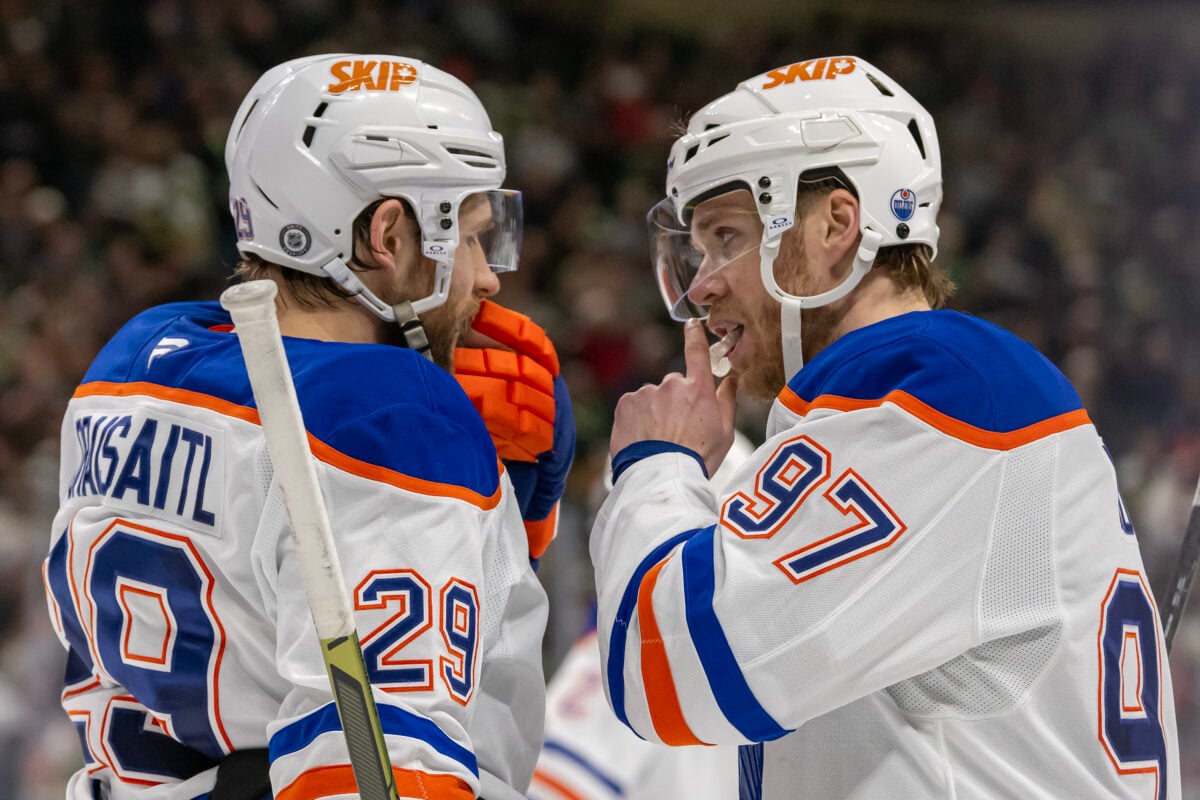 Edmonton Oilers forward Leon Draisaitl (29) and forward Connor McDavid (97) talk before a face-off (Mandatory Credit: Nick Wosika-Imagn Images)
The argument for using McDavid shorthanded is understandable. His speed forces opposing defencemen to remain aware of potential breakaways, while his ability to generate offence can turn a defensive situation into a scoring opportunity. He recorded one shorthanded goal and one assist last season.
However, the occasional shorthanded scoring chance does not justify the additional workload or injury exposure. Penalty killing requires players to block shots, battle along the boards, absorb contact and repeatedly accelerate while chasing possession. McDavid is capable of performing those tasks, but Edmonton gains more from having him rested for the shift immediately following the penalty.
The Oilers should only use McDavid near the end of a successful kill, when he can enter against a tired power-play unit and potentially create offence in transition. He should not be part of a regular penalty-killing rotation. Reducing McDavid’s shorthanded usage could lower his average ice time closer to 22 minutes. Removing another occasional shift at five-on-five would move him closer to 21 minutes without significantly reducing his offensive opportunities.
The same principle applies to Draisaitl. His faceoff ability and defensive awareness make him useful on the penalty kill, but he should be reserved for important draws or late-game situations rather than regular shorthanded minutes.
D.J. Smith Must Rebuild the Penalty Kill
Associate coach D.J. Smith is expected to oversee Edmonton’s penalty kill, giving him an important role on Babcock’s staff. Smith has previous experience managing defensive units and penalty kills. He worked under Babcock as a Toronto Maple Leafs assistant between 2015 and 2019, focusing on the defence and shorthanded units. Toronto’s penalty kill operated at 82.5% in 2016-17 and 81.4% in 2017-18.
Smith later joined the Los Angeles Kings as an assistant in February 2024. During the 2024-25 season, Los Angeles allowed only 2.48 goals per game and killed 81.4% of its penalties. Both results reflected a structured defensive team capable of limiting dangerous opportunities.
His most recent season was less successful. The Kings finished 30th on the penalty kill at 74.6%, and the unit operated at only 70.6% after Smith became interim head coach. That decline cannot be ignored, although Smith was also responsible for the entire team after taking over in March rather than concentrating solely on one defensive area.
Los Angeles still finished seventh in goals allowed per game, and Smith guided the team to an 11-6-6 record after becoming interim coach. Oilers management clearly believes his defensive experience can help Edmonton. His first priority should be developing a dependable penalty kill that does not require McDavid or Draisaitl to carry it.
Oilers Have Better Penalty-Killing Options
Edmonton’s reconstructed roster gives Smith enough defensive forwards to build multiple shorthanded units. Jason Dickinson should become the foundation of the penalty kill. He can play centre or wing, handle defensive-zone assignments and take important faceoffs. Mathieu Joseph brings speed and extensive penalty-killing experience, while Mattias Janmark has consistently been trusted in defensive situations.
Ryan Nugent-Hopkins, Trent Frederic, Vasily Podkolzin and Kasperi Kapanen provide additional options. Josh Samanski could also earn shorthanded responsibilities if he secures a full-time roster position. A potential first unit could feature Dickinson and Joseph, followed by Nugent-Hopkins and Janmark. Kapanen’s speed could be used when Smith wants a more aggressive pressure system, while Podkolzin and Frederic could provide size along the boards.
The defence also has several experienced candidates. Mattias Ekholm, Connor Murphy and Ryan Shea can handle difficult defensive minutes, while Jake Walman and Shakir Mukhamadullin could provide mobility and puck retrieval. Edmonton’s penalty kill finished 20th in the NHL last season and then collapsed to 50% during its six-game playoff loss to the Anaheim Ducks, allowing eight goals on 16 opportunities. Those results indicate that a structural change is necessary.
Smith must improve how aggressively Edmonton pressures opposing puck carriers, protects the middle of the ice and clears rebounds. Better goaltending from Frederik Andersen, Tristan Jarry or Devon Levi would also help, but the skaters in front of them must reduce cross-seam passes and high-danger chances.
Babcock Must Trust Edmonton’s Depth
Reducing the workload of McDavid and Draisaitl will only work if Babcock trusts the rest of his roster.
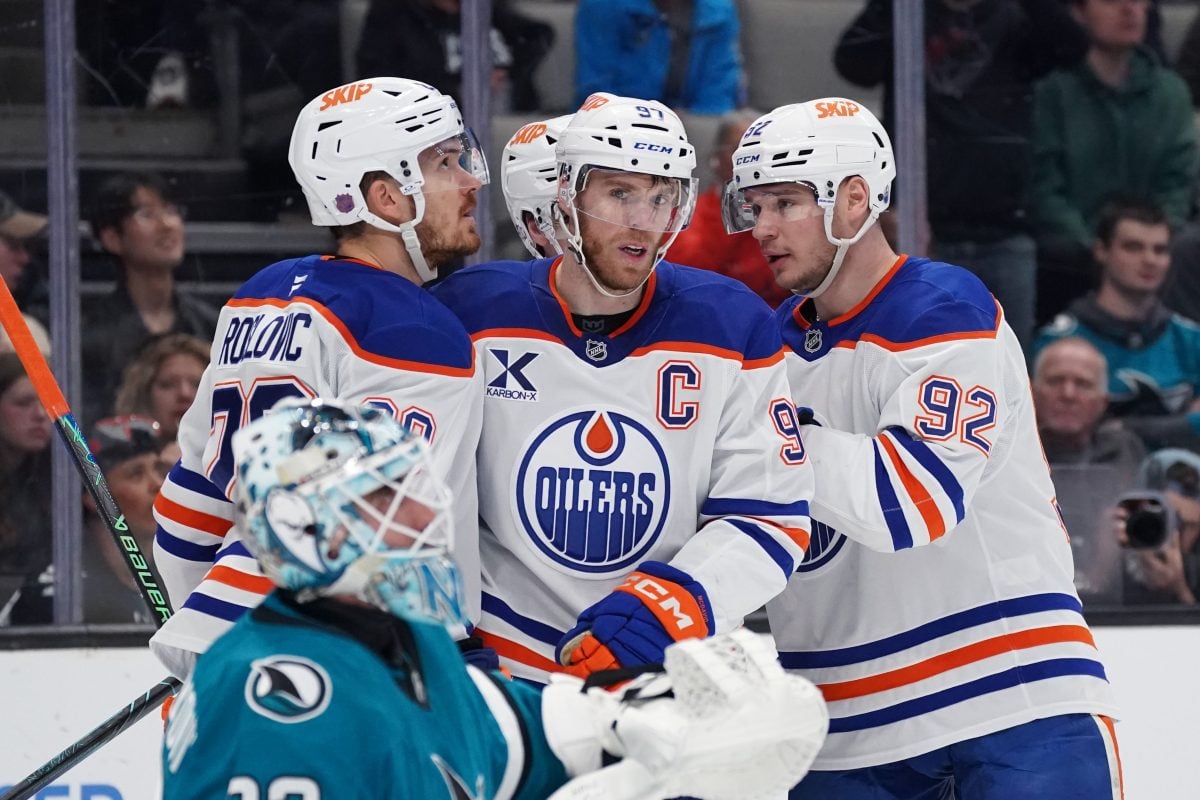 Edmonton Oilers center Connor McDavid is congratulated by teammates after scoring against the San Jose Sharks (David Gonzales-Imagn Images)
Matthew Savoie recorded 18 goals and 37 points during his rookie season, including 19 points over his final 24 games. Isaac Howard produced 50 points in 47 AHL games. Dickinson, Joseph and Colton Dach give Edmonton different options in the bottom six. Those players must receive meaningful regular-season responsibilities. If Babcock shortens the bench every time Edmonton falls behind, McDavid and Draisaitl will again approach or exceed 22 minutes per game.
Edmonton does not need to reduce their power-play opportunities substantially. The top unit remains one of the team’s greatest advantages, and McDavid and Draisaitl should continue to receive significant minutes when the Oilers have an extra attacker. The reduction should come from low-value minutes. Regular penalty-killing shifts and excessive double-shifting against non-playoff opponents create unnecessary fatigue. Edmonton should prioritize using its stars in situations where they can determine the game.
Babcock can also manage their workloads by separating them more consistently at five-on-five. Keeping McDavid and Draisaitl on different lines forces opponents to divide their defensive resources and gives Edmonton two scoring units. Loading them together can remain an option when the Oilers need a goal late in a game.
Edmonton Must Prepare for the Playoffs
McDavid and Draisaitl are capable of playing massive minutes, but capability does not automatically make it the best strategy. The Oilers’ objective is not to maximize their stars’ regular-season production. It is to have them healthy and effective when the postseason begins. Saving one or two minutes per game could equal more than 100 minutes of reduced workload across the season.
Smith’s ability to build a penalty kill around Dickinson, Joseph, Nugent-Hopkins and Edmonton’s other defensive forwards will be central to that plan. The Oilers hired an experienced defensive coach, and they should allow him to construct a unit that does not depend on their best offensive player. McDavid can still appear at the end of occasional penalties, while Draisaitl can take an important defensive-zone faceoff. Those should be situational decisions rather than standard deployment.
Edmonton will always rely heavily on McDavid and Draisaitl. The key is ensuring that reliance does not become unnecessary overuse. If Babcock trusts his depth and Smith fixes the penalty kill, the Oilers can preserve their superstars without sacrificing regular-season success.
Free Newsletter
Get Edmonton Oilers coverage delivered to your inbox
In-depth analysis, breaking news, and insider takes – free.