
With the NHL postseason concluded, focus now shifts entirely to the upcoming NHL draft on June 27. As contenders, the Edmonton Oilers are unlikely to move up in the draft, meaning their first selection comes in the third round.
What players might be available by then? This iteration we will look at the more long-term projects, that the Oilers might take a chance on.
Lets take a brief look at some of the players that will likely be on the board and possible selections that the Oilers could make with their sole 3rd round draft pick.
Aiden Lane, RW, Brampton Steelheads, (OHL)
YearDraft RelativeLeagueTeamGPGAP23–24D-1U18St. Andrews College5630326223-24D-1PHCSt. Andrews College14761324-25DYU18St. Andrews College5534528624-25DYPHCSt. Andrews College147142124-25DYUSHLGreen Bay Gamblers200024-25DYOHLBrampton Steelheads137613
The Mississauga born winger is the epitome of a dark horse in this draft year. First lighting it up in U18 with St. Andrew’s College posting 86 points across 55 games, then moving to the USHL briefly, then finally landing with the Brampton Steelheads at the end of the season where he went a point per game.
Lane is also committed to Harvard University for the 2025–26 season, so he is a bit of a long-term project which might make win-now organizations like the Oilers a bit more hesitant.
What type of player is Lane?
Lane plays a smart and heavy power forwards game. His game is highlighted by strong physicality, evident puck skills, compete level, and senses.
He plays a frequent role on the forecheck and the backcheck showing high levels of play engagement, clean defensive/physical pressure, and strong defensive responsibility. He also has quite lateral angles of attack, but regardless he generates frequent opponent turnovers, and strong check delivery.
In the defensive zone he excels in board play through a quality frame, muscle mass, and effective body positioning. His retrevial ability blends nicely with his hit absorption as he muscles his way through plays and can initiate breakouts that send his team off in transition.
This ability to aid breakouts is echoed through his high quality off-puck positioning, puck handling/puck protection mechanics, quality play processing which helps his play ID and further articulates itself through his pass placement/delivery.
The OHL winger has a high hockey IQ that allows him to string together plays in transition with quality scans, play ID, and notable play anticipation. This play anticipation allows him to identify passing lanes offensive and defensively as he routinely cuts lanes off and reduces chances against on the forecheck.
In the offensive zone he is a menace of a net front presence showing good balance, grit, and ability to get in the dirty areas and hammer home in close slot chances. His physicality shines offensively as a play supporter, and cycle support.
The Canadian forward has an around average projectable shot with good power, release point, and leverage, but lacks some placement ability.
Areas of improvement
The main areas of improvement for Lane circle around his skating. His skating lacks due to a clunkier stride that produces acceleration, power, and stride recovery inefficiencies. These limitations are most obvious in transition play, and breakaways, as he generally lacks significant separation speed.
Additionally offensively his creativity/instincts, and poise aren’t always consistent. At the next level expect him to be more of a play supporter than a play driver. However, with his role as a powerforward he likely won’t be relied upon as a goalscorer at the NHL level.
Does drafting Lane make sense?
Lane has the potential to be a mid-round steal for whichever organization selects him as there is lots to like about his smart game from his compete, physicality, or quality puck skills.
Lane is more raw than most of the prospects covered in this series, but could fit nicely in Bakersfield or Edmonton after his NCAA career.
His unconventional development path has likely pushed him down in the draft rankings. With a NCAA track of four more years of development, it is possible he can overcome some of these skating limitations to become an quality top nine forward at the NHL level.
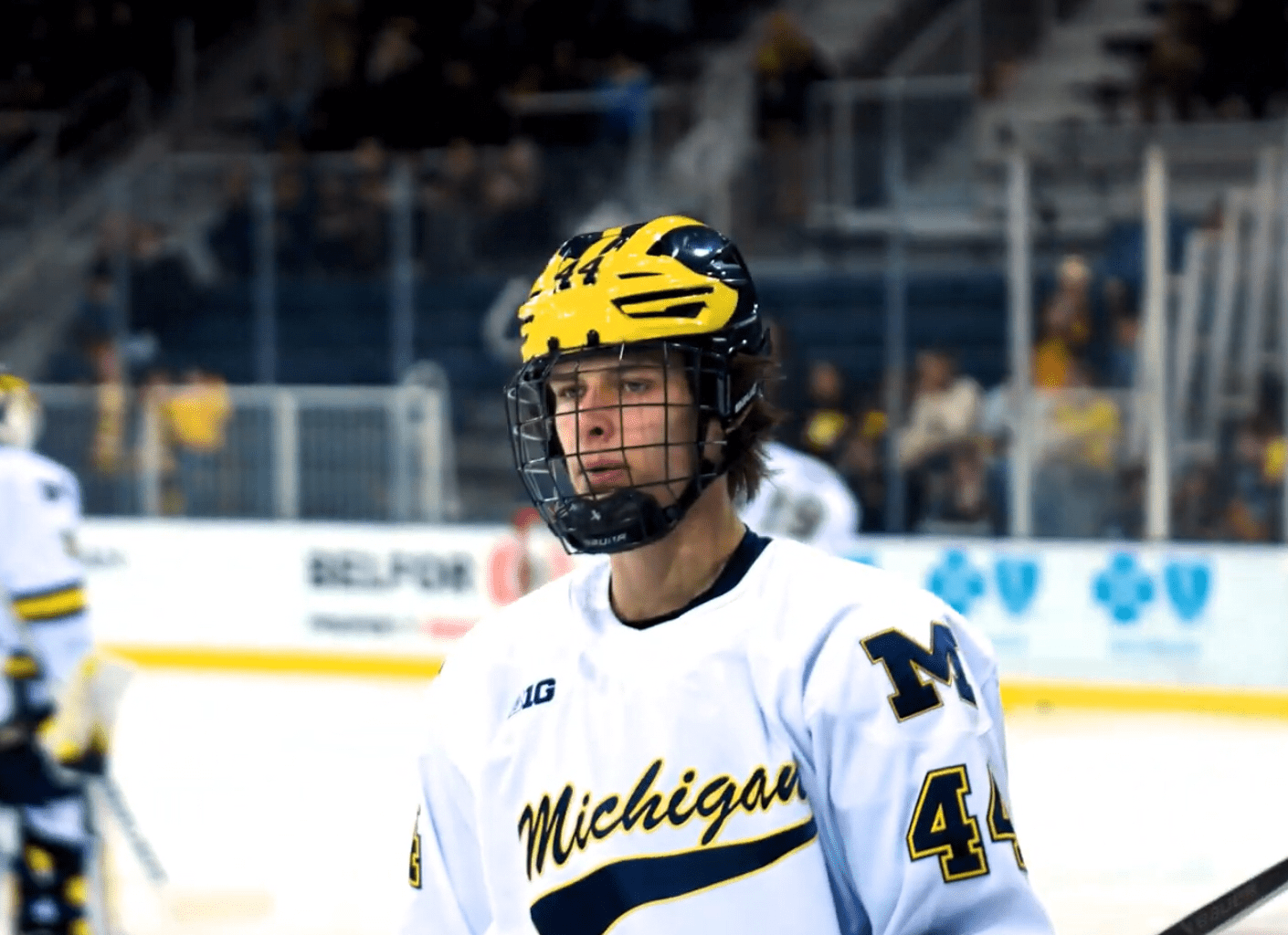
William Horcoff, C, University of Michigan (NCAA)
YearDraft RelativeLeagueTeamGPGAP23–24D-1NTDPU.S National Team U17541181923-24D-1USHLUSNTDP Juniors35551023-24D-1WHC-17USA U17712324-25DYNTDPU.S National U18 Team28861424-25DYUSHLUSNTDP Juniors721324-25DYNCAAUniversity of Michigan18461024-25DYWJC-U18USA7224
Most fans should be able to recognize the Horcoff name, as his father, Shawn, is a former captain of the Edmonton Oilers. It is quite unlikely that the younger Horcoff is still on the board come the third round, but if he is there’s would no doubt be serious consideration for selection on pedigree alone.
Horcoff has gone where the USA National Team Development Program has gone, and he’s shined accordingly as a reliable physical pass first forward. After making a midseason jump to the NCAA, Horcoff has seen his draft stock rise after a solid performance for one of college hockey’s best teams.
What type of Player is Horcoff?
The Michigan-born forward plays a heavy two-way forward’s game. This game is highlighted by a strong physicality, smart hockey sense, and a quality passing aptitude.
The forward contributes consistently in all three zones with good defensive/offensive instincts, proactive scans/play reads, and notable creativity/space manipulation throughout.
Specifically on the defensive Horcoff displays strong positioning, defensive awareness, and notable pressures exertion mixed in with play disruption. The 6’4” forward also has an NHL ready frame, which he is learning to leverage more, and through quality angles of attack/timing that blend nicely with his physical pressure and grit he can force opponents into making errors and generating turnovers.
A strong active stick, pro-active positioning through strong gap recognition, and solid risk awareness means Horcoff is often in movement, and although he lacks dynamic skating he is always calculating where to go next. This non-stop play reading hints at a solid motor, play anticipation and hockey IQ.
Offensively Horcoff’s puck skills shine as he uses his frame for strong handling mechanics, but regularly dishes out effective one-touch passes to jump start breakouts demonstrating offensive instincts through solid play processing, vision, and option ID ability.
There are some decision making gaffs, but overall Horcoff forward is a classic give and go playmaker.
This physicality also shines in the offensive zone as the American forward is a quality in-close finisher and cycle supporter through solid body positioning, playmaking knowhow, and space creation/usage as a low zone forward and net-front presence.
The former USHL forward is a strong board play asset and retrieval specialist with quality muscle mass, and toughness that can extend offensive pressure of his team.
Areas of Improvement
Skating, intensity, and finishing ability are the major areas of improvement for the prospective second or third rounder.
Horcoff’s skating mechanics are below average as his posture in his stride recovery goes quite high, reducing its overall efficiency and effectiveness. This posture also interrupts his acceleration, stride fluidity, and makes his edgework/crossover integration more challenging.
These skating shortcomings are most evident in his transitional play as he needs his above average motor to compensate for this lower end speed, which would be a problem at the next level.
In combination with his skating his compete level appears to be largely inconsistent too, as Horcoff lacks intensity, pace, and hustle in his game. This partly explains his give and go/one-touch nature.
This lower pace game of the forward is something that NCAA opponents take advantage of, and this will only increase at the next level.
This pace also blends in an unfavourable manner with Horcoff’s lack of finishing ability, exemplified by mixed playmaking execution, poorer shot selection, and less favourable lane usage specifically in regards to rush attacks. Growth in rush instincts would result in more production on the scoresheet.
Would Horcoff be a good fit?
If everything goes right for Horcoff he could realistically be a bottom-six two-way forward at the NHL level, that blends size, skill, and grit all together in one.
Outside of Connor Clattenburg and to a lesser extent Sam O’Reilly, the Oilers don’t have many of those hard skill prospects. To add one with such a unique combo of size, and soft/hard skill could be beneficial.
This being said his NHL ETA is five or so years, which might make the Oilers slightly more hesitant to select the American.
Lucas Beckman, G, Baie-Comeau-Drakar, (QMJHL)
YearDraft RelativeLeagueTeamGPGAASV%
SORecord2023–24D-1U18Laval-Montreal Rousseau Royal142.71.90727-4-023-24D-1QMJHLBaie-Comeau-Drakkar91.32.93837-1-024-25DYQMJHLBaie-Comeau-Drakkar522.65.914431-18-224-25DYWJC-U18Canada20.75.95502-0-0
Goalies are longer-term projects, and the Oilers pipeline has a high quantity of them. Beckman might just be what it needs. The Montreal-born product is no stranger to the big stages appearing with Team Canada at the most recent WJC-U18 tournament after shining all season in the QMJHL.
Not only did he outshine more mature goalies but Beckman did so in style, leading all rookie goaltenders in save percentage, second in rookies for goals against. He was tied for third among all QMJHL goaltenders for save percentage this year too.
What type of goalie is Beckman?
Beckman plays an all around solid mechanical game with some mixes of athleticism that make him a ideal hybird goalie for todays game. His game is highlighted by solid mobility, senses, and rebound control.
The QMJHL goaltender shows quality mobility through efficient movement, quality agility, strong t-pushes, and shows a tight (almost too rigid) body control of shots. This ease of movement allows quicker positioning and more effective checking up as a result.
Whereever he needs to get in his crease he can no problem.
Speaking of senses, Beckman tracks pucks exceptionally well, has a a good ability to see through screens, and has little trouble keeping up with pace of play. This pace of play is a benefit to the young goalie as he excels at moving the puck, and often spurs offensive breakouts for Baie-Comeau-Drakkar.
The Canadian goalie also shows some aptitude in glove side shots, and rebound control. This rebound control allows for greater quality shot mitigation and reduces the quality of chances against.
As the season went on Beckman also shows greater play poise with more confidence and composure as a first year starter.
Areas of improvement
One thing that does raise some red flags is the fact that Beckman plays in front of a solid defensive team which regularly allows only lower quality shots through. His below average size at 6’1”, and his trouble with handling five-hole shots, particularly when he is out of position.
His size also compounds with his positioning as he doesn’t box out as much as he could, which leaves a large portion of the net exposed, which higher skilled players can abuse.
Should Edmonton draft Beckman?
As the only goalie in this series Beckman undoubtly has a longer development timeline than the players. However his mobility, senses, and rebound control make him an attractive option.
Beckman’s selection would add another highly touted goalie into the system that is on a different development timeline than Samuel Jonsson, Nathaniel Day, or Connor Ungar. It is also possible that with the CHL-NCAA rule change after his CHL career Beckman goes the NCAA route for development too.
If everything goes according to plan for the young Quebecer Beckman could realistically be a 1A/1B option for an NHL organization.
Who would Edmonton select?
Well considering that all three of these prospects don’t particularly match the priorities of the organization it’s hard to see any of them get selected by Edmonton come draft day.
Out of the three, the one mostly likely would be Horcoff, as he has upside, matches what the Oilers need out of their depth. Plus as a player likely to be selected in the second round it would be hard to pass up if he fell to Edmonton in the middle of the third round.
Who would you like to see the Oilers select with their pick? Let us know in the comments below.
Follow The Oil Rig on social media!
Like this:
Like Loading…