
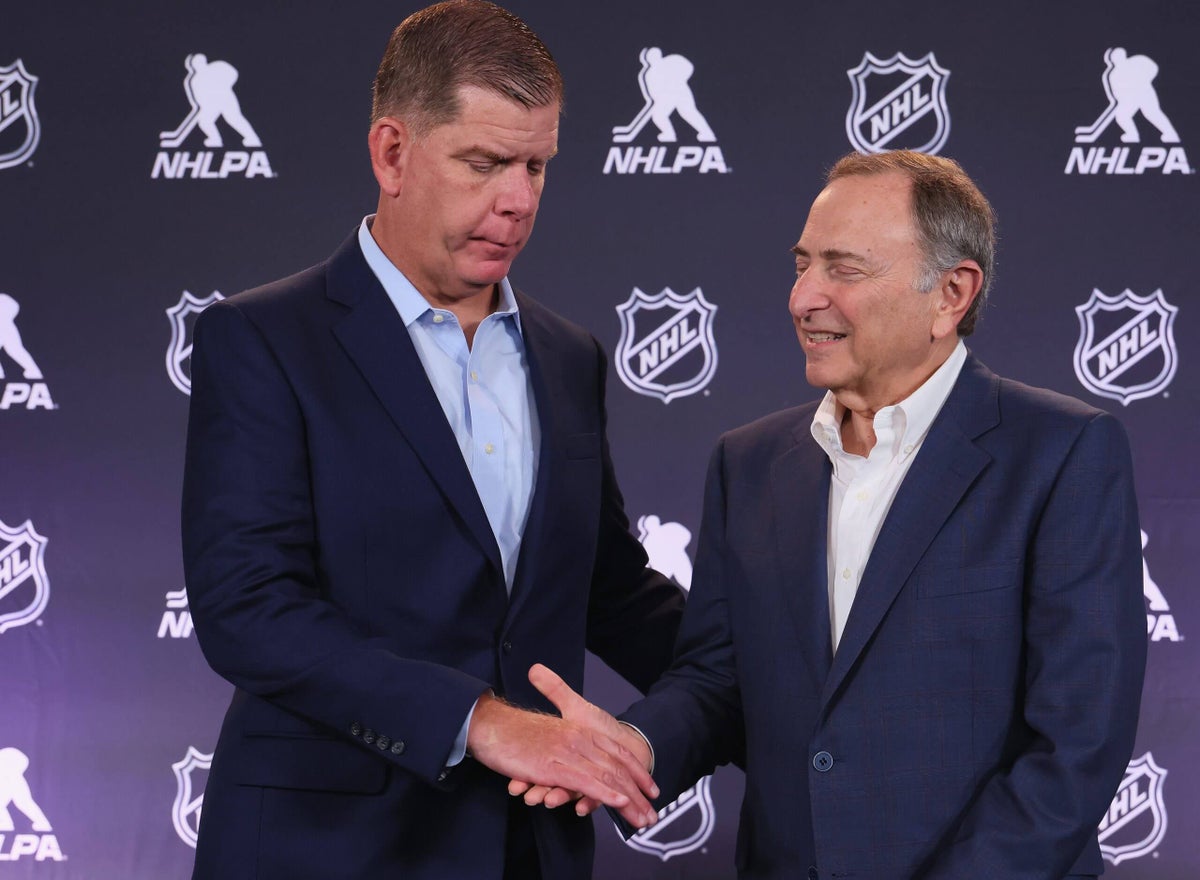
There will be labor peace in the NHL until 2030.
That is the top takeaway after the league and NHL Players’ Association announced they had come to terms on a new collective bargaining agreement on Friday in Los Angeles. The new agreement begins in the fall of 2026 — after the current COVID-19 era CBA expires — and runs for four years until the September after the 2029-30 season.
Exact details on everything are still not fully available, as owners and players need to ratify the deal. But here are the most interesting changes, with some thoughts on why they’re being implemented and what they might mean for the league and its players.
Why was the regular season extended to 84 games?
There has been a general sense for years that the preseason has become too long and onerous around the league. In 2024-25, NHL teams played an average of 6.5 exhibition games before the regular season began, including five teams playing eight games.
That number is going to be limited to four preseason games per team beginning in 2026, and veteran players will be limited to playing in only two of them. The number of regular season games per team, meanwhile, will be increased from 82 to 84.
The NHL has played 84 games in a season twice before (in 1992-93 and 1993-94), so this isn’t unprecedented. And regular season games are obviously preferable to preseason ones, both financially and from an entertainment perspective. While the season is already overlong in general, the good news is the plan will be to start the regular season in late September and spread the games out over more time, so there will be fewer back-to-backs and player fatigue.
With the Olympics and World Cup being jammed into the schedule in 2026 and 2028, more breathing room makes sense. But it’s a shame the NHL can’t ensure the Stanley Cup is given out before mid-June going forward.
What’s up with the playoff salary cap?
This closes a loophole that teams have been increasingly exploiting in recent years. It likely started with the 2015 Chicago Blackhawks, who placed Patrick Kane on long-term injured reserve and added a bunch of talent at the trade deadline using the salary cap space before activating Kane for the playoffs and going on to win another Stanley Cup.
In the years since, the Tampa Bay Lightning, Vegas Golden Knights, Toronto Maple Leafs, Edmonton Oilers and Florida Panthers (among others) have all used LTIR to add more talent to their playoff rosters, creating a system where there’s now an obvious benefit to “slow playing” injuries throughout the season and having players suddenly healthy in the postseason.
Instituting a playoff salary cap will be complex, however, as the league’s accounting allows for teams to accrue salary cap room throughout the year and add big salaries late in the regular season. Injuries are another complication when it comes to the cap, and there may be legitimate situations where new rules will have unintended consequences here.
We have to wait and see what these rules look like when the full CBA fine print is released, but the NHL needs to be careful it doesn’t create situations where teams are sitting good players in key playoff games simply to make the numbers work.
How will shorter contract term limits impact player movement?
NHL executives debated at length over what to push for on contract term length throughout this process, with some wanting to keep the current eight years to extend with your own team and seven to sign with another team, and others wanting shorter limits on deals.
In the end, a compromise was reached: Lower the term limit number by one, with players only able to sign for seven years with their own team and six with another one as a free agent.
This rule will be put into effect beginning in the fall of 2026, so it’s not believed to limit, say, Connor McDavid signing an eight-year extension with the Oilers in the next 12 months. (Not that this scenario is likely.)
Even though it feels like a subtle change, multiple executives and player agents I talked to today said this very well could end up being the most significant shift in this CBA. Unrestricted free agents only being able to sign for six years in other markets, for example, will likely lead to higher per-year contract values and more player movement in general, as star players will no longer be able to stretch their contract values out as much and will be more likely to change teams in their primes.
Other new contractual limitations — such as that signing bonuses, currently uncapped, will be limited at 60 percent of salaries per year, and that the year-to-year variance on deals will be dropped from 25 to 20 percent, according to league sources — will also contribute to top players getting higher AAVs on their deals, as contracts will not be able to be as frontloaded or buyout-proof as they have been in the past.
With fewer avenues for GMs and agents to get creative, the main flex point will increasingly become being able to offer more money, which could see the NHL’s middle class squeezed more as teams try to accommodate their stars.
What does raising the minimum salary mean?
One group that may not be squeezed as much? The players on the league’s absolute low end.
The current NHL league minimum salary of $775,000 will rise to $1 million over the next several seasons, meaning guaranteed growth of roughly 30 percent for those depth players. Depending on how fast the cap accelerates under this agreement, that could be close to in line with overall cap growth by 2029, meaning fourth-liners and callups will be getting a reasonable share of the NHL’s revenue growth.
What isn’t changing from the last two agreements is that the owners and players will continue to split league revenue, 50-50. How that gets divided up among the various players, though, is what could continue to shift in new directions with the new provisions coming in.
Why is the EBUG system changing?
The NHL didn’t love the optics of having amateur goalies — like David Ayres, a Zamboni driver who famously won a game for the Carolina Hurricanes against the Maple Leafs back in 2020 — enter games when teams had multiple netminders go down with injuries.
Now teams will be able to carry their own third-string professional goalie for this purpose.
Details are scarce as to how this will work and what those players will be paid. I’m on the record as seeing this problem as overblown, personally, as it happens so infrequently that dedicating a job to the role feels like overkill. That’s money that will, presumably, come out of other players’ pockets.
Plus, EBUGs are always amazing stories.
Why is the new CBA only four years long?
NHLPA executive director Marty Walsh addressed the CBA’s four-year length up front at Friday’s press conference, pointing out that NHL careers can be short and that there had been players who had retired while only playing under one collective agreement in the past.
Shorter is better, in other words, Walsh argued, and the league was on board with that.
The good news is the two sides were able to get this deal done in record time — more than a year ahead of schedule — creating a lot of stability for a league that has endured far too many lockouts in the past and seems to be enjoying some positive financial momentum right now.
And 2030 feels a long time away, too.
(Photo of Walsh, left, and Bettman: Bruce Bennett / Getty Images)