
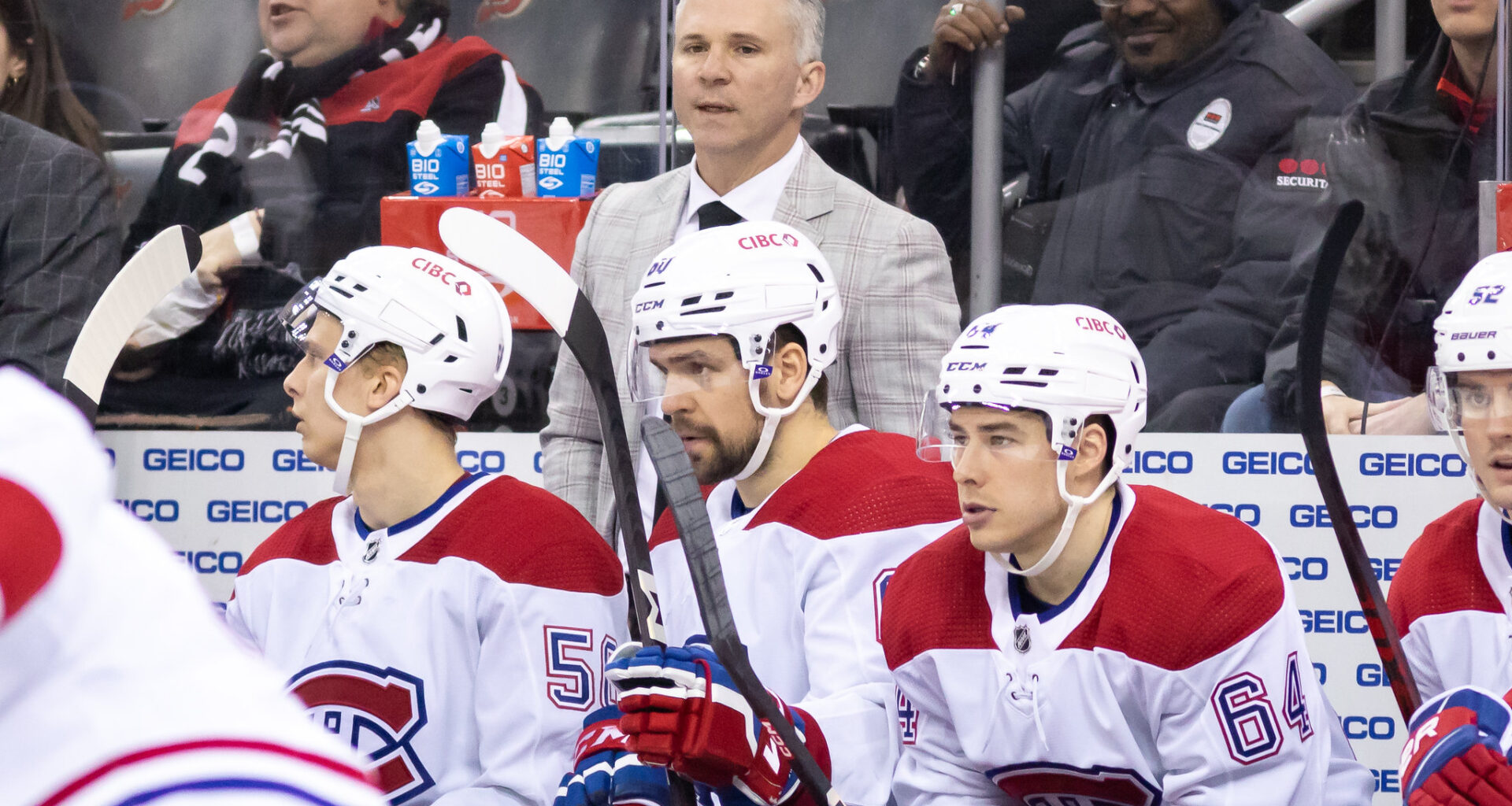
There were many worthwhile Jack Adams Award candidates in 2024-25. So, it speaks to Montreal Canadiens head coach Martin St. Louis’ legitimacy as a fourth-year bench boss that he earned one of the final three finalist spots, alongside Scott Arniel (Winnipeg Jets) and Spencer Carbery (Washington Capitals). That in and of itself should be enough. It has to be.
St. Louis Not the Coach of the Year
After all, based on the level of competition, St. Louis realistically won’t win. Whereas the Canadiens’ playoff berth as the Eastern Conference’s second wild card was unexpected, Arniel’s Jets winning the Presidents’ Trophy was too, probably to a greater extent. And, after the Capitals just snuck into the playoffs last season with the same 91 points the Habs did this one, fewer still anticipated them finishing first in the East, which coincidentally resulted in a first-round match-up against the Habs (and an eventual five-game series win).
Related: Canadiens Head Coach Martin St. Louis Named Jack Adam Finalist
It’s hard to handicap the race between Arniel and Carbery, as each one has a pretty convincing case to claim victory here, at least in direct comparison to St. Louis. As far as Canadiens fans are concerned, it should be wholly irrelevant. While there are undeniable parallels between the Habs and last year’s Capitals, both they and the Jets have been perennial playoff teams for the last decade or so, with exception to a single season in each case (2021-22 for the Jets, 2022-23 for the Caps).
So, the Canadiens, who are still in rebuild mode are finishing in last place in 2021-22, are forging their own distinct path here, as St. Louis becomes the team’s first Jack Adams finalist since Guy Carbonneau in 2007-08. Coincidentally, that tenure was Carbonneau’s first as a head coach, just like St. Louis’, which started in February 2022 when he replaced predecessor Dominique Ducharme. However, Carbonneau had previously served as an assistant. Adding to St. Louis’ accomplishment is how he had never coached professionally at all before coming aboard what at the time seemed like a tire fire of a situation.
Canadiens Ahead of Schedule Under St. Louis
Considering the Canadiens officially only aimed to be “in the mix” by the end of the regular season, it’s fairly clear they’re ahead of schedule in that rebuild. What’s arguably most impressive is, under St. Louis’ watch, after a disappointing start to the season, the Habs went 32-18-8 (to finish 40-31-11 overall) since Dec. 3, translating to an elite .621 points percentage. Pro-rated over an entire season, that would tie them with the likes of the Tampa Bay Lightning and Colorado Avalanche.
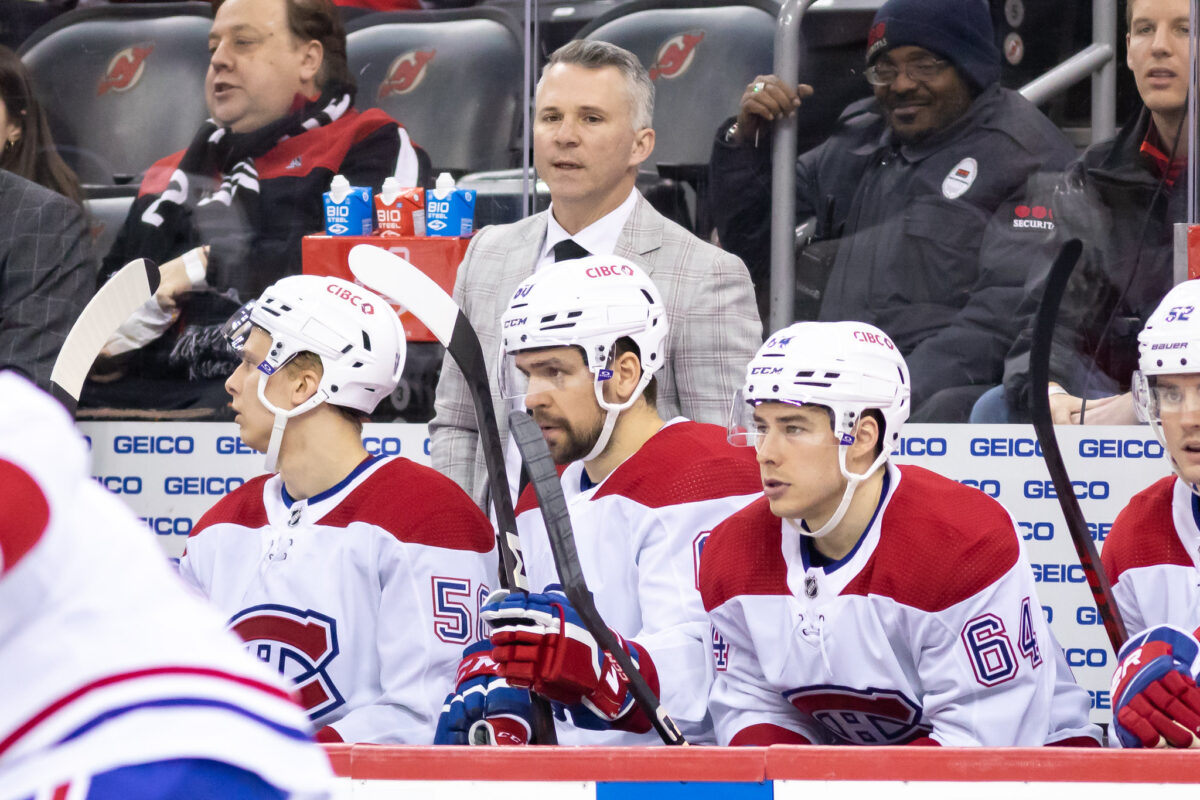 Montreal Canadiens head coach Martin St. Louis – (Jess Starr/The Hockey Writers)
Maybe had St. Louis been able to sustain that rate of success over a full 82-game schedule it would be a different story. As it stands, he has to share credit for the organization’s remarkable turnaround with the likes of forward Patrik Laine, who debuted on Dec. 3 after having sustained a preseason injury, defenseman Alexandre Carrier, who helped stabilize the defense upon being acquired on Dec. 18, and goalie Jakub Dobes, who replaced Cayden Primeau as the team’s backup on Dec. 27, adding a sense of reliability to the position.
Dobes infamously shut out the Stanley Cup-champion Florida Panthers in his debut on Dec. 28. He started his career with a 5-0 record and .941 save percentage (SV%). He admittedly fell down to Earth as the season progressed, ending with a 7-4-3 record, 2.74 goals-against average (GAA) and .909 SV% and was pressed into duty in the series against the Capitals when starter Sam Montembeault left Game 3 due to injury. His 2.91 GAA and .881 SV% through three playoff appearances may have left something to be desired, but it should be clear goaltending wasn’t the primary reason the Canadiens lost to the Caps, a mismatch in the two teams’ level of physicality popularly cited as a bigger factor in the defeat.
St. Louis Overdelivers Despite His Shortcomings
Of note, St. Louis waited until Game 3 to bring in 6-foot-4 defenseman (240 pounds) Arber Xhekaj, which was seen as one of many turning points in the series (leading to a critical win in the aforementioned Game 3). The fact Xhekaj had to come in cold as a regular healthy scratch, last having played at the start of April, speaks to St. Louis’ inexperience and the questionable deployment decisions he continually makes. Whether the assessment of the Canadiens being outmatched physically by the Capitals was right or wrong though, members of the NHL Broadcasters’ Association only vote on the award at the end of the regular season. So, any suggestion Carbery outcoached St. Louis in the series a moot point.
Even if it were relevant, there should be little minimizing St. Louis’ accomplishment in making the playoffs, which for all intents and purposes served as the Canadiens’ championship. Any subsequent single-game or series victories would have been gravy. And, in that way, it’s hard to fault him for any postseason shortcomings, if the primary goal wasn’t even to get there in the first place. In effect, St. Louis significantly overdelivered, getting more out of his team than anyone expected to justify the recognition. It nevertheless further evidences how much further St. Louis has to go before he can legitimately be considered the best coach in the league.
That the Canadiens just barely snuck in does provide hope for the future, especially considering the team’s consistent year-over-year linear growth under St. Louis. Chances are good he’ll be an even more viable candidate next year. Ironically, he ultimately may not get a nod as a result of heightened expectations, but those too would be a testament to his own year-over-year growth, which has been significant since his debut. His status simply as a finalist for the award solidifies his initial selection for the position as having been the right one. For an incredibly young team struggling to find its way, there was no one better.
