
We know what the Pittsburgh Penguins have been up to this offseason, as well as what they still might do, so let’s take a look at what their divisional rivals around the Metropolitan Division have been adding this summer. Some teams have improved. Some have largely stayed the same. Some made moves and did not really get better or worse.
Carolina Hurricanes
Carolina has made some of the biggest moves in the division this offseason, and arguably — to this point — the best moves in the offseason in the whole league.
The most significant of those was getting forward Nikolaj Ehlers signed in free agency to a six-year contract that reportedly saw him take less money to join the Hurricanes than he could have received elsewhere. Ehlers is a fascinating player because his rate stats and per minute stats always put him among the most productive players in the NHL, but his ice-time in Winnipeg never seemed to match that production.
Will an increased role unlock an entirely new level of production for him?
Carolina also added defenseman K’Andre Miller in a trade with the New York Rangers, sending away prospect Scott Morrow, a first-round pick and a second-round pick.
It also concludes a series of trades that saw Carolina open last season with Martin Necas and Jack Drury, and ultimately end up moving them for Mikko Rantanen, who was then moved for Logan Stankoven (who also signed a bargain contract extension this summer), K’Andre Miller (one of the first-round picks acquired for Rantanen) and an additional first-round pick.
If Carolina had just traded Necas and Drury last offseason they are not getting that sort of a haul. The Rantanen situation might have looked bad with the way it played out, but the roster is better now and in the future from where they started last season.
The question is if these moves will be enough to get them over the hump in the Eastern Conference. Still a good team, and probably a better team than last year, but still lacking a true superstar.
Columbus Blue Jackets
This might be in the early running for most disappointing offseason.
Columbus entered the summer with more salary cap space than any team outside of San Jose and owned two first-round picks that general manager Don Waddell was seemingly itching to trade for immediate help.
So far their big moves have been to acquire Charlie Coyle and re-sign Ivan Provorov to an outrageous contract (seven years $8.5 million cap hit) while also locking up Dante Fabbro.
It’s still a good up-and-coming roster overflowing with young talent, but this offseason seems like a huge missed opportunity so far.
New Jersey Devils
The Devils didn’t make any major moves, but did make a couple of smaller depth moves.
Evgenii Dadonov is coming off a 20-goal season for the Stars, and the Devils got him for one year and $1 million.
Connor Brown had a nice bounce back season in Edmonton with 13 goals and 30 points, and turned that into a four-year, $12 million deal with the Devils in free agency.
They are not league-altering moves, but solid depth moves for a team that needed some additional depth. The biggest thing for the Devils this season will be keeping Jack Hughes healthy for a full season.
New York Islanders
The Islanders have had an interesting offseason, which is at least more than you can say about the Lou Lamoriello years.
Instead of paying defenseman Noah Dobson a contract they were not comfortable with, they moved him to the Montreal Canadiens for two first-round draft picks and ended up with three picks within the top-20, including their own pick at No. 1 overall.
They received high marks for their draft performance by mostly following the rankings and coming away with defenseman Matthew Schaeffer (No. 1) and the two prospects a lot of people wanted to see the Penguins pick — Viktor Eklund and Kashawn Aitcheson.
They also made a nice free agent signing by getting Jonathan Drouin on a short-term deal, and then took a roll of the dice by adding Maxim Shabonov from the KHL.
From a short-term outlook I don’t know if the Islanders roster is better than it was a year ago. But the Brock Nelson trade (netting them Cal Ritchie and an additional first-round pick), Dobson trade and draft lottery luck have rapidly improved what was one of the league’s thinnest farm systems.
Now they just have to develop them.
New York Rangers
The Rangers offseason got off to a massive start when they fired head coach Peter Laviolette and replaced him with Mike Sullivan. The big moves did not stop there.
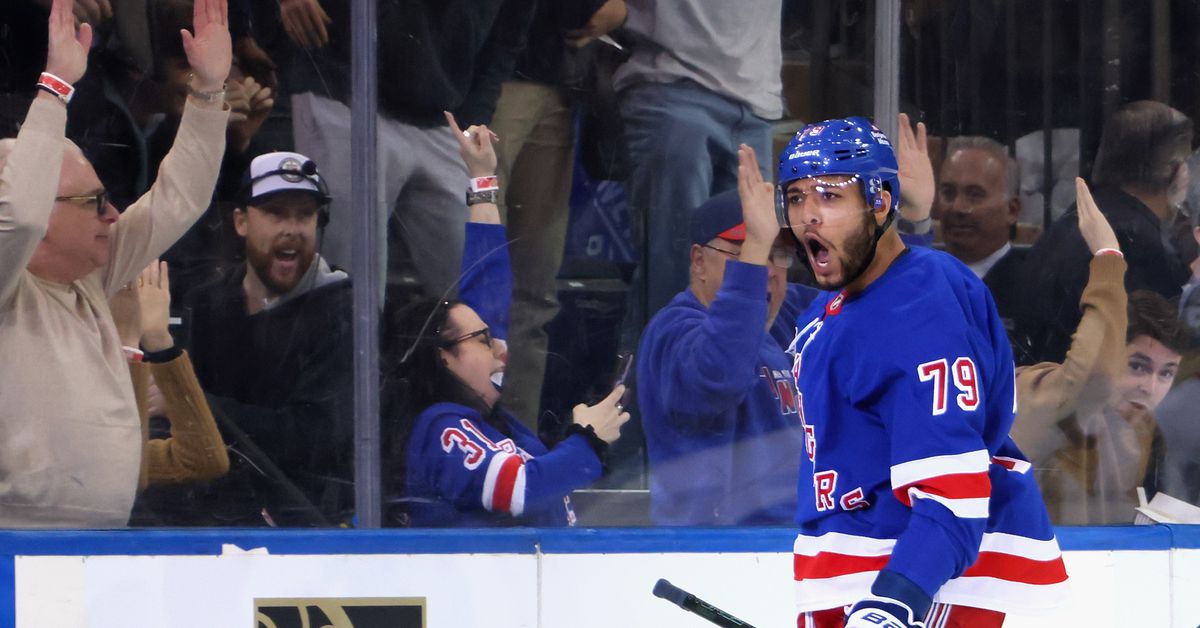
They continued to take a sledgehammer to their old leadership core by dumping Chris Kreider onto the Anaheim Ducks for a prospect and a draft pick, and traded K’Andre Miller to the Hurricanes and signed defenseman Vladislav Gavrikov to a long-term contract in free agency, confirming what had been the worst-kept secret in the NHL going into the summer.
The Gavrikov move is an interesting one because he could be a great top-pairing partner for Adam Fox, and the contract actually came in a little lower than everybody was anticipating.
The problem is that for as good as their top-pairing will be, they are still going to have to play 40 minutes a game without those two on the ice. The rest of the defense is … not ideal.
They better be right in their assessment of Miller to be willing to trade him within the division.
While it was probably time to move on from Kreider, that still lives a big hole at forward that hasn’t been filled yet.
Busy offseason. But are they better? I’m not so sure. And that alone might perfectly describe the existence fo the New York Rangers.
Philadelphia Flyers
The Flyers were the other Metropolitan Division team to make a big coaching change this summer, bringing in another person with Penguins connections and hiring Rick Tocchet. In terms of his results, I’m not convinced it’s the slam dunk a lot of other people do, and if he doesn’t find success here, on a fourth different team, it might be time to end that head-coaching experiment.
As for the roster, it’s been an interesting offseason across the state.
Their big move was trading for Trevor Zegras, reuniting him with former Ducks teammate Jamie Drysdale. There was a time when Zegras and Drysdale were supposed to be cornerstones of the Ducks rebuild and are now trying to rebuild their own careers in Philadelphia.
Given the cost it took to acquire Zegras (Ryan Poehling and two mid-round picks) I think it’s a worthy gamble for the Flyers to take. I also like the idea of sticking him at center and seeing how he develops there. But there is also a chance that his play away from the puck sends Tocchet into a fit of rage at some point before the season ends.
The Flyers’ biggest need going into the offseason was clearly goaltending, and their only move to address what was the worst situation in the NHL a year ago was signing Dan Vladar to a multi-year deal.
A $5 million investment in Christian Dvorak is also a questionable move.
Washington Capitals
After having one of the busiest and most impactful offseasons in the NHL a year ago, it’s been quiet so far for the Capitals.
They got defenseman Martin Fehevary re-signed to a long-term deal, also re-signed Anthony Beauvillier and traded a second-round pick to the Florida Panthers for Justin Sourdif.
They missed out on Nikolaj Ehlers (who would have been a really interesting signing there) and might have to look to the trade market if they are going to make any other significant upgrades.
The roster is still pretty good, and largely the same as last year’s, but can that roster repeat that same performance?