
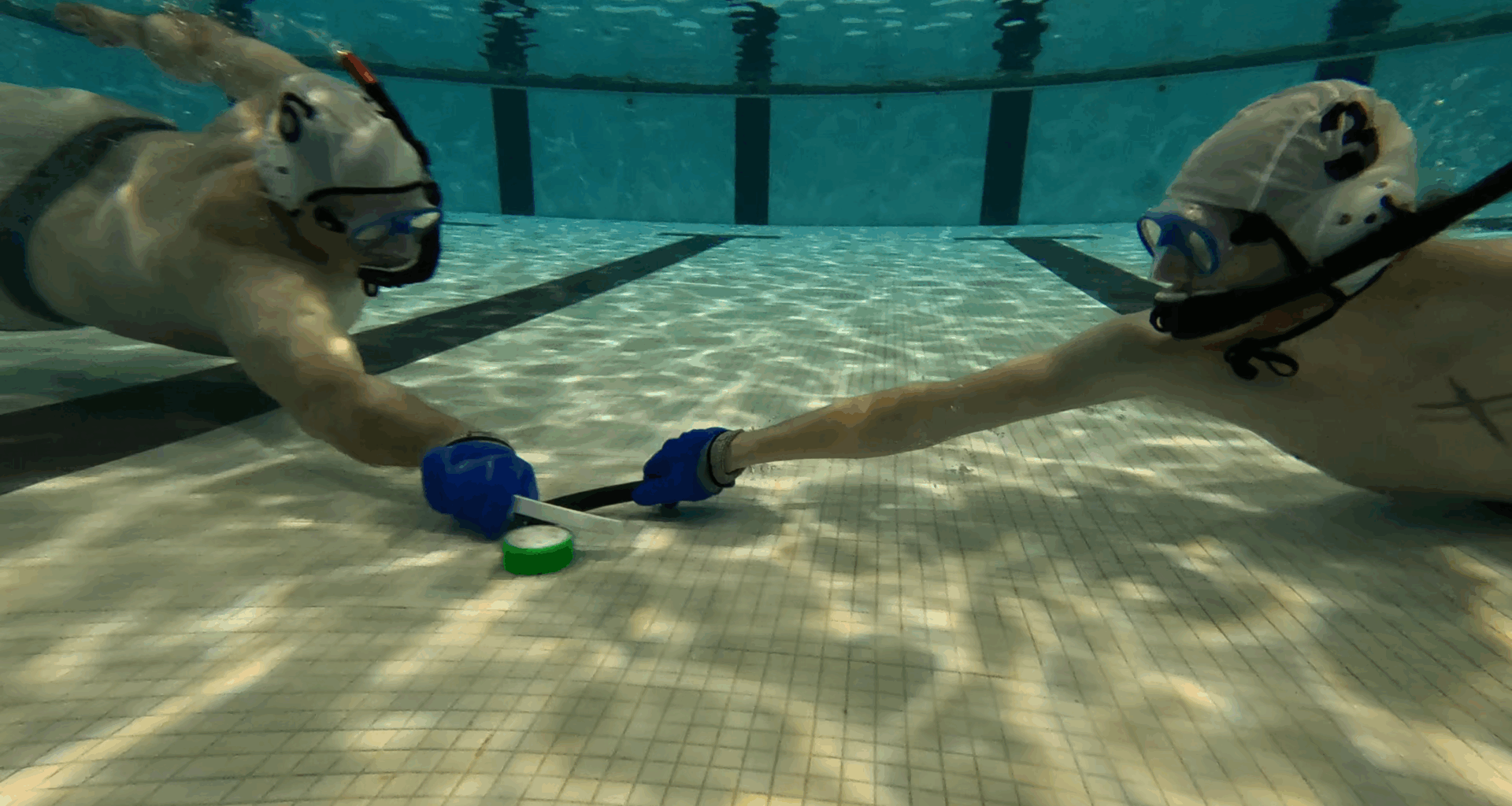
It’s a simple game of hockey. A puck sits in the middle. The first team to gain possession can start advancing play, and teams score a goal when the puck touches any part of the 9-foot chain on the opposing side.
The catch? It’s done entirely underwater.
“It almost feels like you’re flying through an environment that you don’t normally get to do,” said Matt Crocken. “You feel weightless. You feel free.”
Crocken, the head coach of the Baltimore Bottom Feeders, started playing underwater hockey over 20 years ago. After playing in the Washington, D.C. area, this year he decided to bring the sport closer to him.
“The distance to Rockville is really challenging in D.C. traffic, and life got busy,” he said. “I was thinking about it, and like, why don’t we just start a club here? Let’s see what that would take. And so here we are.”
The club holds practices at Goucher College’s Aquatics Center. The last practice of the summer session is this Sunday, July 27, at 6 p.m. He said a fall session will start in late September. All the information you need before attending a practice is on their website.
 A player swims while playing underwater hockey at Goucher College in Baltimore County. Photo courtesy of Matt Crocken.
It’s a sport you have to see for yourself. Players use water polo caps, snorkel gear, a special glove, a small hockey stick and a puck. The first practice, with all of the gear provided, is free. Returners pay $10 to help cover the pool rental.
“Come out and try it. Come out and see what it’s about,” Crocken said.
Atlantis Sports helped Crocken start Baltimore’s first underwater hockey team. The non-profit started as an organization dedicated to the technical side of underwater hockey, including the development of underwater cameras and a time/score display system.
Seven years later, in 2022, its focus shifted to growing the game of underwater hockey through support and promotion.
“As long as you can swim, you will love this sport,” said Angie Larson, Atlantis Sports’ marketing & outreach coordinator. “We really try to make this a family-friendly, inclusive sport. We don’t want money to be an issue for people.”
She estimates there are “about 60” underwater hockey clubs across the country. Atlantis Sports provides each new club with $2,000 worth of equipment. The nonprofit, up to a year, also helps cover the cost of renting the pool. They want to let clubs slowly become self-sufficient.
Larson, who used to play water polo, plays underwater hockey herself.
“On a personal level, it’s changed my entire life,” she said. “This sport is great because people are playing it up until their 70s, and you don’t really have to worry about spraining your ankle.”
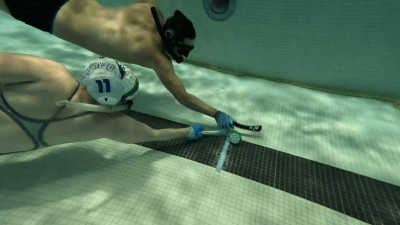 Players fight over a puck underwater at a Baltimore Bottom Feeders practice. Photo courtesy of Matt Crocken.
Both Larson and Crocken agree that one of the hardest parts about starting an underwater hockey club is finding a pool to host them. Atlantis Sports helped Crocken find Goucher College and set up an insurance policy.
“In Baltimore alone, there have been … unfortunately some actual deaths involving sports with breath holding,” Crocken said. “I think there is some pushback from anyone coming in, especially an outside group, coming into a pool saying, ‘yes, our main activities involves breath holding and doing things underwater.’”
Promotion is another hard component of starting a club. Crocken said some asked if the club was a scam and don’t believe he’s serious about it.
“The number one way people find out about this sport right now is word of mouth,” Larson said. “[Crocken’s] definitely going above and beyond as far as like a coach goes a lot of times. People will just do the coaching, and they forget about the promotion part of it.”
She said the niche sport of underwater hockey “has potential” in Baltimore, and Crocken makes it easy to get involved. You only need to be comfortable in the water, over 18 years old (due to the insurance policy) and have the excitement to learn to play.
“Some people are hesitant about the underwater thing, but then once they realize … how the gear works, how the plays work, and what’s going on, they get used to it quickly,” Crocken said.
Related