
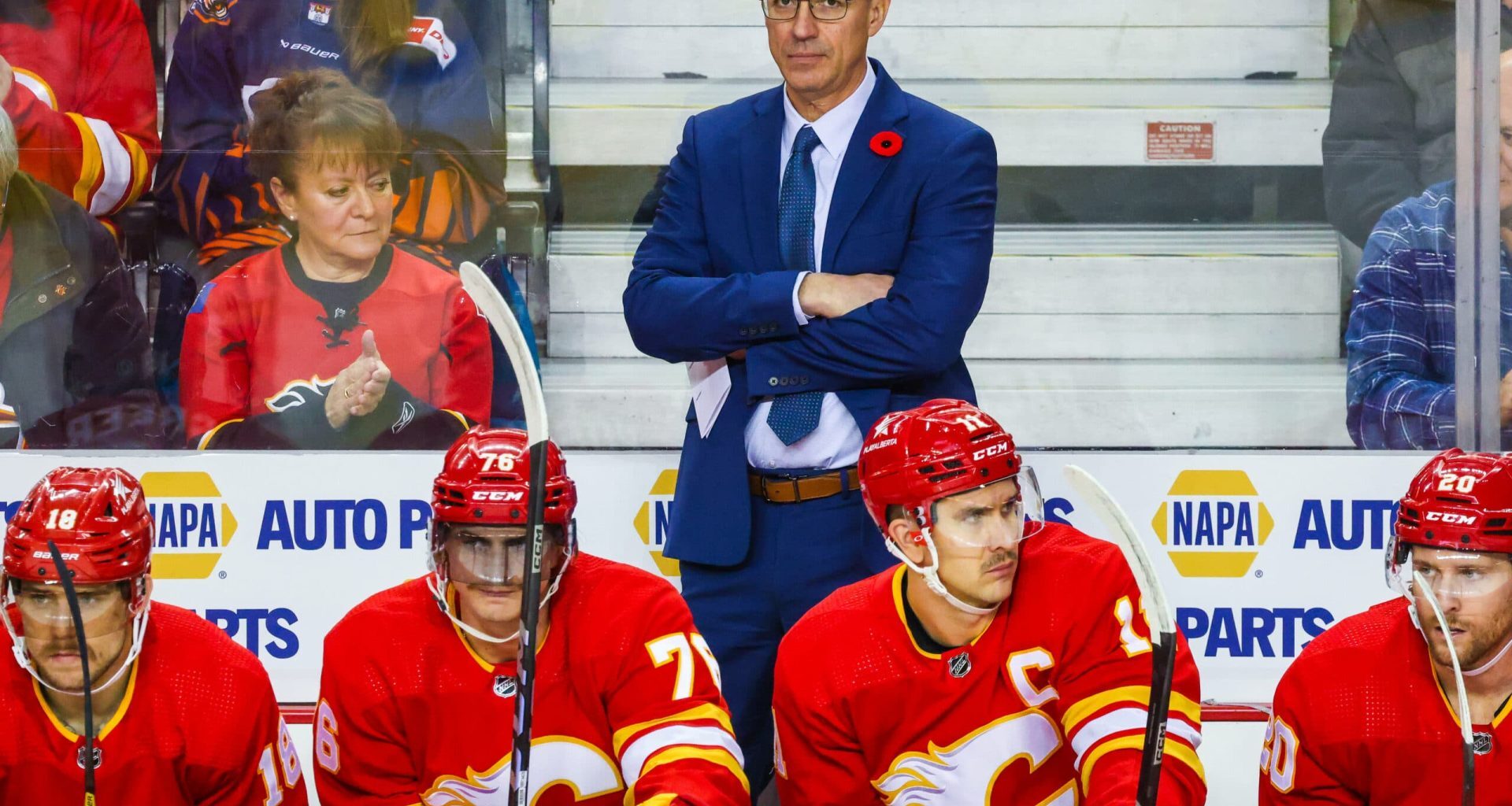
Ryan Huska came under fire during the season for questionable decision-making in pivotal moments. As the Calgary Flames were all of a sudden catapulted into the playoff race, every time Huska made a choice that backfired, he heard about it. While there is an argument that the criticism of Huska was unfair, there was some truth to it.
With Calgary undergoing some struggles this past year—especially in the offensive zone—there is a discussion to be had about the Flames’ playing style.
The Flames’ current system
The Flames played a specific scheme of just pucks on net from anywhere, as well as dump-and-chase hockey. Simple north-south hockey; no room for any other plays. The game plan is to get into the zone and chase after it in the corner. When the puck carrier is entering the offensive zone, the wingers are flat-footed. Stuck waiting before the blue line, they don’t garner any speed going into the play. It allows the opposition to turn the play around quickly.
This is one of the main reasons for the Flames’ lacklustre performances in the offensive zone. Not just a lack of talent, but a lack of a system designed to give them an advantage.
What fits the Flames
As mentioned before, the Flames have played a north-south style of hockey. No room for creativity, just get the puck to the blue line and fire it on net. We have seen how that doesn’t work; the Flames’ top players thrive in a system that allows them to use the width of the ice.
When he registered 115 points, Jonathan Huberdeau was allowed to use his hockey IQ and creativity to skate the width of the ice. There, he found passing lanes or created them himself, while this isn’t the same Huberdeau, the team isn’t doing him any favours. He can find his teammates when he has no business to. There has been talk for a while about getting Huberdeau back to his Florida self. This very well could be the answer.
Look at Nazem Kadri. The way he uses the full size of the ice to make plays. The Flames are still stuck in the system that worked back in 2022, when the team was built around it. This isn’t the same team anymore.
What’s next for the Flames
The biggest example of the Flames needing a new system is the downfall of Jonathan Huberdeau. We saw promise this past year that he could get back to his old self; however, it was only scratching the surface. In Florida, the Panthers had success on the rush; all their players generated speed and weren’t flat-footed at the blue line. Space opened up as players went into the zone and left the defence scrambling, allowing Huberdeau to make plays. The Flames have the players to pull this off, and it would benefit this team.
That’s the main critique of the style of play in Calgary. They are caught standing on the rush. If you look back at highlights, you will almost always see the two wingers standing upright until the puck enters the zone. It makes it so the puck carrier jumps ahead and has no options, and eventually we see either a weak shot attempt or a turnover the other way.
Teams can shut this down easily and take away room and suffocate the offence. The Flames have play drivers in Huberdeau, Kadri, and more. They just set themselves up for failure by forcing them to make a play all alone far too many times.
If we see more of an effort in cycling the puck, which we saw in the final game last season when Zayne Parekh was handling the puck, this team can do damage. This isn’t to say Ryan Huska is the problem; there is a multitude of problems within the organization. It’s just that this is one of the biggest changes that we must see in this team next season.
As I mentioned above, the Flames are stuck in the past; the league has changed, and so should the Flames.
Related