
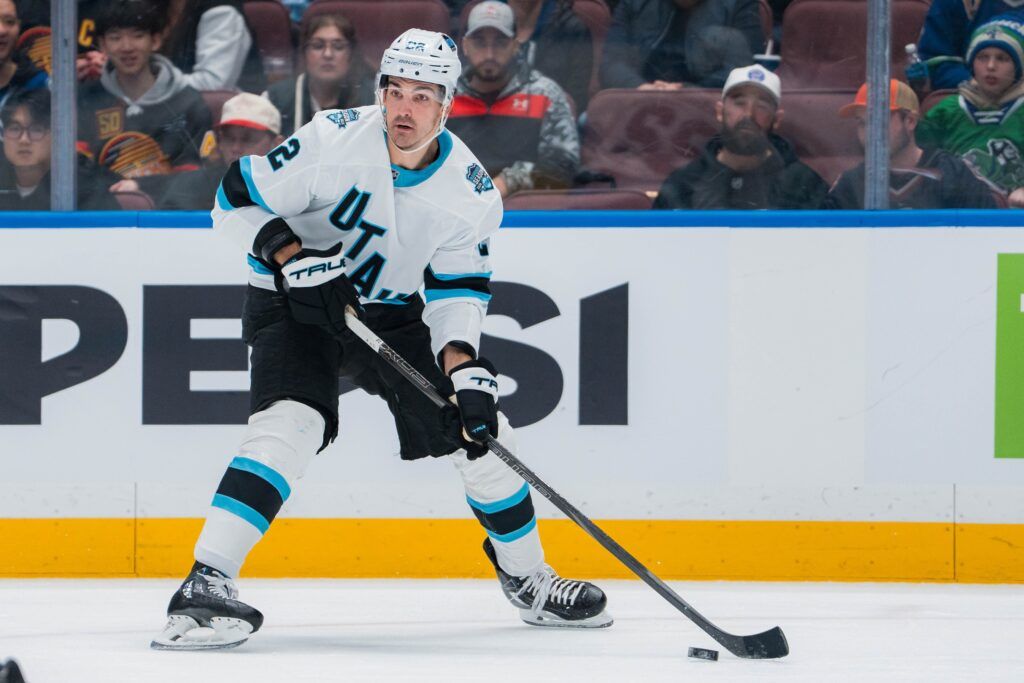
The Utah Mammoth have locked in a core piece of their lineup, but the decision has sparked a debate about value versus production. A five-year, $21.25 million contract signed in July secured a key player through the 2029-30 season, but it also raised questions about whether the team overpaid for potential. While the front office sees a foundational player, some analysts wonder if the price was too high for what he has delivered so far.
Did the Utah Mammoth Overpay for Jack McBain’s Potential?
The player at the center of this discussion is forward Jack McBain. His new agreement, which carries an average annual value of $4.25 million, successfully avoided arbitration and solidified the team’s depth down the middle. At 25 years old, McBain is coming off a career season where he set personal bests in both goals and total points
Standing 6-foot-4 and weighing 219 pounds, he provides a physical, two-way game that management has openly prioritized as it builds a championship contender. After scoring 13 goals and totaling 27 points in 82 games last season, he enters the next chapter of his career with long-term security under the Mammoth banner.
However, not everyone views the deal as a clear win. In his annual front-office confidence rankings, The Athletic’s Dom Luszczyszyn suggested the extension might be “a touch on the high side.” Critics point out that the $4.25 million cap hit is significant for a center who has not yet demonstrated major scoring upside. While his 27-point campaign showed progress, his offensive ceiling remains a question mark.
Luszczyszyn characterized the contract as a mild overpay based on McBain’s production to date, although he did acknowledge the importance of the player’s role within Utah’s system. For the Mammoth, the contract secures a reliable third-line presence who can handle tough defensive matchups.
General manager Bill Armstrong defended the move, emphasizing McBain’s consistency and toughness. “He is a big, strong, physical player who competes hard on a nightly basis and brings a gritty toughness to our group,” Armstrong said in a team release. “Jack is an important part of the championship-caliber team we are building, and we look forward to having him back on our roster for the foreseeable future.”
That sentiment was echoed by Mammoth president of hockey operations Armstrong, who highlighted McBain’s versatility and team-first attitude. “The commitment that both sides are making to each other in this extension tells you everything you need to know about the value and importance that has been placed on winning together,” he said.
For his part, McBain is focused on the team’s upward trajectory. “We’ve been building something really special here,” he said. “I’m super happy I was able to get it done… It’s a group with a really bright future and I’m just happy I can be a part of it.”
How Does the Front Office’s Overall Strategy Inspire Confidence?
Despite the questions surrounding the McBain signing, the move was just one part of a larger offseason that has generally shaped a positive perception of Utah’s front office. In Luszczyszyn’s 2025 NHL front-office confidence rankings, the Mammoth ranked seventh overall, a slight dip from fourth place the previous year.
The front office earned high marks for its recent trades, including defenseman Mikhail Sergachev’s key additions and forward JJ Peterka. Furthermore, the team has been praised for its strong drafting and for securing Dylan Guenther on one of the most team-friendly, long-term contracts in the league.
Ultimately, Utah fans remain optimistic about the team’s direction. While McBain’s contract stands out as a potentially questionable move, the front office’s overall track record continues to inspire confidence that the franchise is building a legitimate contender.