
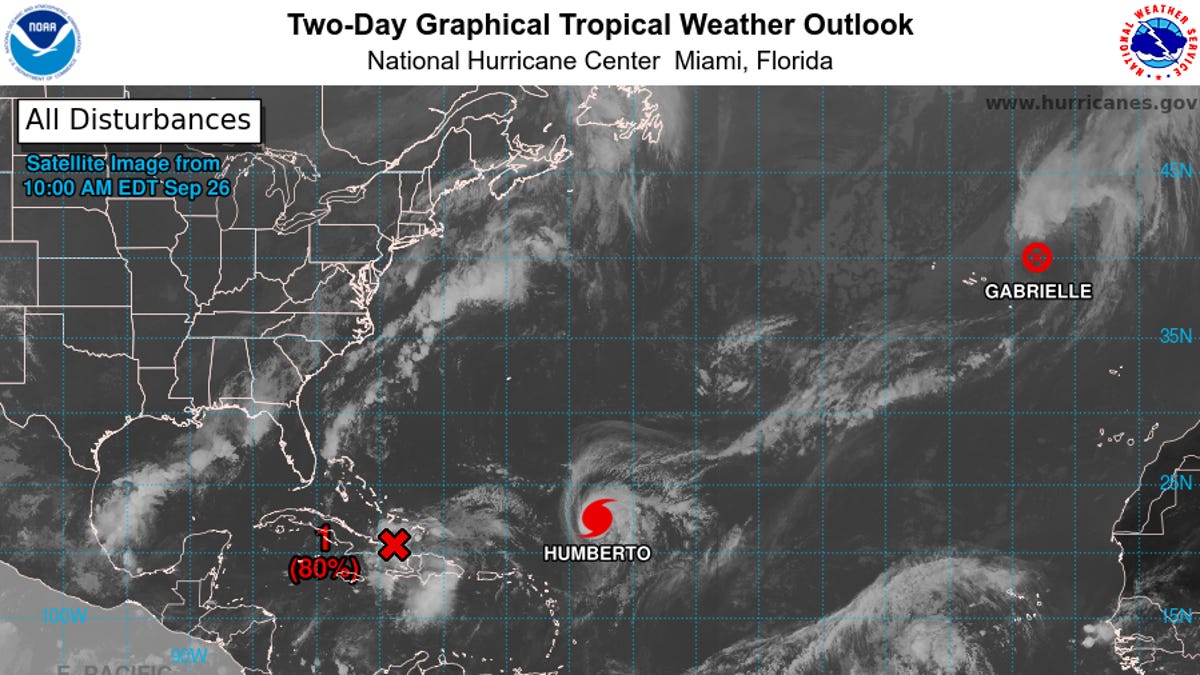
While Hurricane Humberto continues to strengthen out in the Atlantic Ocean, it’s not the storm that poses the most danger to U.S. shores.
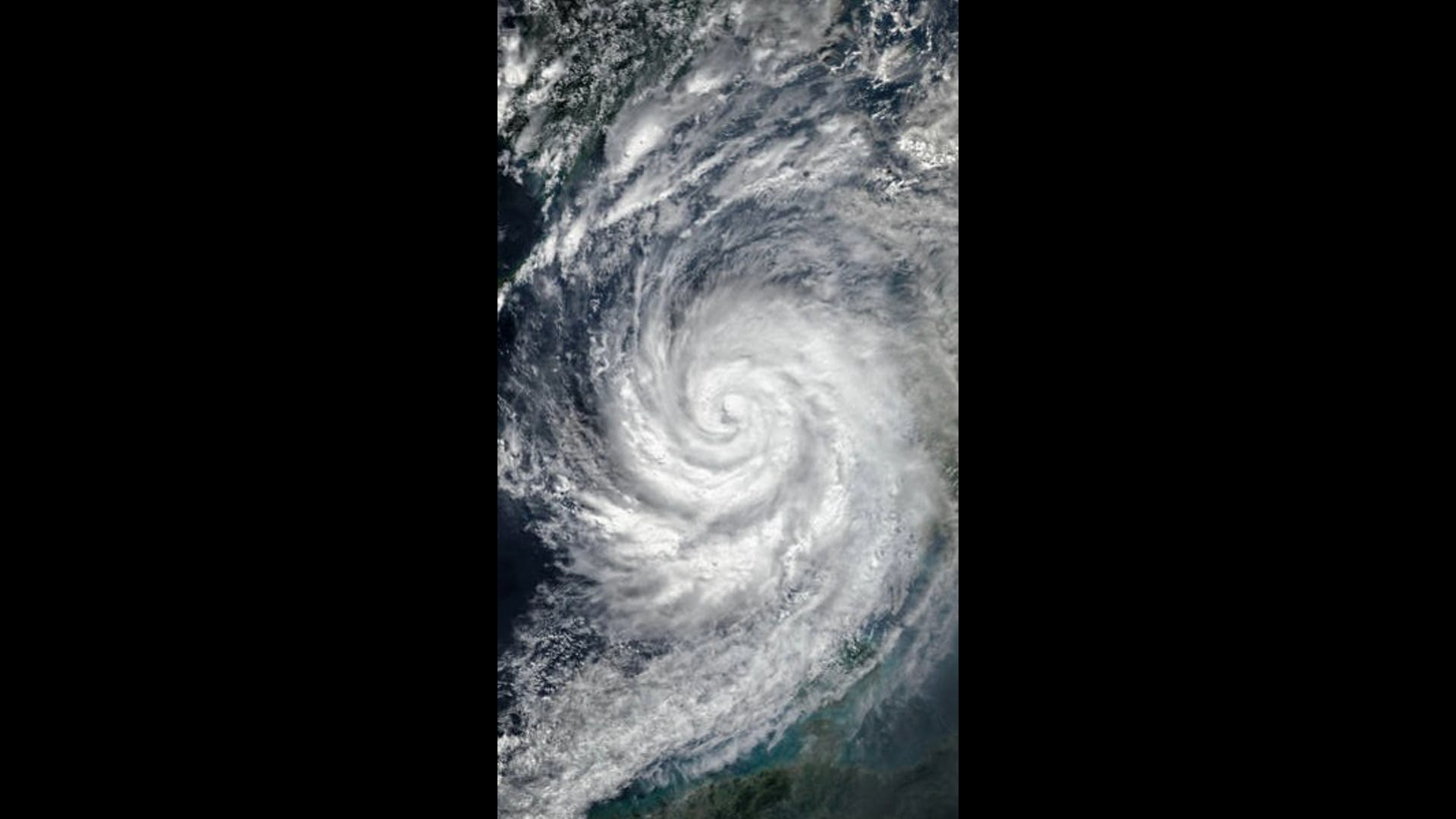

Rare Humberto-Imelda dual storm raises US hurricane risk
A rare weather setup is forming in the Atlantic, where two tropical systems may develop dangerously close to each other early next week.
unbranded – Newsworthy Vertical
While Hurricane Humberto continues to strengthen out in the Atlantic Ocean and is forecast to become a major hurricane with wind speeds of 130 mph, it’s not the storm that poses the most danger to U.S. shores.
No, the storm that U.S. residents have to worry most about isn’t even a named storm yet, but is forecast to soon become Tropical Storm Imelda. The National Hurricane Center plans to begin issuing advisories on the system as a potential tropical cyclone at 5 p.m. on Sept. 26.
The other growing concern for millions across the Carolinas and into Virginia isn’t tropical at all. It’s the slight risk for excessive rainfall ahead of the storm in a phenomenon the National Weather Service calls a predecessor rain event. If that sounds familiar, it’s because a similar event took place in mountainous areas of North Carolina and Tennessee before Helene arrived a year ago.
A cold front sitting over the Appalachians is generating showers, and could continue to generate rain through the weekend, with the bulk of the rainfall slowly shifting eastward by Sept. 28, said Scott Kleebauer, a meteorologist at the Weather Prediction Center.
By then, Kleebauer said, the showers and thunderstorms in the eastern Carolinas could begin pulling in early bits of tropical moisture out in front of the approaching tropical system.
To be clear, the weather service isn’t forecasting Helene-like extreme rainfall, but is urging residents, especially in southeastern North Carolina and coastal South Carolina to expect heavy rain, potentially through the end of September.
Meanwhile, although Humberto is forecast to remain out to sea, it could still affect the path of soon-to-be Imelda through a meteorological process known as the Fujiwhara effect.
How all of the weather systems moving into the larger overall region interact with one another will determine the extent of impacts the storms could have on the U.S. East Coast, the Bahamas and potentially Bermuda over the next few days. But the risks are growing for impacts along the coast between Florida and North Carolina, National Hurricane Center director Michael Brennan said on the evening of Sept. 25.
What’s the forecast for 94L?
“Showers and thunderstorms continue to show signs of organization in association with a tropical wave #94L located near Hispaniola and eastern Cuba,” the hurricane center said on the morning of Sept. 26. “This low is expected to become a tropical depression near the central and northwest Bahamas over the weekend.”
“While there remains considerable uncertainty in the long-range track and intensity of the system, there is a significant risk of wind, rainfall, and storm surge impacts for a portion of the southeast U.S. coast early next week,” the hurricane center said.
In Charleston, South Carolina, National Weather Service meteorologist Blair Holloway said on the morning of Sept. 26 that confidence in the forecasts for the storm “has not increased or changed much from yesterday (Sept. 25).”
“Considerable uncertainty remains including its development, track, intensity, timing, and potential impacts,” Holloway said.
Will it hit the US? Could it be another Helene?
“A majority of the (model) solutions, but not an overwhelming majority, bring the system toward the Carolinas by around Tuesday,” said Houston-based meteorologist Matt Lanza on his Substack “the Eyewall” on Sept. 26. “However a non-trivial number of models peel the system back to the east, into the open Atlantic, due in part to some complex interactions with Hurricane Humberto.”
“Anyone having confidence in what, precisely, will happen at this point is probably not being honest with themselves (or you),” he added.
Heavy rain might end up being the main calling card of Imelda. “There is real potential here for a rainmaker in the Carolinas, and particularly North Carolina,” Lanza said. “Readers there will certainly and understandably be concerned that this could become another Hurricane Helene-like event. For now, we think that is unlikely, as the strongest rains appear to be east of areas most impacted by Helene, and the overall signal for prolonged, heavy rainfall is lower this time.”
For now, he said, NOAA is predicting 6 to 10 inches of rainfall for areas hardest hit, which is no picnic, but also far from reaching Helene-levels.
Hurricane Humberto expected to be season’s third major hurricane
At 11 a.m. on Sept. 26, Humberto was centered about 450 miles northeast of the northern Leewards and moving northwest at 5 mph, with sustained winds of 90 mph.
For now, Humberto is forecast to follow a pattern similar to Erin, moving between the U.S. and Bermuda, but the strengthening Humberto is increasing the risks of long period swells that could make seas and surf hazardous along the U.S. coast, the hurricane center said. Humberto’s exact track is uncertain and remains tied to the future of the potential Imelda and other weather systems in the region.
Humberto is forecast to become a major hurricane with wind speeds of 145 mph, about 1,100 miles east-southeast of Miami by Sept. 28, the hurricane center said. If it does so, Colorado State University hurricane researcher Phil Klotzbach said the Atlantic would be “3 for 3” in hurricanes becoming major this year, with Erin and Gabrielle both becoming major hurricanes.
The last time an Atlantic hurricane season’s first three hurricanes reached that level was in 1935, he said.