
Five games into the new season, the Toronto Maple Leafs look a lot like they always do — talented, inconsistent, and occasionally brilliant. The team shuffled the deck again this summer, adding grit and structure with players like Nicolas Roy, Dakota Joshua, and Matias Maccelli. Calle Jarnkrok is healthy again, Auston Matthews looks sharp, and Oliver Ekman-Larsson has brought some quiet composure to the blue line.
Related: Auston Matthews Passes Dave Keon on Maple Leafs’ All-Time Game-Winning Goals List
But for all the talk of being “harder to play against,” the early evidence says otherwise. There’s plenty to like — and plenty to worry about. Let’s take a look at three positives and three negatives that tell the story so far.
Three Negatives to Start the Season
Negative 1: Blowing Leads Has Become a Maple Leafs Habit
It’s the same script we’ve seen before. The Maple Leafs jump ahead early, then lose the thread. Against the Detroit Red Wings, they led by two — twice — and still found a way to let the games slip. The same thing happened against the Nashville Predators and again in Game 4, when they were outshot in the middle frame after another fast start.
This isn’t bad luck. It’s a pattern. The team scores early, relaxes, and then spends the rest of the night trying to recover momentum. You can talk systems all you want, but this looks like a mental block — the kind that becomes part of a team’s DNA if left unchecked.
Negative 2: The Maple Leafs Are Still Too Top-Heavy
Auston Matthews and William Nylander are doing their part. They’re driving the attack, creating chances, and carrying the scoring. The trouble is that no one else is following. The new depth group — Max Domi, Roy, Joshua, Maccelli, Nicholas Robertson — has produced just a handful of assists and two goals on the season.
Related: Ranking the Maple Leafs’ Best Goalies Since 1990
That imbalance makes the Maple Leafs easy to game-plan against. Shutting down one line shouldn’t cripple a team with this much talent, but it still does. Until the depth starts chipping in, the stars are pulling more than their share of the load.
Negative 3: The Maple Leafs Still Are Missing That Pushback
Fans can feel it — the lack of edge. When Ozzy Wiesblatt ran Easton Cowan into the net, nobody really answered. Chris Tanev made a token effort, but Matthews, wearing the “C,” skated away. That’s not about systems or structure. It’s about the heart of the team.
 Toronto Maple Leafs right wing Easton Cowan (Nick Turchiaro-Imagn Images)
This team has enough skill to score; it just doesn’t yet fight to defend what it earns. The Maple Leafs say they want to be tougher to play against. Until they stand up for each other, it’s talk.
Three Positives to Start the Season
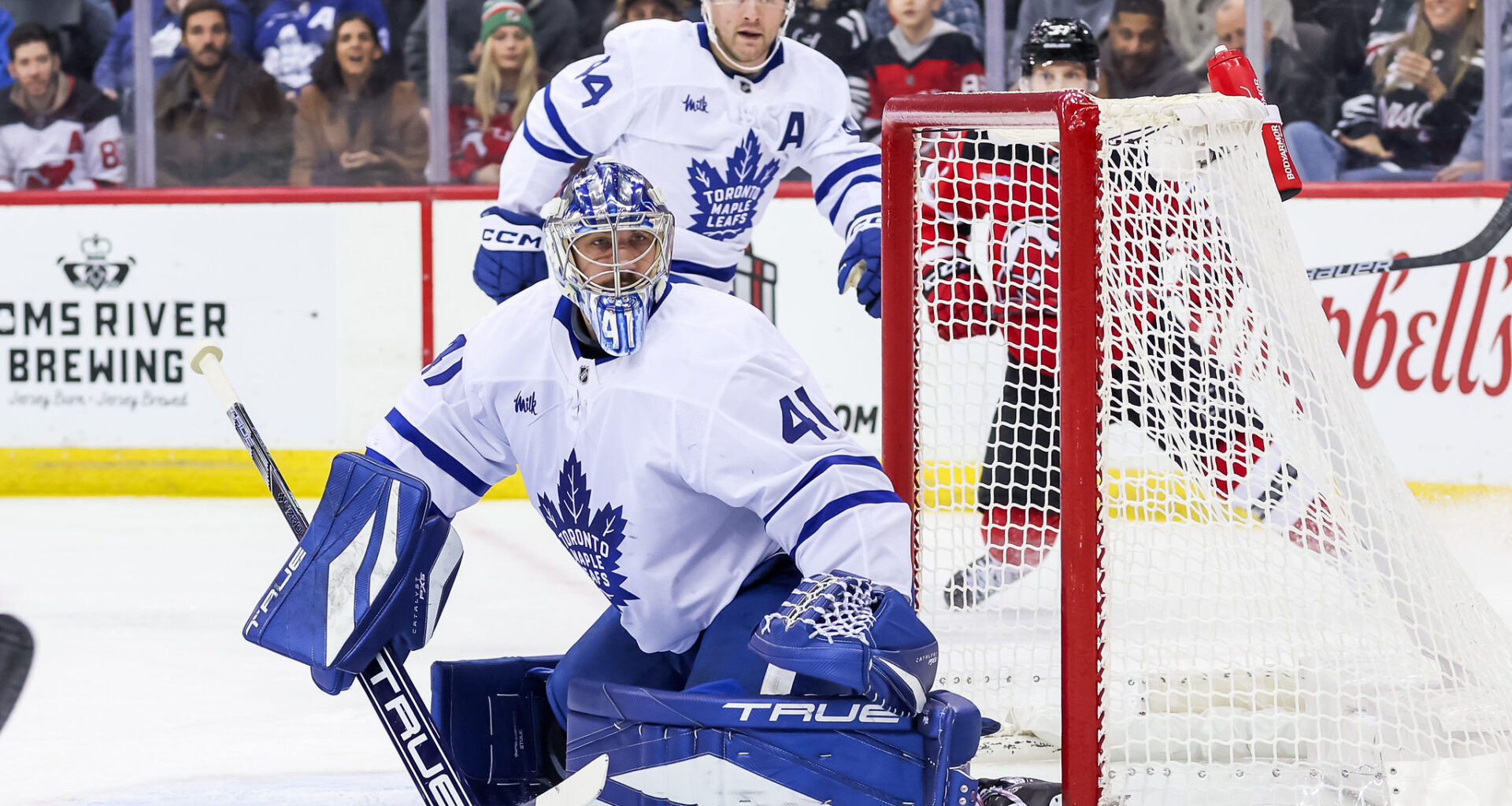
Positive 1: Stolarz Has Been Steady in the Maple Leafs’ Net
If there’s been one true bright spot, it’s Anthony Stolarz. Calm, square, and quietly confident, he’s given the team something they haven’t had in a while — consistency. Against Detroit, he was under siege and still kept them in it. He stole a game from the New York Rangers.
Related: Is a Nicholas Robertson Trade Finally Coming for the Maple Leafs?
He’s not always flashy, but he’s composed. That alone changes the team’s feel. After years of guessing which version of their goaltending would show up, the Maple Leafs might finally have a reliable base to build from.
Positive 2: Nylander’s Game Is Maturing
In the absence of Mitch Marner, Nylander has taken on more creative responsibility — and he’s thriving. His poise with the puck, his balance under pressure, and his quiet confidence all suggest a player comfortable carrying more of the offensive load.
He’s not the loudest voice in the room, but his leadership comes through consistency. He’s setting the tone with play, not speeches. And for a team trying to move past last spring’s drama, that’s exactly what they need.
Positive 3: Berube’s Structure Is Taking Shape
It’s not all gloom. The team’s defensive system looks tighter than it did a year ago. You can see the effort to collapse around the net, shorten gaps, and support the puck. Oliver Ekman-Larsson’s experience and Tanev’s steadiness have helped calm the blue line.
Related: Is the Maple Leafs’ Bend But Don’t Break Mentality the Team’s New DNA?
The challenge now is to sustain it. The Maple Leafs look more organized — they just haven’t figured out how to turn structure into swagger.
What’s Next for the Maple Leafs
So far, this team feels like a mix of old habits and new ideas. The talent’s there, the effort is mostly there, but the chemistry and urgency still lag behind.
If the Maple Leafs can find a way to protect leads, get regular secondary scoring, and keep their goalie from seeing 40 shots a night, this could turn into a strong season. But if they keep replaying the same script — early goals, soft moments, and slow fades — fans already know how this movie ends.
