
Katie Townsend’s role encompasses the Kraken and the arena, which is also home to the Seattle Storm WNBA franchise and the Seattle Torrent Professional Women’s Hockey League team and around 80 nights of live music and entertainment a year. Townsend also works closely with the arena’s ownership and executive team, foundation, community projects and commercial partners.
How did you land your role at the Kraken?
I have been here since almost day one, before the Seattle Kraken had a name and before the arena was even built. I came here from We. Communications, where I was for four years, and before that I was a BBC producer in the U.K.
Tell us about the job.
When I started, I did not know much about hockey. But I was a sports fan, and I believed very much in the power of sport for bringing people together, creating unforgettable moments and being a vehicle for storytelling.
In 2019, I pitched not telling stories about hockey. We were telling stories about sustainability, because we have the most sustainable and progressive arena in the world. We’re telling stories about construction and engineering, because we’re building an arena in a way that has never been done before.
What other stories did you tell at that time?
Stories about transportation. How do you get here? We embed free public transit in every ticket. We’re telling stories about technology and innovation. How are you buying your food and beverages? How are you entering the arena?
We have a foundation, so there’s community storytelling and social impact storytelling. Then the pandemic happened, which threw everybody and so my communications shifted again.
Do you do day-to-day hockey communications?
I don’t do the transactional comms, which is, this player is injured or this player is out today. I set the strategy for communications, internal, external, across all of our entities. How do they weave together? And how are we telling a cohesive story and building fandom?
What does a typical day involve for you?
On a game day, the hockey comms team will attend morning skate. In the morning, they’re doing all the media interviews with the coach — who’s playing — and that starts pretty early. Then they are here in the evening. Puck drop is traditionally 7 p.m. right through until the end of the game at 10-11 p.m.
My role is to support them. I’m attending some games, not all now, although I did the first couple of seasons. What earned media stories are going out? Are we telling just the day-to-day story or bigger stories? And how is that translating into fan-centered communication?
I work closely with our marketing team looking at what messages are going out to fans. How are we telling the stories, some crisis communications, and particularly supporting the arena team on that as they tend to have more crisis needs.
How do you position your franchise leadership?
I meet our owner, Samantha Holloway, every couple of days. We’re looking at different initiatives she wants to launch. She transitioned to be our owner about two years ago, so we’re working closely with her on her profile. Is there a speaking engagement she’s attending? Is there a story we’re working on, or are there internal initiatives we’re planning?
We’re also developing another arena that comes under our community banner, a stadium at Seattle Center, which is a high school community facility. There’s a public-private partnership with Seattle Public Schools and the city.
After we meet today, I go to our Seattle Kraken and Climate Pledge Arena exec team meeting, then I meet with the city and school district to talk about that stadium. So there’s lots of different parts to what I do.
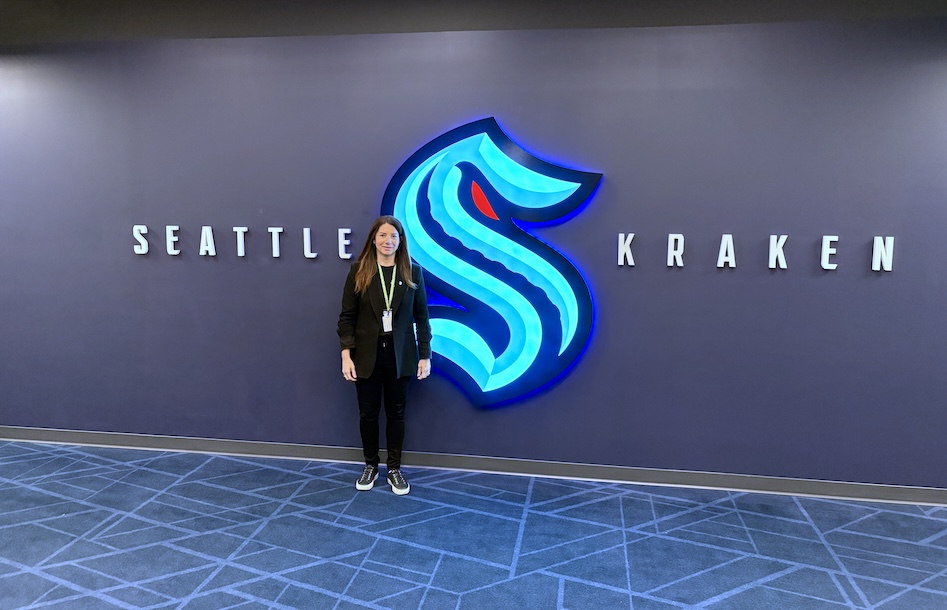 Townsend has been with the Seattle Kraken since 2019.
How has your role developed?
Before I took on this expanded role, which is all of our enterprise, it was more predictable because it was focused on Kraken gameday and the season schedule. The biggest thing is how diverse this job is, and the issues you’re talking about every day are unpredictable, whether it’s game presentation related, planning, giveaways, talking about a sustainability story or a business story, the other part is supporting our partners.
Joint storytelling with our partners is a big part of our earned media strategy. We have an incredible portfolio, from Amazon to Starbucks to Alaska Airlines to Brooks Sports. I’m meeting our new wine partner later about how we’ll tell that story and roll it out.
How big is your team?
I was talking recently with a counterpart at the [Seattle] Seahawks, and saying that sports teams in general are about 250 to 300 staff. And when you think about that as a company, it’s pretty small, especially in Seattle, with all the giant companies.
But the impact of a sports team goes way beyond those staff. You’re generating a ton of news, a ton of moments and memories with those small numbers of people. Our marketing team is about 40 to 50, and that includes game presentation. Our comms team, which is in different verticals, whether it’s hockey or entertainment, is about six people.
Sometimes we have agency support for opening week, and for the arena opening I worked with We. Communications, because we really wanted to do some deep national storytelling around sustainability and incredible arena.
Tell us about the WNBA franchise and the concert part of the job.
Climate Pledge Arena is the only arena in the country that is home to two professional women’s sports teams. So the Seattle Storm, which is an exceptional WNBA franchise, is a tenant here — a separate organization, but an incredible partner.
The PWHL team, which plays its first game here on November 28, is also a tenant and a [partner]. They practice at our [hockey] practice facility, so we’re trying to join those narratives together.
Then we have about 80 concerts, live music and entertainment every night. The most powerful story that links all of those is how sport, music and entertainment can bring people together.
How did Amazon get involved?
When we approached Amazon to be naming rights partner, they decided that rather than calling it the Amazon or AWS arena, they wanted to name it after a cause, and that cause is the climate pledge, which commits companies to being net zero carbon by 2040.
That created a whole other storyline and communications narrative, because it became the most sustainable arena in the world. It is net zero carbon-certified single-use plastics, 97% of our waste is diverted away from landfill. It has 100% renewable electricity, and we take rainwater from the roof — it rains a fair amount in Seattle — and use it for the ice.
How did the sustainability narrative play?
That’s been an incredible story to tell. It also ties into the artists who come here. For example, Coldplay, and probably the most prominent, Billie Eilish, really care about this. They understand that when they tour that is generating a ton of waste. So how can you eradicate and eliminate that? It is a unique selling point for us, both as an earned media story, but also in terms of the artists we attract.
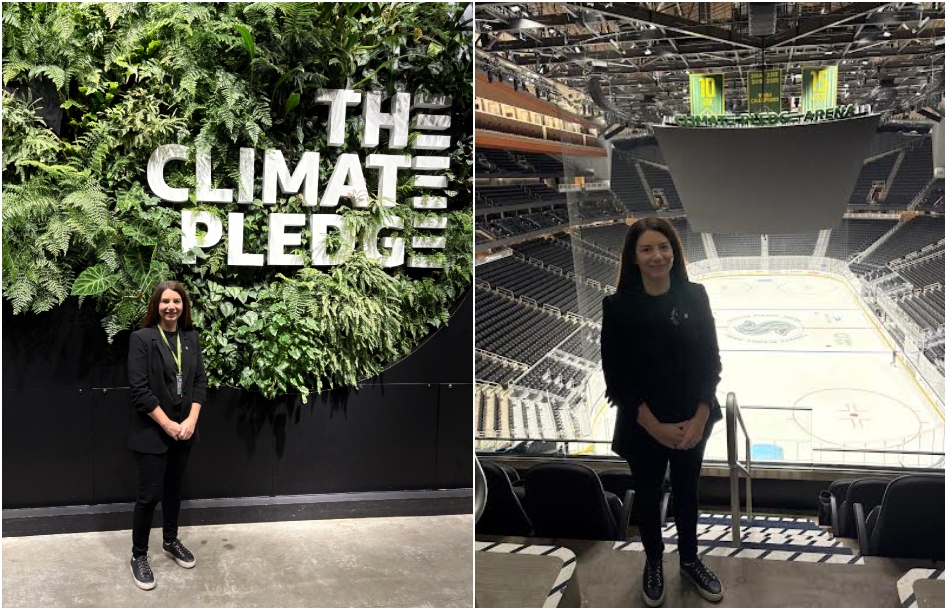 Amazon chose the name “Climate Pledge Arena” to highlight its climate pledge, which commits companies to achieve net zero carbon emissions by 2040.
Do you have ambitions to get an NBA franchise back in Seattle? How’s that going?
I think the city is ready. It’s been ready ever since the Seattle Supersonics left [in 2008]. Our owner has said a number of times the arena is ready and the ownership group is ready.
If the NBA decides to expand, Samantha would pursue that. The main thing is it has to be right for the NBA, and we want to be respectful of their process and make sure we are never getting ahead of the commissioner. He’s dealing with a million things in the NBA’s world, but when he’s ready to expand, he knows the arena is ready — it was built for the NBA. The fanbase is incredible. Our partners would be ready, and as an ownership group, we are.