
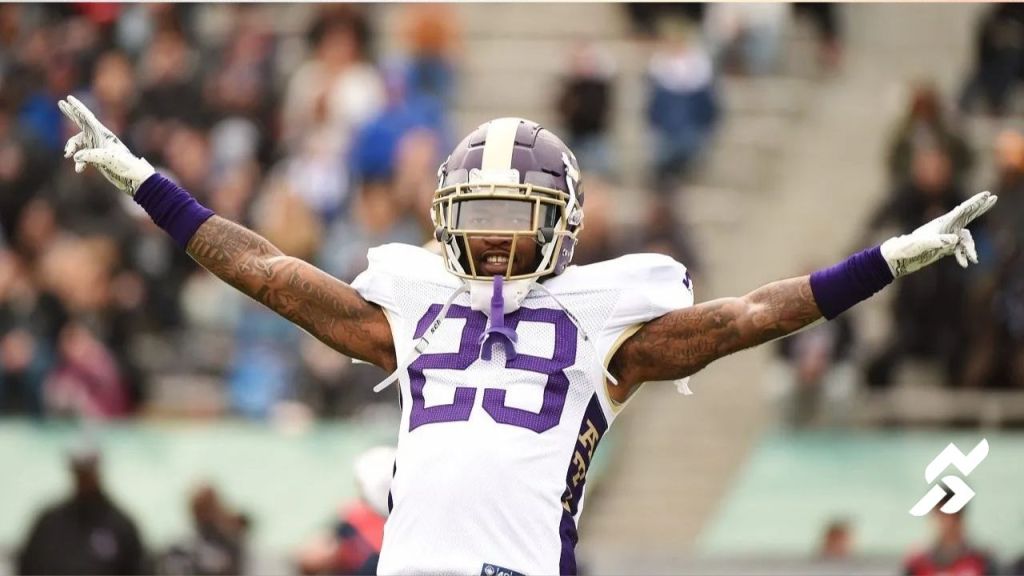
It’s probably fitting that a multimillion-dollar litigation involving the once-hyped and later bankrupted Alliance of American has ended in a judgment for just $1.
In a 199-page, more than 65,000-word order, U.S. Chief Bankruptcy Judge Craig A. Gargotta on Tuesday ruled that Dundon Capital Partners, Carolina Hurricanes owner Tom Dundon and executive John Zutter are not liable for contract, fraud and fiduciary-duty claims in their roles with the AAF.
They were sued by bankruptcy trustee Randolph N. Osherow, who accused them of misusing the league for their own benefit. Earlier this year, Gargotta oversaw a five-week trial that examined the AAF’s abrupt collapse in 2019 after it ran out of money, leading to players, employees, vendors and others not being paid.
The ruling wasn’t a total victory for Dundon. He was found liable for breaching a fiduciary duty of loyalty. As Gargotta explained, Dundon “engaged in self-dealing” that benefited his friends and used assets from league founder Ebersol Sports Media Group. This self-dealing included Dundon “providing free advertising to entities related to him (like AT&T, Carvana and TopGolf) and to entities owned by friends.”
Gargotta also criticized Dundon for being “on opposite sides of various transactions related to funding AAF” and the league’s operations.
But the billionaire owner only must pay $1 in liability. That’s because Osherow “was unable to prove any causally related harm,” meaning while Dundon breached a duty, the breach wasn’t shown to cause any actual harm, let alone the $184 million in damages claimed in the suit. As a result, Gargotta awarded nominal damages of $1.
Osherow v. Dundon, Zutter & DCP is one of several cases involving the AAF and offers a window into seasoned and skilled sports executives failing to clarify important points in conversations.
Gargotta retold how Charlie Ebersol, head of Ebersol Sports Media Group, conceived of the AAF in 2017 as a developmental football league that would include former NFL players, who would be paid double what rival startup XFL was planning to pay players. The plan was to launch the league in spring of 2020, but when Ebersol “caught wind” that the XFL would launch at the same time, Ebersol moved up the AAF’s start to 2019.
Expediting the launch of a sports league had severe financial repercussions, Gargotta wrote, since the AAF had to incur “massive obligations and liabilities.”
Along those lines, Gargotta referenced longtime sports executive Jeff Moorad, who “observed that Ebersol ran the league like a 10-year business rather than a startup.” This spending approach obviously didn’t work out.
The AAF was initially backed financially by Reginald Fowler, a former part owner of the Minnesota Vikings, but as Gargotta explained, “Fowler’s investment commitment fell through because of accusations of financial crimes against him.”
Ebersol later pursued funding from Dundon, who Ebersol thought had pledged to provide $250 million. Dundon, however, contends he never made such a definitive promise, and the alleged commitment was not backed up by written documentation.
Dundon wired a total of $69.7 million, but it wasn’t enough to keep the league operating. Ebersol believes Dundon, as summarized by Gargotta, “orchestrated AAF’s demise for the sole purpose of divesting AAF of its most important assets: its technology and player contracts.” Dundon disputed that assertion and maintained that contractually he had only committed to the roughly $70 million investment and that he made good faith efforts, including attempts to renegotiate media and vendor contracts to reduce costs, that ultimately came up short.
Gargotta offered detailed opinions about the 23 witnesses in the case. NFL commissioner Roger Goodell testified by video for about 25 minutes. Goodell said he “vaguely recalled discussing the possibility of an NFL developmental league concept with Ebersol.” He also opined that spring football leagues “are inherently problematic and unsuccessful.”
As to the key witnesses, Ebersol and Dundon, Gargotta went into particular detail. He wrote that Ebersol is “charismatic, engaging, creative, driven, and smart” but his testimony was at times “confused and disorganized.” The judge questioned why Ebersol would “profess concern for the AAF players” yet allow the AAF to play the first game of the season “with insufficient funds to pay the players.”
Gargotta also noted that while Ebersol was “well-liked by AAF employees” he was “unwilling to put his personal resources into AAF to pay players or sustain AAF operations.”
The judge praised Dundon as a “self-made billionaire” with “world-class business acumen” but noted that “notwithstanding all his business and financial acumen,” Dundon “could not recall the initial terms of the AAF deal and any specifics about how his investment would fund AAF.”
Interestingly, Gargotta concluded from testimony by Dundon and others he was attracted to buying a professional football league “because Dundon was unable to buy an NFL team.” The judge also surmised that Dundon saw owning the Hurricanes as “the next best thing alternative.”
Dundon’s account of discussions with Ebersol was largely accepted by Gargotta. The judge noted that “the evidence does not reflect that” that Dundon and Ebersol discussed a $250 million agreement. Gargotta also pointed out that Ebersol failed to inform Dundon of the AAF “drastically downgrading” projected revenue “due to cuts in marketing, advertising, and technology, which had adversely affected sponsorship, ticket sales, and general awareness of the league at a critical time—just before the start of the season.”
Dundon was represented by Brent Hockaday and other attorneys from K&L Gates and Bell Nunnally & Martin.
The AAF’s plight is a reminder that while established pro leagues like the NFL and NHL are financially thriving, the road for upstart leagues has more than its fair share of closures, bankruptcies and lawsuits that long outlive the games themselves.