
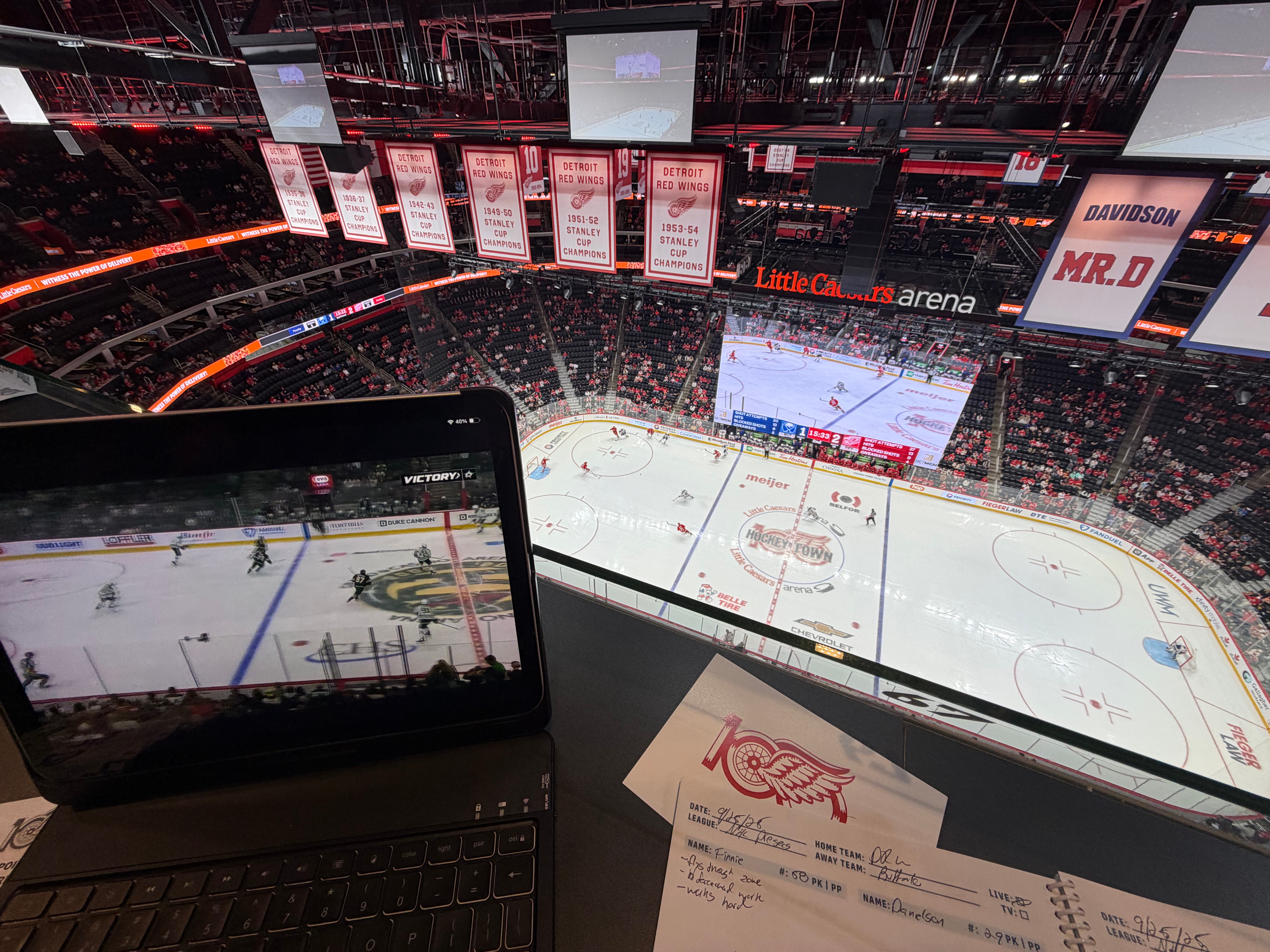
This morning, after the Detroit Red Wings morning skate at Little Caesars Arena, I meandered over to the Nashville Predators locker room, said hello to Predators head coach Andrew Brunette and then we proceeded to have close to a 20-minute conversation about the state of the team and other various NHL topics.
That story will come out tomorrow, but today I want to talk about the nature of this chat. Where how on the day of an NHL game, I was the only non rights-holding reporter to speak with the head coach.
It’s become a common occurrence in NHL coverage, and sports coverage in common. As outlets have scaled back on travel and left reporters at home, coaches and athletes on the road are largely unbothered or even spoken to.
It’s a very meta concept, but I basically, on Thanksgiving Eve, I want to lament how much I miss my media friends and you should, too.
This has been on the front of my mind for a long time, how that aside from NHL.com’s Nick Cotsonika, I’m usually the only non team or rights-holding employee at visiting media availability in Detroit.
Layer that on top of the recent story about how the Minnesota Timberwolves, an NBA team, “apparently have zero beat reporters at most road games,” in a recent post at Awful Announcing.
What was taken as a shocking moment in that Awful Announcing story, is common in the NHL. Outside of a couple markets, beat writers rarely travel now and each year another reporter gets the call that they won’t be hitting the road this season.
One of my good friends, Matt DeFranks, no longer travels for road games to cover the St. Louis Blues. I learned this, sadly, when I wanted to connect with him for lunch while the Blues were in Detroit.
But while I’m sad about not getting a chance to grab lunch with my friend, Blues fans — and NHL fans in general — should be sad about the reality that the NHL road game has largely become a mystery box and void of information. Sure, you get certain things, but the people asking questions and delivering “content” from road games are team employees that come with more of a marketing tilt to their storytelling.
It’s something that we’ve all seen coming, in Dallas, the Dallas Morning News has gone from having a full-time traveling beat reporter, fittingly in DeFranks, to one in Lia Assimakopoulos, who has had to do so much of her job while juggling SMU coverage and rarely stepping onto a plane when the Stars leave Texas.
(Quick side note, as I’ve said multiple times before, Lia does a tremendous job. This is a reflection of the business, not her work.)
But you go from seeing it happening to the fact it’s already happened. Reporters are being pulled off the road, and those that still travel, sadly, will eventually get the call that their game story or feature isn’t worth the return on investment of paying for flights and hotels.
It’s easy to think about COVID as a conduit for this, but the reality is COVID was only the accelerant for this, not the seed that started it all. Without COVID, this would probably be happening, but I think it at least would have been a slower trickle to this state.
Fans, on a larger scale, also don’t care enough about this. This isn’t to demean the general sports fan, but I think we’ve reached a state of sports consumption now where fans get enough player personality from those mini-mic interviews as players leave practice, the long-form feature and work needed from a daily beat writer isn’t needed anymore to connect a player to the audience.
Teams realize this, too. They used to need the media to connect, now they can simply bypass any reporter to connect with the wider base, I’ve seen backend numbers for readership before at various places, and the team websites and rights-holders bring in exponentially more views than any independent site.
I’m writing this, for example, to an audience of close to 4,000. That’s nothing in the larger scheme of things. I love all 4,000 of you (especially those who are paid subscribers!), but nothing I write will ever have the platform one TikTok video has from a team account.
And whether it’s intentional or not, teams this season across the league seem to be doing more and more to make life slightly more difficult for media members. They aren’t restricting access, nothing that would be a so-called “grievance,” but I’ve both noticed myself and spoke to others in my business about how NHL media relation staff’s have been less accommodating than they’ve been before.
(Again, important side note, I want to give a credit to the Red Wings and Predators PR staffs today, who both were really great to me today.)
I guess as a media member you could raise a stink about it, you could complain. But I’ve also learned that the public also has little sympathy for people who get paid to watch a game for a living.
And maybe that’s my point here, we are moving further and further into a space where reporters and journalists don’t exist in hockey, or even sports, media.
I’m not complaining, heck I’m happy I’ll have a nice exclusive piece tomorrow because of the new landscape. But I’m also a bit sad about the reality and how while I miss seeing my media friends, you should too.