
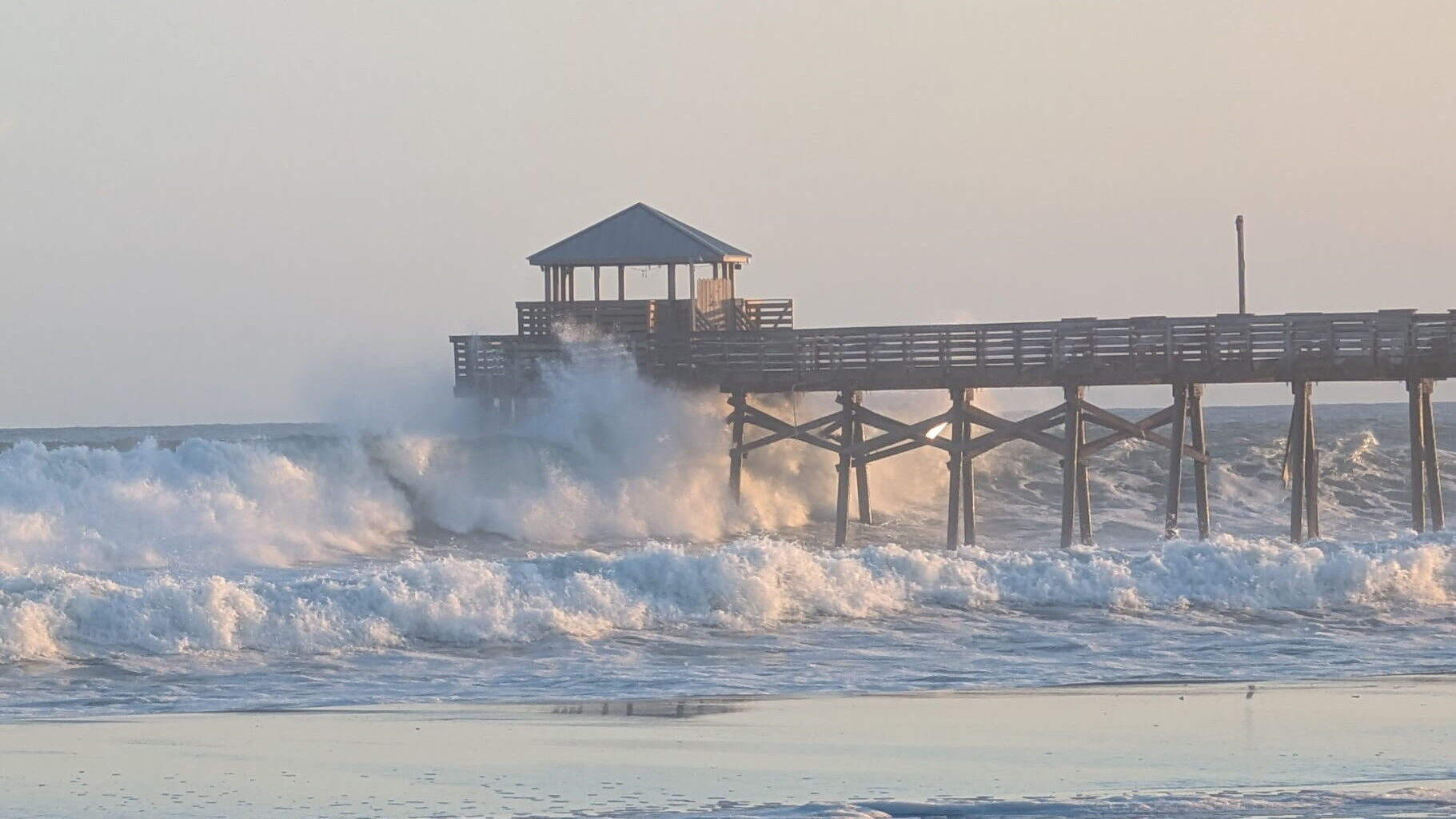
The 2025 Atlantic hurricane season ended on Nov. 30 without a hurricane making landfall in the US, according to the National Oceanic and Atmospheric Administration (NOAA).
While a hurricane didn’t make landfall, multiple tropical storms affected the Carolinas in 2025, the most notable being Tropical Storm Chantal in early July. The Piedmont region of the state saw significant damage, hundreds of roads closures, rivers cresting at record heights, and the loss of life as a result of Chantal.
“For the first time in a decade, not a single hurricane struck the US this season, and that was a much needed break,” said Neil Jacobs, PhD, undersecretary of Commerce for oceans and atmosphere and NOAA administrator. “Still, a tropical storm caused damage and casualties in the Carolinas, distant hurricanes created rough ocean waters that caused property damage along the East Coast, and neighboring countries experienced direct hits from hurricanes.”
The Atlantic basin produced 13 named storms with winds of 39 mph or greater, of which five became hurricanes with winds of 74 mph or greater, including four major hurricanes with winds reaching 111 mph or greater. An average season has 14 named storms, seven hurricanes, and three major hurricanes. NOAA had predicted a slightly above average season with 13 to 19 total named storms.
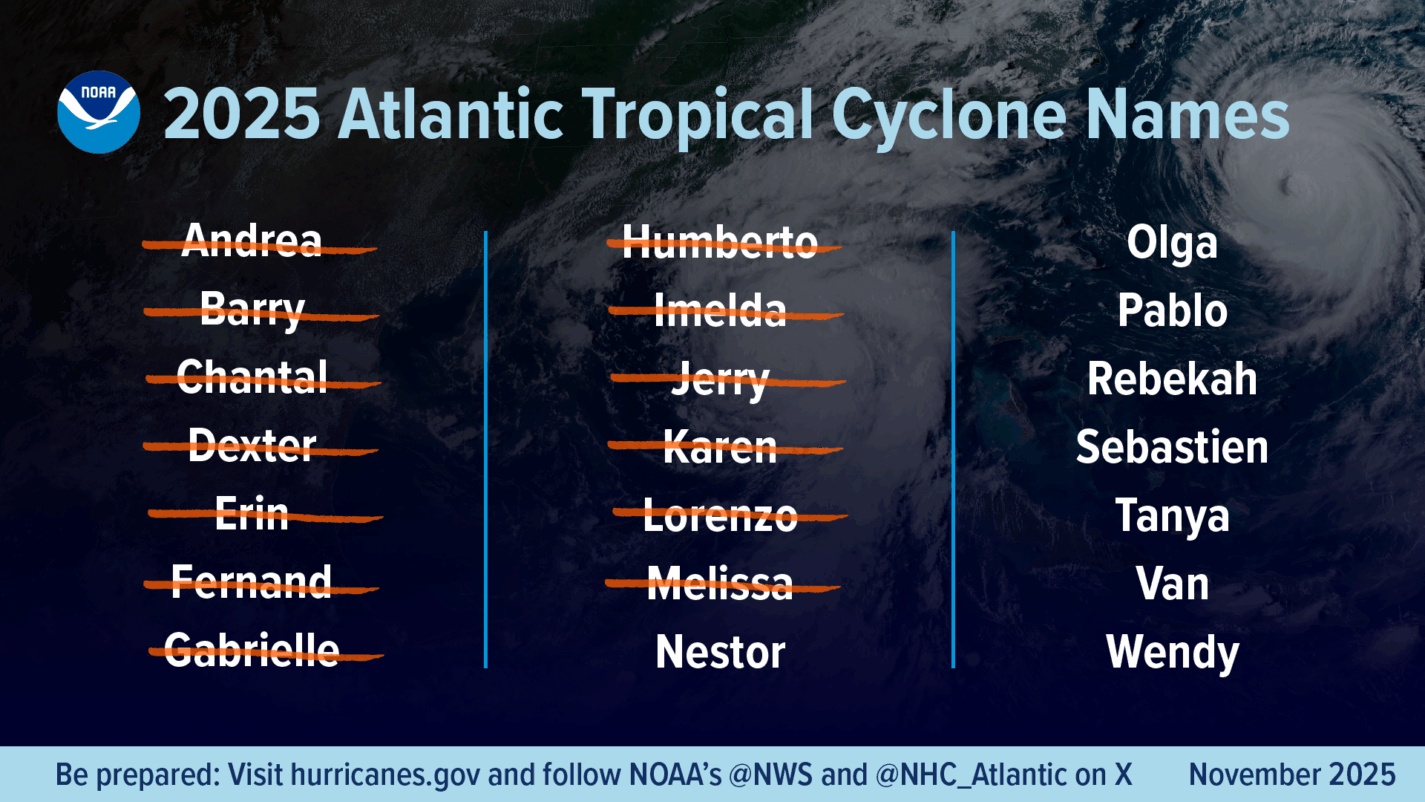 List of used 2025 hurricane names. Source: NOAA
“Throughout the hurricane season, and all year long, the National Weather Service works around the clock to meet our mission of saving lives, protecting property and enhancing the national economy,” said Ken Graham, director, NOAA’s National Weather Service. “I’m grateful to this talented team for their steadfast dedication to the safety of the American public.”
Multiple hurricanes and tropical storms that did not immediately impact the state did cause some significant beach erosion across eastern North Carolina. Since September, 16 homes in the Outer Banks have collapsed prompting state officials, including Gov. Josh Stein and Commissioner of Insurance Mike Causey, to ask Congress to pass HR 3161, the Preventing Environmental Hazards Act of 2025.
For the first time ever, NOAA incorporated Artificial Intelligence as part of their forecasting for 2025, as the use of AI continues across many sectors and industries across the globe.
“The 2025 season was the first year NOAA’s National Hurricane Center incorporated Artificial Intelligence model guidance into their forecasts,” added Jacobs. “The NHC performed exceedingly well when it came to forecasting rapid intensification for some of the more impactful storms and provided critical decision support for our Caribbean partners.”
The 2026 Atlantic hurricane season will run from June 1 through Nov.r 30.