
In last month’s edition of Goalie Tracking, we looked closely at how Anaheim’s Lukas Dostal tends to hold his skate edges longer than most. We looked at how his stand-up style goes against the grain of the butterfly style that dominates today’s NHL goaltending, and the advantages it gives him.
It’s important to note that while that style works for Dostal, there’s a reason butterfly still reigns supreme in the world of modern goaltending.
No technique covers more net and makes more saves on shots from close to the net than the trusty butterfly. When used correctly, it can make goalies nearly unbeatable, and two of the netminders using it most effectively this season are San Jose’s Yaroslav Askarov and Boston’s Jeremy Swayman.
Welcome back to Goalie Tracking, where we examine the details of the position and attempt to explain why goalies do what they do. In a position in which margins are razor-thin and the game is faster than ever, details are the difference between saves and goals. We try to highlight exactly what different goalies are doing to separate themselves. This time, we will dive into what makes each of these two butterflies so effective.
Let’s begin with Askarov, who had a sensational November to thrust the upstart Sharks into the playoff conversation in the Western Conference. There was a lot of pressure on the 23-year-old rookie coming into his first season as a starter in the NHL. For Askarov, the biggest pressure was coming from within.
“I was putting a lot of pressure on myself and overthinking things,” he told The Athletic. “I was trying to figure out what was going wrong. You have a bad day, so you try just working harder, and it usually doesn’t help. That’s what I was doing.”
Askarov went 1-4-1 in October with a .844 save percentage and minus-3.09 goals saved above expected (GSAx).
“I felt good physically, but it was the mental side,” said Askarov, who felt like he was overthinking in games. “I felt like Swiss cheese, and I had no idea why. You’re in trouble if you’re thinking on the ice. I was trying not to think, but that’s easy to say, hard to do.”
It didn’t take him long to turn a corner, relax, start playing reactively and trust his instincts. When that happened, he showed the elite level of goaltending he’s capable of.
“Coaches, players and family have all helped, but the big step has to come from you,” he said. “You are the one who has to manage it at the end.”
Askarov went 8-2-0 in November with a .944 save percentage and 18.02 GSAx. He was a brick wall behind the Sharks and made some of his most impressive stops in big moments, with the game on the line.
Given that he is one of the most promising young goalies in the world, there’s a lot to like about Askarov’s game. He is an exceptional skater, with quick, twitchy feet when the puck gets around him. He is explosive laterally, which makes getting around him very difficult.
His superpower, though, is his ridiculous flexibility. Specifically, it’s the amount of internal hip rotation he can use on the ice to make his butterfly flare as wide as possible. Even Colorado’s Mackenzie Blackwood, who is one of the most athletic goalies in the NHL, raves about Askarov’s hip mobility.
“I feel like that’s just a natural, God-given ability that he has, that a lot of guys don’t have,” Blackwood told Sheng Peng from San Jose Hockey Now in November. “I would say that’s probably the most impressive thing that he has, talent-wise.”
The more flexible a goalie’s hips are, the wider his butterfly can be. On top of that, Askarov’s long legs make his butterfly even wider, covering the entire bottom of the net when he flares his legs out, like on this stop on Utah’s Dylan Guenther.

Creating a straight wall with the pads like that obviously requires tremendous flexibility and leg strength.
“I’ve been pretty flexible my whole life,” Askarov said. “I did a lot of stretching when I was younger. Now I do more movement drills, not just stretching.”
Askarov takes this advantage to the next level by dropping into the full splits, while still keeping his pads flush to the ice. Most NHL goalies can do the splits, so that’s not out of the ordinary, but most have to point their toes skyward to do it. Askarov keeps his feet pointed forward, creating a snowplow wedge in the crease and essentially eliminating the bottom of the net.
This highlight-reel save on Seattle’s Tye Kartye on Nov. 5 is a great example.

This scoring chance was the result of a giveaway in the slot as the Sharks were exiting their zone. When Kartye received the pass in front of the net, Askarov immediately dropped into one of the widest butterflies you’ll ever see.
Kartye realized he had time to hit the brakes to try a deke back against the grain to go around Askarov, but the goalie dug his left skate into the ice and extended into the full butterfly splits to stuff the shot.

There’s enough flexibility and strength on display in this sequence to make an Olympic gymnast blush, but Askarov often takes it to yet another level. Getting into this awkward position to make a save is one thing. You would think Askarov is relatively vulnerable and immobile once he reaches that point, but you’d be wrong.
On a sequence of saves against the Utah Mammoth on Oct. 17, Askarov stops a backdoor one-timer with a wide butterfly, then drops into the butterfly splits to stuff any rebound attempts. As the puck slides to his left, he actually rotates and pushes himself around the crease while in this flexed position.

Having the mobility to stretch into a position is one thing. Having enough strength and control from that position to slide around the ice, with bodies all around you, is something entirely different.
Remember the old Mastercard commercial that joked Dominik Hasek had a slinky for a spine? Whatever Askarov’s hips are made of, they’re priceless.

It provides a massive advantage, especially on chaotic plays near the crease. In those situations, Askarov has the luxury of eliminating the possibility of the puck scoring along the ice.
“It’s kind of nice,” he said with a laugh. “On plays that are super close, you can stay in the butterfly. I have long legs and a wide butterfly, so I can get all of the low plays.”
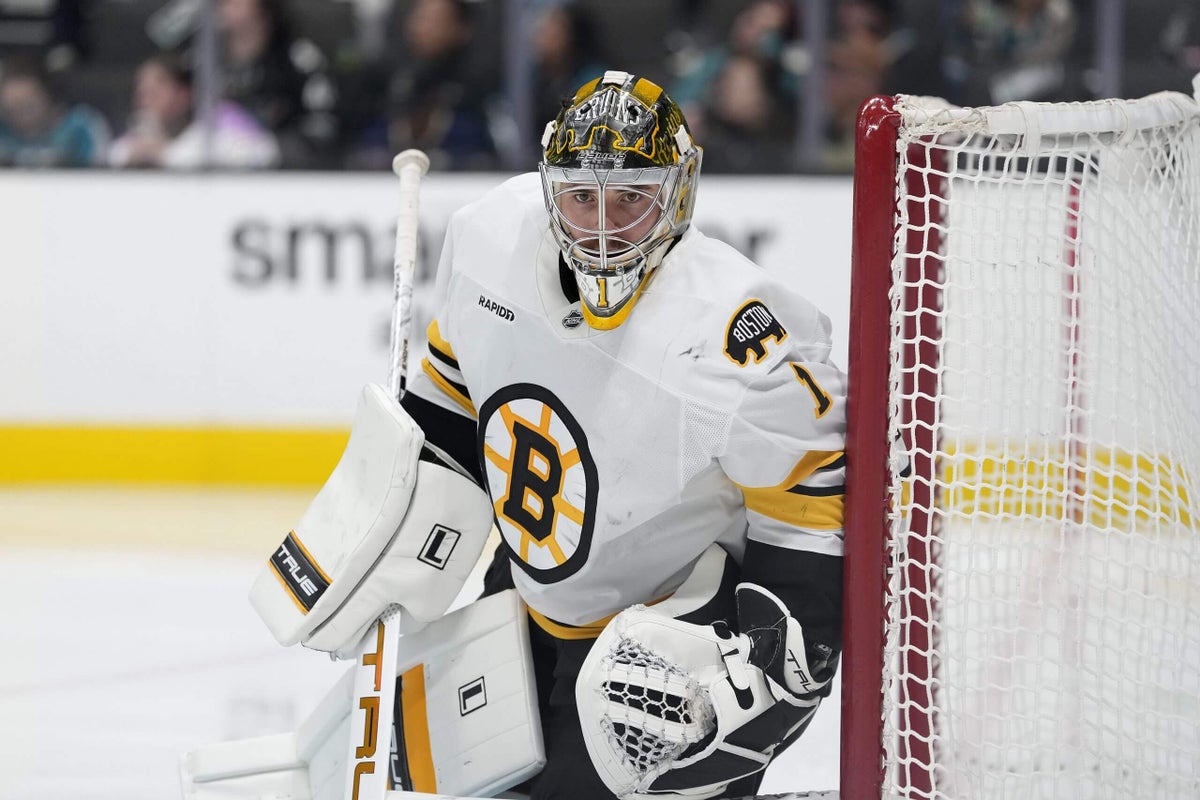
Like Askarov, Swayman is a true butterfly goalie. Beyond that, their styles aren’t very similar. Boston’s netminder, who has saved an impressive 20.26 goals above expected over his first 18 starts, plays a much quieter brand of goaltending.
The Anchorage, Alaska native is as fierce a competitor as you’ll find. He enjoys jostling with the players trying to screen him and isn’t afraid to get physical to protect his blue ice. He doesn’t shy away from post-whistle scrums, but as fiery as Swayman can be, his style is calm and controlled.
He navigates his crease with strong connectivity. His eyes and gloves lead each movement. His skates, hips and shoulders remain square to the puck at all times, and his balance and weight shifts rarely put him out of position.
He rarely extends his limbs to make saves. Instead, he gets his center of mass in front of the puck and closes all openings in his posture. Because of this, he often makes saves look easier than they should. He also sets himself up well to make any follow-up saves on rebounds, which has been crucial to his success behind a struggling Bruins defense.
Boston has given up the most rebound shots in the NHL this season at even strength (90). Despite that, they’ve allowed the fourth-fewest rebound goals (four).
It’s easy to see why the Bruins have given up so many rebound opportunities. Swayman has good rebound control, but a goalie can only do so much when shots are coming from close to the net and through a sea of traffic. The 155 shots Swayman has faced from inside 29 feet are the fifth-most of any goalie in the NHL, and from that close, a goalie doesn’t have the reaction time needed to direct rebounds into the corners.
Instead, he must rely on squareness to the puck to control those rebounds, and Swayman is exceptional at that. The situations in which it’s most noticeable are when the shots come from the sides of the net. For the most part, all goalies are good at staying square to the puck when it’s in the middle of the ice, but as it moves toward the walls, some tend to flatten out along their goal line to prepare for a possible centering pass.
When a goalie’s skates flatten out, getting closer to being parallel with his goal line, it creates two problems. It makes the initial save more difficult, but more importantly, it creates a bad angle that sends rebounds into the most dangerous area of the ice.
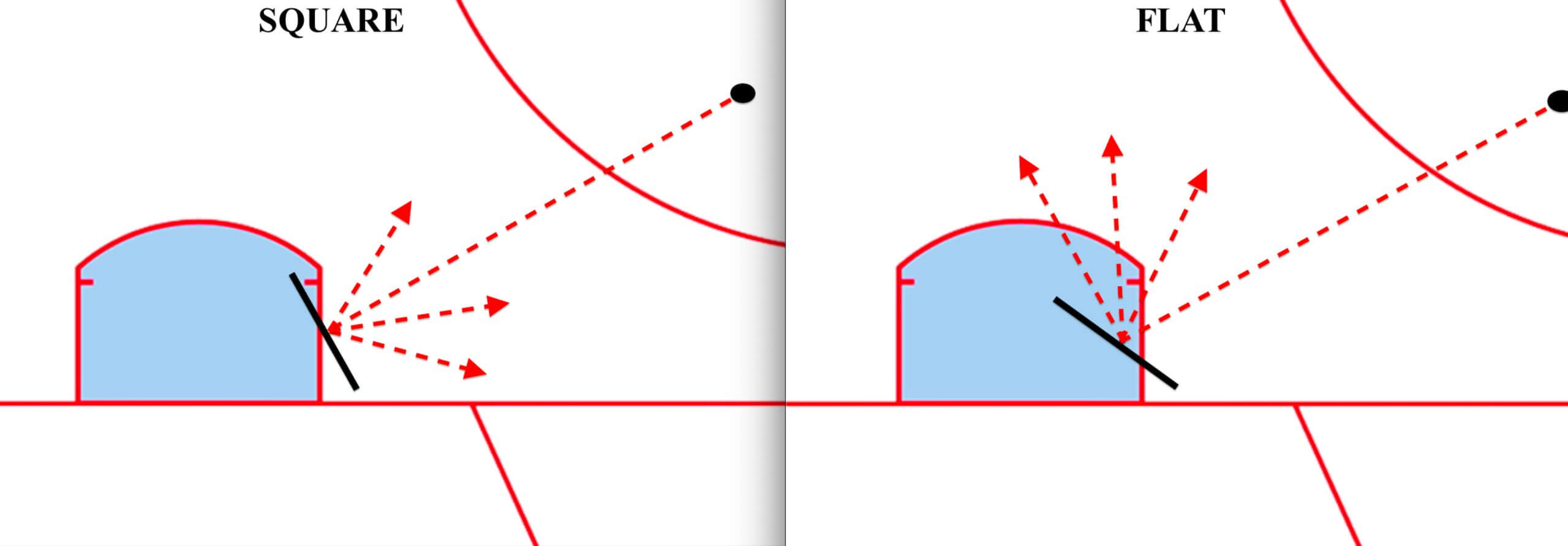
If a goalie stays square to the shot, the rebound typically bounces straight out in front of the goalie. This keeps it out of the middle of the ice and reduces the movement needed for the goalie to square up to the next shot.
This play against Carolina on Nov. 1 is a good example of how Swayman uses positioning to make a dangerous situation look routine. It’s an odd-man rush for the Hurricanes directly off a bad turnover by the Bruins in their own zone.

If Swayman doesn’t fully commit and square up to the shot, the rebound likely spills out into the front of the net, where Carolina has two attacking players waiting to pounce on it. Instead, it hits him and ricochets harmlessly into the corner, ending the chance altogether.
Some goalies feel uncomfortable getting their skate too far outside of the near-side post on sharp-angle plays because they feel exposed to a pass across. Swayman trusts his reads enough to commit to overlapping that post, and it essentially eliminates the chance of that shot going in. This angle from behind the shooter shows how solid his net coverage is.

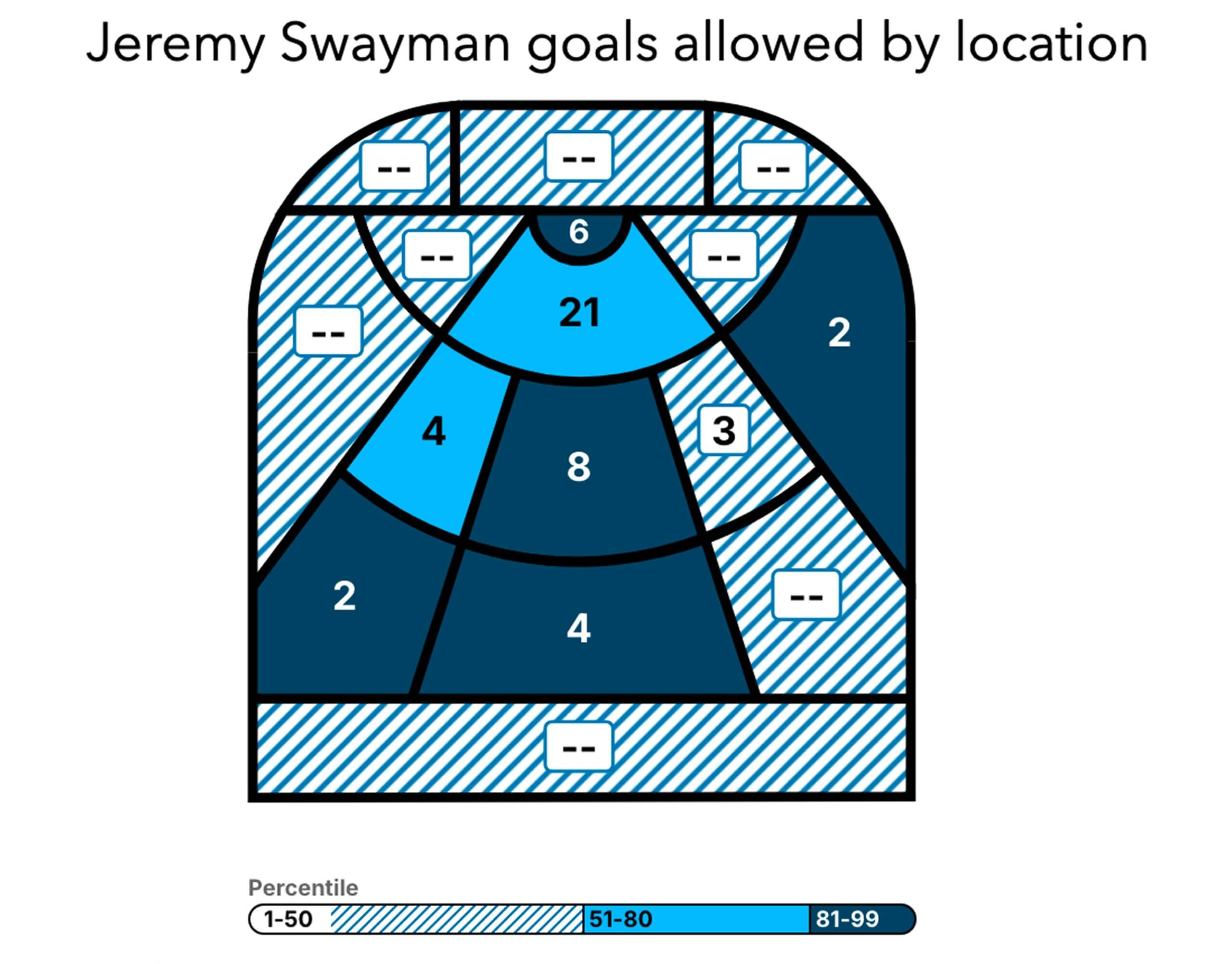
This chart by NHL Edge shows the locations for each goal Swayman has given up this season. He hasn’t allowed a single goal from either segment of the sharp angle to his right, and only two to his left.
Here’s another recent example, against the Detroit Red Wings on Nov. 29. With a player streaking toward the far post, it would have been easy for Swayman to fall into the trap of cheating over for the pass, but he stayed committed to the shot and kept the rebound in front of him, not in the slot.

Swayman is constantly putting fires like this out with sound positioning, and it can easily go unnoticed. Not only has he made the seventh-most high-danger saves, he has also prevented quite a few more from ever happening.
Aside from positioning, the other aspect that makes Swayman’s butterfly so effective is how balanced and reactive he is from the position.
“When I’m feeling good in my butterfly, it feels solid when my knees are under my hips,” Swayman explained. “Where guys get into trouble is when their knees get outside of their hips, and they get a little off-balance. When I’m not getting too spread out, and I’m able to react, it allows those quick-twitch muscles to drive my knee to my chest and move whichever way the puck is going.”
This series of stops in the game against Detroit on Nov. 29 put these attributes on full display.

This is a tough play for Swayman because the pass was to his right, but the player receiving it (No. 27, Michael Rasmussen) was skating back to his left. He butterflied immediately to shut down a potential deflection by Rasmussen, but quickly realized that wasn’t happening.
Swayman’s body control was impressive here, and there was no panic. He smartly poked the puck off Rasmussen’s stick to buy himself some time, and kept his weight forward and over his knees as he slid back to his left. There was no sprawling or reaching. Swayman kept his hips and chest tall and on top of the puck, and his hands in front of him to make a huge save.

Watching Swayman and Askarov succeed with two very different styles of butterfly goaltending is fun to watch. It proves there’s no right or wrong way to stop a puck. It’s about maximizing the strengths of that particular goaltender. One is making saves that strain the muscles in your legs just by watching, while the other is making it look far easier and routine than it ever should.
It’s great to see Swayman back at the top of his game after a disappointing 2024-25 season. He faced a lot of pressure last season after the Bruins traded Linus Ullmark and signed Swayman to a huge extension. His first season as the true No. 1 didn’t go as he planned, but he went to work this summer to make sure that didn’t repeat in 2025-26.
Swayman spent very little time away from the ice this offseason and gained valuable experience playing for the United States at the IIHF World Championships in Sweden.
“Worlds was really good for me,” he said. “Having a group like that, with an us-against-the-world mentality, was really special to get behind and find my game a little bit. At the same time, knowing that I’m building for something bigger, and competing for a gold medal really helped a lot. That was special.”
Swayman went 7-0 in the tournament and shut Switzerland out in the final to win a gold medal.
“After that win it felt like a little bit of a burden off my shoulders,” he said. “To finally shed your gloves after a win is a pretty special feeling. Just taking that positivity into the summer helped a lot, too. That was a really big component to it all. I wasn’t satisfied, and wanted to keep that rolling.”
Through the first two months of the NHL season, Swayman has done exactly that.