
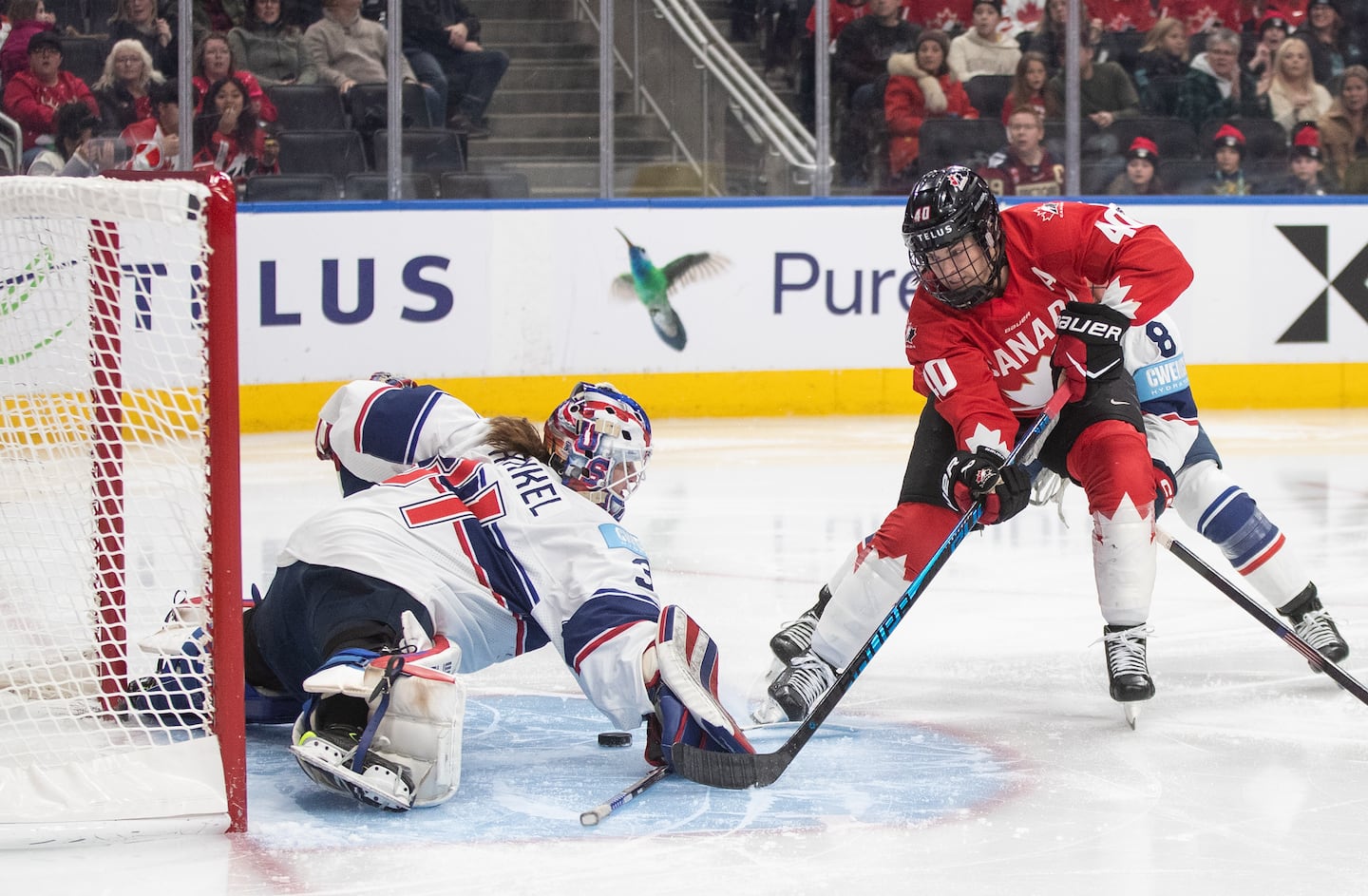
The Americans also pulled off the first sweep by either side in six editions of the Rivalry Series, which began in 2019.
Thoughts and shots after a dominant four-game performance that had the Americans’ goal song, “I Love Rock and Roll,” virtually on repeat:
▪ Is Canada weakened, or just sleeping? Team Maple Leaf left home veterans for the games in the United States, and played them in Edmonton. The Canadians struggled with a younger, faster, and more skilled opponent. The United States moved the puck more quickly and more decisively. It forechecked far more effectively.
Get Starting Point
A guide through the most important stories of the morning, delivered Monday through Friday.
Now, now. We are two months from Milan, which, of course, is all that matters. And TSN, which broadcast the Canadian leg of the Rivalry Series, made sure to highlight Canada’s 2002 gold-medal run, which saw it lose eight straight to the United States before beating the Americans on their turf in Salt Lake City.
But that is ancient history. The Canadians looked out of sorts for long stretches of these tuneups, and that has to concern those wearing the red and white jerseys.
▪ The best player in the Rivalry Series was center Abbey Murphy. The best line was Murphy riding on Taylor Heise’s right wing, with Hannah Bilka on the left. The latter replaced Kendall Coyne Schofield, who opened the series in that spot but settled into a third-line role.
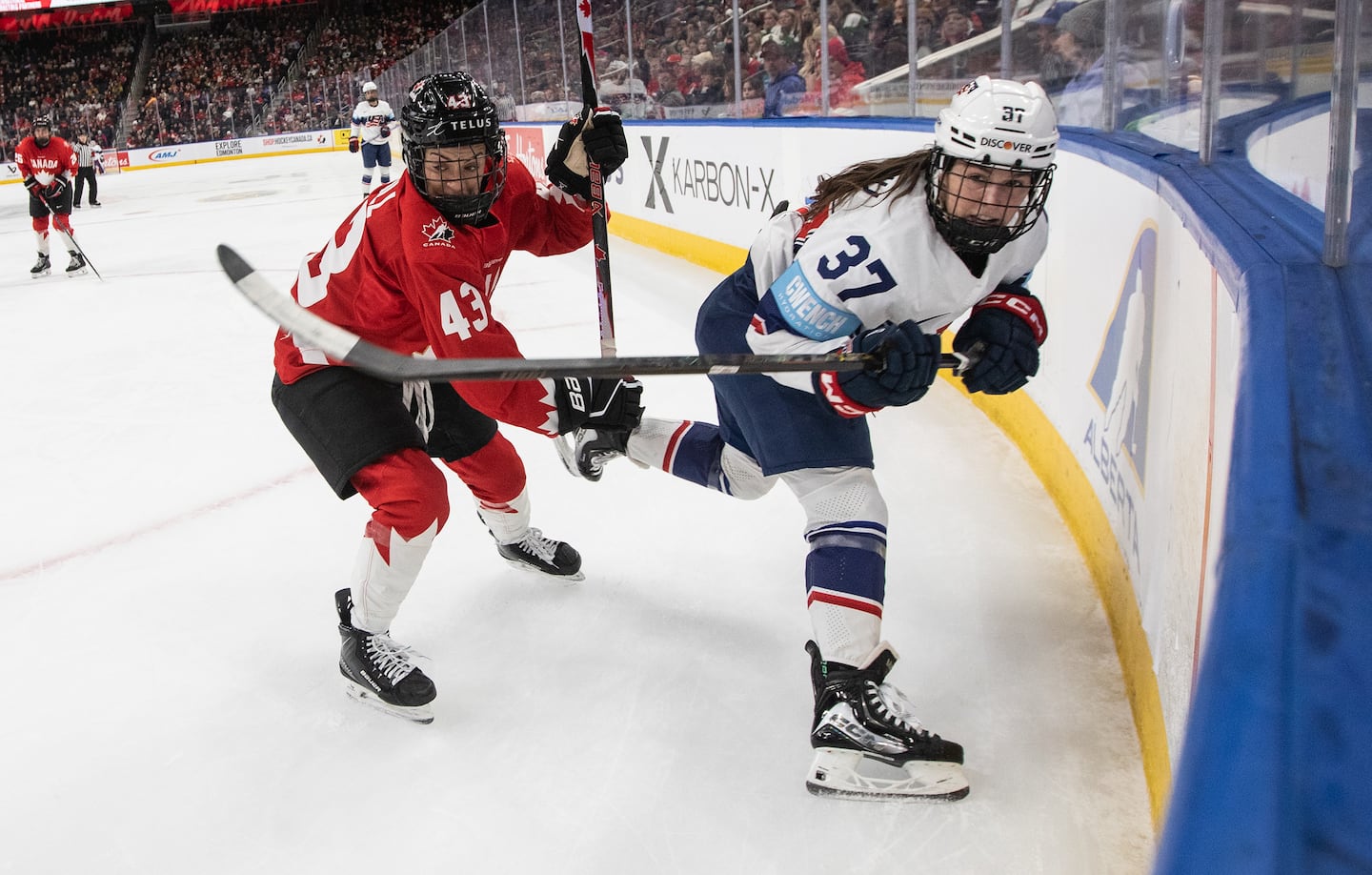 Abbey Murphy scored five goals for the United States in four wins over Canada in the Rivalry Series.Jason Franson/Associated Press
Canada has a problem with Murphy, who didn’t score in the Rivalry Series finale and still finished with a tournament-best five goals (5-3–8). On two American goals in Game 4, she was creating havoc in front of the net. She drew a penalty in each game. Her hat trick in Game 1 came off slick feeds from Heise, who led all scorers with a 1-8–9 line.
▪ With 23-player rosters due Dec. 31, the Americans’ top six is locked in: the aforementioned Bilka-Heise-Murphy line, behind Tessa Janecke–Alex Carpenter–Hilary Knight. The rest seems murky by comparison.
Kelly Pannek, Coyne Schofield and Hayley Scamurra are likely picks. Britta Curl-Salemme and Jesse Compher have size and center-wing versatility. Grace Zumwinkle is a power winger with a heavy shot. Kirsten Simms, Joy Dunne, and Lacey Eden are high-scoring NCAA forwards. It will be tough for Milton’s Casey O’Brien, who didn’t make much of an impact in the Rivalry Series, to crack the roster.
▪ The two blue lines are a study in contrasts. Canada gets almost no production from its back end (though 18-year-old Chloe Primerano, who has a decent chance to make the Olympic team, has a bright future). Meanwhile, the United States has the NCAA’s leading scorer in Caroline Harvey, the Wisconsin senior from Salem, N.H., who might be the best player in the world right now.
The Americans’ length is also an advantage. Laila Edwards is 6 feet 1 inch, Lee Stecklein 6 feet, and Fleet captain Megan Keller is 5-11. All three can skate and know how to use their size. Canada doesn’t have a player at any position over 5-10, and its tallest defenders are 5-8.
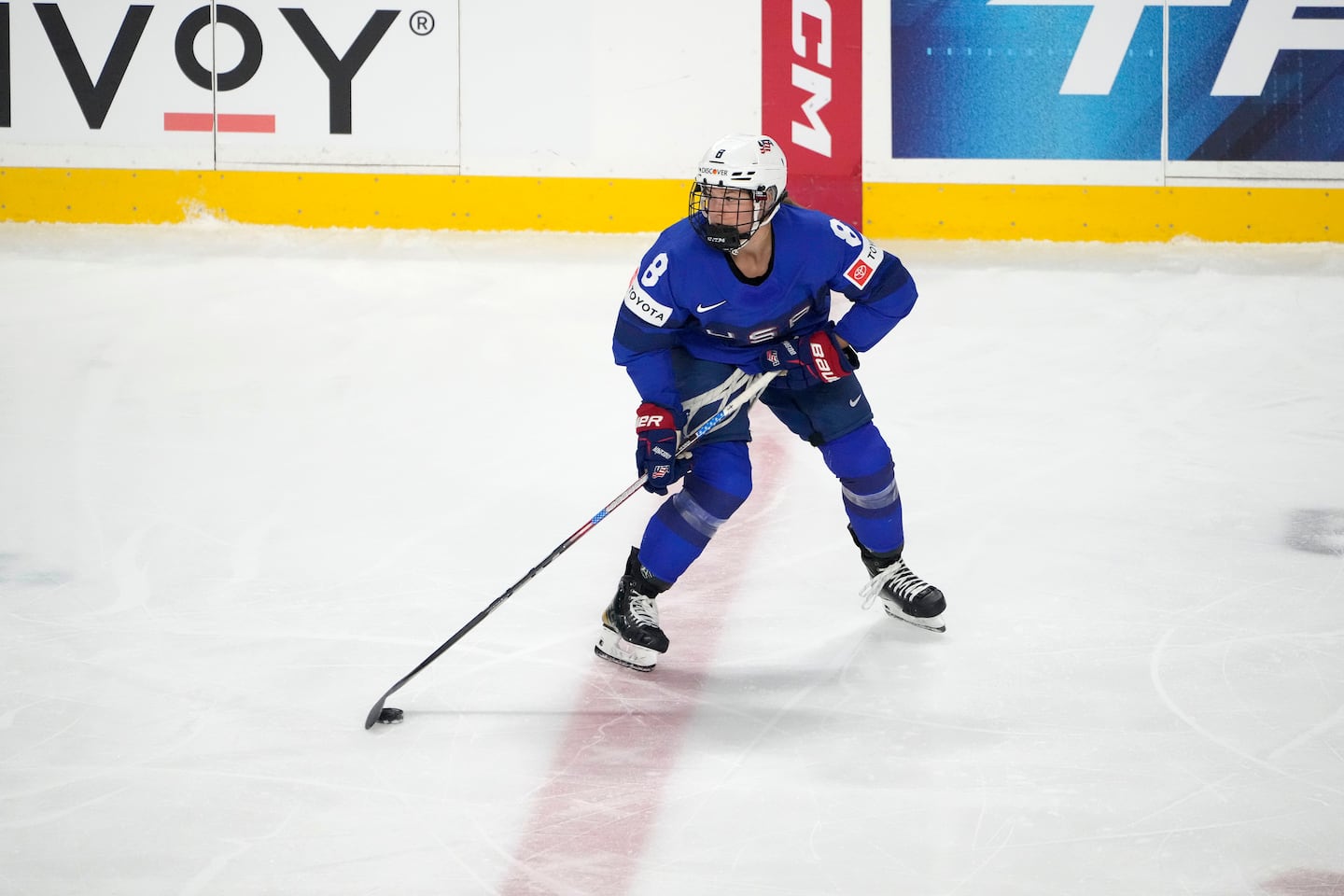 Boston Fleet defender Haley Winn was in the Team USA lineup for all four Rivalry Series wins over Canada.Tony Avelar/Associated Press
The United States leaned on the same top six defenders in all four games: Keller and Edwards, Harvey and Cayla Barnes, and Stecklein and Haley Winn. The final spot for Milan could go to Rory Guilday (over Savannah Harmon, Emma Peschel, and Anna Wilgren).
▪ Two former Northeastern netminders, Aerin Frankel and Gwyneth Philips, split the four-game workload for the United States. Frankel stopped 49 of 51 shots and has allowed six goals in six games this season between four starts with the Fleet and two with the national squad. Philips let in five goals in her two starts (stopping 59 of 64) and would be a fine choice.
But the edge here goes to Frankel, who was the choice in the World Championship final (and after she was injured in a collision with Canada’s Laura Stacey, Philips relieved her and helped the Americans win gold).
Canada’s women’s team, like the men, can’t find consistency. Likely starter Ann-Renee Desbiens gave up nine goals on 49 shots (.816), and her potential backup, Emerance Maschmeyer, stopped seven of 12 shots (.583).
▪ The Americans were warmed up. PWHL teams have played between three and five games, while many NCAA teams have played upwards of 20.
That’s an advantage for a US team that boasts the top four scorers in college hockey (Harvey, who has 41 points in 20 games; Minnesota’s Murphy, and Wisconsin’s Simms and Eden) and seven of the top 12 (including Ohio State’s Dunne, seventh; Penn State’s Janecke, 11th; and Wisconsin’s Edwards, 12th).
Will they still have the juice come Feb. 5, when the United States opens Olympic play against Czechia, and Canada takes on Finland?
Regardless, the Americans will enter as the gold medal favorites.
The Patriots had a chance to clinch the AFC East but couldn’t get it done. How the players and Coach Vrabel reacted.
Matt Porter can be reached at matthew.porter@globe.com. Follow him @mattyports.