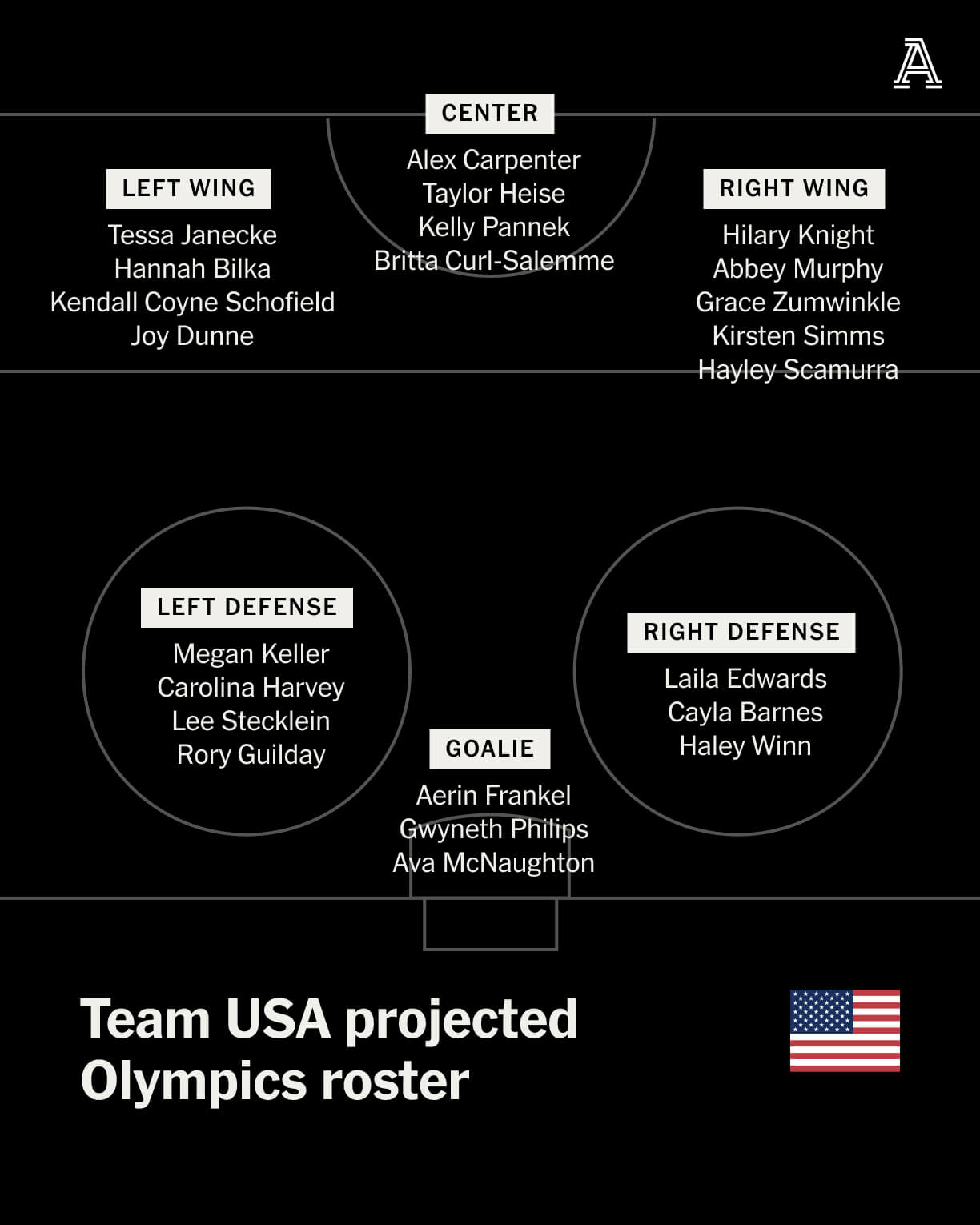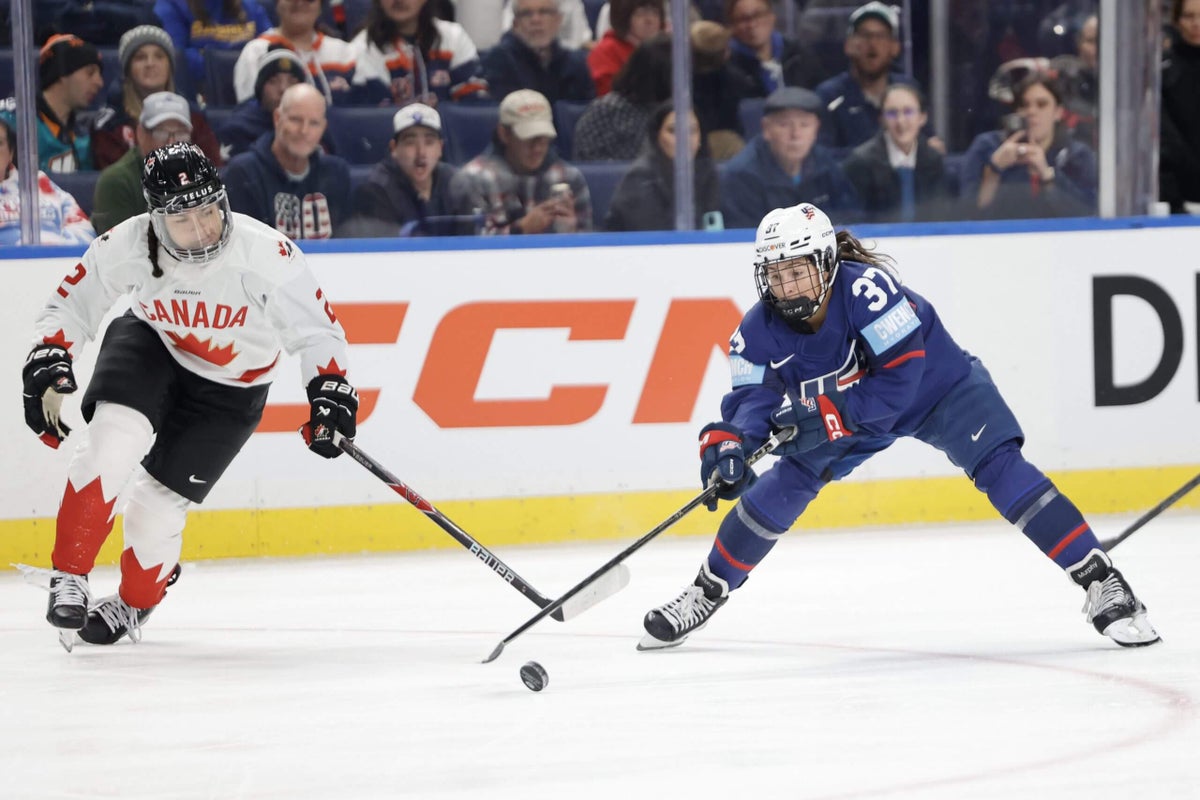
The 2025 Rivalry Series is now complete, with the U.S. women’s national hockey team completing a convincing 4-0 sweep over Team Canada.
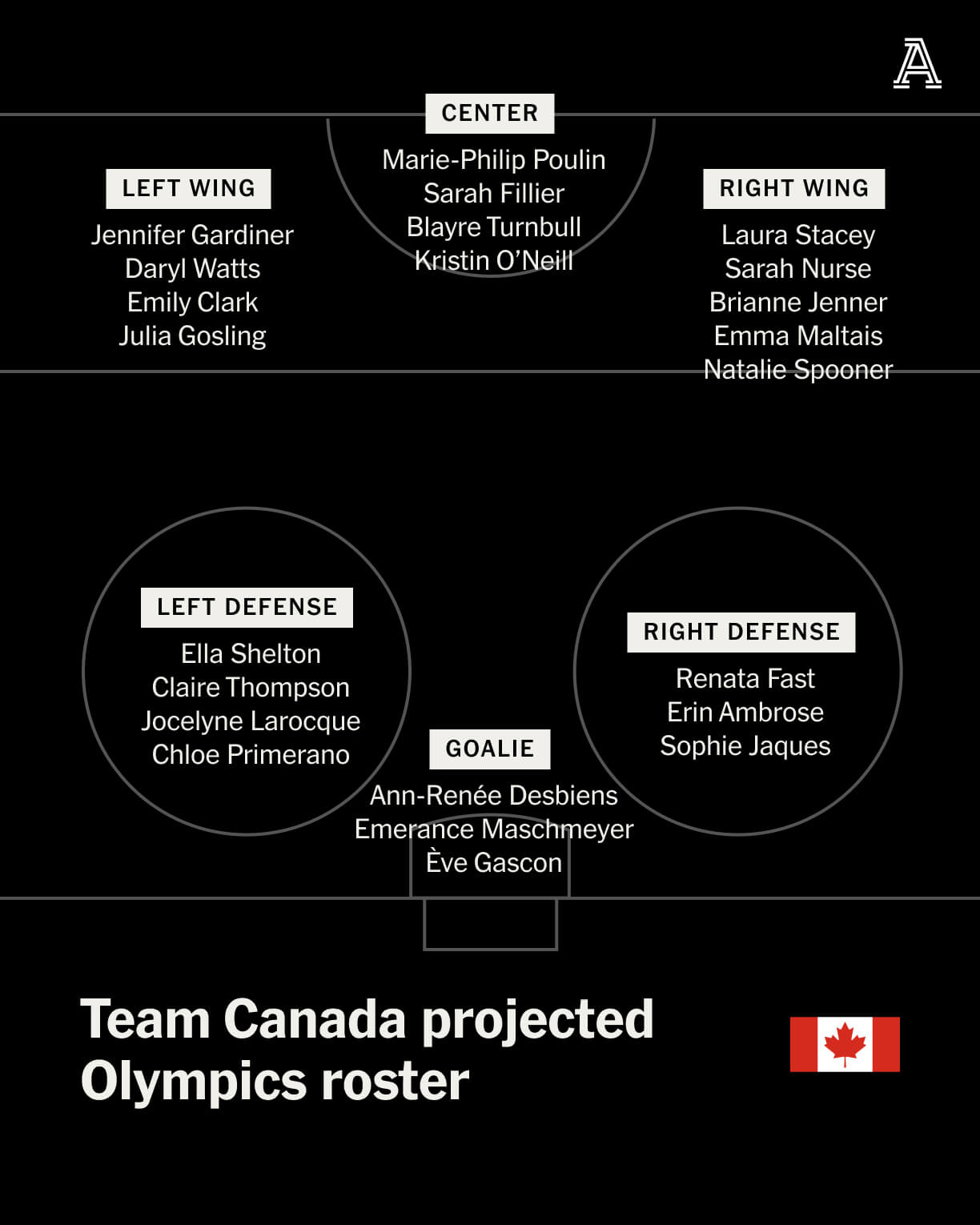
Saturday’s series finale in Edmonton came less than two months away from the 2026 Olympics, where the two powerhouse teams are expected to clash (once again) in the gold medal game. We’re also just weeks away from the official unveiling of the Canadian and American Olympic rosters.
The United States plans to announce its 23-player roster on Jan. 2; Canada’s announcement will be sometime next month.
In the meantime, let’s take a look at how the Rivalry Series might affect the Canada and U.S. rosters.
Team CanadaStock up
Sophie Jaques, defense
Jaques’ productivity in the PWHL has made her undeniable (in our eyes) for Team Canada. Now feels like a great time to plug our PWHL Model that’s coming soon — thanks to our friend Dom Luszczyszyn and data via @hockeyskytte — which helps quantify Jaques’ offensive impact at the pro level.

According to the model — which considers each player’s production, ice time and five-on-five goals for and against relative to their ice time — no defender in the PWHL has a higher net rating than Jaques. Her skating and defensive game are still a work in progress and she was benched in the gold medal game at last year’s World Championships, which could be a cause for concern. But Jaques should add value to Team Canada in a (somewhat sheltered) third-pair role with power-play time.
Julia Gosling, forward
Gosling went from Canada’s 14th forward at worlds to someone we feel comfortable penciling in for the Olympic roster. She’s been solid in her first three games with the Seattle Torrent and showed off her big shot with two goals in the team’s first-ever game. Gosling can scale the lineup for Canada, adding size and secondary scoring to the bottom six or leveraging that shot for more offensive opportunity at the top of the lineup.
Canada struggled on the power play all series (3/13), but Gosling proved she could be an asset there, scoring one goal and assisting another.
Gosling gets one! 🚨
Gosling fait mouche! 🚨#RivalrySeries | #SérieDeLaRivalitépic.twitter.com/kLhjnSZxUu
— Hockey Canada (@HockeyCanada) December 11, 2025
Emma Maltais, forward
Maltais was one of Canada’s better players over the course of the series, and we saw her elevated in the lineup as a result. Once viewed as a gritty-energy bottom-six forward, Maltais got looks on the top line with Marie-Philip Poulin and as the second-line center with Sarah Fillier in Edmonton, which speaks to the trust coach Troy Ryan has in her at a critical time for Team Canada. Maltais didn’t necessarily produce a ton — one goal in four games — but she’s versatile, reliable and brings energy up and down the lineup. She’s an Olympic lock at this point in her career.
Brianne Jenner, forward
Jenner was probably never at risk of getting cut from Team Canada, so including her here might seem silly. But it’s worth acknowledging that she’s looked much better since women’s worlds in Czechia — her first worlds since 2012 where she failed to score a goal — for both club and country. Jenner is tied for the PWHL lead in scoring, thanks to a big four-point game last month, and scored Canada’s lone goal in Saturday’s series finale for her 50th career goal with Team Canada.
Brianne Jenner ties the game with an absolute beauty!#RivalrySeries pic.twitter.com/fWBtjZEP8R
— TSN (@TSN_Sports) December 14, 2025
She’s looking more like the Brianne Jenner we’ve come to know over the last decade and it’s coming at a great time for Canada, because if there’s anyone not named Poulin who has proven they can step up at an Olympic games, it’s Jenner.
Mushy middle
Jennifer Gardiner
Gardiner had an excellent women’s worlds debut last year, scoring 10 points in seven games beside Poulin, who led the tournament in scoring and won MVP. She scored a critical game-tying goal in the gold medal game, which proved she could be productive against top competition too. But through the Rivalry Series, Canada mostly shuffled Gardiner around the bottom of the lineup, which probably isn’t the best sign.
Still, Gardiner is versatile enough to play up and down the lineup and has a track record as a good linemate for Poulin, which is a good option to have on the roster even if the staff seems reluctant to go back there.
Natalie Spooner
Spooner remains a difficult player to evaluate for Canada. She looks much better than she did coming back from ACL surgery last season, but still might be a step slower than her MVP form in 2024. A rookie like Caitlin Kraemer might be a younger, more versatile option as Canada’s 13th forward, but it would be unlike Canada’s brain trust to cut a veteran for a rookie at this stage in an Olympic cycle. On top of that, Spooner has only played four PWHL games this season and has almost two months to get her legs more fully back under her for the Olympic tournament. Canada might also benefit from Spooner finding some chemistry with her Toronto Sceptres teammates Daryl Watts and Emma Maltais — a line they could carry over from the PWHL to the Olympics.
Stock down
Jocelyne Larocque
For over a decade, Larocque has been one of Canada’s best shutdown defenders who could be relied on to eat minutes against top competition. Over the last two years, however, 37-year-old Larocque has noticeably lost a step. Not only does she have little to give offensively, her defensive impact has been in serious decline from a +3.0 defensive rating in 2023-24 to -0.2 through four games in 2025-26 for the Ottawa Charge.

For Team Canada, she’s also become prone to big mistakes, like in the gold medal game at last year’s worlds when she sent a puck right onto Taylor Heise’s stick in overtime.
Still, it’s hard to imagine Team Canada cutting Larocque, given her time in the program and her leadership role in the locker room, and there aren’t exactly great alternatives at this stage in the game. Micah Zandee-Hart isn’t a massive upgrade, according to the model. And while Kati Tabin has posted great defensive numbers in the PWHL, she’s only played two games for Canada compared to Larocque’s 204.
Danielle Serdachny
Serdachny played a fourth-line role in three of Canada’s four Rivalry Series games, which isn’t necessarily a reason to put her stock down. She’s played a depth role well in the past — even scoring the game-winner at 2024 worlds in Utica. But with only 23 roster spots — compared to 25 at worlds — someone has to come out. And at this stage, if we give Gosling the inside track and assume Kristin O’Neill remains a lock at 4C, Serdachny might be on the outside looking in.
Team USAStock up
Abbey Murphy, forward
Murphy has long been an Olympic lock, but her play in the Rivalry Series has proven she’s among the players to watch heading into Milan. Starting with a hat trick in the first game in Cleveland, the University of Minnesota star tied Hilary Knight for first on the team with five goals and finished a point behind Taylor Heise, whom Wroblewski called “the epitome of an Olympian,” for second on the team with eight points.
While she can be an agitator, Wroblewski contends that’s overblown and that “she’s just playing hockey.” Her hockey IQ is elite. She has a Patrick Kane-like force field on the flank where you’re almost scared to challenge her, which allows her to be on an island all by herself and she shoots the puck as well as anybody in the sport. But what sets her apart is her skating. Wroblewski said, “It’s noticeable amongst the finest and best skaters in the world. She’s a step ahead of them.”
Rory Guilday, defense
In the final game of the Rivalry Series, the Americans essentially played with seven defenders instead of eight — a design solely to give Guilday the best possible audition to earn herself the seventh D spot. After missing the Wednesday contest with an elbow injury, Guilday sure looks like she landed that spot judging by the way Wroblewski talked about her after the game. He said she was “rock solid” and “very stoic back there,” then gave her the greatest endorsement a stay-at-home defender can receive: “I felt safe with her out there.” Not bad for a player who entered the series in November fighting her way back onto the roster.
Hannah Bilka, forward
Bilka’s stock was on the rise after you could noticeably feel her absence on the U.S. team at worlds last April. Now she’s back in the mix, playing with Heise and Murphy, and on the top power play, which speaks volumes about where she’s at in the eyes of the coaching staff.
Bilka has always been a dynamic offensive talent, but there were some questions if she could check, play a 200-foot game and be hard enough to play against. She has answered all those questions since August to the delight of the USA staff. One of the biggest changes came in Plymouth when Megan Keller tweaked something minor and Bilka took her spot on the power play and aced the exam.
Grace Zumwinkle, forward
It’s been an up-and-down four years since Zumwinkle made her Olympics debut in 2022. After making the Beijing team, Zumwinkle didn’t make the 2023 worlds and was the second alternate in the 2024 worlds. She earned a spot on last spring’s team and has continued to get better, earning more ice time under Wroblewski.
It helps, too, that Zumwinkle looks healthy and ready for a big third season in the PWHL – she already has two goals in four games, which is half of her production from a down sophomore season. At her best, Zumwinkle is a strong north-south skater who can play through contact in the middle of the ice. She has put in tons of work and should be in for her second Olympics in 2026.
Laila Edwards, defense
It was fair to wonder if Edwards’ swap from MVP-caliber forward to defense might affect her chances at making the U.S. Olympic team. Edwards has been making strides at her new position since worlds in Czechia and was absolutely stellar throughout the Rivalry Series. She led all U.S. defenders with six points, she defended in an elite manner and when she wanted to jump up in the play, you were reminded just how good of a forward she was due to her exceptional instincts offensively. That she’s an Olympic lock a year after her debut on D speaks to how impressive and versatile an athlete Edwards really is.
Mushy middle
Kirsten Simms, forward
Simms was perhaps the biggest debate we had at the bottom of the U.S. lineup. She’s not your typical fourth-line winger — Jesse Compher might fit that role more traditionally — and she also took two bad offensive-zone penalties in Wednesday’s game.
However, given the 23-player roster, Wroblewski might want someone like Simms as a failsafe in case of injury higher up the lineup.
“It changes the way you pick a team,” Wroblewski said about the women’s roster limit. “Normally … You could take that maybe gritty, heart and soul type of player as your 12th and 13th roles knowing that you could bring along a more skilled player as a 14th player, and have her in the seats. Then if somebody gets hurt, now you have that ability to inject a skilled player.
“But without that 14th player, now you have to really think about, ‘What if that power player got hurt?’ You’re not gonna have her in the waiting as the 14th player, so you might be thinking about making sure that she’s a part of your 13, which changes the dynamic of your group.”
If we’re reading the tea leaves correctly, Simms might have the inside track.
Stock down
Lacey Eden, forward
Eden has been on five straight World Championship teams for Team USA dating back to her 2021 debut in Calgary. But she might be falling down the depth chart as players like Simms, Zumwinkle and Britta Curl-Salemme — who we see as a lock at 4C — have pushed for roster spots in Milan.
Savannah Harmon, defense
Harmon was Team USA’s seventh defender in Czechia and was benched for the gold medal game after a major defensive gaffe in the semifinals led to the opening goal versus the Czechs. She’s been better in the PWHL this season for the Toronto Sceptres, but only played in one game in the Rivalry Series in favor of younger options like Guilday, Emma Peschel and Anna Wilgren.
Ultimately, if we assume Guilday is in, Harmon is the only player who could be out on this current U.S. blue line.