
What’s in a rebuild? Would a reconstruction by another name not be as painful?
The Pittsburgh Penguins are attempting to follow in the footsteps of the Washington Capitals and the LA Kings, whom general manager Kyle Dubas has cited as quick turnaround examples.
However, even the best laid plans require a bit of luck, and most championships are born of building around a high-draft pick or four. The Florida Panthers are somewhat disproving that theorem with a team so solid that no Eastern team in three years has been able to dethrone them, and two straight Stanley Cups have followed.
Florida has plenty of first-round picks, but Aleksander Barkov is the centerpiece, literally and figuratively. He was drafted second overall.
Setting aside the mold-busting Florida team, which had Matthew Tkachuk fall into their lap via forced trade, teams that had to reconstruct their roster, the Washington Capitals and LA Kings remain the prime examples.
But the debate is–should they be followed?
Washington missed the playoffs in 2022-23 before roaring to a Presidents’ Trophy in 2024-25. After what looked like the end of competitiveness, core players Nick Backstrom and T.J. Oshie stepped away, and the team was able to offload expensive underperforming goalie Darcy Kuemper to LA for struggling center Pierre-Luc Dubois, who had seven years remaining on a hefty contract.
It was a risky move by then-Washington GM Brian MacClellan, certainly the boldest move ever made by a McClellan or MacClellan in Washington D.C. (civil war joke), and it worked. Also, the decision to hang onto a few first-round picks, while watching the Penguins throw theirs around like hotel keys at a sales convention, paid dividends, too.
The trade acquisition of goalie Logan Thompson, who may well be the 2026 Team Canada Olympic starter, for a relatively light cost, sealed the deal. Very quickly, Washington was again legit.
LA has also been a team to watch, and was the other example mentioned by Dubas when he tried to explain his rebuild model before last season. After missing the playoffs for three straight years from 2018-21, LA bounced back with young players such as Adrian Kempe and Quinton Byfield.
They have made the playoffs in four straight seasons, while also holding stalwarts Anze Kopitar and Drew Doughty. Kopitar will retire after this season, and Doughty probably isn’t too far behind.
That’s how it’s done, right?
Welllllll, not so fast.
The long-term outlook of both Washington and LA probably won’t do much to discourage the crowd that insists a figurative wrecking ball is the only method by which a rebuild can be successful.
LA failed to make it beyond the first round in the last four years, getting bounced, humbled, and otherwise frustrated by the Edmonton Oilers in each attempt. This season, they’re out of sorts, struggling, and look to be right back where they were in 2021.
In 2023-24, Washington was summarily dismissed via a Round One sweep by the New York Rangers. Last season, they taught the upstart Montreal Canadiens a playoff lesson before being rudely handed their golf clubs after just five games by the Carolina Hurricanes.
This season, LA is struggling. They traded unhappy center Philip Danault to Montreal for a mere second-round pick, and have a wild-card spot with a .557 winning percentage.
The disappointing Western Conference has kept LA’s hopes afloat.
Washington is in third place in the Metro Division, but like every team in the East, it is a two-game losing streak away from being out of the playoffs.
Neither LA nor Washington is mentioned as a Stanley Cup contender this season, or in the near future.
Did the quick rebuilds shortcut the process to their long-term detriment?
Before Penguins fans take the two teams as proof of concept that teams need to be pared to the studs, very few teams that take the nuclear option and pray to the hockey gods for draft picks and lottery wins succeed within a few years. Some do, such as the Montreal Canadiens, who appear ready to challenge for the Conference for the next decade after a few-year playoff drought.
The Detroit Red Wings, Ottawa Senators, Columbus Blue Jackets, and more have tasted only a little bit of success. Ottawa broke its eight-year playoff drought last season, but currently, only Detroit is in a playoff spot this season.
Despite the best efforts of some of the most lauded GMs in the game, none of the rebuilds of the last decade have broken free of the middle, except–soon–Montreal.
How many top picks and top-five picks did Edmonton go through? How many years did Edmonton suffer with Connor McDavid either out of the playoffs or with early exits before suffering the heartbreak of Stanley Cup Final losses? (The answer is eight years with McDavid, and nearly a decade of rebuilding before that.)
So, is the quick rebuild method acceptable?
Sid vs. Gordie
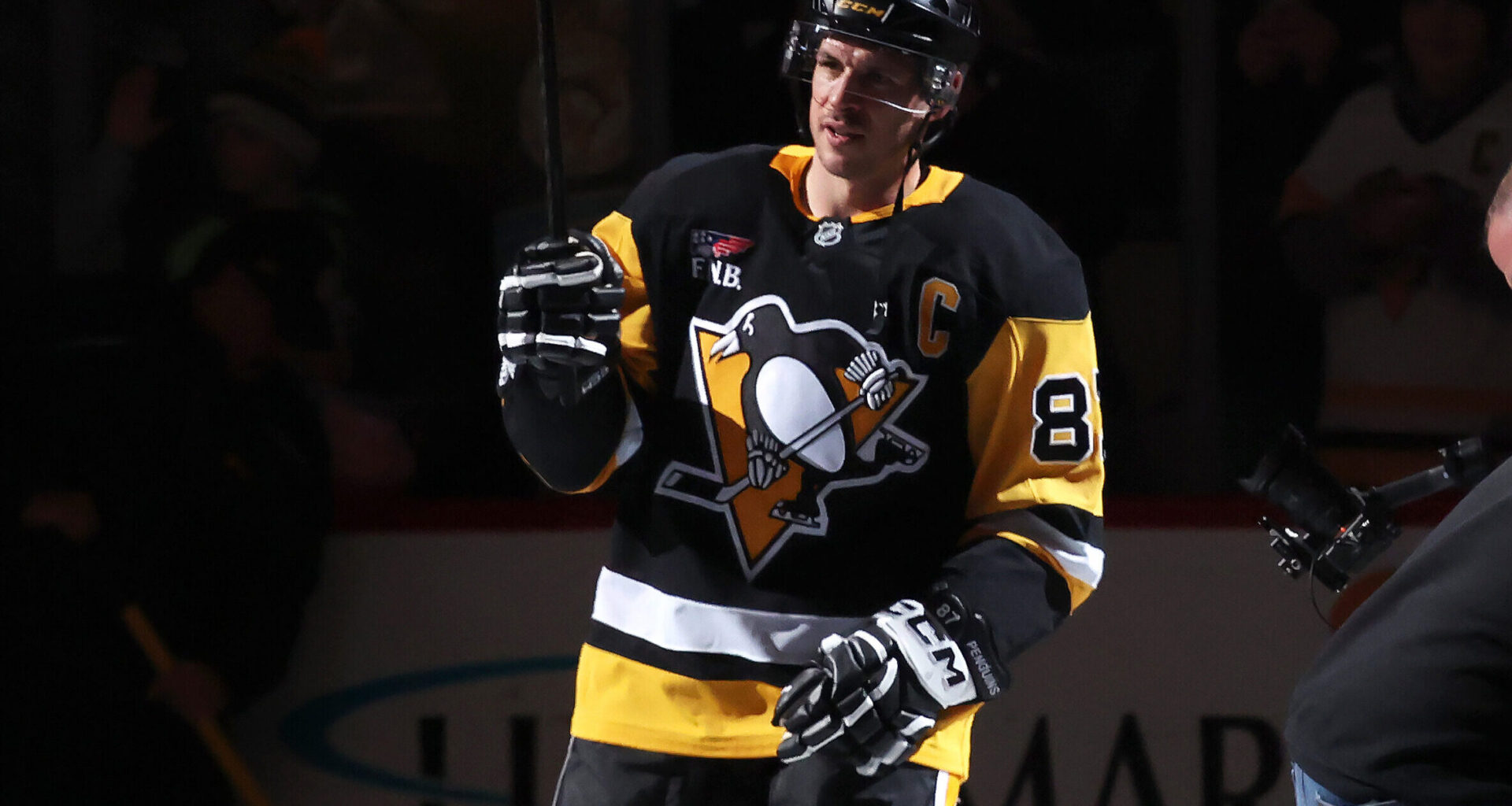
Now that Sidney Crosby has surpassed Mario Lemieux as the Penguins’ all-time leading scorer with 1724 points (now 1725 and counting), the next couple of names on the NHL’s all-time single-team scoring list are entirely consequential to Crosby’s place in history.
Next, Crosby will surpass Steve Yzerman’s Detroit Red Wings mark at 1755. That’s nice, but soon Crosby will become No. 1 on the list when he passes Gordie Howe’s Detroit mark at 1809.
Passing Howe is a mark that only a few players in the game have done, and none with just one team. Counting his time in Hartford, Howe finished with 1850 points, but the countdown is on for Crosby to be the greatest single-team player…ever.
But it doesn’t stop there.
If and when Crosby approaches and passes Howe, there will be no arguments as to Crosby’s elite status in the history of the game. The argument will then become, does he replace Howe as one of the four greatest players ever?
It might be heresy for hockey purists and fans in Original Six cities, but the game is so dramatically different that Crosby’s feat to storm past Howe should be viewed as it is: Crosby joining Lemieux, Wayne Gretzky, and Bobby Orr as the four greatest players ever.
Since Gretzky, has any player influenced more kids to play the game? Influenced more kids to play the game his way, influenced teammates and opponents, and been a better ambassador in the process?
Short answer: No.
Sidney Crosby has not just been the face of the game for this generation that emerged from the 2004-05 lockout, bruised, weary, and confused, but he has shaped the game and how it is played. Sure, contemporary Alex Ovechkin will finish with well more than 900 goals, but he didn’t redefine the game. He didn’t dominate the sport in the same way.
Crosby is the best at everything. From faceoffs (most faceoff wins ever) to his defensive prowess, gritty down-low play, to goal scoring and assists, he will be top-10 in every major stat and unquestionably among the greatest of all-time greats.
He won’t achieve that mark based on longevity, but a longevity of greatness. No one has been better, longer than Crosby, who grew so weary of repetitive questions of his breaking records for 36 and 37-year-old players, that he began to quip, “It just means I’m old.”
No one is asking those questions of the 38-year-old Crosby, because the single-season records are down to him and Howe.
Howe’s legacy as the icon who defined the game as Mr. Hockey for leading the league for a generation and Mr. Elbows for his toughness left an indelible mark upon the league long after he was gone, but that doesn’t mean Crosby can’t be better.
Perhaps the best comparison for Crosby’s career is, indeed, Howe. Crosby has played with toughness and indomitable grit even as the points piled up. And very soon, Crosby will have the statistics to show that he is quite worthy of being ahead of Howe in the conversation among all-time greats.
Tags: Gordie Howe penguins rebuild Pittsburgh Penguins Sidney Crosby
Categorized: PHN Blog