
As December turns into January, this is the part of the season where fantasy value is driven more by deployment than reputation. Injuries, trades, and coaching adjustments are compressing roles across the league, creating short- and mid-term value windows that waiver wires have not fully caught up to yet. The players below all fit that theme. Each one sees meaningful usage through elevated minutes, power-play responsibility, or stable top-six deployment, making them viable adds or streamers right now based on how their teams are actually using them, not just what the box score says.
Data Sources:
Player Data From Natural Stat Trick
Yahoo roster percentages via Frozen Tools.
Line combinations and power-play deployment via Daily Faceoff and Frozen Tools.
All information current as of December 23rd, 2025.
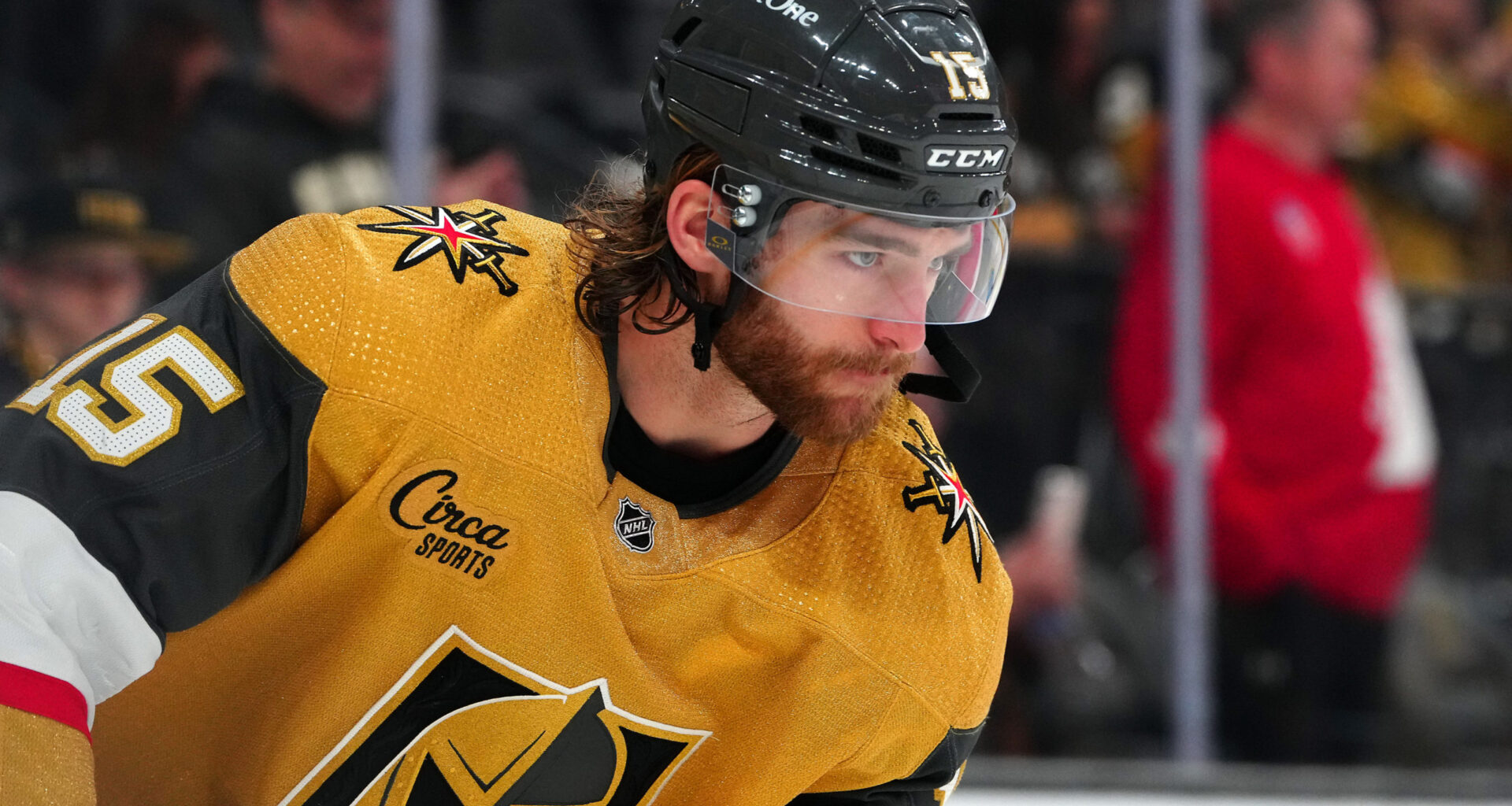
Vegas Golden Knights — Noah Hanifin (43%, D)
Hanifin has become a clean, role-based add because Vegas is missing key pieces on the blue line. With Alex Pietrangelo and Shea Theodore both out, Hanifin is absorbing true top-pair usage and more of the offense-driving workload than he normally carries. Through 25 games he has 11 points while averaging 23:10 per night, and the fantasy-friendly part is the volume underneath it: 65 shots (2.6 per game) plus 39 blocks (1.6 per game) give him a real floor even when he does not hit the scoresheet.
The quarter split supports the usage story. Quarter 2 has been his most productive stretch so far, with 7 points in 15 games and four power-play points, and the game log shows the ceiling when the minutes spike. The three-assist night against Edmonton came with over six minutes of power-play time, which is exactly what you are chasing when injuries force a team to condense its deployment.
Takeaway: Hanifin is a strong add in any format that values minutes, shots, and blocks, and he becomes even more valuable if he continues to see PP1 touches while Pietrangelo and Theodore remain out. The main risk is obvious role compression once Vegas gets healthy, but the short-term setup is exactly what you want to stream or hold.
Columbus Blue Jackets — Mason Marchment (11%, F)
Marchment has landed in a sneaky fantasy-friendly spot after the move from Seattle to Columbus. Through 31 games split between SEA and CBJ he has 16 points with strong banger support, including 39 hits, and he is playing a steady 17:01 per night. The scoring pace is not at his Dallas peak, but the profile is still usable because he brings category coverage and has enough top-six access to run into points.
The quarter split helps explain the shape of the season. Quarter 1 was more playmaking-driven (1 goal, 8 assists) and included plenty of time next to Matty Beniers and Jordan Eberle. Quarter 2 has flipped into finishing, with six goals in 12 games, and the recent game log shows why he is worth streaming right now. He has multiple multi-goal games this month, including a two-goal, two-power-play-goal night against the Kings. Even with only modest power-play time overall, he is still getting enough PP2 exposure to matter when the shot and net-front chances show up.
Takeaway: Marchment is a strong streamer in standard formats and a solid depth add in multicat leagues because the hits keep his floor stable. The upside comes when he sticks in the top six with skilled centers, which Columbus has already shown a willingness to try.
Anaheim Ducks — Mikael Granlund (34%, F)
Granlund is back from injury and immediately looks like the engine of Anaheim’s offense again. Through 19 games with the Ducks, he has 15 points (a 65-point pace) while playing 17:33 per night with a massive 3:34 of power-play time. The role is as clean as it gets for a waiver-level forward. He is taking real center reps, winning draws at 51.1%, and he is being leaned on for offense in every game state.
The usage profile is the selling point more than the shooting percentage. Granlund is still generating volume at 2.2 shots per game, and the power-play share is heavy, sitting at 62% this season. The quarter split stays consistent too: nine points in nine games in Quarter 1, then six points in 10 games in Quarter 2 with the same top-six usage and similar PPTOI. Even when the line combos shift, he keeps landing with Anaheim’s best finishers, most often in looks that include Frank Vatrano and Troy Terry. That is the type of deployment that sustains production even when the team is not scoring in bunches.
The recent game log reinforces the point. Granlund has points in four straight games, including multiple two-point nights, and he just posted three straight one-goal outings while keeping his power-play workload intact. That kind of consistency is exactly what you want heading into the tighter part of the schedule when streaming spots need to produce.
Takeaway: Granlund is a strong add in standard points leagues and an easy hold while he stays locked into a top-line, top power-play role with elite PPTOI. The floor comes from minutes, deployment, and touches, and the upside is a 60-plus point pace as long as the role stays this stable.
Utah Hockey Club — Sean Durzi (13%, D)
Durzi is a volume-driven fantasy defenseman whose value is almost entirely tied to minutes and opportunity, and both are trending the right way right now. Through 18 games he has eight points while playing 20:08 per night, and the peripherals are doing real work: 36 blocks already, which is two per game, plus steady shot volume at 1.8 per game. Even if the scoring sits in the “fine” range, that block rate makes him playable in multi-cat formats on its own.
Quarter 2 is where the role stabilizes. After barely playing in Quarter 1, he has logged 16 games in Quarter 2 at 20:17 per night with 31 shots, seven points, and two power-play points. The power-play usage has also settled into a consistent band around 1:45 per game, and he is getting those reps alongside Mikhail Sergachev most often. That pairing matters because it signals Durzi is staying in the top-four lane rather than getting buried in sheltered minutes.
The recent game log shows a player quietly stacking useful nights even without a goal. He has points in six of his last 10 games, with multiple games logging over 23 minutes and several nights with three or more blocks. That is exactly the profile you want when streaming defensemen, because he can help even when the points do not show up.
Takeaway: Durzi is a strong add in deeper leagues and a solid streamer in standard formats, especially if you need blocks with a realistic path to assists. The ceiling is capped unless his power-play share climbs, but the minutes, shot volume, and block floor are stable enough to hold while he stays locked into this workload.
Philadelphia Flyers — Travis Sanheim (36%, D)
Sanheim is doing the exact thing that keeps defensemen fantasy-relevant even when the raw point totals are “meh”: he is playing an absurd amount and piling up category volume. Through 36 games he has 16 points, but the real story is the usage and peripherals: 24:53 per night, 65 blocks (1.81 per game), and enough hits (0.64 per game) to avoid being a one-category specialist. In leagues that count blocks, this is a real floor.
The power-play piece is the swing factor. His season-long PPTOI is only 1:23 per game, but the quarterly split shows a clear change. In Quarter 1 he was basically a passenger on the man advantage (0:46 PPTOI per game, zero PPP). In Quarter 2, that role expanded hard: 2:03 PPTOI per game and three power-play points in 17 games. That is not a random blip, that is deployment. If that stickiness holds, his assist rate can stay elevated even if he never becomes a big goal scorer.
The game log backs up the “quiet production” angle. He has a steady run of one-point nights, plus a legit ceiling game against Buffalo (two assists and two PPP with 6:29 of PPTOI). Even when he is not scoring, he is still logging 24 to 31 minutes, which keeps the block totals coming and gives him constant access to secondary assists.
Takeaway: Sanheim is a strong hold in multi-cat formats because the minutes and blocks are elite. In points-only leagues he is more matchup-dependent, but the Quarter 2 power-play bump is the reason he is worth rostering right now rather than treating him as a stream.