
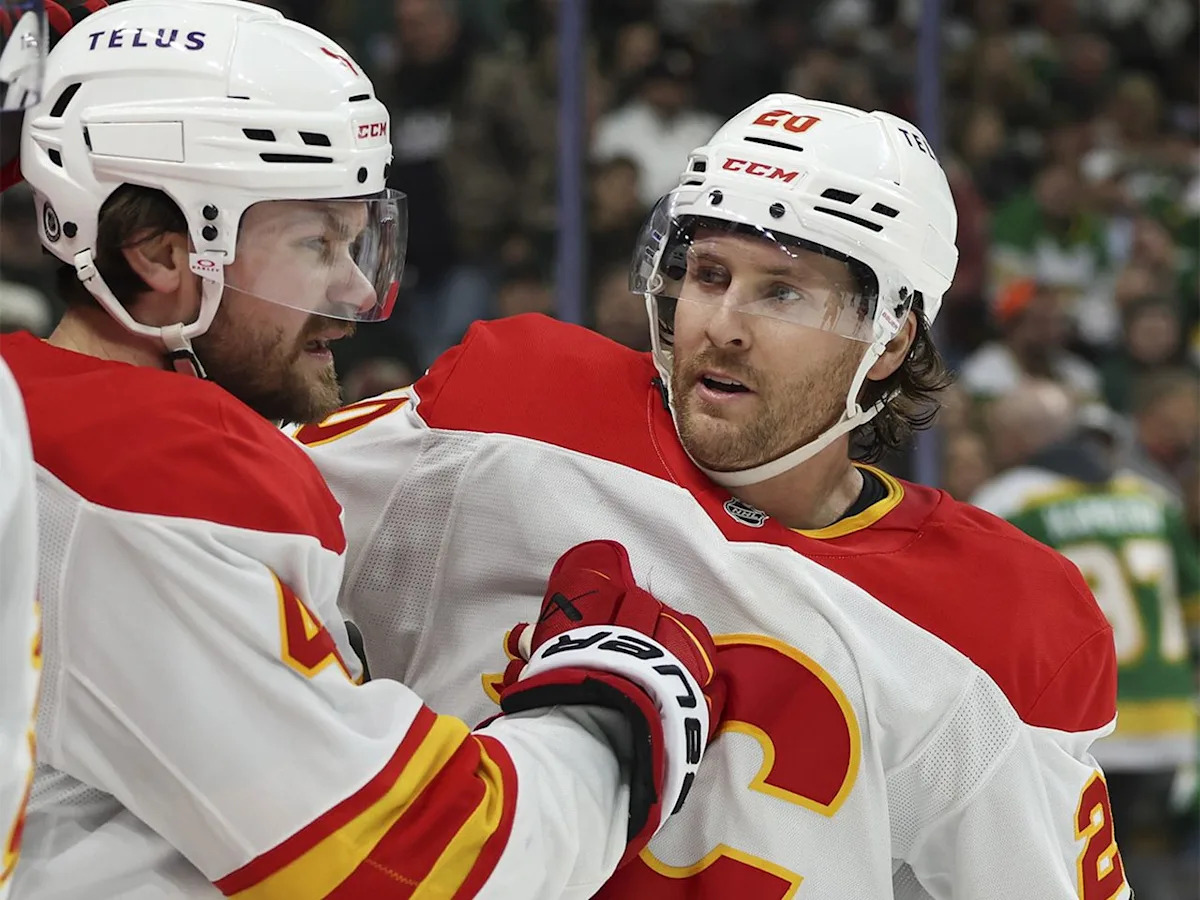
The most recent time Calgary Flames general manager Craig Conroy made a notable roster move was the acquisition of Morgan Frost and Joel Farabee on Jan. 30, 2025.
Unless you count waiver-wire acquisitions or minor contract signings, the Flames essentially have been sitting on their hands for nearly 12 months.
That period of time included an NHL trade deadline, an entry draft, a free-agency push and the club falling to 32nd in the league after getting off to one of the worst starts to a season in franchise history.
Right now, the Flames seem frozen by indecision. A kind of holding pattern where they are not signing anyone, not investing draft futures in roster upgrades, not leveraging their ample salary-cap space, nor trading any of their coveted veterans.
The Flames recently battling their way out of the league’s basement may add to the front office’s hesitancy. Making the playoffs has gone from nearly impossible at the end of October to merely implausible at the start of January.
But Conroy won’t be able to stand on the sidelines much longer. At some point, the front office is going to have to pick a direction.
The Flames may be playing competitive hockey right now, but they remain a franchise in the midst of a transitional period that is nowhere near competing for a Stanley Cup.
Icing a plucky underdog roster that tops out at “making life difficult for opponents” isn’t what players, coaches, GMs or fans dream about.
The pending free agency of Rasmus Andersson is obviously something that needs attention. Currently second on the team in scoring, Andersson is having a career season and is arguably Calgary’s best remaining trade asset.
Blake Coleman is also becoming a player of interest thanks to his high-end, two-way play and reputation as a champion and leader. Recent rumors suggest that as many as 20 NHL teams have called the Flames about his availability.
Andersson is the most pressing concern since Coleman has another year on his deal. The decision to trade or keep Andersson should be the first domino in a series of moves for Conroy.
If Andersson is moved, it will deal a serious blow to the Flames’ already faint post-season aspirations. Management can opt to hang on until the very last minute of the trade deadline, of course, but that risks an injury or market dilution relative to moving him earlier.
In truth, this is not a decision that should be moderated by the club’s position in the standings. Keeping Andersson will come at the cost of a big, long-term contract (think: eight years and $8 million-plus per season), assuming he is willing to re-sign here at all.
The two parties have had months and months to work out a deal, so that seems unlikely.
Losing him to free agency would be terrible asset management and obviously is not an option. Moving him for a large bounty of futures is the most likely scenario, given his performance and prominence around the league.
Keeping Andersson as long as possible to bolster the club’s shot at the post-season seems intuitive, but it doesn’t make sense upon some reflection.
Calgary’s playoff chances range between 10-30%, depending on where you look online. Losing their No. 1 defenceman for the final month of the regular season will hamper their efforts considerably.
In short, if the Flames are selling Andersson, then they are sellers, period. Meaning, if Coleman is one of the most popular trade targets in the league at 34 years old, then he should be moved at the earliest convenience as well.
Related
Other teams already have broken the seal of the NHL trade market. Many contenders are drawing up their wish lists prior to the Olympic break.
The Flames have played relatively well since bottoming out earlier in the year, but as a roster still in a radical redevelopment phase, they remain a work in progress.
“Wait and see” is not an approach that is going to work much longer.
The trade deadline is like a ticking clock and the Flames’ front office still has a lot of work ahead of them if they want to craft a team that competes for Cups, instead of for the nominal plaudits reserved for outcompeting low expectations.