
– Advertisement –
America loves watching sports. Any form of competition, from pickleball to ping pong, finds an audience. Competition fuels interest, and the ability to wager on every play, player, or potential outcome only heightens engagement. As a result, leagues at every level continue searching for new ways to present the same games that have been around for generations.
For nearly 20 years, the NHL has attempted to do just that with its annual outdoor regular-season game. In 2008, the fast-paced sport often described as soccer on steroids with ice mixed in debuted the Winter Classic. The league’s goal was clear: claim New Year’s Day, a date long dominated by college football.
Initially, it worked.
Since the Winter Classic’s debut, the NHL has moved the event across the country, added additional outdoor games, and shifted dates away from a New Year’s celebration. However, following last week’s presentation in Miami, it has become increasingly clear that the league needs more than another location change. It needs a reset.
I am a lifelong hockey fan. Growing up in Chicago, I watched the early 1990s success of Jeremy Roenick, Chris Chelios, and Ed Belfour. As a teenager, I moved and witnessed the launch of the Dallas Stars, along with the first Stanley Cup championship in a city I called home. Despite the move, I never shed my Blackhawks’ colors, and the three Stanley Cup runs from 2009 to 2015 remain some of the greatest sports moments of my life.
When the NHL launched the Winter Classic in 2008, it chose Buffalo. Cold, snowy Buffalo, New York. Sidney Crosby’s Pittsburgh Penguins, then shaping what would become a dynasty, faced the hometown Sabres. The setting could not have been more appropriate.
There was snow, bitter cold, and a dramatic 2-1 shootout finish, with the road team winning in front of more than 71,000 fans at Ralph Wilson Stadium. It was the perfect kickoff to what was intended to be an annual tradition.
That first game averaged 3.75 million viewers, making it the most-watched regular-season NHL game that season on NBC Sports. Since then, the league has surpassed that audience only three times across 15 Winter Classics.
More troubling, since 2020 the event has failed to draw an average of two million viewers in any single year. This season’s game barely topped one million viewers, though it did rise six percent from last year’s low point.
There are several possible explanations. The broadcast partner may play a role. TNT Sports has aired the last four Winter Classics, while NBC carried the event for most of its history. Moving the game away from New Year’s Day may also matter, with fewer people home and watching television during the holiday. Team selection, on-ice competitiveness, and increased sports competition on television all factor in as well.
Still, the larger issue feels unavoidable.
Sports fans are always searching for something new, but they also crave authenticity. The Winter Classic no longer feels special. It needs more than a venue swap. It needs a course correction.
This year’s experiment in Florida illustrated the problem. While the state has become a hockey hotbed over the past several years, manufactured snow alongside sand missed the mark. The musical performances failed to connect with traditional or casual fans, and attempting to present a Canadian sport with a Latin flair felt forced.
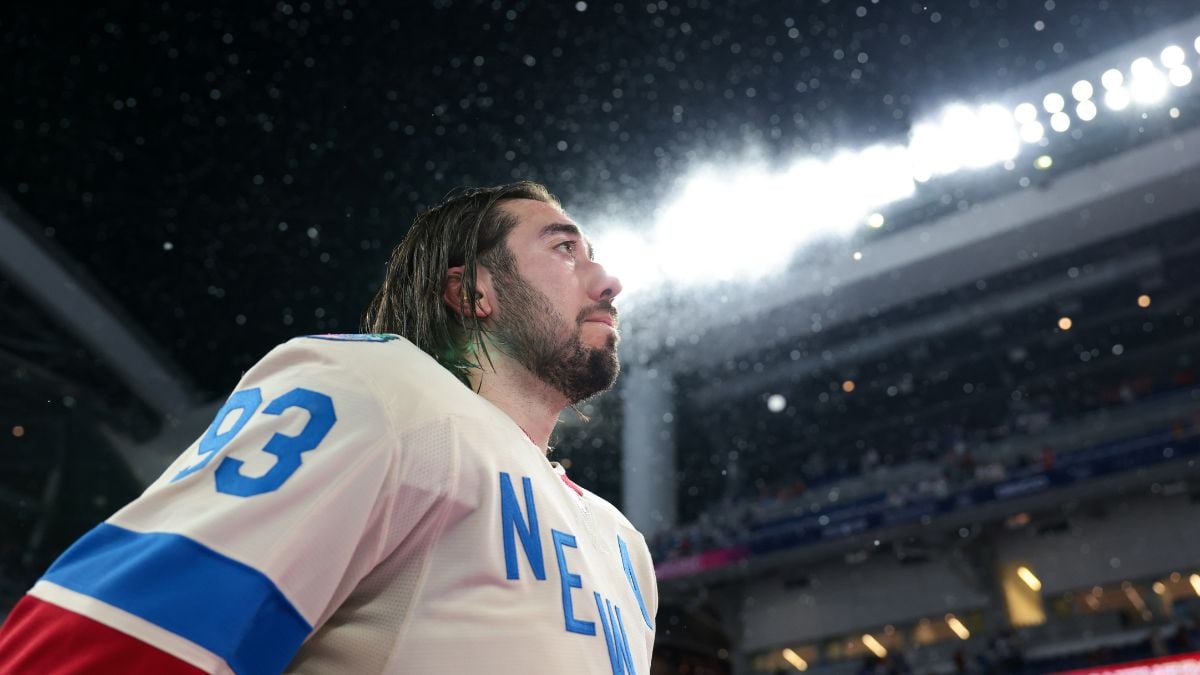
Even more damaging, the game was played in a dome that remains closed more than 98 percent of the year. An event built around the elements cannot thrive indoors. Watching the New York Rangers and Florida Panthers compete while beach activities unfolded nearby created a jarring, almost surreal experience.
The Winter Classic should not take place in regions that do not understand winter. Las Vegas did not make sense, and Florida repeated the same mistake. There is little spectacle in watching a game that is already played indoors simply be played indoors again, even if a retractable roof briefly exposes the ice before puck drop.
Hockey has a feel. It is a sport born in the cold, demanding speed, toughness, and physicality. That identity clashes with analysts lounging in kiddie pools and sipping margaritas while tropical entertainment fills the broadcast.
The NHL now has an opportunity to change course.
With the league announcing that the next Winter Classic will be held in its newest market, Salt Lake City, the chance to reconnect with fans is real. While weather cannot be controlled, the story can. Interest can be rebuilt.
Just like a team stuck in a losing streak, the solution starts at the blackboard.
Lean into the Original Six. Embrace the roots of pond hockey. Tie in Salt Lake City’s Olympic history. Bring back familiar voices like Mike Emrick and Don Cherry. Sell fans on the idea that this is the most unique setting for an NHL game in history.
The Winter Classic was never meant to succeed on novelty alone. It worked because it tapped into nostalgia, grit, and the soul of the sport — hockey as it existed before television contracts, betting apps, and algorithm-driven programming decisions. Cold air. Visible breath. History in every shift.
If the NHL wants the Winter Classic to matter again, it must stop chasing spectacle in places where winter is a costume rather than a condition. The league needs to stop asking how far the idea can be stretched and start remembering why it worked in the first place.
Salt Lake City offers a chance to reset, not reinvent. Strip it back. Let the game breathe and the weather be the star. Let history do the heavy lifting.
Because the Winter Classic does not need to be louder, trendier, or more modern. It needs to be authentic — and in hockey, authenticity has always come from the cold.
Barrett Media produces daily content on the music, news, and sports media industries. To stay updated, sign up for our newsletters and get the latest information delivered straight to your inbox.

John Mamola is Barrett Media’s sports editor and daily sports columnist. He brings over two decades of experience (Chicago, Tampa/St Petersburg) in the broadcast industry with expertise in brand management, sales, promotions, producing, imaging, hosting, talent coaching, talent development, web development, social media strategy and design, video production, creative writing, partnership building, communication/networking with a long track record of growth and success. He is a five-time recognized top 20 program director in a major market via Barrett Medi’s Top 20 series and has been honored internally multiple times as station/brand of the year (Tampa, FL) and employee of the month (Tampa, FL) by iHeartMedia. Connect with John by email at John@BarrettMedia.com.