
For most of the season, the Montreal Canadiens’ biggest storyline has been injuries. Injuries piled up, call-ups were rushed into meaningful roles, and the lineup rarely looked the same from one week to the next. Yet, here we are, the Habs are rolling, hanging onto a strong position in a brutally competitive Atlantic Division, and doing it while missing several key pieces.
Now comes a very different kind of challenge, and one the organization hasn’t faced often in recent years: the Canadiens have too many NHL-caliber players and not enough spots. With reinforcements getting closer to a return, the idea of trading someone away no longer feels impossible.
Surviving the Injuries
The list has been long and punishing. Kirby Dach, Alex Newhook, Jake Evans, Patrik Laine and Kaiden Guhle all spent significant time on the sidelines, forcing head coach Martin St. Louis and general manager Kent Hughes to lean heavily on depth pieces. Players who started the season penciled in as call-ups or fringe NHLers suddenly found themselves playing real minutes in important games.
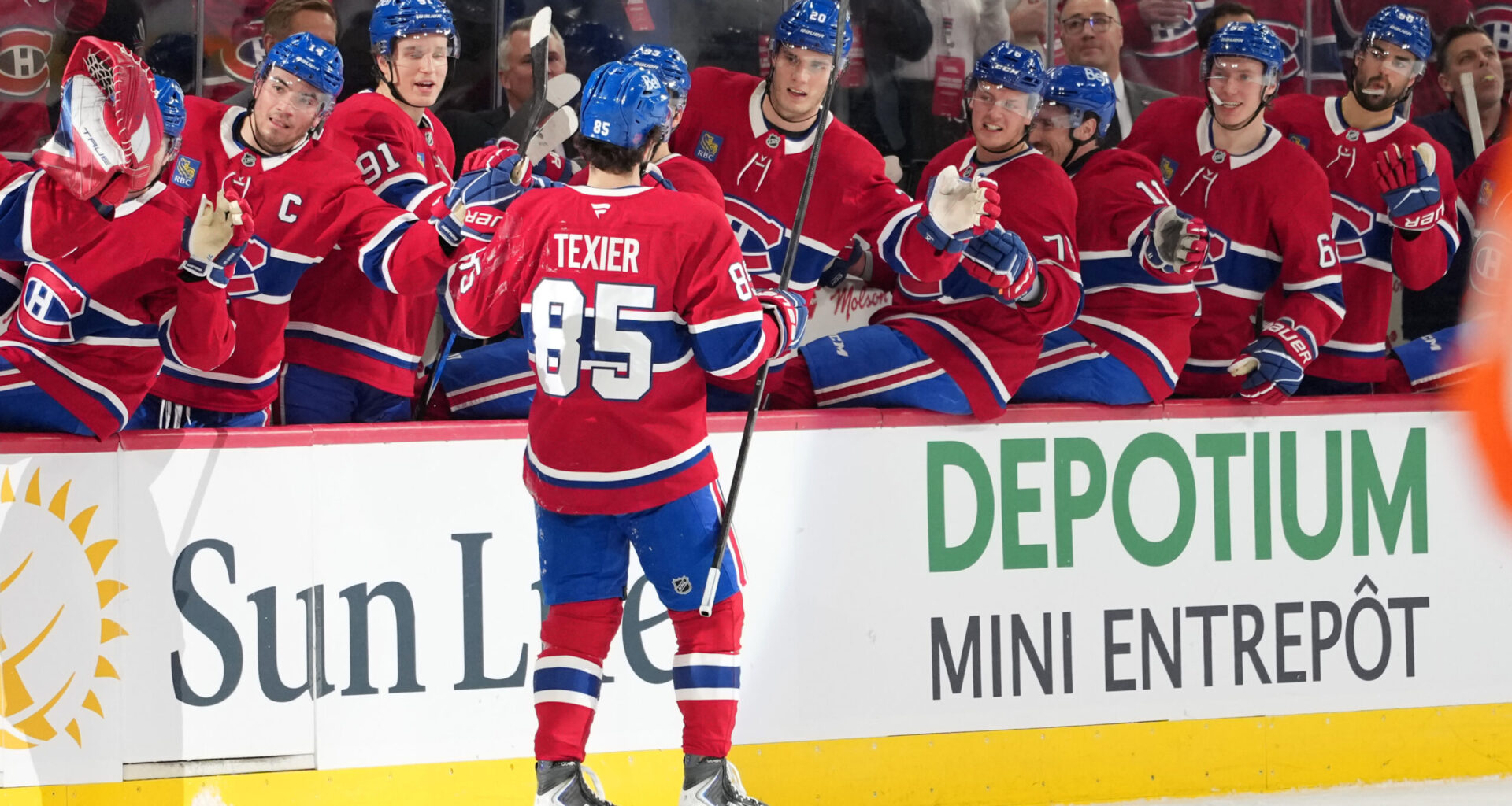
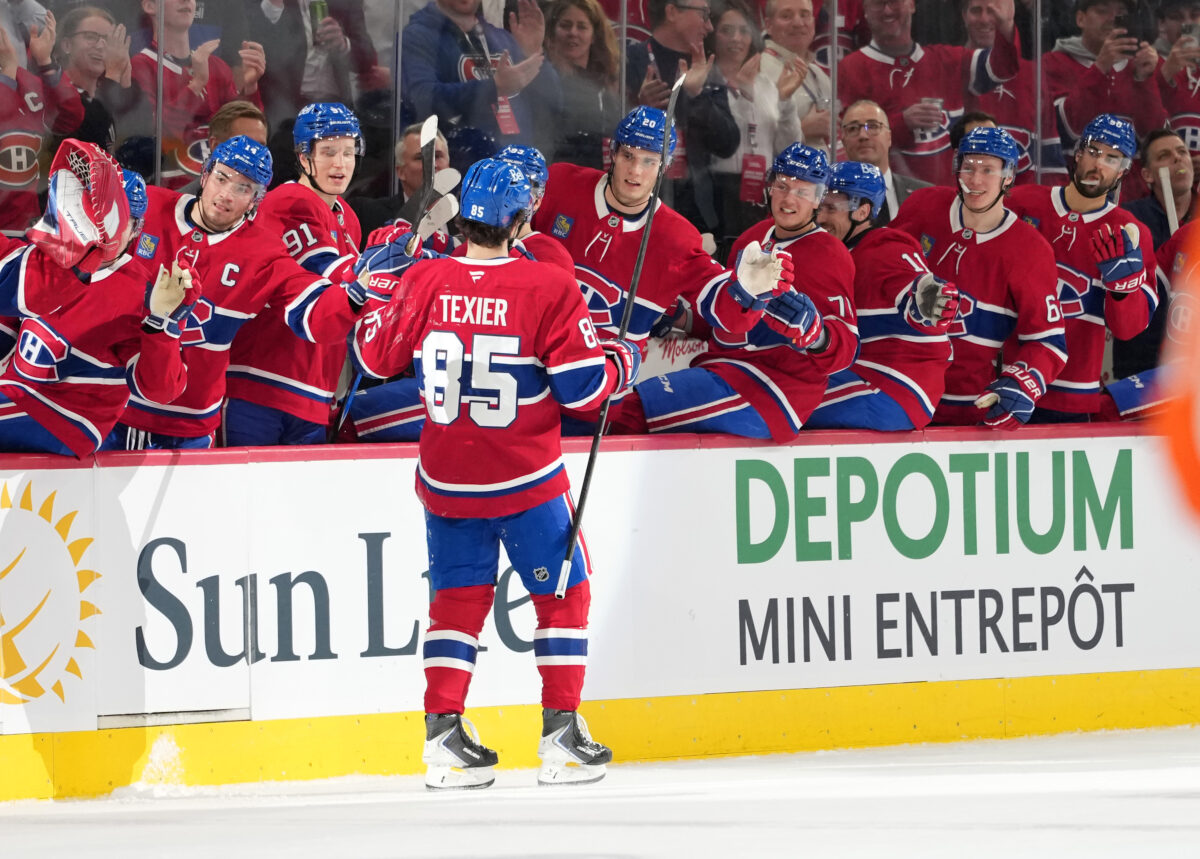 Dec 16, 2025; Montreal, Quebec, CAN; Montreal Canadians forward Alexandre Texier (85) celebrates with teammates after scoring a goal against the Philadelphia Flyers during the first period at the Bell Centre. Mandatory Credit: Eric Bolte-Imagn Images
Somehow, it worked. Montreal stayed competitive. The structure held. Young players didn’t drown, veterans stabilized things, and the team kept collecting points even while missing major contributors. That stretch said a lot about organizational depth, but it also changed the conversation. These weren’t just emergency replacements anymore; several players earned the right to stay in the lineup. That’s where things get complicated.
Too Many Guys, Not Enough Seats
When everyone is healthy, the Canadiens suddenly have a logjam. Up front, there are too many guys who can play. With Alexandre Texier filling in nicely and the Canadiens acquiring Phillip Danault from the Los Angeles Kings, the Habs have two new faces they did not have at the start of the season.
When everyone comes back healthy, the Canadiens will likely sit one of Samuel Blais, Joe Veleno or Owen Beck, or send them to the Laval Rocket. That still makes sense, especially Beck, who can go back to Laval without consequence. But even after those moves, you’re still left with tough calls.
Related: Alexandre Texier Forcing the Canadiens’ Hand With Strong Game
Are you really scratching Texier after the way he’s played? Do you sit a veteran like Brendan Gallagher, who brings leadership and grit? Can you justify taking Josh Anderson out of the lineup entirely when he still fills a unique physical role?
At some point, internal competition turns into a roster squeeze. That’s when front offices start picking up the phone.
Who Could Actually Be Moved?
This is where it gets tricky. The Canadiens have a nice problem. They have too many guys. What about moving someone?
For that, the Canadiens would likely have to trade a player that has value, teams are interested in, and a move that would not derail what the Canadiens are building right now and for the future. In the short term, the Canadiens are in a position to go back to the playoffs for the second straight season. In the long term, you don’t want to touch your young core and promising prospects.
Trading a short-term depth piece doesn’t change much. Moving a core young player could be counterproductive. Dach is an uncomfortable but unavoidable name in this discussion. His talent is undeniable, but so is his injury history. The Canadiens are deep at center, and with Nick Suzuki locked in on the first line and other young pivots pushing, Dach could theoretically be a player other teams ask about.
Veterans like Gallagher or Anderson are harder to move because of contract considerations. That’s why a move may not happen at all, and that’s okay. With that being said, the Habs have a fun issue on their hand.
The important thing is this: the Canadiens don’t need to force anything. For the first time in a while, they’re operating from a position of strength. Internal competition is healthy. Depth is real. Flexibility exists.
Whether Hughes ultimately pulls the trigger on a trade or lets this roster battle itself out internally, the message is the same: the rebuild has reached a new phase. The Habs aren’t just filling holes anymore. They’re choosing between good options.
