
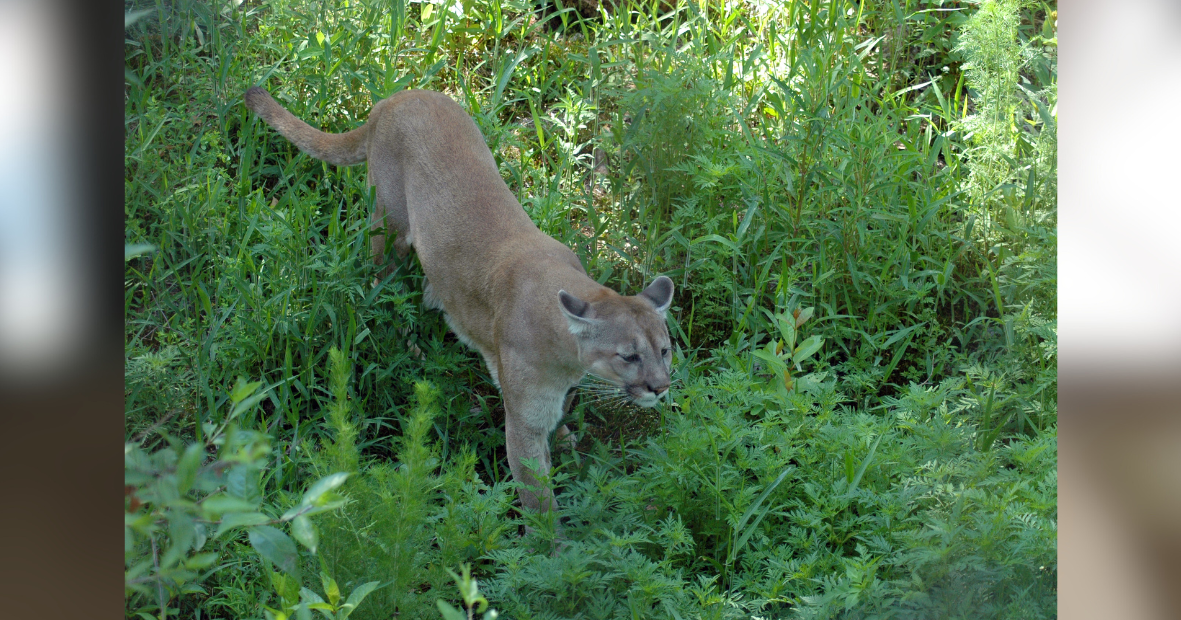
COLLIER COUNTY, Fla.—The Florida Fish and Wildlife Conservation Commission has announced its first recorded panther death for the year, nine days into 2026.
According to the Florida Fish and Wildlife Conservation Commission‘s Panther Pulse website, the 1-and-a-half-year-old to 2-year-old female designated as UCFP497 was discovered on Interstate 75, 0.9 miles north of Collier Boulevard in Collier County.
FWC states the cause of death was due to a vehicle impact.
In 2025, 18 critically endangered Florida panther deaths were reported by the FWC, with 17 fatalities attributed to vehicle strikes.

Florida panther. Credit: WINK News
By Nicholas Karsen
The one outlier was attributed to “intraspecific aggression,” which, according to the Center for Academic Research & Training in Anthropogeny, occurs when animals attack members of their species. Typically, this is done as an act of dominance or when resources are scarce, forcing a struggle to improve survival chances.
Since 2014, the FWC has maintained records of panther deaths, depredations, and births of litters.
When comparing the first recorded deaths of a particular year, the earliest the FWC has reported a fatality was on January 1, 2020, when a female was struck by a vehicle in Hendry County.
The latest a panther death was reported was January 29, 2019, when a 3-year-old male was killed by vehicle in Hendry County.
According to the FWC, the guiding conservation goal for the Florida panther is to manage this significant wildlife resource for its long-term well-being and the benefit of both the panther and people.
There are two ways to purchase a panther plate.
You can become a first-time panther tag owner or replace your current plate with a new one by visiting your local Tax Collector’s office to purchase or renew it in person.
Florida panthers
Renew your existing “Protect the Panther” registration online through the Florida Department of Highway Safety and Motor Vehicles.
In September, the FWC completed its first enrollment period for the Florida Panther Payment for Ecosystem Services (PES) Pilot Program. Eligible applicants could be awarded with per-acre payments for providing habitat conditions that support panther conservation and landscape connectivity, benefiting both landowners and panthers.
The program received 69 applications covering over 172,000 acres in 14 counties; however, only 59 applications met the eligibility criteria.
Nicholas Karsen is a Digital Specialist and has been with WINK News since May 2023.