
On the morning of his much-awaited return to Toronto last Friday, the Vegas Golden Knights made Mitch Marner available to the media at their team hotel at 10:45 a.m.
Fifteen minutes after the Maple Leafs began their morning skate nearby at Scotiabank Arena.
The clash in timing left the local media with a choice: Marner or the Leafs.
Most chose Marner.
Which meant a smaller pack of media for the Leafs skate and no requests for Auston Matthews to speak. The same was true after the Leafs lost in dispiriting fashion to the Golden Knights.
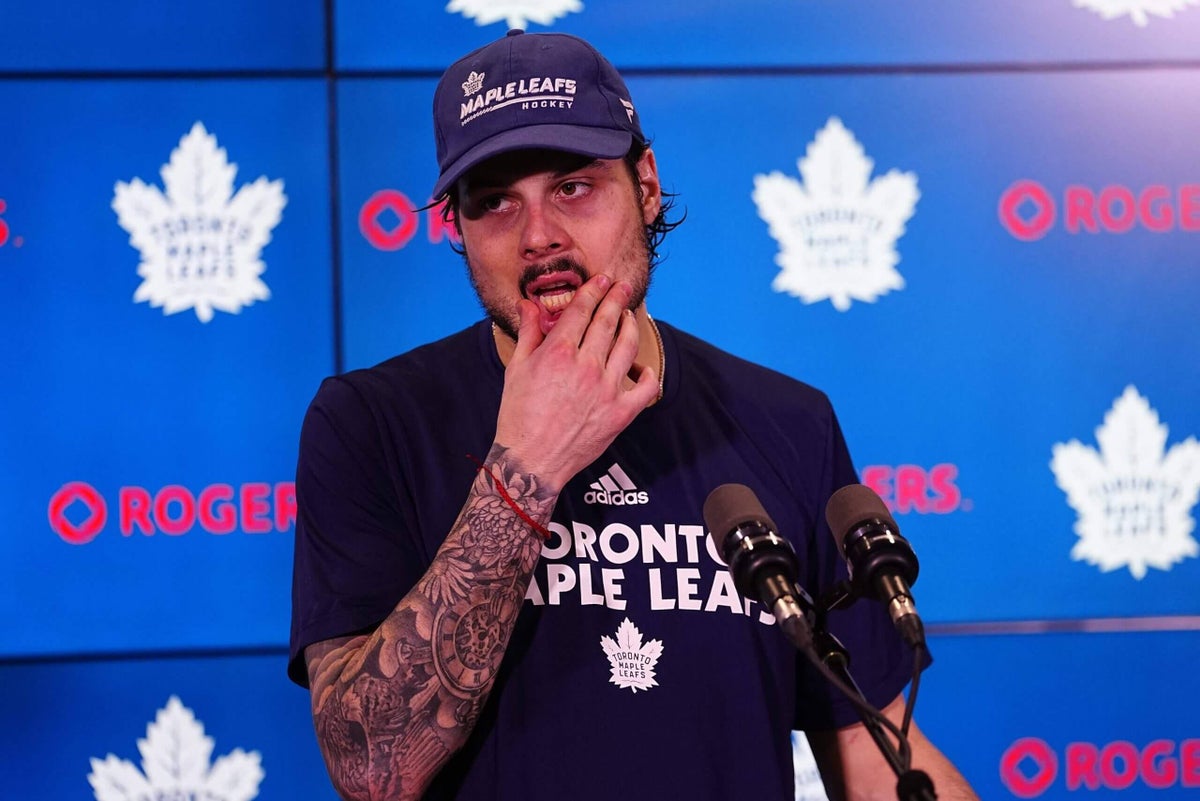
Matthews wasn’t requested. Matthews didn’t speak. There was no refusal on his part to do so.
There’s been confusion about what happened that day and how things work between Matthews, the Leafs and the media in Toronto.
Here’s how it goes.
Before games, the Leafs will generally make two players available to all media who are interested at the back of their dressing room. Those players are typically requested by one representative of the media who ends up doing so on behalf of the group.
Reporters (like me!) are free to request, and speak to, anyone else who skated that morning.
The same is true for the most part after the game.
A request for four players comes in from that one media representative, and others are free to request more as they see fit. (I asked to speak to Matthew Knies following the Leafs’ Sunday loss to Colorado, while the group landed on four others, including Matthews.)
Typically, postgame requests take a familiar form: The goal scorers, the starting goaltender, and if it’s a particularly bad loss, a member of the team’s leadership group — often the captain, but not always.
After that Friday loss to Vegas, the three goal-getters — Scott Laughton, Bobby McMann and John Tavares — along with the goalie, starting for the first time in more than two months — Anthony Stolarz — were requested by the group. All four spoke.
Matthews was told that morning that he might be needed afterward, and was willing and even expecting to do so. The request never came, and the Leafs, mindful of the volume of requests on their captain, didn’t ask.
Which, in hindsight, was a failing of the media (myself included).
It’s possible that Matthews’ snippy response to TSN’s Mark Masters regarding Marner during a pregame broadcast interview scared the group off. Why bother, in other words, asking questions that have to include Marner to someone who clearly wasn’t interested in doing so.
Whether Matthews, as the captain, should speak after every loss, or every game for that matter, is another question. The team tries to be mindful of how much media it asks Matthews to do, given the demands of the market (heavier than almost anywhere) and the fact that Matthews, as the team’s captain and best player, draws by far the most requests.
Not having Marner around, coupled with William Nylander’s absence due to injuries, has meant that Matthews is more in demand than usual this season.
During his first 46 games this season, Matthews did media 43 times, according to the team, plus another dozen in-game broadcast interviews.
It’s not perfect.
After the Leafs unraveled against the Edmonton Oilers on home ice in mid-December, Matthews didn’t speak despite a request from the media. That doesn’t happen much, but it will happen the odd time over the long 82-game season.
Matthews, furthermore, isn’t available to speak outside of scrums, in a one-on-one setting that is, nearly as much as I’d like.
Unlike his predecessor as captain, John Tavares, Matthews isn’t often seated at his dressing room stall when media enter, making more formal or informal conversations difficult. And if he has spoken to the group the day before a game, for instance, Matthews sometimes isn’t made available to speak again the following morning.
But if he’s requested afterward, he will almost always appear.
The truth about Matthews and the media is a little more complicated than it seems.