
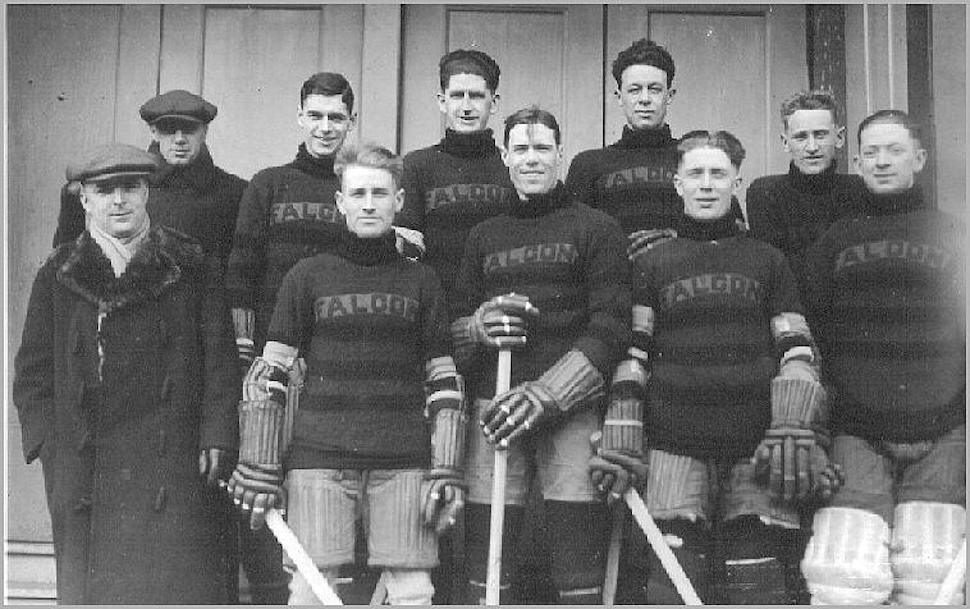
With the 2026 Winter Olympics just days away and four Winnipeg Jets set to compete, a remarkable moment in Canada’s hockey history is about to be brought back into the spotlight.
On February 4, the Winnipeg Jets will honour the 1920 Winnipeg Falcons with a special video tribute at Canada Life Centre during their Olympic send-off game against the Montreal Canadiens. The Falcons were the first team ever to win Olympic gold in hockey for Canada, yet many modern fans don’t know their story.
What makes the Falcons even more extraordinary is that nearly every player on that team was a first- or second-generation Icelander from Winnipeg’s West End. It’s a legacy championed by local enthusiast Rod Palson, who has worked to bring renewed attention to the team’s history.
Listen to the full interview with CHVN Morning Show Host, Mike Thom and Rob Palson below!
Icelandic roots and early discrimination
Rod Palson says his own Icelandic heritage fuels his passion for preserving the Falcons’ legacy. He says that although he has always considered himself a proud Canadian, he is even prouder of his Icelandic roots. (Mike Thom/PNN)
 Rod Palson says his own Icelandic heritage fuels his passion for preserving the Falcons’ legacy. He says that although he has always considered himself a proud Canadian, he is even prouder of his Icelandic roots. (Mike Thom/PNN)
About 14 months ago, Palson began thinking about the upcoming Olympic year and the approaching milestone marking 150 years since the first Icelanders arrived in Manitoba and saw an opportunity to renew interest in the Falcons.
Palson said many hockey fans he knows have heard of the Winnipeg Falcons but did not realise the team won Canada’s first Olympic hockey gold medal or that its players were largely of Icelandic descent. He said that legacy is a deep source of pride within the Icelandic community and deserves wider recognition.
The Falcons’ story began in the late 19th century when Icelandic immigrants settled in Manitoba, learning a new language and adapting to a new way of life. Over time, they also learned the game of hockey.
Early Icelandic players formed teams such as the Icelandic Athletic Club and the Vikings, competing mostly against each other because of discrimination.
Those teams eventually combined to form the Winnipeg Falcons. Despite their growing skill, Palson explained that established teams in Winnipeg initially refused to allow the Falcons into top-tier leagues, underestimating them and discriminating against them because of their background and language. That changed only after the Falcons became too good to ignore.