
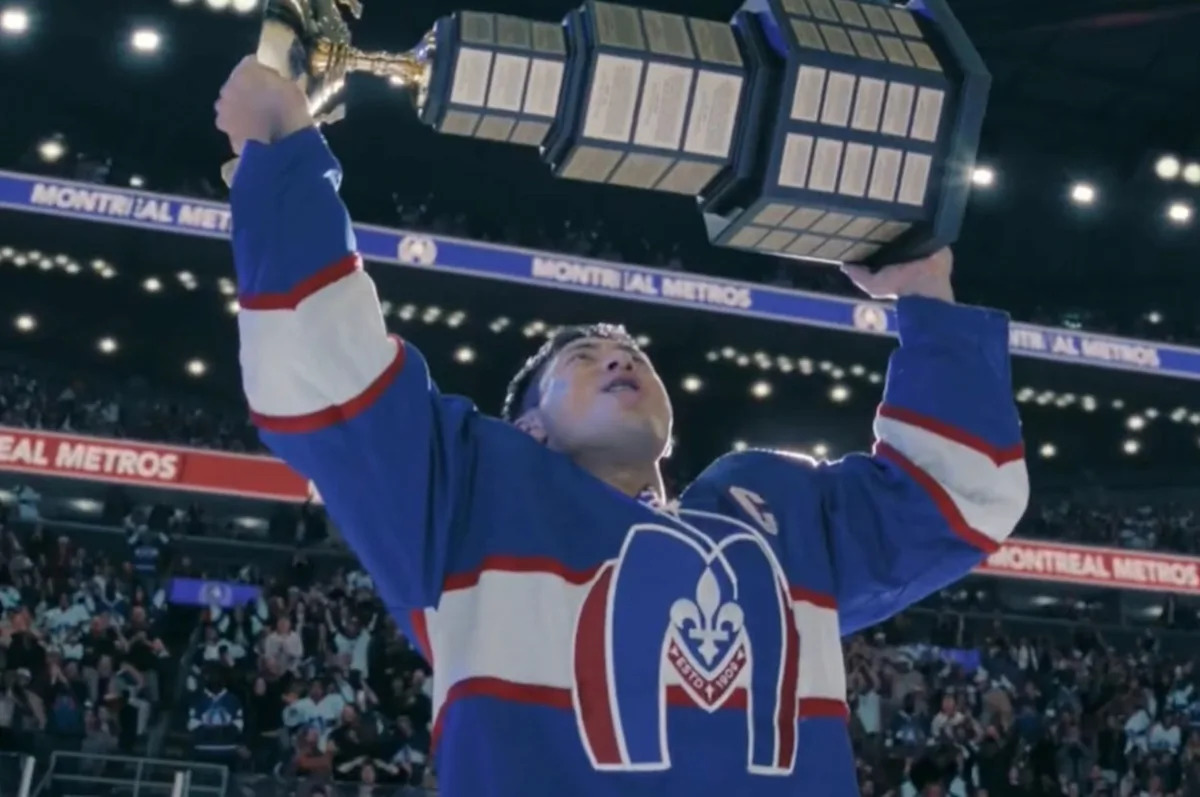
Like many others over the past month or so, I’ve been watching Heated Rivalry. The show was so much fun, and I’m already dying for the next season (hurry up, 2027 release date). What I have found since watching the show, discussing with friends, and watching an embarrassing amount of TikTok edits is that many fans of the show have never watched a hockey game. Heated Rivalry is doing so much to grow the game, and as a long-time superfan, it’s so exciting to me.
Crave
The show’s timing also could not have come at a better time. Not only are we in the middle of an exciting NHL season, but the Winter Olympic Games are in full swing in Milan. That means new hockey fans will have so much exciting hockey to watch. That being said, if you’re a fan of Heated Rivalry and have thought about dipping your toe into the world of the NHL, let me be your guide. So, let’s get started….
Related: If You’re Secretly Attracted To These Animated Characters, You’re Not Alone
The basics of the NHL
Let’s start from scratch! The NHL stands for National Hockey League and has 32 teams. It has two conferences, the Eastern and Western Conferences, and four divisions: the Metropolitan and Atlantic Divisions in the East and the Pacific and Central Divisions in the West. Each conference has 16 teams, and each division has eight teams.
How to Pick Your Team
Want to know how to pick a team? There are so many good ways to pick! You could go by region, so pick a team from where you’re from or where you live. You could also pick a player you like, if you know of any, and then root for the team that player plays for. You could also pick a team with a rich and storied history. Orrrrr if you want me to pick for you, let me suggest my team, the New York Rangers (hehe). We have one of the best goalies in the league, the jerseys are super cute, and we have many celebrity fans, like Margot Robbie and Michael J. Fox.
The Season
Each NHL season has 82 regular-season games. After that, the playoffs start. Sixteen teams make it to the playoffs. The teams that make it are the top three teams in each division and the next two best teams in the conference. The teams that miss the playoffs will have the best chance to get top prospects in next year’s draft. So basically, if a team misses the playoffs, it improves their chances of getting the next Ilya or Shane, so there’s a silver lining. The teams that make the playoffs will play for the Cup, just like the guys from Heated Rivalry.

Crave
The Cup is called the Stanley Cup (sort of like the MLH Cup) and is named after Lord Stanley, the person who started the tradition of gifting the winning team the Cup. To win the Cup, a team must make it through four rounds of playoffs. Teams advance to the next round of playoffs by winning four games before the other team does. This means playoff rounds will last four to seven games. Each round is the same two teams playing against each other until one team wins. The team that wins the final round of the playoffs gets to lift the Cup and have all their names engraved into one of the rings on the trophy. Also, fun fact, like in the show, guys really will grow playoff beards and not shave until they’re eliminated from the playoffs or Stanley Cup Champions.
Related: I’m Not Kidding, 93% Of People Can’t Get 11/11 On This General Knowledge Quiz
 The Rules
OK, so there is a lot to unpack here, but I’ll keep it simple. During a game, there are five skaters and a goalie on the ice for each team. This is three forwards (two wingers and a center) and two defensemen. Each game is 60 minutes long with three 20-minute periods. There are usually 17 minutes in between each period. Whichever team has scored more goals at the end of the 60 minutes is the winner. If there is a tie, the games go to overtime. In the regular season, this means that they will play for five more minutes with only three skaters and a goalie on the ice for each team. These five minutes are sudden death, so if a goal is scored, the game ends. If the game is still tied after five minutes, the game goes to a shootout. This is similar to penalty kicks for any soccer (or football, sorry, I’m American) fans out there.

The shootout sees each team send out one skater at a time for a 1v1 against the goalie. The shootout is best-of-three. If, after three skaters per team, the shootout is tied, teams go one at a time, and the first team to score without allowing a goal in the same round is the winner. The shootout will go on until there is a winner. During the playoffs, if a game is tied after regulation, it continues with full 5v5 20-minute periods until there is a winner, but it’s sudden death like regular-season overtime. By the way, the longest game in playoff history went to 6OTs and lasted over 176 minutes!
Related: Eat A 6-Course European Meal And I’ll, With No Doubt, Guess Your Sign
Starting the Game
Each team can carry and dress 20 players for a game. Teams can call up a player from the minor league (each team has a minor league affiliate) if a regular player is hurt. (Also, some players will be sent down to the minor league for conditioning if they aren’t playing well.) Typically, there will be four groups of forwards and three groups of defenseman that will rotate between ice time and the bench. These groups are called lines: forward lines have three skaters, while defensive lines, known as defensive pairs, feature two skaters. Lines/pairings will come out together and play one shift. A shift is typically just under a minute in length. Once their shift is done, players will change, and the next line/pairing will come out. Coaches may choose to keep the lines the same each night or shuffle players around game by game, sometimes even while the game is being played.
Players have to be careful when changing, as it is against the rules to have more than five skaters (plus the goalie) on the ice at once. There will be repercussions if a team is caught with too many players on the ice. Each game will start with a face-off (these will also occur at each stoppage of play), where one player from each team, typically the center, will attempt to get the puck that is dropped by the referee and pass it back to their team. The team that wins the face-off controls the puck for the first play of the face-off until they turn it over to the other team, pass it deep to change lines, or score a goal.
Penalties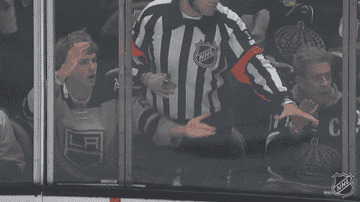
To go into all the rules of the game would be a lot of info, but I want to cover something basic that you’ll probably encounter in your first NHL game: penalties. Penalties occur throughout the game and can significantly impact the final score. When a player is called for a penalty, they sit the length of the penalty in the penalty box and are ineligible to go back to the bench or the ice before their time in the box is over. It’s basically like being told to sit in the corner and think about what you did.
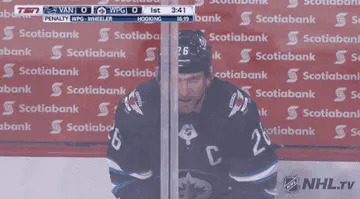
There are two main types of penalties: major and minor. A major penalty lasts five minutes, and the main way people get it is by fighting. In this case, both teams would have a player in their penalty box (the ones who fought) for five minutes, and each team would continue to skate at 5v5. Minor penalties are more common, and there are a variety of ways to be called for one. Common minor penalties include tripping, roughing (often like fighting but not as dramatic, and gloves stay on), interference, hooking (wrapping the blade of your stick around an opposing player), and high-sticking (hitting an opposing player up high with your stick). For these penalties, the naughty player sits in the box for two minutes, and their team has to skate down a player. That means the team that committed an infraction is on the penalty kill and has to skate 5v4. The team that drew the penalty (the team whose player was affected by it) gets to be on a power play and enjoy two minutes with one more skater than the other team. These power plays often yield a goal for the team with the extra skater, so taking too many penalties could be dangerous. A double minor might be called if a minor penalty is committed and the player affected is bleeding. This usually occurs when a player takes a high stick to the nose or mouth. The player has to stop bleeding before they can play, but once they are cleaned up, they can play on the power play (and often do, hockey players are super tough). A power play will end early if the team that has the extra skater scores a power play goal. If a short-handed goal (goal by the team with four skaters) is scored, the power play will continue.
Related: Eat At A 24-Hour Buffet And I’ll Guess Your Favorite Pixar Movie
The Standings
So, you start watching some games and want to know how your team is doing. I got you. There’s a simple way to see how your teams stack up to others in the league. You just need to peek at the league standings. They can be a bit confusing at first glance, but I have a simple way to understand them. Each team accrues points as the season goes on; better teams have more points. After each win, a team adds two points to its point total. If a team reaches overtime but loses, they still earn one point. This is called the loser point and is pretty divisive, tbh. If a team loses in regular time (regulation), they get zero points. So if a team plays 10 games and wins six in regulation, loses two in OT, and loses two in regulation, they would have 14 (out of the possible 20) for that 10-game stretch. If you were looking at the record written out for that stretch, it would read like 6-2-2. The first column is regulation wins, the second is losses in regulation, and the third is losses in OT.
More Hockey!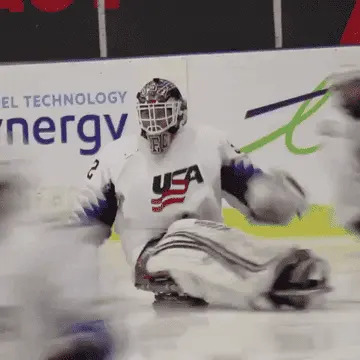
Let’s say you start watching the NHL and fall in love (it’s easy to do) and want more. There’s plenty more hockey to watch! There’s college hockey, which is pretty popular in some regions and is a great way to watch some of the future stars of the NHL. There is also the PWHL, the Professional Women’s Hockey League, which has been around for only a few years and continues to gain popularity. The league just expanded and is likely going to expand again in the near future. If the hockey bug is hitting you now, you can enjoy the Winter Olympics. There, countries assemble super teams of the best players from across the NHL, minor league teams, and more to play an international best-on-best tournament. This is also the first Olympics to feature NHL players in over 10 years. You can cheer your country’s best players on all February as they hunt for the gold. Sled hockey will also be played at this year’s Paralympic Games, a really cool version of the game featuring some incredible athletes.
In conclusion
As it may be evident now, I really love hockey. And I think you can love it too! It’s a pretty simple game to pick up, and attending a game in person is unmatched, but if you can’t make it, watching it on TV is also a lot of fun. Plus, it’s fast-paced, and the playoffs are the best playoffs in sports, in my own humble opinion (and I’m right). While this didn’t cover absolutely everything you’ll encounter, I think it should get you going on your hockey journey. I mean, if you start watching now, you’ll have something good to do before Season 2 of Heated Rivalry and will be a pro by the time it drops. So, I’ll leave you with this: Give it a try – you might love it! I know I do. If you have any questions, drop them in the comments!
This post was written as part of the BuzzFeed Community Creator Program. Interested in joining? Sign up here to be notified when applications open up for the next round of Community Creators!
Also in Community: Eat A Gigantic Pile Of Food And I’ll Guess Your EXACT Age
Also in Community: Pick Red Flags And Green Flags To Find Out Which Type Of Romantic You’ll End Up With
Also in Community: Not To Get Tooooo Personal, But I Know The Type Of Friend You Are Based On Your Meal Choices