
The round-robin stage at the 2026 Milan Cortina Olympics gave us our first real look at how the Minnesota Wild’s players are performing on the international stage. With group play now complete, there’s enough sample size to start identifying trends, both good and concerning. So how strong have the Wild’s Olympic performances actually been so far?
Filip Gustavsson Struggling with Consistency and Stability
Sweden opened round-robin play with a 5-2 win over Italy, but Gustavsson’s night was not as smooth as the final score suggests. He finished with 20 saves on 22 shots, yet the early minutes were messy. As described in Sweden’s 5-2 win over Italy recap, Italy scored first and capitalized on early pressure, with Gustavsson dropping his stick during one chaotic sequence in front.
The bigger concern was how quickly things unraveled. Gustavsson was tagged for allowing two goals on the first four shots he faced, and those are the kinds of pucks that feel like they’re leaking in rather than being forced through elite offense. He steadied himself as the game went on. Still, through the round-robin, the starts have lacked sharpness.
Quinn Hughes Makes Playmaking Look Effortless
Sweden opened round-robin play with a win over Italy, but Gustavsson’s night was not as smooth as the final score suggests. He finished with 20 saves on 22 shots, yet the early minutes were messy. Italy scored first and capitalized on early pressure, with Gustavsson dropping his stick during one chaotic sequence in front.
The bigger concern was how quickly things unraveled. Gustavsson was tagged for allowing two goals on the first four shots he faced, and those are the kinds of pucks that feel like they’re leaking in rather than being forced through elite offense. He steadied himself as the game went on. Still, through the round-robin, the starts have lacked sharpness.
In the U.S. men’s 5-1 win over Latvia, he recorded two assists against Latvia, showing how seamlessly his vision and passing translate to the Olympic stage. Hughes continued his strong play in the 6-3 win over Denmark, helping the U.S. remain undefeated while orchestrating offense from the blue line. Hughes also contributed with assists in the 5-1 win over Germany, further cementing his role as a primary playmaker for Team USA.
His ability to find teammates in traffic and make crisp, creative passes has been a major factor in the Americans’ early dominance. Hughes is setting the tempo, proving his skill set thrives beyond the NHL.
Matt Boldy Creating Chances and Driving Momentum
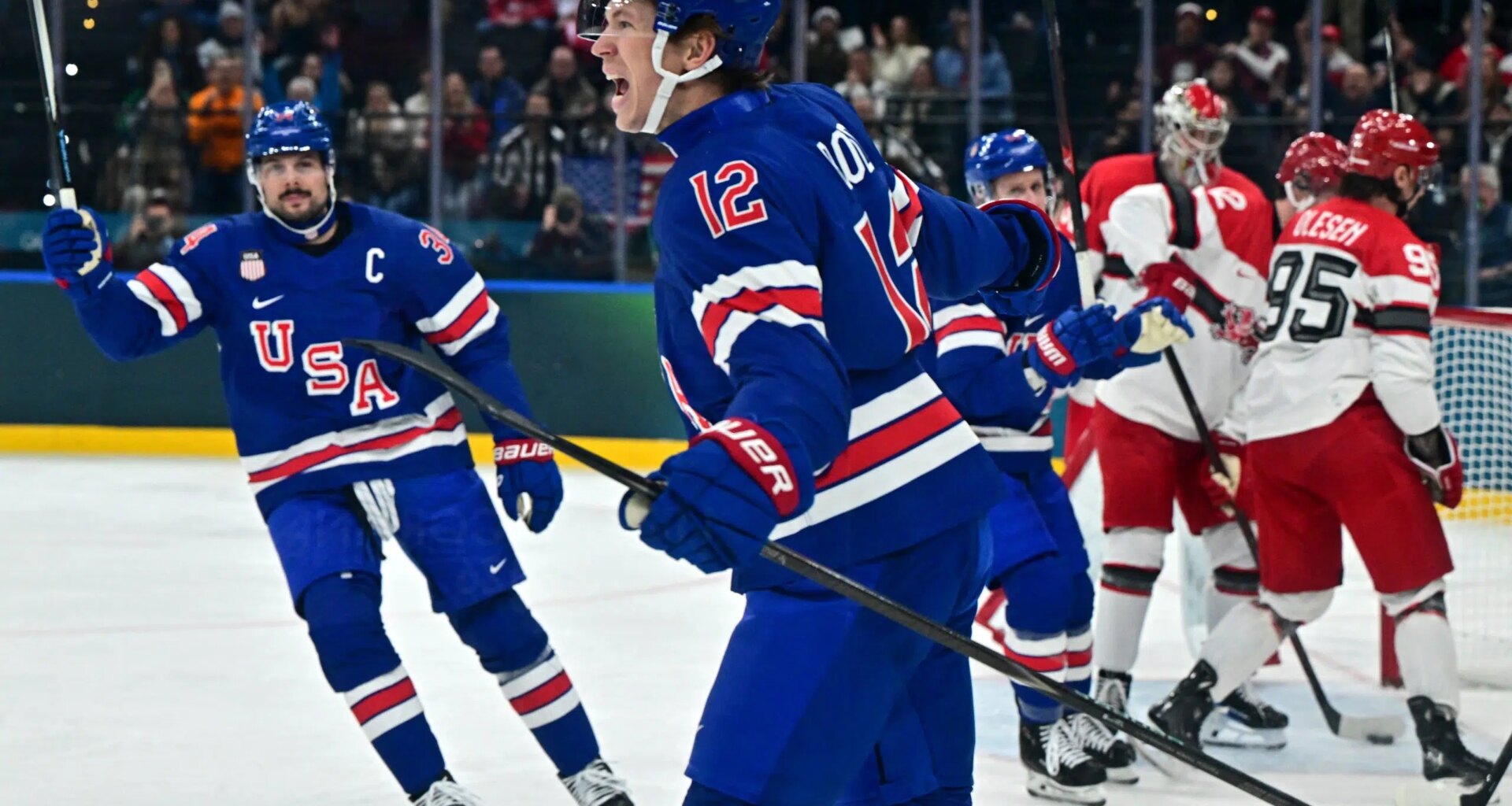
From the first puck drop, Boldy has set the tone for the Americans, driving the play and energizing his teammates. In the 5‑1 win over Latvia, he was a key playmaker, creating chances and making plays while setting up scoring opportunities, even if he didn’t find the back of the net. He followed that with a goal in the 6‑3 win over Denmark, helping the U.S. maintain its undefeated streak, showing his finishing touch on the international stage. Boldy also contributed offensively in the 5‑1 win over Germany, continuing to make his presence felt with smart passes and puck protection.
Boldy’s blend of creativity, speed, and hockey sense has translated seamlessly to Olympic ice, turning seemingly small moments into momentum shifts. If he keeps driving play and creating opportunities, he’ll be one of the tournament’s most exciting forwards to watch
A Winger Balances Defense with Scoring Impact
Brock Faber has been a steady presence on the blue line for the U.S., combining reliable defense with timely offensive contributions. In the 5-1 win over Germany, he scored a goal for Team USA, giving the Americans a comfortable lead and showcasing his ability to jump into the play. While he didn’t record points against Latvia or Denmark, Faber’s defensive positioning and puck-moving have been crucial in keeping the U.S. in control throughout the round-robin.
Whether shutting down opponents in his own zone or helping transition the puck up ice, Faber’s game has been consistent and impactful. His combination of size, awareness, and willingness to contribute offensively makes him a key part of the Americans’ early tournament success.
Wild Players Leave Their Mark Heading into Knockouts
Through the round-robin, Minnesota Wild players have had a noticeable impact on Team USA and Sweden, both good and bad. Hughes and Boldy have driven the offense with crisp passing and timely scoring, Faber has balanced that with steady defensive work and a goal against Germany, and Gustavsson’s starts have been uneven, but he has shown resilience. Beyond the Wild, Eriksson Ek also contributed with a goal, while goaltender Wallstedt has yet to see ice time.
As the tournament moves into the knockout rounds, it will be interesting to see how these Wild players continue to shape their teams’ performances and whether their skills can carry them deeper into Olympic competition.