
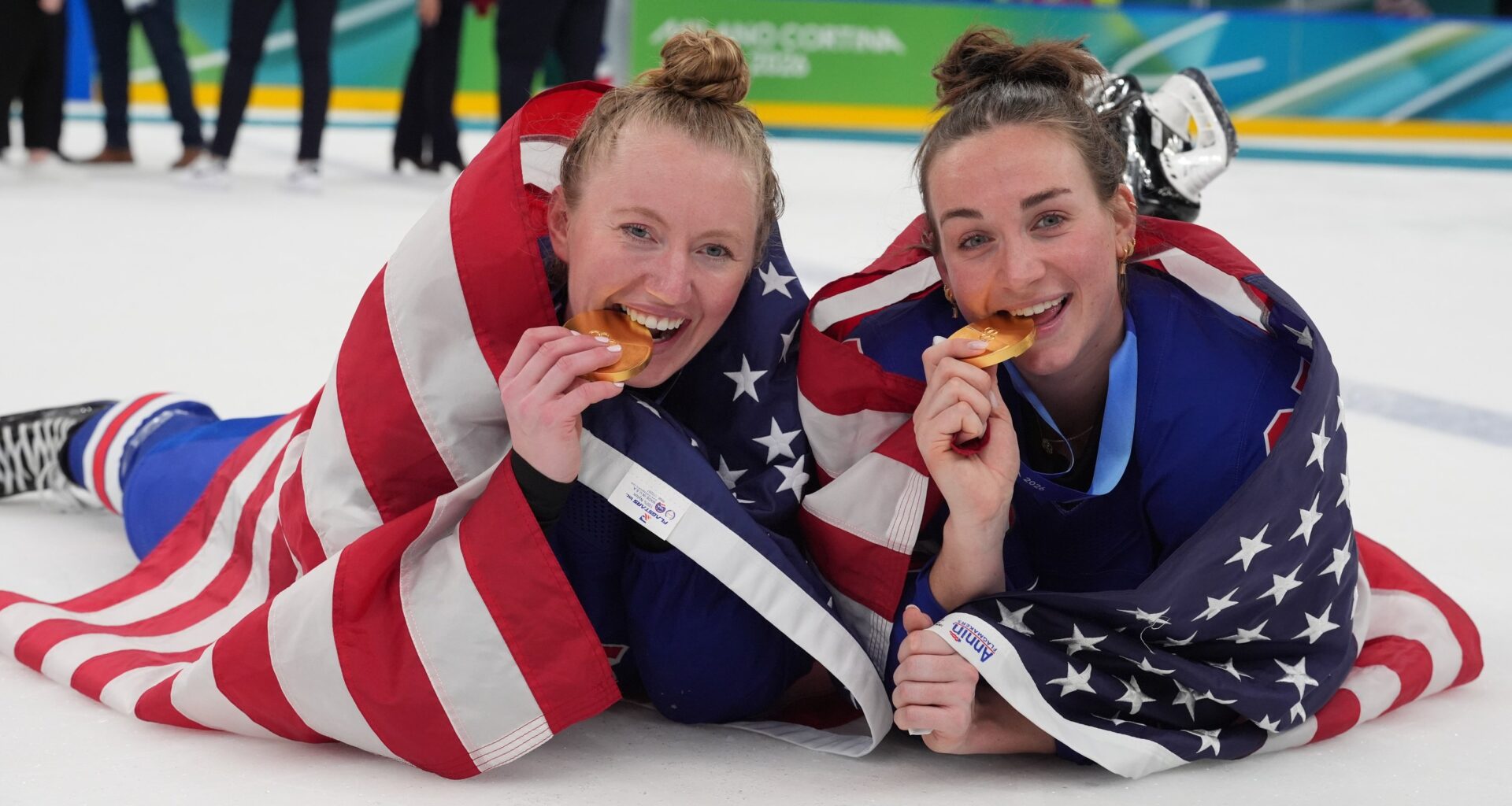
The U.S. women’s hockey team winning Olympic gold is more than a championship on ice; it’s a statement about where the sport stands in America and how deeply it is woven into places like Minnesota. Their 2-1 overtime victory over Canada capped an intense tournament and delivered a defining moment for the US and the State of Hockey.
Team USA’s gold came in classic fashion: a tight defensive battle, an early Canadian lead, a late American push, and a golden goal in overtime. Trailing 1-0 deep into the third period, the U.S. forced its way back into the game before Megan Keller buried the winner in OT, securing a 2-1 triumph and flipping what looked like a Canadian coronation into an American celebration.
It was yet another chapter in the sport’s greatest rivalry, but one that underscored how far the U.S. women’s program has come since women’s hockey joined the Olympic program in 1998.
The win also reflects the maturation of a younger American core that had been building toward this moment through previous world championships and Olympic cycles. For veterans, it was validation of years spent pushing for better resources, visibility, and respect; for newcomers, it was proof that they can carry the national program’s legacy forward. Together, they delivered a performance that will be replayed and retold every four years as the standard for what USA Hockey expects of itself.
For the United States, this gold medal is a rare point of uncomplicated national pride. Millions who might not follow hockey regularly tuned in to see the stars and stripes take on Canada in a winner-take-all showdown, and they watched an American team show poise under maximum pressure. In living rooms, bars, and watch parties, people who couldn’t name a single women’s pro team still felt the stakes and found themselves cheering on every backcheck, blocked shot, and rush up the ice.
The victory also carries symbolic weight in the broader story of women’s sports in America. The U.S. women were competing not just for a medal, but for visibility, investment, and respect equal to their impact. Their gold underscores that women’s hockey can anchor primetime broadcasts, drive merchandise sales, and inspire viral moments every bit as much as any men’s event. It strengthens the argument for continued funding of girls’ programs, expanded professional opportunities, and better media coverage at every level of the sport.
If the win belongs to the United States, Minnesota owns it in a meaningful way. The state has long been a primary pipeline for USA hockey, supplying top players, goaltenders, and leaders to the women’s national team. Many of the women who skated in this tournament grew up on Minnesota’s outdoor rinks, starred in the girls’ high school state tournament, or developed at local colleges that have become national powerhouses.
For communities from the Iron Range to the Twin Cities suburbs, seeing “their” players on Olympic ice gives the medal an intensely local flavor. Minnesota’s influence is not just about numbers; it’s about identity. The fast, skilled, relentless style on display from Team USA mirrors what is taught and celebrated at rinks across the state.
When the American women climbed the podium, coaches and volunteers back home could point to that moment and say, This is what our culture produces. The gold validates decades of investment in girls’ hockey in Minnesota, from early-morning practices to packed state tournaments, college rivalries, and the quiet work of parents sharpening skates and driving to rinks in subzero temperatures.
The impact of this gold on Minnesota’s hockey future could be enormous. Olympic success has a history of boosting youth participation, and no state is better positioned than Minnesota to catch that surge on the women’s side. Young girls who watched the game, many of them wearing jerseys of their favorite American or local stars, now have a concrete, recent example of what is possible if they stay with the sport.
At the same time, this victory offers momentum for existing high school and college programs to push for even higher standards. It becomes a recruiting tool, a rallying point, and proof that “from Minnesota to the Olympics” is not a slogan but a track record.
In locker rooms across the state, coaches will reference this gold medal game as they talk about work ethic, resilience, and belief. For both the United States and Minnesota, the U.S. women’s gold is not just the end of a tournament. It’s the spark for the next wave of players who will chase their own place on Olympic ice.
Think you could write a story like this? Hockey Wilderness wants you to develop your voice, find an audience, and we’ll pay you to do it. Just fill out this form.