
This in from various Toronto hockey commentator, their sometimes scathing analysis of Team Canada’s player selection, with the management group led by St. Louis GM Doug Armstrong failing to select key players, including Edmonton’s Evan Bouchard and Zach Hyman, who mesh so well on the Oilers with Connor McDavid.
Most forceful was NHL insider Nick Kypreos of Sportsnet, who said on the Real Kyper and Bourne show,
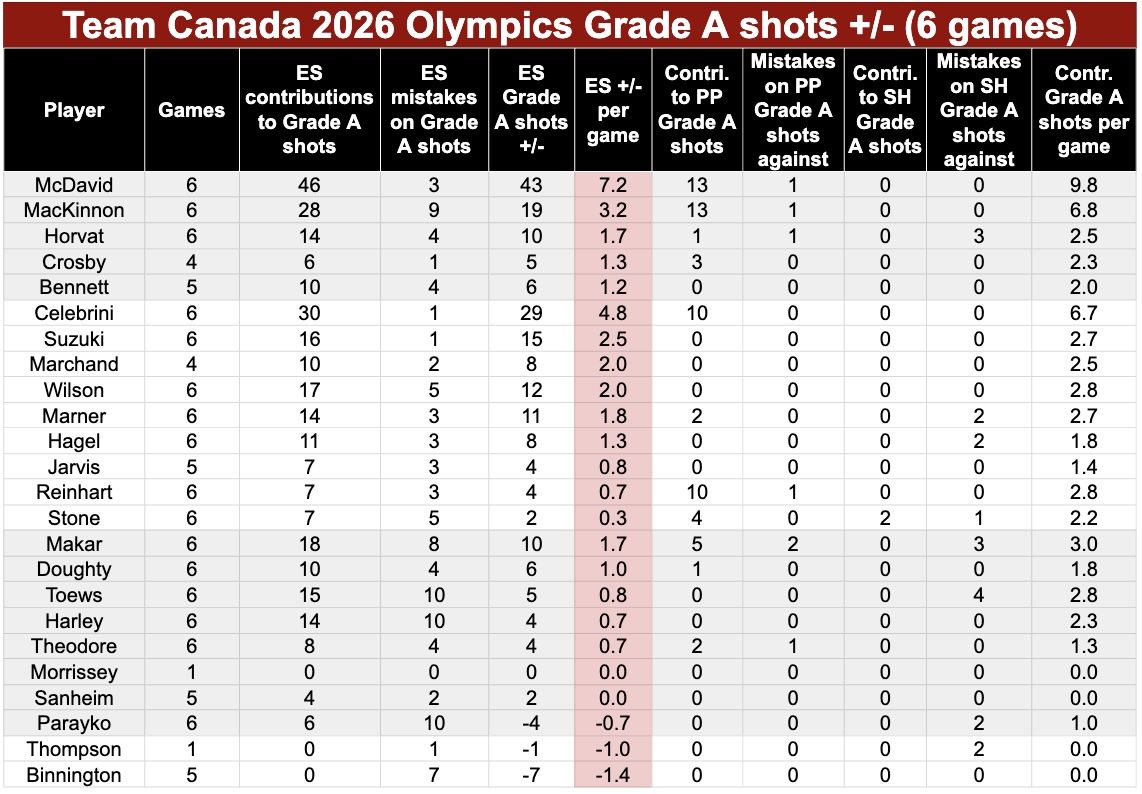
“I think we didn’t have the right guys,” said Kypreos of the roster make-up. “I look at that power play, and I would rather have revisited a better net front presence with Zach Hyman than three shooters. Celebrini, McDavid and McKinnon all wanted to be on the perimeter, all wanted that open space to shoot the puck 20 feet, 30 feet, but I saw nobody stand in front of the net for a minute and a half, okay?”
Kypreos also questioned the selection of aging d-man Drew Doughty, now 36 and having struggled this year in Los Angeles. “You guys tell me if I’m wrong, okay? But Drew Doughty couldn’t play… Please tell me why someone would be in a meeting for Team Canada and say that if we lost (puck-moving d-men Cale) Makar or (Josh) Morrissey, Drew Doughty can come in and fill that? And you don’t feel like that he could?
But they couldn’t play him six minutes.”
Co-host Justin Bourne said the loss of Morrissey to injury was a huge blow to Canada.
“It was just a big mistake. And they got to wear it. I like Drew, but Drew’s at the end of his career.
Drew couldn’t play.”
Kypreos said before the tournament he and others on the show had agreed Canada should bring in young and mobile Matthew Schaefer as a depth d-man, as well as Oilers d-man Evan Bouchard. “You needed one of those two guys to step in for Morrissey being out. Drew Doughty was not it.”
In the Athletic, Toronto writer James Mirtle said something of the same: “While it makes some sense to take different types of D men to fill different roles, Canada didn’t really have a great replacement for Makar in the No. 2 role with Morrissey out — especially given Doughty’s age (and diminishing skating ability) and Cooper’s lack of trust in (puck-moving d-man Shea) Theodore. Canada ultimately dominated the chance counts, but in some cases, those opportunities were coming off the sticks of some depth D, who weren’t likely going to create goals. In other words, Canada could have used another skilled playmaking defender like Matthew Schaefer or Bouchard as their seventh or eighth D.”
On the Ray & Dregs show, former NHLer Ray Ferraro of Vancouver also brought up Bouchard’s absence, but was less certain he should have been included.
“Without Josh Morrissey, you lose a puck mover. I didn’t think that Bouchard was going to make it (the team) because I think I feared the play where he just kind of blanks out. Like that worries me. And I felt that probably had a lot of weight. That sort of stuff is why he wasn’t there. But if he was your specialist D in the game, your seventh D that just played on the power play in a shift here and a shift there. Man, maybe if he’s back at the point and he opens up a little room by shooting the way he can, then maybe so. But I put it this way. Had they had that 5-on-3 not occurred or had they scored? No, I don’t think we would have been talking about Evan Bouchard. But that situation showed up. And they didn’t score. So of course, it has to be talked about.”
My take
1. Team Canada got goalied in the game. They put 27 Grade A shots on the American net. Team USA could only muster 14, but managed to win 2-1 because Hellebuyck played the best game of any goalie this century, when you take into account the pressure on him and the many outstanding saves he made.
Given that Team Canada was so dominant when it comes to flow of play, why question the line-up? There are a few good reasons.
2. First, the point that Mirtle makes is compelling. A number of Team Canada’s best scoring opportunities came off the shots from players like Travis Sanheim and Devon Toews. But Sanheim has just six goals in 56 games this year, while Toews has one goal in 42. Doughty has three goals in 48 games and fellow Team Canada defender Colton Parayko one goal in 57 games.
How much more dangerous and more likely to score on hard-earned scoring opportunities would Canada have been with d-man shooters like Schaefer, 16 goals in 58 games, Bouchard, 15 goals in 58 games, or Jakob Chychrun, 21 goals in 57 games?
All three of Schaefer, Bouchard and Chychrun were reportedly looked at by Team Canada. All three were rejected in favour of Toews, Sanheim, Doughty and Parayko.
3. Of course, Team Canada doesn’t need just d-men who can score goals. It also needs excellent two-way defenders. It needs solid defenders period. But the obvious problem with Team Canada’s defence — mentioned repeatedly by critics of the selection process this fall and winter — was the possibility of one of the team’s two elite puck movers, Makar and Morrissey, getting injured in the tournament.
Who would move the puck if one or both went down? Who would run the power play? Who would snap dangerous stretch passes to Team Canada forwards breaking out of the d-zone?
Team Canada could pick eight d-men in total. I heard almost no one complain about the picks of Makar, Morrissey and solid puck movers Toews, Thomas Harley and Shea Theodore. But in the other three spots Team Canada went with defensive d-men, Sanheim, Parayko and Doughty, instead of reserving even one of those depth spots for Bouchard, Schaefer or Chychrun.
The thinking was that even if Bouchard or Schaefer never played they’d be ready to step up in case Makar or Morrissey went down, or in case Harley or Theodore struggled. And that’s exactly what happened with Morrissey’s injury.
4. Another argument from Team Canada management was that they wanted to mostly go with the team that won the Four Nations tournament. And that’s exactly what they did with the defence. But that Four Nations team had only barely won. And at least one of the d-men, Parayko, had struggled with the pace of play in the Four Nations tournament.
Not only that, Parayko and Doughty had struggled this year in the NHL. Why not take Bouchard and Schaefer in their place, with Sanheim around as the designated defensive d-man on the team?
Team Canada final
5. As for Hyman, his absence in front of the net on Canada’s 5-on-3 was glaring. No one screened Hellebuyck on that 5-on-3. Everyone spread out wide to make pretty plays and take outside shots. And Canada failed to score.
6. Of course the main reason for taking Hyman is he has so much existing chemistry with Connor McDavid. In a short tournament, such chemistry can be hard to find, which is why Canada ended up stacking its three best offensive players all on the same line, McDavid, Macklin Celebrini and Nathan MacKinnon. But what if McDavid could have played on a line with Hyman and, say, Mitch Marner or shooter Mark Scheifele. Then Canada could have gone with a second line featuring MacKinnon and Celebrini.
7. When Sidney Crosby went down, taking away the firepower of his line with Marner and Mark Stone, Canada became over-reliant on a few players. Hyman, the West’s top forechecker in the 2025 Stanley Cup playoffs, and Bouchard, so comfortable and excellent playing with McDavid, would have added to the players capable of functioning well in such pressure-packed circumstances.
8. Canada needed just one more goal. As much as this great team was able to apply pressure to Hellebuyck and Team USA, I strongly suspect one or two more goals would have come if Bouchard and/or Schaefer and Hyman had been in the line-up. And that would have made all the difference.
But we’ll never know.
How do you see it?
At the Cult of Hockey
Finally! Struggling Edmonton Oilers forward likely to be traded this week, NHL insider says
Hottest goalie prospect gets demoted by Edmonton Oilers. Huh!?
‘Ended up costing Canada’: Critics blame McDavid in Olympic gold medal loss. Hmm