
Posted on Wednesday, February 25, 2026
|
by The Association of Mature American Citizens
|
0 Comments
|
On February 25, 1940, a historic milestone in both sports and broadcast history unfolded at Madison Square Garden in New York City: the first National Hockey League (NHL) game was televised in the United States, ushering in a new era for how fans would experience hockey and live sports forever.
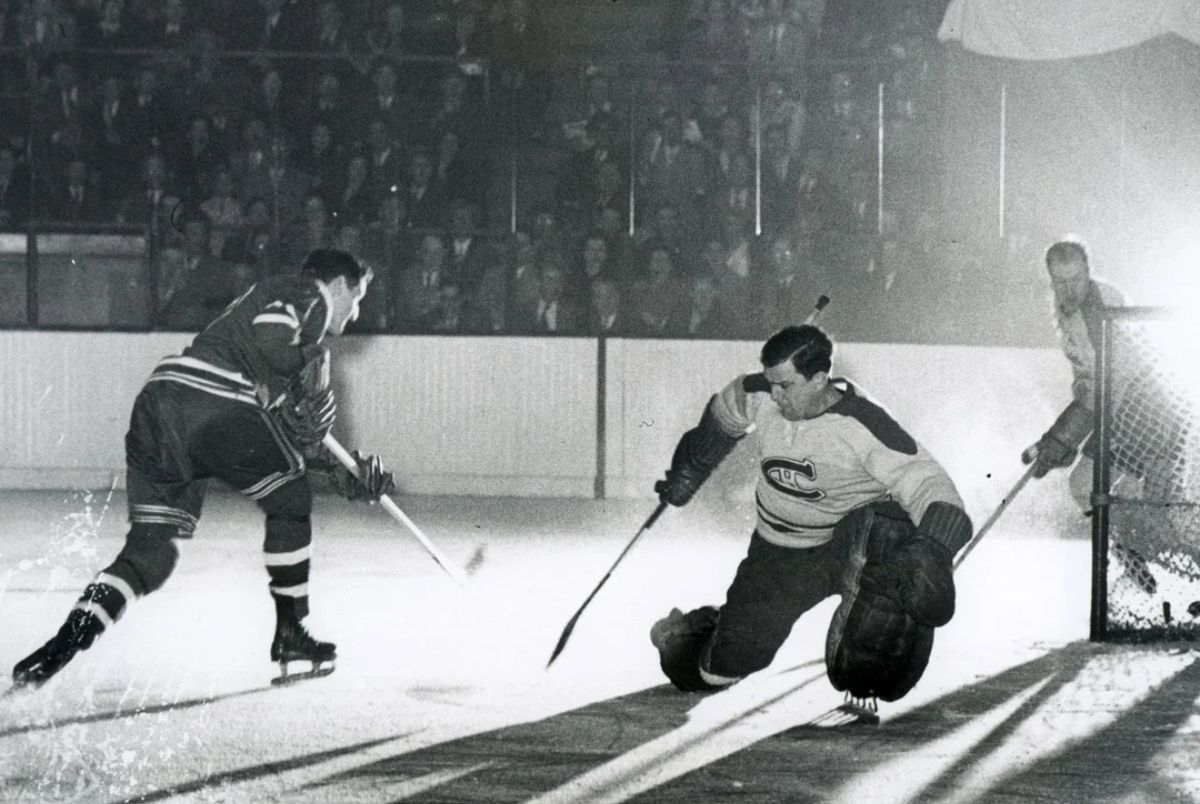
Long before high-definition screens and multi-camera replays, television was still an experimental technology in 1940. Radio remained the dominant medium for news and entertainment, and only a few thousand television sets existed nationwide. Yet on this late winter evening, an NHL matchup between two of hockey’s Original Six teams — the New York Rangers and the Montreal Canadiens — would be broadcast live over W2XBS, the experimental television station owned by the National Broadcasting Company (NBC).
For the handful of viewers with access to the new technology — an estimated 300 households in the New York area — the experience was raw and imperfect. With a single, stationary camera mounted above the ice and primitive equipment that struggled with light and motion, the game flickered onto small black-and-white screens. Shadows and glare from the arena’s lighting sometimes obscured the action, and there were no close-ups or instant replays — just the steady, live feed of players skating and the puck sliding across the ice.
Despite its technical limitations, the broadcast was a breakthrough. It marked the first time an NHL game was transmitted on television in the United States and represented one of the earliest intersections of professional sports and this emerging medium. The Rangers triumphed over the Canadiens by a 6-2 score, with standout performances that would have been lost to history if not for the fledgling cameras rolling that night.
Though the audience was small and the equipment crude, this experiment laid the groundwork for a transformation in how sports would be consumed. Within a decade, television ownership would surge, and sports broadcasts would become a staple of American culture. By the 1950s and ’60s, hockey and other professional sports had regular television coverage, making heroes out of athletes and bringing games into living rooms across the nation.
For the NHL, the 1940 broadcast was an early recognition of television’s potential to expand its reach and popularity. What began as a modest, one-off experiment eventually evolved into multi-million-dollar broadcasting contracts decades later, shaping fan engagement and helping elevate hockey into a major televised sport.
In retrospect, the Rangers-Canadiens game of February 25, 1940, stands as more than a score in the record books; it was a watershed moment — where ice, broadcast technology, and a fledgling audience combined to change the way the world watches sports.
