
Back in August, we explored what the Buffalo Sabres should do with players scheduled to become free agents, either unrestricted or restricted, after the 2025-26 NHL season. A lot has changed over the six months.
Most importantly, the Sabres have emerged as a legitimate playoff contender in the Eastern Conference and it appears the franchise finally has a foundation to build some sustainable success. Ending the club’s 14-year playoff drought would be the first major step in the right direction.
Buffalo also signed Josh Doan, who was acquired from the Utah Mammoth in the blockbuster JJ Peterka trade, to a seven-year contract extension. It established him as a key cornerstone alongside the likes of Rasmus Dahlin, Tage Thompson, Owen Power and Mattias Samuelsson.
The Sabres have some difficult decisions on the horizon, though. They still have several impending free agents, including Alex Tuch, and just $13.3 million in projected salary-cap space for 2026-27, per PuckPedia. It doesn’t leave much financial flexibility ahead of this season’s trade deadline.
In turn, the Blue and Gold may be forced to seek out rentals as potential short-term upgrades in order to prevent the offseason outlook from becoming even more complicated. Any more significant trades may have to wait until the summer when the cap picture will become more clear.
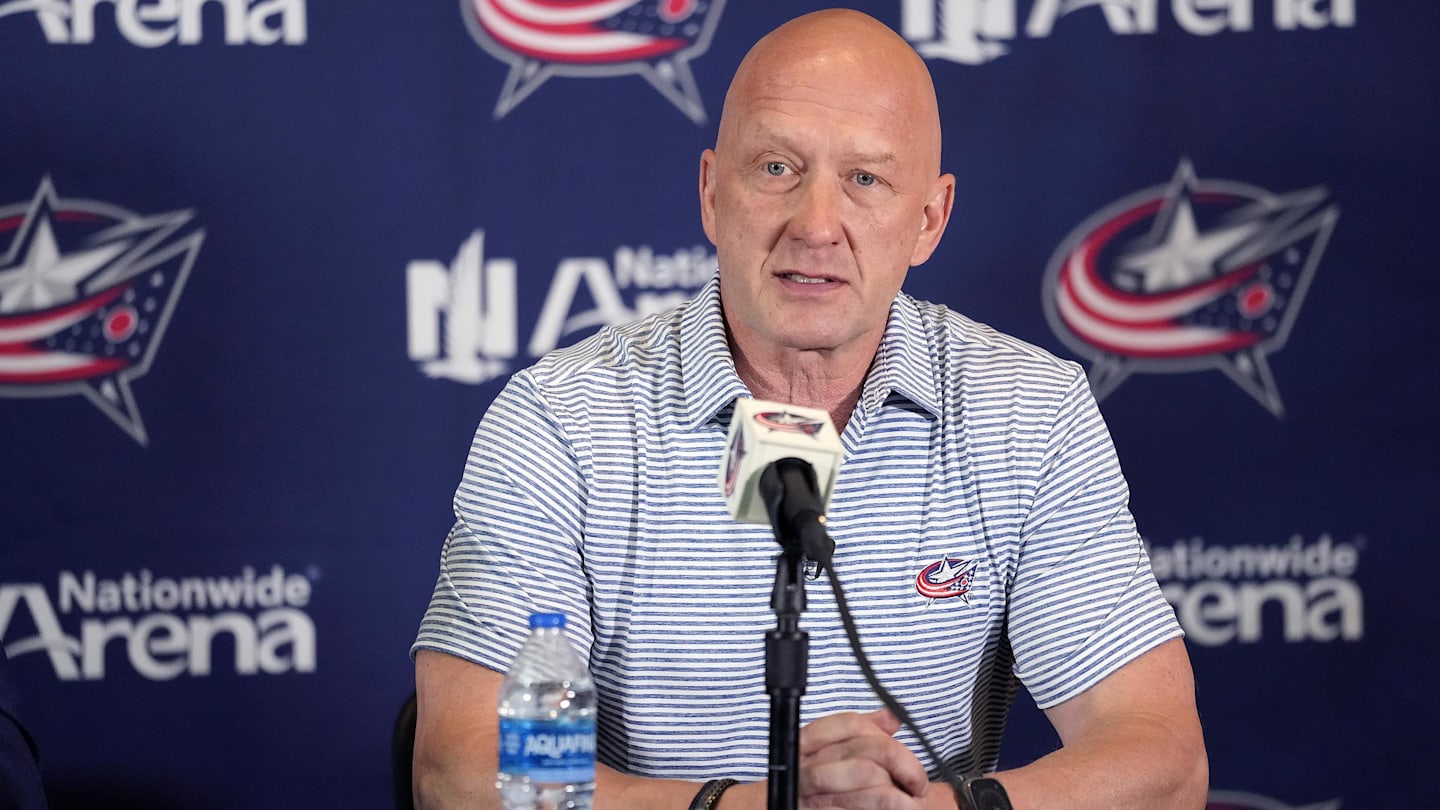
Meanwhile, let’s make some updated predictions about how general manager Jarmo Kekalainen will handle the important internal decisions prior to free agency this summer.
Alex Tuch (UFA)
At this point, the Sabres have little option beyond keeping Tuch as an “own rental” and then letting him explore the open market.
They can’t risk losing the locker room by trading away a vital contributor in the middle of the postseason chase and meeting his asking price, which is projected around $10.5 million annually on an eight-year contract, likely wouldn’t age well since the winger will be 30 in May.
Perhaps Tuch’s market won’t be as strong as his agents expect. That could allow the Sabres to bring him back over the summer at a more reasonable salary or term. But if another organization is willing to pay him a double-digit AAV into his late-30s, letting him walk is probably the right call.
Prediction: Allowed to hit free agency
Beck Malenstyn (UFA)
While Malenstyn isn’t a must-sign player, he fills a unique role for the Sabres as a high-energy fourth-line winger who delivers a lot of hits. Nobody else on the roster, or in the minors, could handle that spot as effectively, so letting him leave in free agency would create a void.
So, it makes sense to bring him back on a one- or two-year deal as long as he’s not seeking a significant raise from his current $1.35 million salary.
Prediction: Re-signed to short-term contract
Josh Dunne (UFA)
Dunne has been a fine addition to the fourth line but, if the Sabres re-sign Malenstyn, they’ll have enough options for the bottom of the lineup, especially if they’re unable to trade Jordan Greenway.
Prediction: Allowed to hit free agency
Jacob Bryson (UFA)
Bryson has been in the Buffalo organization since the 2017 NHL Draft and he’s never developed into anything more than an underwhelming No. 7 defenseman. It’s time to move on.
Prediction: Allowed to hit free agency
Zach Benson (RFA)
Benson has established himself as one of the NHL’s most important role players, as illustrated by the Sabres’ stark record difference when he’s out of the lineup. Unfortunately, his hard-nosed style of play leads to a lot of absences, which is a problem for the Blue and Gold.
Yet, the winger’s strong on-ice results suggest Buffalo should take the risk associated with signing him to a long-term extension now because the cost to do so is going to skyrocket if he’s ever able to stay healthy for an entire campaign. A bridge deal could end up cost the team a lot more money in the long run.
Prediction: Re-signed to long-term contract
Peyton Krebs (RFA)
Krebs is a perfect “glue guy.” He’s a capable fourth-line center with good defensive instincts, a high motor and a willingness to stand up for his teammates. That impact has made him important to the Sabres despite his status as an offensive black hole.
The problem is Buffalo has often pushed him up the lineup when injuries arise, including multiple stints this season on the first line, and that simply isn’t going to work. If the front office can improve its offensive depth, keeping him purely as a bottom-of-the-lineup contributor is acceptable.
Prediction: Re-signed to short-term contract
Michael Kesselring (RFA)
In the August free-agent forecast, we argued the Sabres should quickly sign Kesselring to a long-term extension before his value rose. It appears it’s a good thing they didn’t because he’s struggled through an injury-plagued season with just one point in 24 games.
Although Kekalainen should still keep the 26-year-old defenseman in the fold, a short-term, prove-it deal feels more fitting at the current stage. This is a stance that could still change if the blueliner puts together a strong finish to the campaign coming out of the NHL Olympic break, though.
Prediction: Re-signed to short-term contract
Isak Rosen (RFA)
It doesn’t feel like Rosen has a long-term future in Buffalo. He’s torn up the AHL, scoring 183 points (87 goals and 96 assists) in 228 games across four seasons with the Rochester Americans, and he flashed some NHL potential with three goals and four helpers in 16 games with the Sabres this season.
The organization, whether it be Kekalainen or former GM Kevyn Adams, has still remained hesitant to give him a full-time, top-six role with the big club. And, with Rosen set to turn 23 in March, keeping him in the minors is going to start hampering his value.
So, using him as a trade chip over the summer as the Sabres attempt to find another game-changing offensive player could be the best outcome for all parties involved. It’s time for the 2021 first-round pick to get a chance to truly prove himself at the NHL level.
Prediction: Traded in the offseason