
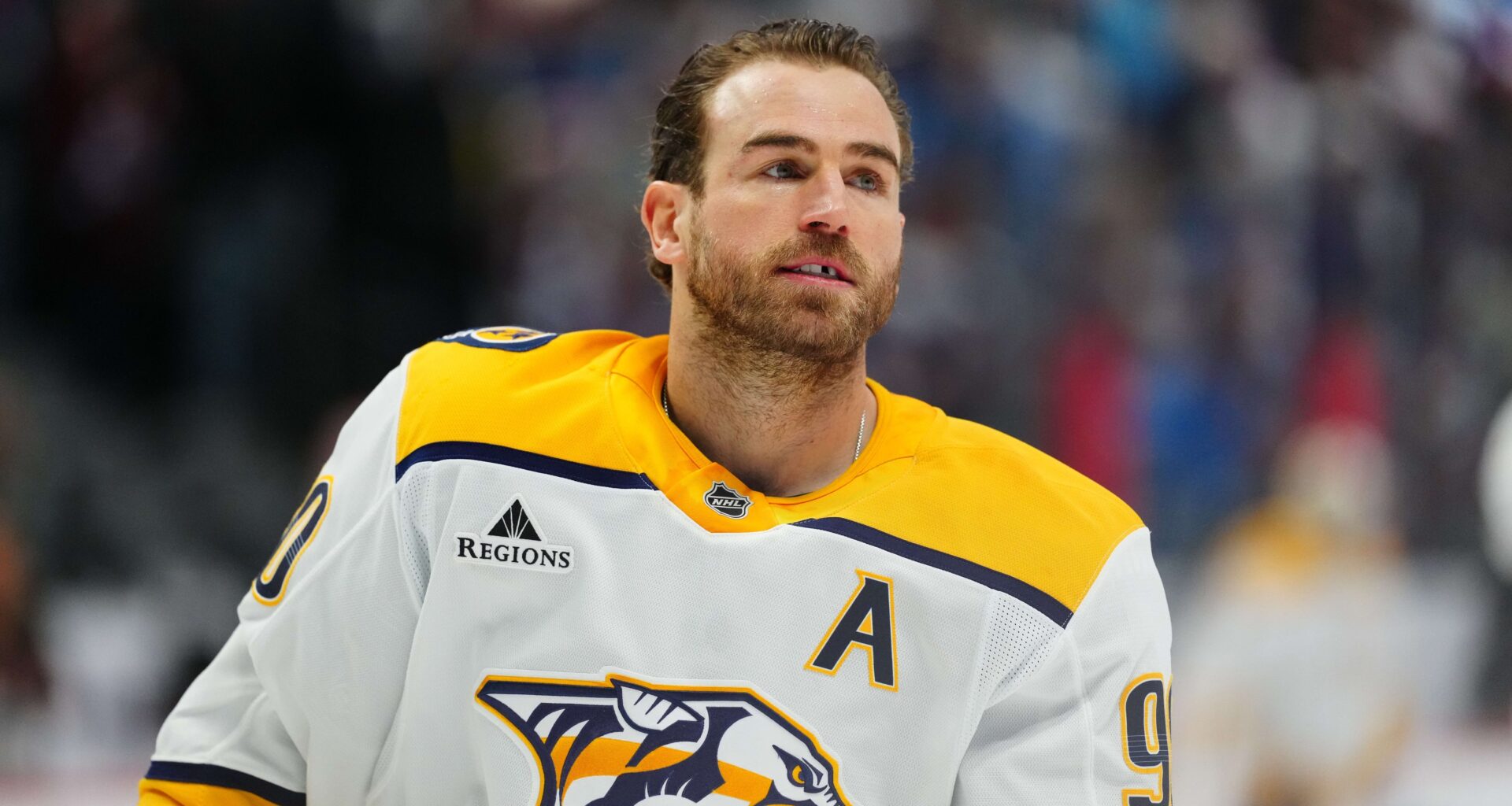
The Minnesota Wild should avoid a Ryan O’Reilly trade because the timing of his age curve and the structure of his contract clash with where this roster and cap sheet are headed over the next few seasons.
Ryan O’Reilly is 35 and is firmly in the back half of his career. Even for elite two-way centers, foot speed erodes and recovery time lengthens in the mid-30s, which is especially problematic in a league that keeps getting faster every year.
Minnesota already relies on veteran leadership in key situations; adding another mid-30s forward risks tilting ice time even further toward players past their physical peak. O’Reilly profiles as a smart, positionally sound center.
Still, the Wild really need to lock in long-term, prime-age impact talent down the middle, not short-term solutions that could fall off quickly. Bringing in a 35-year-old with heavy mileage is betting that he gradually declines rather than steeply, which isn’t a bet a cap-constrained team should be making.
O’Reilly signed a four-year, $18 million contract with the Nashville Predators on July 1, 2023, carrying a $4.5 million cap hit through the 2026-27 season. That means any team trading for him is inheriting multiple years of term, not a short, low-risk rental. The structure effectively commits the team acquiring him to paying a significant middle-six number for a player who could quickly become more of a third-line matchup center as he ages.
For the Wild, that $4.5 million cap hit would run straight through the years when they finally escape the worst of the Zach Parise and Ryan Suter dead cap hits, where the Wild should be reshaping the top of the roster. Cap flexibility is one of Minnesota’s biggest upcoming advantages; tying a meaningful chunk of that to a mid-30s center on the back half of his deal blunts that advantage before it arrives.
Beginning in 2025-26, the Wild’s cap picture finally opens up as the Parise and Suter buyouts drop dramatically and the league’s upper limit increases into the mid-$90 million range. Projections show Minnesota with more than $20 million in space for 2025-26 and nearly $40 million the following summer, much of which the Wild have earmarked for keeping Kirill Kaprizov and possibly re-signing Quinn Hughes.
After several seasons of squeezing around dead money, this is the moment Bill Guerin can swing big on true core-changing players. Taking on Ryan O’Reilly’s contract would mean allocating scarce, newly available space to an aging second-line center instead of leaving room for a younger, higher-ceiling pivot. The Wild need the freedom to pursue players who can grow with this core into their late 20s, not those who are likely to decline as the window peaks.
Minnesota’s depth chart already has many responsible, two-way forwards. However, they’re missing a dynamic, prime-age center who can drive a line at five-on-five while matching Kaprizov, Matt Boldy, and Quinn Hughes’ timelines. Using cap space and assets on O’Reilly would be a meaningful opportunity cost. Every dollar and pick spent on him is a dollar and pick you can’t spend on a younger center with upside.
There’s also the risk of redundancy. O’Reilly’s strengths – faceoffs, defensive reliability, and leadership – are all valuable. Still, the Wild already have a leadership group and a defensive structure that have not been their primary issue. If he slows down and settles into more of a third-line usage role by the end of the deal, Minnesota would be paying a premium for traits they can often find cheaper on the market or develop internally.
When the cap finally opens and prospects like Charlie Stramel and Ryder Ritchie start arriving, the Wild’s priority should be adding prime-age impact players to supplement that wave, not patching holes with mid-30-year-old players on multi-year tickets. The best contenders in the coming years will be the ones that use new cap space to lock in their next core, not to chase short-term name recognition.
Ryan O’Reilly is still a useful NHL player. Still, his age, term, and $4.5 million cap hit do not align with Minnesota’s competitive timeline or financial strategy. For a team finally emerging from cap jail, the Wild should keep its powder dry and aim higher than a declining veteran center on a multi-year deal.
Think you could write a story like this? Hockey Wilderness wants you to develop your voice, find an audience, and we’ll pay you to do it. Just fill out this form.