
 Company Logo
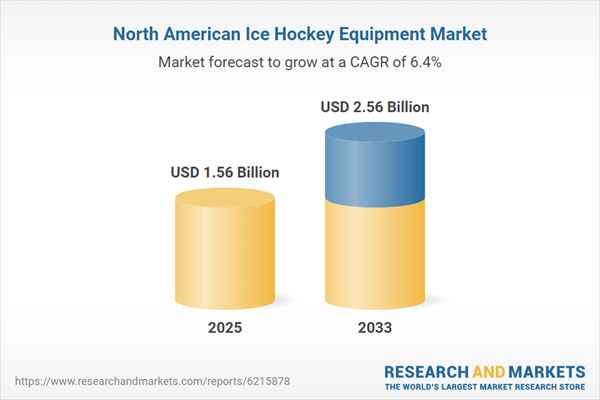
The North America Ice Hockey Equipment Market is poised to grow from US$ 1.56 billion in 2025 to US$ 2.56 billion by 2033, at a 6.37% CAGR. This growth is driven by high participation rates, technological advancements, and demand for high-performance gear. Ice hockey’s cultural significance in the region bolsters demand across professional and amateur levels, with technological innovations enhancing safety and performance. Sustainability and customization trends are reshaping product development, while affordability remains a challenge. Continued investments in youth programs and eco-conscious practices promise sustained market expansion in the U.S. and Canada.
North American Ice Hockey Equipment Market
 North American Ice Hockey Equipment Market · GlobeNewswire Inc.
Dublin, March 09, 2026 (GLOBE NEWSWIRE) — The “North America Ice Hockey Equipment Market Report by Product Type, End User, Category, Distribution Channel, Countries and Company Analysis, 2025-2033” has been added to ResearchAndMarkets.com’s offering.
The North America Ice Hockey Equipment Market is expected to reach US$ 2.56 billion by 2033 from US$ 1.56 billion in 2025, with a CAGR of 6.37% from 2025 to 2033
The North America ice hockey equipment market is anticipated to grow steadily, driven by rising participation in the sport, technological advancements, and increasing demand for high-performance protective and training gear.
The ice hockey equipment industry in North America is one of the most mature and dynamic segments within the sports equipment market. With ice hockey being deeply embedded in the region’s sporting culture, demand for helmets, sticks, skates, gloves, pads, and training accessories continues to remain robust. The market benefits from high participation levels across professional, amateur, and youth categories.
Technological innovations in protective equipment, ergonomic designs, and lightweight materials have enhanced player performance and safety, driving consistent product replacement cycles. The region’s well-established infrastructure, including ice rinks and training facilities, supports continued growth, while brand endorsements and professional leagues further influence consumer trends.
Sustainability and customization have emerged as key trends shaping product innovation. Manufacturers are focusing on eco-friendly materials, improved ventilation systems, and digital design technologies that offer athletes tailored fits and enhanced comfort. The integration of analytics-based training equipment and smart wearable technology has expanded product functionality beyond traditional use.
Growing awareness of injury prevention and performance optimization among players and coaches has led to increased spending on advanced gear. Retailers and brands are also leveraging e-commerce and omnichannel strategies to reach a wider audience, making high-quality products more accessible to both urban and suburban consumers.
However, the market faces challenges related to equipment affordability and maintenance costs, particularly for young players. The high cost of premium products and frequent equipment upgrades can limit participation in lower-income segments. Additionally, environmental concerns associated with synthetic materials and manufacturing waste have prompted companies to explore greener alternatives.
Despite these challenges, continuous innovation, supportive sporting organizations, and youth development programs are ensuring steady growth in the North American market. As ice hockey remains a celebrated sport across the region, investments in player safety, material innovation, and sustainable manufacturing practices will define the industry’s long-term progression.
Key Factors Driving the North America Ice Hockey Equipment Market Growth
Strong Ice Hockey Culture and Participation Levels
The deep-rooted cultural association of ice hockey in North America remains one of the primary drivers of the regional market. With professional leagues such as the NHL and extensive youth participation, demand for high-quality equipment continues to thrive. Schools, clubs, and recreational facilities provide structured programs that promote early engagement in the sport. Additionally, government and community initiatives supporting athletic development have increased accessibility to training resources.
Frequent tournaments and televised events enhance the sport’s visibility, inspiring consumer interest in branded equipment. Seasonal enthusiasm and the presence of established sports infrastructure across the U.S. and Canada create consistent demand for helmets, sticks, skates, and protective gear. This cultural commitment ensures a steady replacement cycle, brand loyalty, and long-term market sustainability, reinforcing North America’s dominance in the global ice hockey equipment industry.
Technological Advancements and Product Innovation
Continuous technological advancements have significantly shaped the North American ice hockey equipment market. Manufacturers are focusing on lightweight composite materials, shock-absorbent foams, and ergonomic designs that enhance player mobility and safety. Innovations such as carbon fiber sticks, reinforced helmets, and smart gear with integrated performance sensors cater to professional and amateur athletes alike. Custom-fit solutions using 3D scanning and digital modeling improve comfort and protection, aligning with rising consumer expectations for personalized products.
Additionally, the introduction of eco-conscious materials supports sustainability goals while maintaining high performance standards. These advancements not only improve player experience but also promote frequent product upgrades. As brands compete through innovation, players benefit from increased safety, reduced injury risks, and enhanced precision. Technological evolution remains a cornerstone of growth, driving brand differentiation and consumer loyalty across the North American market.
Expanding Youth Development and Training Programs
Youth engagement is a critical growth driver in the North American ice hockey equipment market. Schools, sports academies, and local clubs actively promote ice hockey through structured training programs and junior leagues. These initiatives introduce children to the sport at an early age, fostering long-term participation and consistent demand for beginner and intermediate-level equipment. Government and private sector collaborations have improved access to rinks, coaching, and safety training, further encouraging involvement.
Additionally, sponsorships and community tournaments create opportunities for talent development and increased equipment sales. Parents and coaches prioritize safety, driving demand for certified, protective gear with enhanced comfort and durability. The growing emphasis on grassroots development ensures a steady influx of new players, sustaining the industry’s expansion. Youth-oriented marketing strategies and affordable product lines continue to strengthen the market’s foundation across North America.
Challenges in the North America Ice Hockey Equipment Market High Equipment Costs and Accessibility Barriers
The cost of ice hockey equipment presents a significant challenge for market growth in North America. Premium-grade products such as helmets, skates, and sticks can be prohibitively expensive, particularly for beginners and youth players. The need for frequent replacement due to wear or safety regulations further increases the financial burden on families and training programs. As a result, participation levels in some communities are restricted by affordability concerns. The high cost of maintaining ice rinks and training facilities also contributes to overall expenses. While brands have introduced entry-level product lines to improve accessibility, balancing quality and affordability remains difficult. Equipment rental programs and second-hand markets offer temporary relief but lack consistency in safety assurance. Addressing these barriers through cost-efficient production, material innovation, and subsidy programs is essential for ensuring long-term participation and market inclusivity.
Environmental and Sustainability Concerns
Environmental impact poses a growing challenge for the North American ice hockey equipment market. Traditional manufacturing processes rely heavily on synthetic materials such as plastics, polyurethane, and carbon composites, which contribute to waste and emissions. Discarded equipment often ends up in landfills, prompting criticism from environmentally conscious consumers. Regulatory pressures and shifting preferences are compelling brands to explore sustainable solutions, including recycled materials and eco-friendly production techniques.
However, transitioning to greener alternatives involves substantial investment and potential performance trade-offs. Additionally, maintaining product durability and safety standards while reducing environmental impact remains a complex task. As sustainability becomes a key purchasing factor, manufacturers must balance innovation, cost-efficiency, and environmental responsibility. Embracing circular economy practices and transparent sourcing will be crucial for addressing these concerns and maintaining brand credibility in a competitive, eco-aware market.
Companies Featured
Bauer Hockey LLC
STX (Wm T. Burnett & Co. Inc.)
True Temper Sports
Warrior Sports (New Balance Athletics Inc.)
CCM Hockey AB
Franklin Sports Inc.
Garf Skates AG
American Athletic Shoe Company
Sher-Wood Hockey Inc. (Canadian Tire Corporation)
Key Attributes:
Report Attribute
Details
No. of Pages
200
Forecast Period
2025 – 2033
Estimated Market Value (USD) in 2025
$1.56 Billion
Forecasted Market Value (USD) by 2033
$2.56 Billion
Compound Annual Growth Rate
6.3%
Regions Covered
North America
Key Topics Covered:
1. Introduction
2. Research & Methodology
2.1 Data Source
2.1.1 Primary Sources
2.1.2 Secondary Sources
2.2 Research Approach
2.2.1 Top-Down Approach
2.2.2 Bottom-Up Approach
2.3 Forecast Projection Methodology
3. Executive Summary
4. Market Dynamics
4.1 Growth Drivers
4.2 Challenges
5. North America Ice Hockey Equipment Market
5.1 Historical Market Trends
5.2 Market Forecast
6. Market Share Analysis
6.1 By Product Type
6.2 By End User
6.3 By Category
6.4 By Distribution Channel
6.5 By Countries
7. Product Type
7.1 Ice Hockey Skates
7.2 Ice Hockey Sticks
7.3 Ice Hockey Gear and Accessories
8. End User
8.1 Male
8.2 Female
9. Category
9.1 Mass
9.2 Premium
10. Distribution Channel
10.1 Offline Retail Stores
10.2 Online Retail Stores
11. Country
11.1 United States
11.1.2 Market Breakup by Product Type
11.1.3 Market Breakup by End User
11.1.4 Market Breakup by Category
11.1.5 Market Breakup by Distribution Channel
11.2 Canada
11.2.2 Market Breakup by Product Type
11.2.3 Market Breakup by End User
11.2.4 Market Breakup by Category
11.2.5 Market Breakup by Distribution Channel
12. United States
12.1 California
12.2 Texas
12.3 New York
12.4 Florida
12.5 Illinois
12.6 Pennsylvania
12.7 Ohio
12.8 Georgia
12.9 New Jersey
12.10 Washington
13. Canada
13.1 Canada
13.2 Alberta
13.3 British Columbia
13.4 Manitoba
13.5 New Brunswick
14. Value Chain Analysis
15. Porter’s Five Forces Analysis
15.1 Bargaining Power of Buyers
15.2 Bargaining Power of Suppliers
15.3 Degree of Competition
15.4 Threat of New Entrants
15.5 Threat of Substitutes
16. SWOT Analysis
16.1 Strength
16.2 Weakness
16.3 Opportunity
16.4 Threats
17. Key Players Analysis
17.1 Overviews
17.2 Key Person
17.3 Recent Developments
17.4 SWOT Analysis
17.5 Revenue Analysis
For more information about this report visit https://www.researchandmarkets.com/r/jt7nks
About ResearchAndMarkets.com
ResearchAndMarkets.com is the world’s leading source for international market research reports and market data. We provide you with the latest data on international and regional markets, key industries, the top companies, new products and the latest trends.
Attachment
CONTACT: CONTACT: ResearchAndMarkets.com Laura Wood,Senior Press Manager press@researchandmarkets.com For E.S.T Office Hours Call 1-917-300-0470 For U.S./ CAN Toll Free Call 1-800-526-8630 For GMT Office Hours Call +353-1-416-8900