
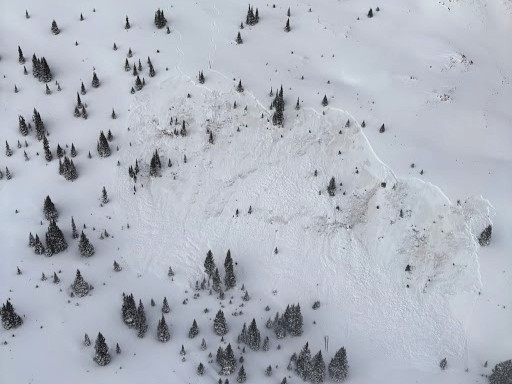
The skier found dead in a field of snow and debris in Colorado’s mountains last week. triggered the 400-foot-wide avalanche that swept him to his death, according to a new report from state officials.
Search and rescue crews found the man buried in a 3-foot-deep avalanche just after sunrise on Sunday in the Boss Basin area, which is on Resolution Creek near Vail Pass and a few miles west of Copper Mountain, according to a report from the Colorado Avalanche Information Center.
The man, a solo backcountry skier who has not been publicly identified, triggered the avalanche in the afternoon of March 7, according to the report. He accessed the ski area by snowmobile at 7 a.m. that day and was last seen headed to the Boss Basin area at roughly 1:15 p.m., officials said in the report.
As the skier traveled down a slope in the area, which he had already skied once that day, a wave of snow and debris swept him away and buried him, state officials said. Only the tip of one ski was visible when he was found.
The skier was traveling alone, so nobody knew he was missing until he didn’t return home, according to the report. He was reported overdue by a family member at 11:30 p.m. on March 7.
Summit County Rescue Group crews searched the area overnight and found the man’s snowmobile on the ridge at 4:00 a.m., the report stated. A thermal-imaging drone flying overhead found the avalanche with ski tracks leading into it about two hours later. The drone captured two sets of ski tracks entering the avalanche area, but only one leaving, officials said.
A helicopter pilot flew rescuers to the scene at about 8 a.m. Sunday, and an avalanche rescue dog found the man’s buried body within minutes, according to the Colorado Avalanche Information Center.
The skier’s head was buried more than a foot below the surface, according to the report. He was already dead when rescuers arrived.
Investigators were unable to speak with anyone who witnessed the avalanche and based the report on interviews with rescuers and information collected at the avalanche site, officials stated.
“Backcountry travel in a group is generally safer than traveling alone,” Colorado Avalanche Information Center officials said in the report. “A well-equipped group that uses safe travel protocols will have more resources to enact a rescue if something goes wrong.”
Solo backcountry travelers accounted for 23% of Colorado avalanche deaths between October 2020 and September 2025, according to the agency. At least one person in Colorado died in an avalanche while traveling by themselves during each of the last five avalanche seasons.
Investigators said it’s not possible to know if having a partner would have saved the man’s life.
“However, given the depth of (the man)’s burial, lack of signs of trauma, and the condition of his equipment … there is a reasonable chance that a fast and efficient companion rescue could have produced a different outcome,” investigators wrote in the report.
Get more Colorado news by signing up for our daily Your Morning Dozen email newsletter.