
There are two things you should know about seniors as they pertain to the NBA draft.
The first is that most draft models will say that you shouldn’t really draft them, especially the 23-year-old “super seniors” coming off their fifth year.
The second is that those draft models are now almost certainly wrong.
Here’s where you can blame NIL money and still feel good about it: NIL has changed college basketball and, in the process, it has also changed the draft. In particular, it has changed the incentive structure for an underclassman deciding whether to stay in college for another year or make the leap to the NBA.
As our draft expert Sam Vecenie has already noted on about 25 different occasions, the rise of NIL dollars has made the decision of any player ranked outside the top 20 on draft boards to return to school a relatively easy one. They can likely make more money staying in college than they could on a late-first-round or second-round pick’s salary in the NBA, and might improve their draft stock at the same time.
This also has implications for those whose job it is to model the draft on the team side. If you’re just looking at historical comps, you’ll quickly see that most fifth-year seniors have turned out to be awful pros, or at the very least underperformed their draft slot.
That premise, however, does not carry forward to the present era for a very simple reason: It is based on pre-NIL logic. In the past, seniors graded out so poorly in part because of a phenomenon called sample-selection bias. Put simply: If they were any good as prospects, they probably would have left for the pros sooner, because financially, there wasn’t a great reason to stay. The mere fact that they showed up on campus for their senior year was a red flag.
All that has changed in the last few years, to the point that scouts and execs expect most underclassmen rated outside the top 20 to return to school.
All those players eventually become seniors and, unlike their four-year collegian predecessors, a lot of them are enticing pro prospects. One-and-dones will always be the lifeblood of the lottery, and that’s likely to be the case again this year, but the final 30 to 40 picks could be a parade of seniors … and they’re likely to be much better pro prospects than the seniors of years past.
So, you have carte blanche to blame the NIL, as you scream out: “Who will think of the draft models?!?!”
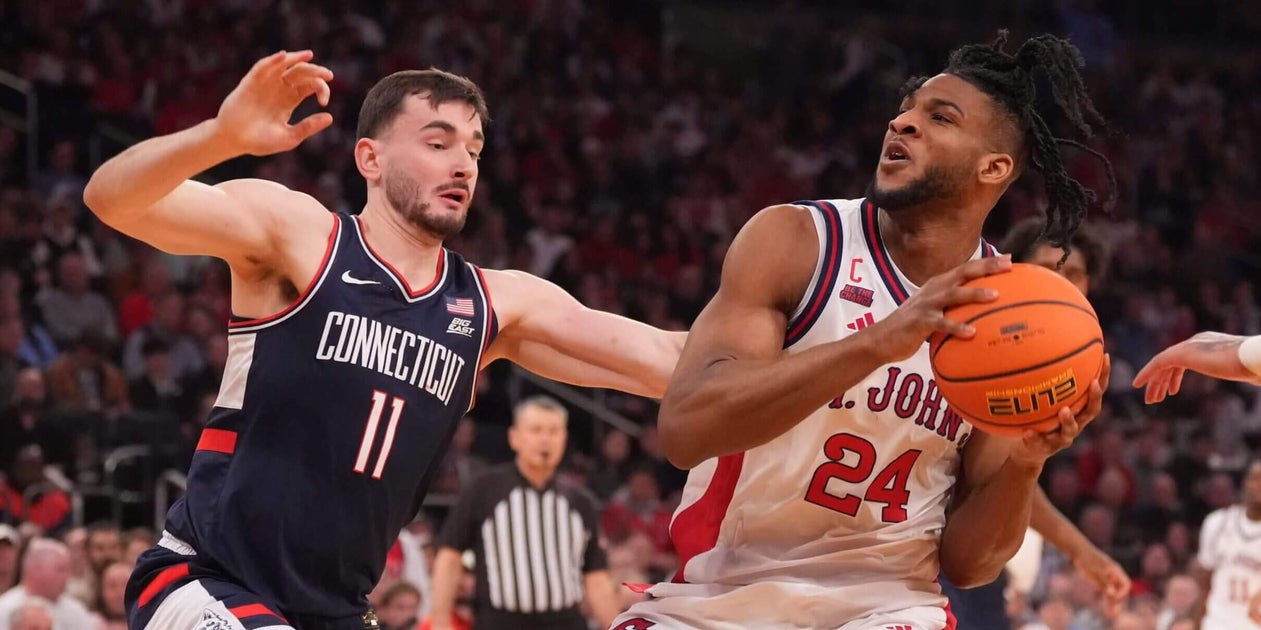
Yes, seniors are going to matter a lot more in drafts now. And with the NCAA Tournament upon us, it’s a perfect time to talk about them. It turns out that nearly every significant senior is also playing in the tournament (Auburn’s Keyshawn Hall and BYU’s out-for-the-season Richie Saunders would be the two most notable exceptions), so it’s a great opportunity to circle back through our notes from the season and talk about some favorites.
I already wrote extensively about two of them, Kentucky’s Otega Oweh and Houston’s Emanuel Sharp, two weeks ago; they remain two of my favorite sleepers from the senior class, but I don’t want to repeat myself here.
Instead, here are 12 other seniors who are playing in March Madness and caught my attention during the course of the season.
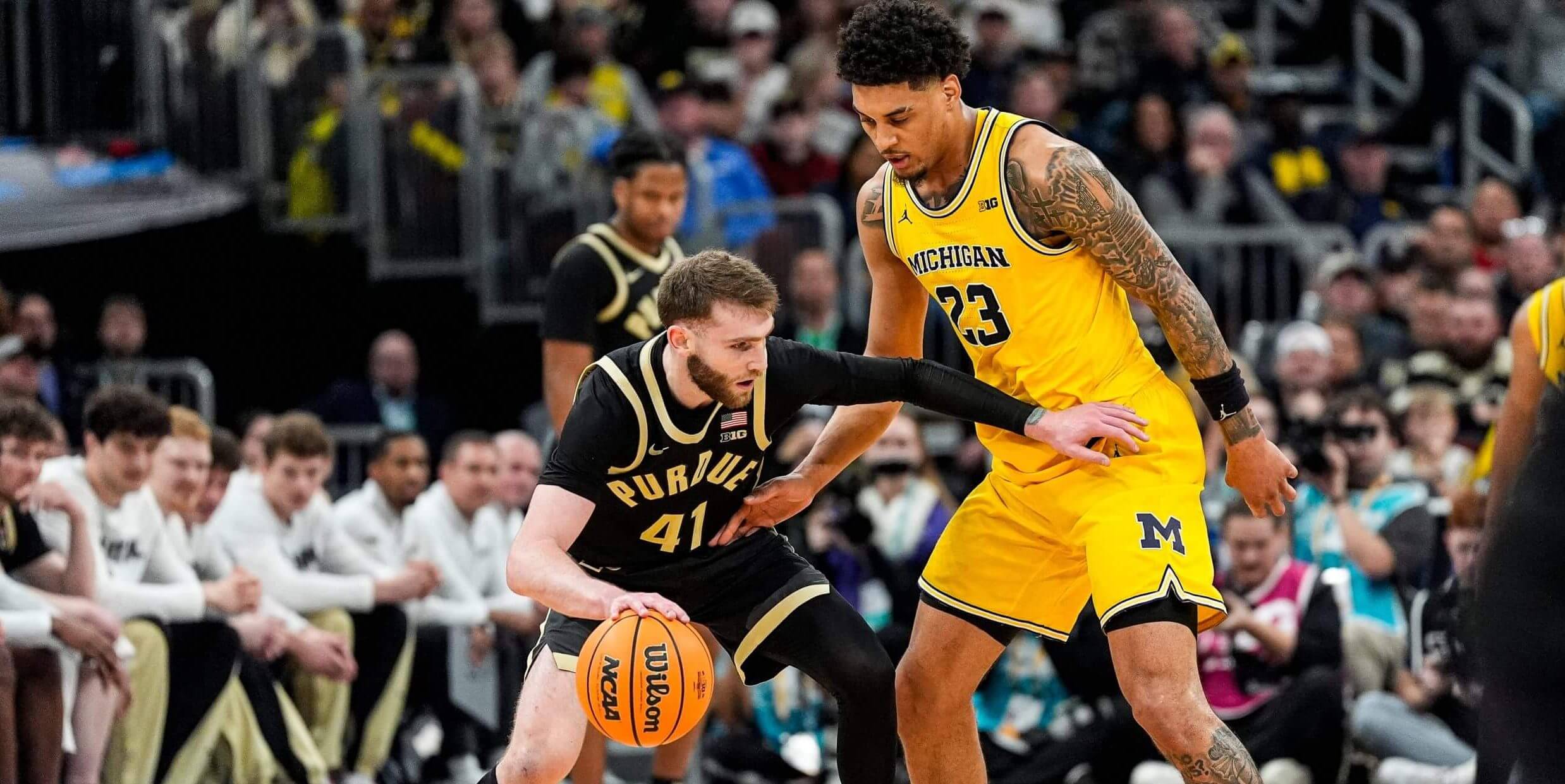
Purdue’s Braden Smith is a great passer, and Michigan’s Yaxel Lendenborg is the best senior of this class. (Junfu Han / Imagn Images)
Yaxel Lendeborg, 6-9 SF/PF, Michigan
Thank you, Captain Obvious. Let’s start with the guy who is hands down the best senior in the country. Lendeborg is a fifth-year who will be 24 when NBA training camps open in the fall, but per my note above this may be less of a negative than historical models would suggest.
What my eye test suggests is that this dude is huge (6-foot-9) and can guard anybody, including taking the assignment on Illinois’s super freshman point guard Keaton Wagler for most of the night when I went to the wilds of Champaign and saw Michigan shut down the Illini last month.
In addition to the defense, Lendeborg is active on the boards and great at taking misses and pushing them the other way, thanks to an impressive handle for his size and plus passing chops. He’s strong finishing in the open court, shooting 64.8 percent on 2s, and his 82.0 percent mark from the free-throw line this season might ease some of the questions about his shooting. Lendeborg remains shaky from long range (34.3 percent this year), but he checks so many other boxes that he can help an NBA team even if he shoots 30 percent from 3.
A late bloomer who had a breakout season for UAB a year ago and would have been a late first-rounder in 2025 if NIL money hadn’t lured him to Michigan, Lendeborg surely will be one of the top-20 picks this time around, especially if he can lead a dominant Michigan team to the title.
Bennett Stirtz, 6-4 PG, Iowa
Stirtz is a tall point guard who can handle and pass, and he sold a lot of scouts with a strong season in the Big Ten after transferring from Drake. His shooting percentages held up amazingly well — 37.6 percent from 3 and a sizzling 59.7 percent inside the arc, plus he made 84.5 percent from the line. Take note of that 2-point mark, especially. Stirtz isn’t just a bombs-away specialist; he has a lot of runners and floaters in his bag and is very good using ball screens.
Equally notable was that his rate of defensive event creation suggests he might not be completely chopped liver on defense, which is scouts’ biggest concern. (That rebound rate, though — yikes.) Realistically, Stirtz lands somewhere between 20 and 40 on draft night and is probably a backup, but in an offense-first league, his pick-and-roll game gives him starter upside.
Alex Karaban, 6-8 SF/PF, UConn
It’s Karaban’s 17th season with UConn, and I’m still not sure what I think of him. He has tremendous size for a small forward and despite his unconventional, Kevin Martin-esque shot mechanics where he makes a quarter-turn sideways and brings it off the left side of his body, he shot 37.7 percent career from 3 and 84.0 percent from the line. Karaban also defends his position and never tries to paint outside the lines, making him a neat fit as a role player.
On the other hand, there just isn’t much shot-creation juice here, and his athleticism markers have always been underwhelming. He hasn’t really improved since his sophomore year, even as other UConn stars graduated and he theoretically could have grabbed a bigger role. He redshirted his first season, so he’s a fifth-year who will be 24 in November.
All that probably pushes him into the second round; on the other hand, he might have the highest floor of any player taken outside the top 20 this year.
Braden Smith, 6-0 PG, Purdue
Listed at 6-foot, 180 pounds, Smith looks about 5-9 and 135 on screen in the hulking Big Ten. He’s an elite passer and orchestrator; the question is whether he can be a threatening enough scorer at the next level to command defense’s attention and open lanes for his passing wizardry. His shooting numbers were fiiiiine but don’t stand out among draftable point guards, and he shot only 47.7 percent on 2s for his career.
As a small guard, Smith will also have defensive questions, although his overall quickness and knack for steals should help in that department. So should the fact that he led the Boilermakers to the conference tournament crown in the mighty Big Ten and has them positioned to possibly make a second Final Four run in his career. His overall body of work seems likely to see him selected somewhere in the 30s, but he’s a guy who could win over some evaluators in the second week of the tournament.
Zuby Ejiofor, 6-9 PF, St. John’s
I wrote something about Ejiofor in November, but we’re overdue for another check-in. Hilariously listed 6-9 by St. John’s, he’ll probably measure at 6-6 or 6-7 in socks at the combine, but that also makes his shot-blocking (4.4 swats per 100) even more impressive. He’s not a five at the next level, but his instincts make him a good secondary rim protector.
Ejiofor checks a lot of “winning role player” boxes in other areas — he has a strong frame and guards multiple positions, and he draws tons of fouls (13.5 FTA per 100 possessions). But the most impressive is that he’s evolved into an offensive fulcrum for the Red Storm this year, issuing 6.7 dimes per 100 while playing center — something that bodes well for his ability to operate off the elbows at the NBA level.
Ejiofor will also have to show pro scouts he can make 3s during workouts — he’s only made 28 in four college seasons and shot 70.7 percent from the line in his career. However, watching him pre-game in Las Vegas earlier this year, his form from distance doesn’t look broken — it’s just not a shot his team needs him to take right now. Scouts looking at the top of the draft will also see plenty of Ejiofor — if St. John’s advances, he may play against Kansas’s Darryn Peterson and Duke’s Cameron Boozer in consecutive games.
Bruce Thornton, 6-2 PG, Ohio State
Eat it up, Atlanta Hawks fans — here’s the real Alpharetta unicorn. Thornton, originally from my current hometown of Alpharetta, Ga., is a 6-2 guard with middling athleticism, yet he shot an astounding 64.7 percent on 2s this year.
The 22-year-old also showed out as a shooter, hitting 40.0 percent from 3 and 82.7 percent from the line, although he isn’t a volume 3-point shooter. He plays more as a paint scorer and will have to transition to being a distributor at the next level, plus he’ll need to lock in on defense to hold up as a smaller guard. He seems a likely second-rounder and would be a priority two-way if he went undrafted. If Ohio State wins its Thursday opener against TCU — the first game of the first round! — Thornton will have a showcase game against Duke in the second round.
Jaden Bradley, 6-3 PG, Arizona
Bradley has had my eye ever since his freshman year on a loaded Alabama team; he played as a scorer then, but in his three years with Arizona he’s morphed into more of a true point guard (8.3 assists per 100 possessions this year, nearly three dimes per turnover). Bradley has good size for the point at 6-3, although he’s a bit thin, and his high steal rate is backed up by solid tape.
Bradley’s standout skill, however, is a throwback mid-range pull-up game, including one of the shots of the year in college basketball when he beat Iowa State at the buzzer with an impossible 15-foot rainbow in the Big 12 tournament semifinals.
Now, um … could you shoot a 3 once in a while? Bradley made 40.4 percent from distance this year and 80.4 percent from the line, but only took 57 3-pointers all season while playing point guard for a dominant team with an elite frontcourt. Um, what year is this again? Obviously, he’ll have to expand the range on those 2-point jump shots to get an extra point at the next level, but I like Bradley once we get into the 40s on draft night.
Joshua Jefferson, 6-8 PF, Iowa State
Is this Georges Niang 2.0? Like his predecessor with the Cyclones, Jefferson doesn’t cut the most imposing figure physically, but he’s a high-IQ forward who can handle and pass with aplomb.
Jefferson is averaging 6.2 assists per 100 possessions from the power forward spot and does just enough as a scorer to keep defenses honest. Pro scouts would still like to see more consistent shooting after he made 34.5 percent from the deep and 70.0 percent from the line this season, but Jefferson has shown a sharp improvement trajectory since hardly playing his freshman year at Saint Mary’s. He could push into the first round with a strong tournament.
Ryan Conwell, 6-4 PG/SG, Louisville
Here’s one where the analytics can make a stronger case than the actual basketball results. A lefty bomber, Conwell hasn’t shot as well as he hoped for Lu-uh-vul this year, making only 34.2 percent of his triples.
But the rest of his resume makes a strong case for his offensive game. As I often say, shooters tell on themselves with their 3-point volume and foul shooting; Conwell’s volume is off the charts at 17.7 flings per 100 possessions, and he made 85.3 percent from the line. Conwell also shot a respectable 53.5 percent on 2s, had a solid steal rate and rebounded well for a small guard.
Finally, he’s a “young” senior who won’t turn 22 until the week before the draft. Add all those factors, and Conwell’s case is stronger than his stat line from this season, especially if he can sell NBA teams that he can play the point full-time at 6-4.
Ja’Kobi Gillespie, 6-1 PG, Tennessee
Gillespie is small, isn’t an elite athlete and shot only 33.2 percent from 3 this year. We’re off to a great start!
However, we’ve seen this movie too many times recently, where a rock-solid but physically unspectacular college point guard gets overlooked in the draft process and then emerges from training camp with a rotation gig.
Gillespie has a chance to be another one if you believe in his 3-ball (he made 40.7 percent a year earlier at Maryland), and in the idea that his ballhawking and tenacity can make up for a shortage of inches even at the next level. Realistically, he’s a late second-rounder or a two-way unless he shines at the combine, but he’s on my list.
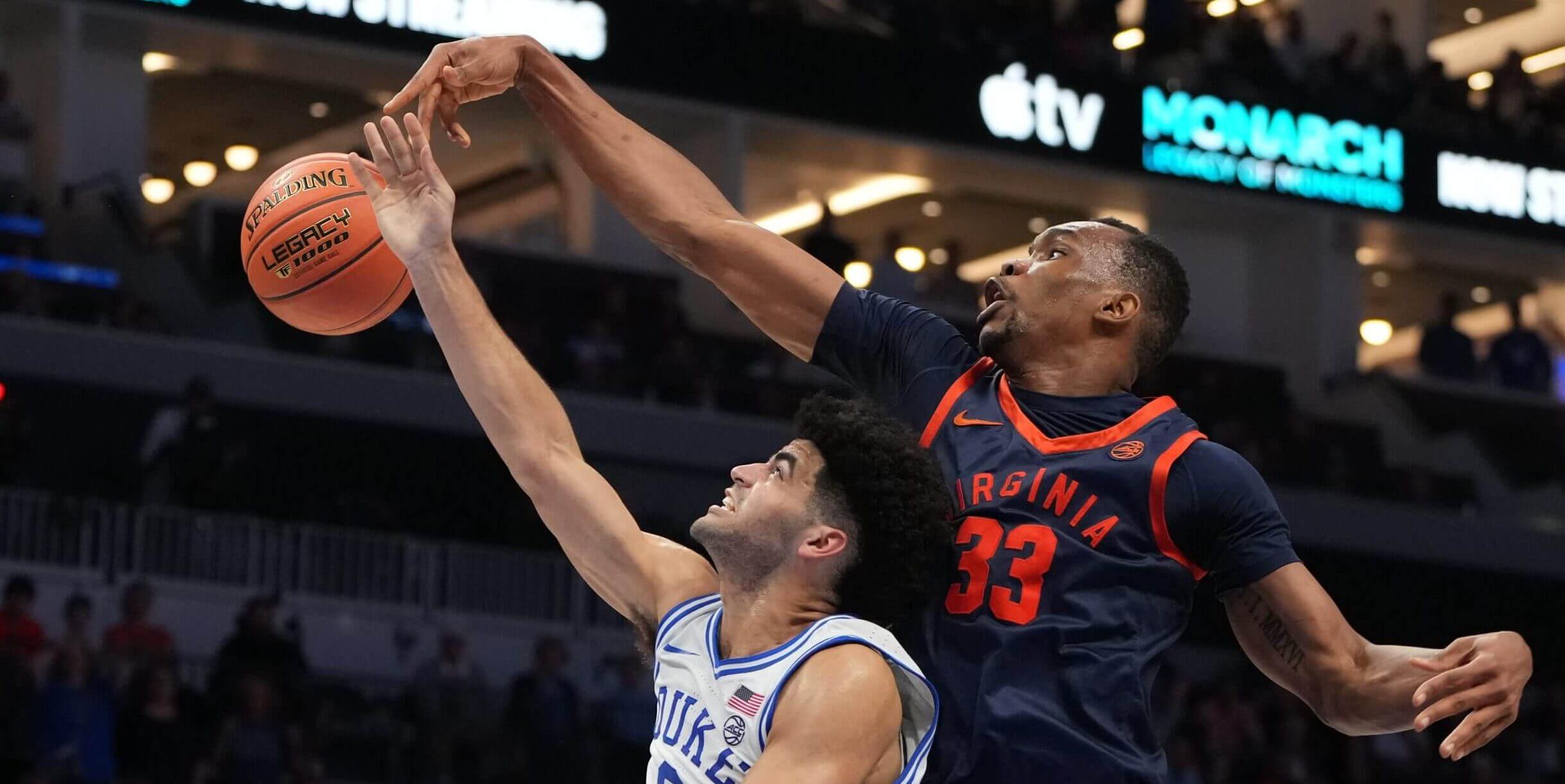
Virginia’s Ugonna Onyenso blocks Duke Cayden Boozer in the ACC title game, one of his 21 blocks in the league tournament. (Bob Donnan / Imagn Images)
Ugonna Onyenso, 6-11 C, Virginia
Oh, like I wasn’t gonna mention him, after he repeatedly stuffed Duke’s star Cam Boozer in the ACC championship game on Saturday. Onyenso blocked nine shots in 22 minutes in Virginia’s defeat, capping off a week in Charlotte where he swatted away 21 attempts in 79 minutes. In the semifinal game against Miami, he also shot 7 of 7 on 2s and made a 3-pointer.
Onyenso’s story is so interesting because he hardly played for Kentucky and Kansas State for three seasons before posting a 17.7 percent block rate — yes, really — with my Wahoos this year. He does this with a relatively low foul rate of 4.2 personals per 100 possessions.
What might keep him from getting drafted is … everything else. Onyenso is a limited offensive player, although he’s been more effective as a rim runner this year and added a nascent 3-point shot (10-of-35) and has always been a decent foul shooter. He also has a thin frame that bigger NBA centers can push around.
Can shot-blocking alone keep him in the draft? I would have said no before last week’s fly-swatting exhibition, but now I’m starting to wonder. He’ll get another great test if Virginia draws a second-round matchup with Tennessee, a big, physical team that likes to play in the paint.
Malik Reneau, 6-9 PF, Miami
I got my first in-person look at Reneau at the ACC tournament in Miami’s win over Louisville and generally liked what I saw. I think he might be a bit undervalued.
Let’s start with the size: Reneau has NBA size at the four, looking a legit 6-9 with a solid frame, and could even take some shifts as a junkball five if he can hold up defensively. He’s never been much of a shooter but upped his volume from 3 this year and made 78.8 percent from the line. He has no chance if he can’t stretch out and hit some catch-and-shoot 3s at the pro level, but if the shot comes around he has enough in his bag to be a fairly effective offensive player. Despite his size, Reneau can put it on the floor and get to the cup, and he’s an instinctive scorer who averaged 38.1 points per 100 possessions at Miami. He’ll have to rein some of that in — he won’t be the go-to guy at the next level — but there could be a fit here as a bench scorer.