
Let’s start with a refresher on the maddest fact from Ron Hextall’s illustrious career: The famed goalie who won the Vezina and the Conn Smythe was also suspended for more than six games three times.
The most famous of the three is the 12-game suspension he landed during the 1989 Stanley Cup playoffs for going after Montreal’s Chris Chelios. With less than two minutes left in the sixth game of the Prince of Wales Conference final, his Flyers down three games to two in the series and his team trailing 4-2, Hextall went wild, leaving his crease to attack Chelios just after the Canadiens had gone offside.
A wild melee ensued, with Hextall given a match penalty. Brian O’Neill, the NHL’s head disciplinarian at the time, said Hextall “showed a complete disrespect for the league and the game” in going after Chelios the way he did. Hextall said he was upset at Chelios for a play earlier in the series, when the brilliant Habs’ defenceman had concussed Hextall’s teammate, Brian Propp, by elbowing the Flyers’ star in the head. Chelios escaped any punishment for the act, so the flamboyant goalie took it up himself to exact revenge.
At the time, it was the third-longest ban O’Neill had ever handed out. Flyers owner Ed Snider was aghast at the length of the suspension, admitting his player deserved some punishment, but not this length.
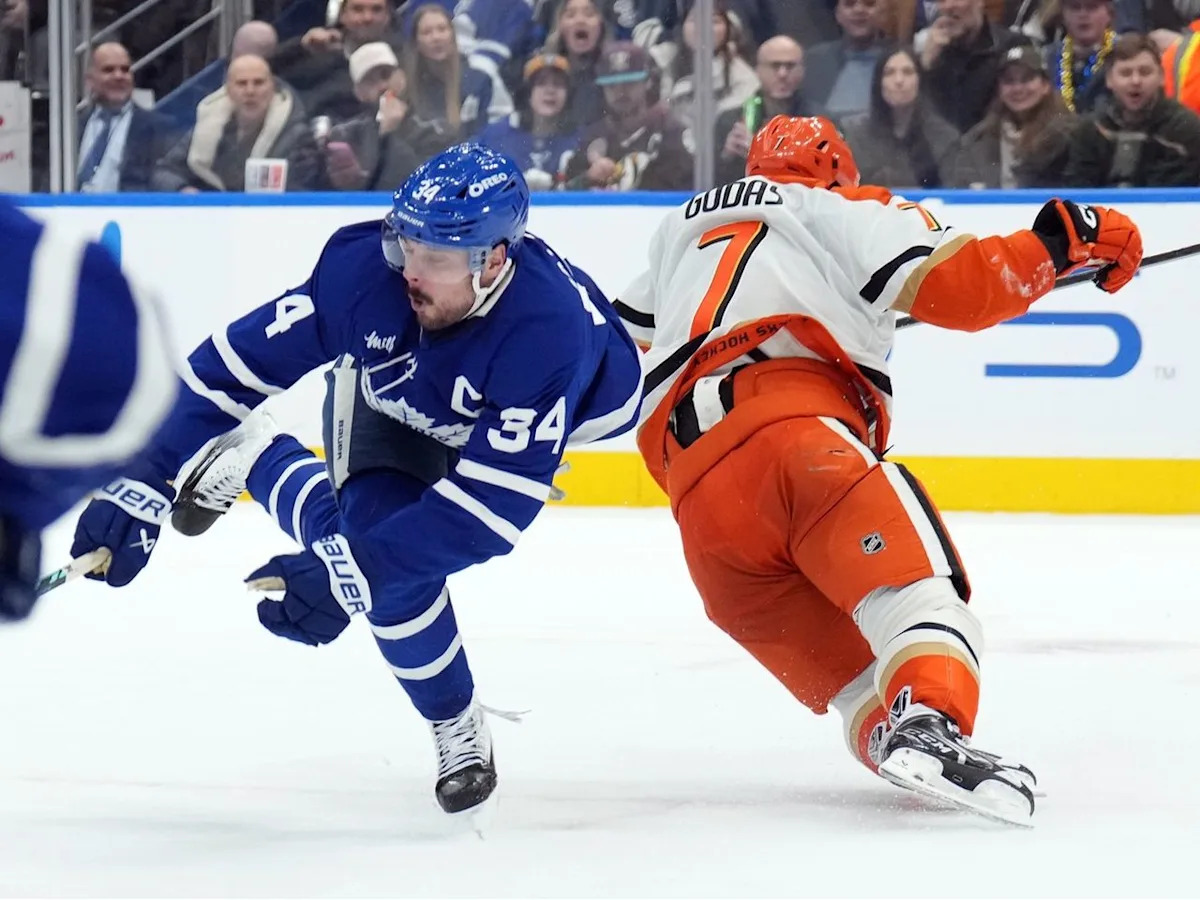
One wonders what Snider would think of the five-game suspension handed to the Anaheim Ducks’ Radko Gudas last week for ending Auston Matthews’ season?
Too short? Just enough? Or somehow too long?
Here’s the other thing to remember about Gudas: There have always been guys like him, who are looking to push the boundaries of acceptability. Think Sean Avery, Nicklas Kronwall, Daniel Carcillo, Claude Lemieux, Ulf Samuelsson, Gino Odjick, Glenn Anderson, Darius Kasparitis … you get the idea.
How the NHL’s department of player safety operates is not something players want to talk about on the record. That’s understandable. After all, if you become an outspoken critic of the official regulator, who’s to say that they won’t come after you harder than you deserve — or turn a blind eye when you’re the recipient of a dirty hit?
But in talking with various NHLers, one thing is clear: There’s a belief among players that being the league’s disciplinarian isn’t a job anyone wants. It’s a thankless task, one that will land you criticism from all sides. But there’s also a sense that the way the league hands out suspensions could be better — that the big moments, the big decisions, should be heavier. (With this in mind, kudos to Connor McDavid for being willing to speak openly about a need for a review of how the system does, or doesn’t, work.)
Five games for Gudas? That’s it?
The lack of clarity is a frustration, too. Is there a general guide to how different infractions are viewed? It all feels pretty opaque to the outside viewer, imagine being a player. All you know that if you are offered an in-person hearing, you’re going to get five games or more.
And yet there now seems to be a fear from the league to do in-person hearings and then hand out a longer ban. The NHLPA’s efforts to dial down on bans through appeals have been successful of late. Has this made George Parros, who heads the department of player safety, and his crew a little gun-shy?
It really would make things better if there were a concerted effort to lay down some standards at the very least: “Do this and you’re facing two games,” and so on.
The Hurricanes’ owner Tom Dundon is apparently advocating for a firmer stance on head shots. Given players who are diagnosed with a concussion are now required to sit out for a minimum of one week, why aren’t the players who cause the concussions — if it’s in an obviously illegal manner, not just a heavy hit — required to sit out for a week as well? Or could you go even more heavy and say the player who caused the injury should be out as long as the player who suffered the injury?
These are questions that a league and player-appointed panel would do well to consider. Other sports have arm’s-length people with experience in their sport tasked with setting standardized guidelines for supplementary discipline. The disciplinary matters are then handled by other arm’s-length people, whose job it is to rule impartially on foul play.
The NHL would be wise to review how it does all this because it’s clear that there’s dissatisfaction with the system as it is and so there’s room for improvement.