
If there was a glaring weakness for the 2025-26 Pittsburgh Penguins it was always going to be on defense and their ability to keep pucks out of their own net. When the season began Erik Karlsson had not yet turned things around, Kris Letang was another year older, nobody knew what to expect from Parker Wotherspoon and the goaltending was the same unsettled question mark it had been for years. If anything was going to put the Penguins into the NHL Draft Lottery, it was going to be the back end of the ice and their inability to stop teams.
But then Karlsson started to play like … well … Erik Karlsson.
Parker Wotherspoon ended up being a pretty good (and unexpectedly good) partner for him.
Ryan Shea took a step forward.
The team as a whole defended a little better than anybody expected, and the goaltending has at least been league average for most of the season. Tristan Jarry got off to a good enough start that they could trade him, Arturs Silovs has had his moments and Stuart Skinner has at least been better than Jarry since the trade.
It has not been great by any means, but it has been good enough to put them into serious playoff contention.
But over the past couple of weeks some of the preseason flaws are starting to resurface and expose themselves.
The Penguins have allowed 42 goals over the past 10 games, including eight games where they have allowed at least four goals and five games where they have allowed at least five goals. That is rough, and it is not good enough. It is not good enough for the regular season, and it is not good enough for the playoffs should the Penguins get there.
There is plenty of blame to go around for it.
Over the weekend against the Winnipeg Jets and Carolina Hurricanes the Penguins were far too easy to enter the zone against, allowing both teams to just effortlessly carry the puck into their zone and set up shop. The Penguins have also been terrible recently at managing the puck, struggling to exit their own zone and turning the puck over in those high-danger areas that lead to chances (and goals) against.
Over the past 10 games they are allowing 3.15 expected goals per 60 minutes of 5-on-5 play, far above their season average of 2.75. It is also one of their worst 10-game stretches of the season. The chart below shows their rolling 10-game averages of expected goals against (during 5-on-5 play) over the course of the season.
This is the high-point for it. That is not good. I also feel like this is just confirming the eye-test we have been seeing and watching every game lately.

There are a lot of layers to the problem.
For one, these past 10 games are probably the toughest 10 games they have played in a row all season. The level of competition is higher than it has been at any point. There are two teams on the ice, both of them full of highly-skilled, highly-talented players that are all making good money. Sometimes they outplay you. Nobody likes to hear that, but sometimes the other team just beats you and is better than you.
The Penguins have also simply not played well. There has been a lot of results over process with some of these recent games, and it is has masked some of their issues. I thought that was the case on Saturday against Winnipeg. On Sunday, it caught up to them.
Letang’s struggles have been well-documented. Having to rely on Connor Clifton and Ryan Graves at the moment is obviously not ideal. They basically have one defense pairing they can rely on right now (Karlsson-Wotherspoon). The defensive depth was, and still is, the biggest short-term and long-term concern. But there really is not much of anything you can do about it right now except try to clean things up the best you can, and hope that things level off when the competition is not a top-five team in the league every night.
They could also use a little more from their goalies right now.
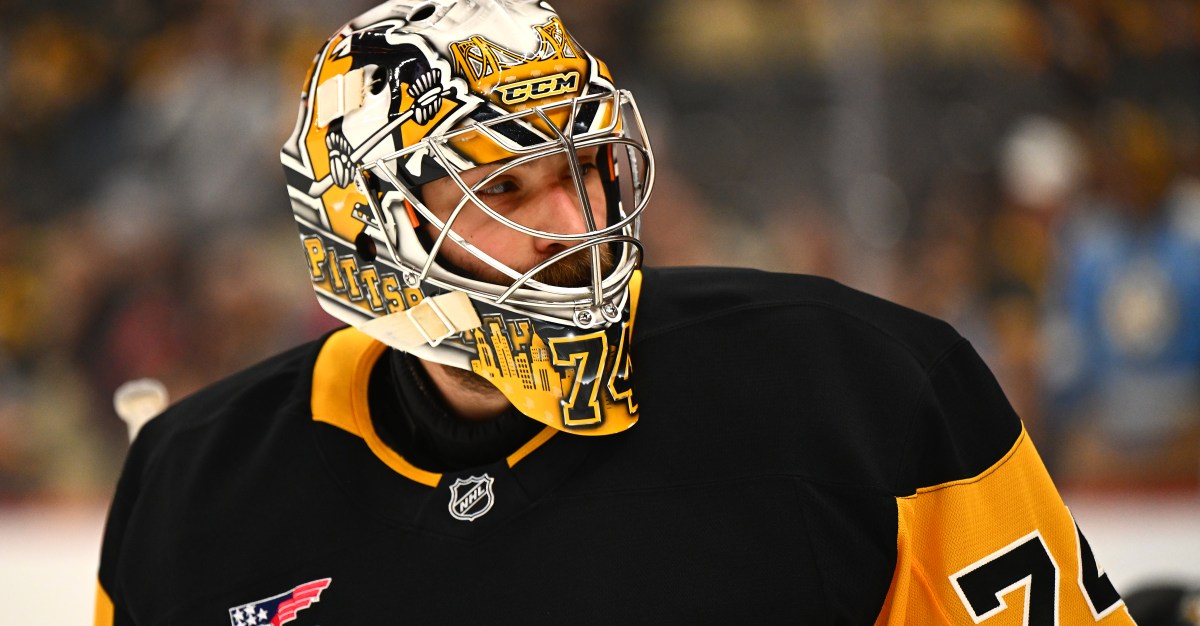
I am not going to say that Stuart Skinner and Arturs Silovs have necessarily been bad. I do think both goalies have had tough games at times over this recent stretch, and both have let in goals they should not have let in, but I also do not think they are the biggest problem right now.
Over these past 10 games the Penguins have allowed 24 expected goals during 5-on-5 play and 41 expected goals in all situations (the second-worst mark in the NHL over that stretch). They have allowed 26 actual goals during 5-on-5 play and 42 actual goals in all situations. They have basically allowed what you would expect them to allow given the chances the team is giving up in front of them.
Is that good enough? Maybe not. Sometimes you do need your goalies to go above and beyond and steal some games. I would not say either goalie has done that recently. They have not been liabilities, but they have not been game-changers, either.
The only other change you can make here is rolling the dice on calling up Sergei Murashov. He certainly has the highest ceiling of any goalie in the system, and his play in Wilkes-Barre/Scranton makes him more than deserving of a call-up. But his long-term development is the most important thing. Do you want to throw a rookie goalie, with less than 10 games of NHL experience, into the middle of a playoff race behind a defense that is struggling to suppress scoring chances in every situation? Especially given some of the opponents on the horizon? That could either go really, really well (if Murashov is up to the challenge and excels) or really, really poorly.
No matter who the goalie is, they need a few more big saves. They also need to put those goalies in fewer situations where a big save is required. They all have less than 12 games to figure it out.