
The Athletic has live coverage of the New York Yankees vs. the San Francisco Giants Opening Day game.
PEORIA, Ariz. — When Craig Stammen first played for Randy Knorr almost two decades ago, the manager of the Washington Nationals’ High-A club noticed something about the young right-hander: Beyond his role on the mound, Stammen was constantly curious about the way the game worked, determined to understand the bigger picture.
“There’s about a handful in my career where pitchers would ask a lot of questions,” Knorr said. “And they weren’t just questions about pitching. Like, he’d watch a hit-and-run. ‘Why’d you hit-and-run right there?’”
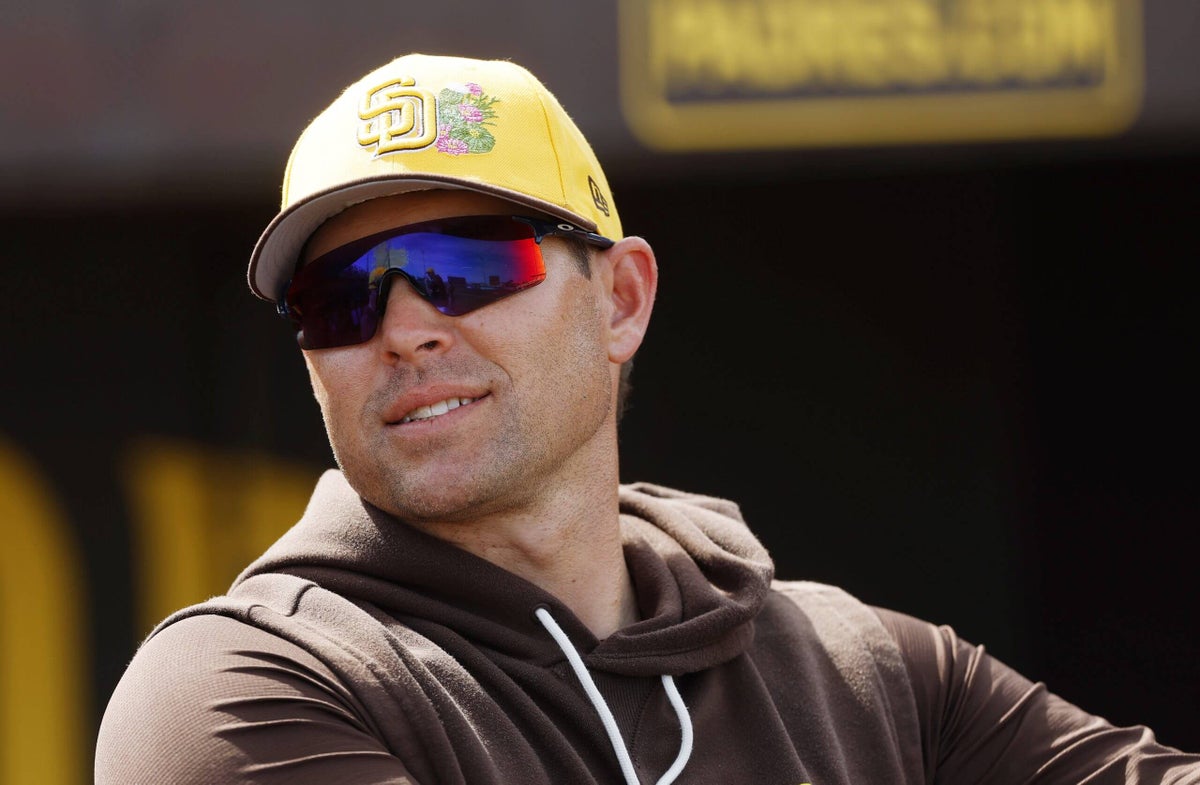
Stammen never stopped asking questions. This week, the former big-league pitcher will manage his first regular-season game for the San Diego Padres. The job has traditionally gone to former catchers and other position players who have spent their careers immersed in the daily rhythms of the lineup card, defensive alignments and base-running decisions. At baseball’s highest level, pitchers rarely become managers. Relievers almost never do. Stammen understands this.
“You have the stigma of being a pitcher and then being a relief pitcher,” he said in November at his introductory news conference.
Eddie Dyer, Bob Lemon, Dallas Green, Tommy Lasorda and John Farrell are the only former professional pitchers to manage their way to a World Series title. In the past four decades, just nine men who primarily pitched during their playing careers have debuted as non-interim major-league managers.
Thursday at Petco Park, with Knorr now serving as his bench coach, Stammen will become the 10th.
“Anytime a pitching guy gets hired, there’s always going to be a level of shock and awe,” said Bryan Price, who made the rare jump from pitching coach to manager with the Cincinnati Reds in 2013. “You can make every argument in the world why a pitching guy is going to be a second option to a former position player.”
Ask baseball people why so few pitchers have turned into managers, and the answers break along two lines — one structural, the other cultural — each reinforcing the other.
The structural case begins with usage. A starter plays once every five or six days. A reliever sometimes pitches on consecutive nights, but more often goes multiple games without taking the mound. No matter the role, pitchers spend their downtime following a unique program, conserving their arms and adhering to routines geared toward the next outing. The game in front of them becomes someone else’s.
“Pitchers don’t play every day,” Stammen said. “Sometimes pitchers can just check out on those days a little bit, and they’re not really thinking about the strategy of the game. They’re kind of zeroed in, like, ‘How do I get that hitter out?’”
Not every pitcher tunes out the surrounding action. Bud Black, the left-hander who managed the Padres and Colorado Rockies for parts of 18 seasons, cites Greg Maddux, Tom Glavine and Trevor Hoffman as Hall of Famers who saw the whole field. Kansas City Royals president of baseball operations J.J. Picollo says Zack Greinke, the former starter known for his intelligence and perceptiveness, could manage if he wanted to.
Yet, aside from Black, none of these pitchers has expressed much interest. And right or wrong, even all-time greats can face a certain long-established perception inside the clubhouse.
“For the majority, I think people look at it as an everyday player is a leader,” said Texas Rangers manager and former utility player Skip Schumaker. “Doesn’t mean (pitchers) can’t lead. It’s just, if someone’s holding a team meeting, it’s usually an everyday player.”
Jerry Dipoto remembers one of the first things he was told when he arrived in the majors as a reliever for the then-Cleveland Indians: Pitchers are better seen and not heard. Go that way. More than two decades later, the instruction strikes him as both dismissive and clarifying.
“I generally think the pitcher is cast from the very earliest stages, for as long as I can remember, as the non-athlete, the specialist, the nuance guy,” Dipoto said. “‘Just come in and throw. Don’t hurt the team.’”
Now the Seattle Mariners’ president of baseball operations, Dipoto is one of three former big-league pitchers working as a lead baseball executive. (The Rangers’ Chris Young and the Boston Red Sox’s Craig Breslow joined him this decade.) On the mound, he points out, pitchers continuously process information, reading hitters, sequencing pitches, initiating the action. Dipoto compares the cognitive demand to that of an NFL quarterback.
“We in baseball,” Dipoto said, “tend to get hung up on the things that we’ve always done.”
Padres president of baseball operations A.J. Preller has conducted five managerial searches. Until this offseason, when Stammen and pitching coach Ruben Niebla were finalists, the executive had interviewed only one pitcher, three-time All-Star Tom Gordon, who was recommended in 2015 by then-senior advisor Logan White.
Preller isn’t alone. Dipoto has been a general manager for three organizations across 16 seasons.
“Off the top of my head, I don’t remember interviewing a former pitcher,” Dipoto said. “I don’t know why that is.”
Few pitchers have publicly shared ambitions, if they have them, of managing. Largely absent from the interview pool, most never receive even preliminary consideration.
Recent managers who pitched
ManagerFromToW-L
Mickey Callaway
2018
2019
163-161
Bryan Price
2014
2018
279-387
John Farrell
2011
2017
586-548
Bud Black
2007
2025
1193-1403
Joe Kerrigan
2001
2001
17-26
Larry Rothschild
1998
2001
205-294
Larry Dierker
1997
2001
435-348
Phil Regan
1995
1995
71-73
Marcel Lachemann
1994
1996
161-170
“Maybe they haven’t put themselves out there, more than anything, because they think they’re not qualified,” Hoffman said. “But I certainly think it’s a personal path that guys want to take or don’t want to take.”
Hoffman, a Padres senior advisor, sought more time with his family after 18 seasons as a closer and clubhouse leader. Black said he didn’t seriously consider managing until a few years into his tenure as pitching coach for the Anaheim Angels, even then requiring sustained encouragement from others in the sport. Around the same time, Price was first approached about the idea by then-Mariners GM Pat Gillick, another ex-pitcher. It was more than a decade later that he ascended to Reds manager as a former minor-league starter.
“If you’re someone with my background, having never played in the big leagues, there’s always that skepticism on top of being a pitching guy,” said Price, who was a senior advisor to the Padres’ coaching staff during Stammen’s final season as a player. “That combination, if you can’t get over that as an individual, if you put your own roadblocks up there — then there’s no reason to move forward.”
In San Diego, Niebla said he did not aspire to one day manage until the “last couple years.” In October, Stammen went from helping interview Niebla and other candidates to becoming one himself. As it did for Black and Price in the early 2000s, the idea came largely from others.
“We’ve talked about it in the past, what he wants to do,” Preller said. “I felt like, ‘Hey, you can be a leader, and you can fill a lot of different leadership roles. You ever think about coaching or managing?’”
The modern game may be strengthening the case for pitchers as managers. The universal designated hitter effectively eliminated the double switch. The three-batter minimum simplified the bullpen chess that once demanded encyclopedic knowledge of platoon splits. Analytics script many in-game decisions before the first pitch is thrown. What managing means, more than ever, is handling people.
“The relationships are really what’s important now,” Schumaker said.
Hoffman agrees. “That can be a bigger job than just X’s and O’s,” he said. “How do you tell someone ‘no’ that might be a superstar? How do you tell someone, ‘I need you to do something that you don’t want to do?’”
Those questions don’t require a background behind the plate or up the middle of the field. They require something else: the ability to read people, build trust and speak directly. Stammen, by most accounts, has demonstrated those qualities since he was still playing.
“I’ve said Craig should be a manager years ago,” said Schumaker, a former Padres coach who was the 2023 National League Manager of the Year with the Miami Marlins. “(He’s) such a good man, a guy that players can trust. He gives it to you real. He’s not going to sugarcoat stuff. And players respond to that.”

Stammen was a member of the Padres organization as a player from 2017 up to his retirement in 2023. (Dilip Vishwanat / Getty Images)
Padres second baseman Jake Cronenworth, who played with Stammen, called his hire a “no-brainer.” Shortstop Xander Bogaerts played for Farrell with the Boston Red Sox and remembers the former big-league starter as an effective communicator. When told pitcher-managers have been especially rare, he paused.
“I never even knew that at all,” Bogaerts said.
Bogaerts is still getting to know his new manager — Stammen was rehabbing during Bogaerts’ first season with the Padres — but has formed an impression. Asked what position he’d guess Stammen played if no one told him, Bogaerts smiled.
“I’d say he probably looks like a pitcher,” Bogaerts said. “They just look a little different, you know?”
Now four decades into his career in baseball, Knorr shares an anecdote about a player the Padres brought to big-league camp this spring. Eventually, the player was sent down. The conversation was candid. Knorr and other team officials were in the room, but Stammen helped lead it without flinching.
A few hours later, Knorr was walking through a hallway when the player stopped him.
“Hey, it was hard, but I really appreciate the honesty,” Knorr recalled the player saying. “I kind of know what direction I need to go.”
Some rookie managers might have softened or postponed a difficult discussion. Stammen didn’t.
“He has them all the time,” Knorr said. “Not afraid of it.”
Stammen, Knorr adds, doesn’t fold when his bench coach or other staffers make suggestions. He listens, processes and regularly says no — or at least “not yet.” “Usually, on a first-year manager, they’ll just agree,” Knorr said. “He’s not like that. It’s a no, where it’s like, ‘Not right now. I haven’t thought about it enough to really think about doing that.’”
Where Stammen is still developing, Knorr said, is the speed of the game. Say, spotting a situation two or three batters before it arrives. But he appears to be closing the gap.
“He’ll tell me stuff now. I’m like, ‘Dude, can we wait until it’s, like, three-hole or something?’” Knorr said with a chuckle. “He’s trying to stay ahead of it, which I appreciate. And he’s messing around with the lineup. He likes the fact that when we take a bunch of guys out at the same time, he can move them all around. Little things like that. It gets him thinking about lineup changes.”
“It’s going to be interesting to watch in the big picture, because I don’t really know — and none of us will know — until Craig’s out there,” Price said. “What is his philosophy going to be as far as his in-game decision-making?”
Stammen’s pitching background might be better preparation than it seemed. Originally a starter, he later settled in as a versatile middle reliever. He took to monitoring pitch counts, anticipating matchups and predicting when a move would be needed. The result was an awareness that starting pitchers, absorbed in their five-day routines, don’t always possess.
“I filled a lot of different roles, so I had to be ready to pitch in the first inning or extra innings and all the way through the game,” Stammen said. “I kind of had to see how the manager managed the game, who he wanted to put in in certain situations and then where did I fit into that situation. But that gave me an advantage.”
Across 13 big-league seasons, Stammen appeared in more than 500 games. He tore multiple flexor tendons near his right elbow. He went two years between his final appearance for the Nationals and his return to the majors with the Padres. He continued pitching into his late 30s, until shoulder trouble ended his career.
His second act will test his resilience in different ways. Of the pitcher-managers to debut in the wild-card era, only Black and Farrell lasted more than five seasons.
“I would hope that that stigma is lessening,” said Black, who rejoined the Padres in January as a senior advisor. “I think people in the game realize it’s more about the person than the position that they played.”
The stigma, at least, hasn’t stopped Stammen. He won’t be the last. Already, three former pitchers are running front offices. A college coach with no professional experience is managing the San Francisco Giants. And a reliever is leading the Padres, with his former minor-league manager as his bench coach.
“In baseball, it used to take 30 years to change the smallest thing,” Dipoto said. “Now, in an offseason, we change six things that seem unbelievable until it takes five minutes in spring training for everybody to adapt to it.”
Sustaining change will depend on front offices willing to look past convention — and pitchers curious enough to keep asking questions.
Knorr remembers those questions from two decades ago, posed by a young pitching prospect wanting to understand a hit-and-run. He’s still answering them now, this time in a big-league dugout, with the regular season days away. “The more you see it,” Knorr told Stammen recently, “the more you’ll pick it up.”
“I’ve got to prove everybody right,” Stammen said, “that middle relievers can take this job on.”