
PHOENIX — As expected, the Minnesota Vikings’ quarterback room dominated most of the discussion at the annual league meetings. We wrote Tuesday about Kyler Murray’s fit and J.J. McCarthy’s progress.
Co-owner Mark Wilf, interim general manager Rob Brzezinski and head coach Kevin O’Connell broached many other topics, too.
Here is what stood out:
Rob Brzezinski calling the shots
The NFL general managers in attendance posed together for a picture Monday outside the swanky Arizona Biltmore hotel. Brzezinski didn’t join the group. He remains the Vikings’ interim GM, and neither he nor Wilf went into detail on Brzezinski getting the job full-time.
“That’s a conversation we will have,” Wilf said. “We’ll sit down with Rob and see — just like we will with other candidates. We’ll see where he wants to go and not go.”
The Vikings aren’t considering a broader change to their structure, according to Wilf. Whereas other NFL teams have elevated executives to a president of football operations role, Wilf said the team is planning to stick with a traditional general manager who reports directly to ownership.
What qualities are they looking for in their replacement for the fired Kwesi Adofo-Mensah? Wilf didn’t mention personnel background or analytical expertise. Instead, he used the descriptor leader a couple of times, someone who can enter the TCO Performance Center and build consensus with an aligned coaching staff and personnel department.
After the draft next month, the Vikings will begin a brisk slate of interviews. Wilf said that ownership will drive the process, but chief operating officer Andrew Miller and perhaps members of the coaching staff (such as O’Connell) will provide input.
Brzezinski and O’Connell have worked closely and effectively in recent months. They share a mutual respect, and together they have tried to establish the clear lines of communication that led to a disciplined approach in free agency. They’ll collaborate before and during the draft. Brzezinski knew he was being cliched when he said execution during those three days is his primary focus. He also swore it was the truth.
“There’s been a couple of times during this process where I’m, like, ‘Wow, this is an awesome responsibility that we have right now,’” Brzezinski said. “We want to get this right. And I believe we’re going to get it right.”
Setting priorities for the draft
In past years, Brzezinski orchestrated trades on draft night. While scouts and other staffers conferred on prospects, Brzezinski would be on the phones, lining up potential avenues to move up and down the board.
This role will now fall to salary-cap consultant Matt Thomas, senior manager of football administration Emily Badis and director of player personnel Ryan Monnens. That will allow Brzezinski to communicate with director of college scouting Mike Sholiton, O’Connell, defensive coordinator Brian Flores and other stakeholders to ensure they’re all on the same page.
Every NFL team talks about trying to draft with a best available mindset. Brzezinski also prefers that strategy, but he has also made multiple references to the importance of stacking the draft board objectively. He has learned that teams trying to fill needs will often move up prospects because of the position they play. Why do that when a better player is available at a position you might need next year?
“We’re looking at this as something that we want to incrementally get better and sustain,” Brzezinski said.
One way to view the Vikings’ situation is that their decision not to spend excessively in free agency to fill holes puts pressure on them to find clear fits at those positions in the draft. A different perspective? They still have several holes, which means a draft pick at almost any position could make sense.
Patience is the guiding principle here. It’s the same idea that Brzezinski introduced with free agency. The Vikings were interested in available options at running back and on the defensive line, but when their markets skyrocketed, they held their ground, believing that it would suit them over the long haul.
No rush to trade Jonathan Greenard
The Vikings appear to be playing the long game with edge rusher Jonathan Greenard, too.
They love Greenard. They know how much he matters to Flores’ defense. But they also aren’t afraid to allow a player to explore his market. If another team wanted to pony up — both a new contract for Greenard and requisite draft compensation for the Vikings — they would be happy to listen.
“It’s not like we’ve been trying to move him,” Brzezinski said. “That’s not the case. We’re a much better football team with him.”
O’Connell similarly said he expects Greenard to play a major role for the Vikings in 2026, both on and off the field. Other NFL teams could continue to call. The Vikings will keep an open mind.
If training camp comes and Greenard still wants a reworked contract, the Vikings will look for a solution as they have with core players like Josh Metellus and T.J. Hockenson in previous seasons.
Blake Brandel the center of attention
Talk to former Arizona Cardinals staffers who have spent time around Murray, and they’ll reiterate the need for a solidified interior of the pocket. Seeing over offensive linemen is less critical than keeping pressure from affecting his vision.
The Vikings feel good about their guards, but they’ll have a new center for the third time in three seasons.
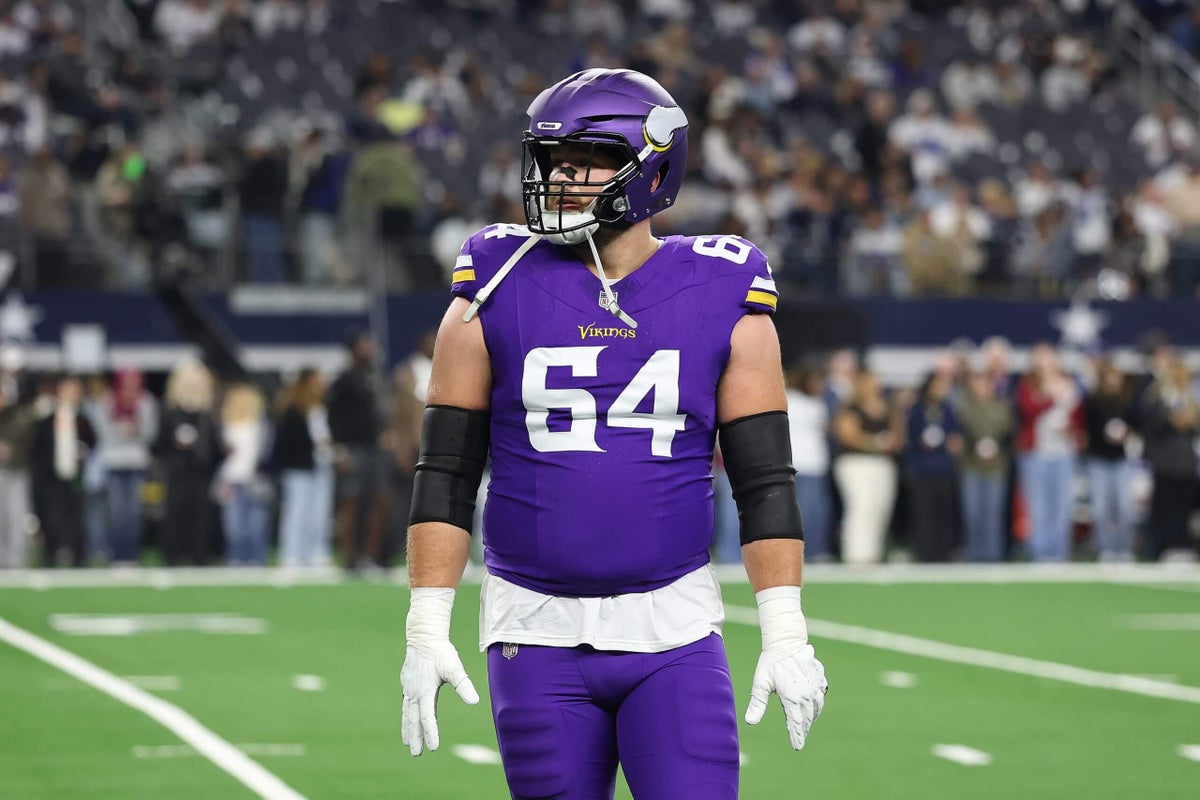
When the subject came up with O’Connell, he brought up Blake Brandel. The Vikings have moved Brandel around for several years. They think his versatility is valuable, but they also understand that keeping him in one role would benefit his development.
“We want to do what’s best for Blake to ascend and reach his highest potential at one position,” O’Connell said. “We want to have him, more than likely, at that center spot.”
Brandel played six games at the position last year for the first time in his career. His size and athleticism fit the prototype. O’Connell also noted the number of intriguing available centers in the draft, a confirmation that the position will be a primary target.
Christian Darrisaw primed for return?
Sticking with the offensive line, Christian Darrisaw’s health will play a large role in whether we see an offensive improvement from the Vikings.
“He’s so impactful,” O’Connell said. “I don’t think we put enough credence and weight into (that position’s) impact, depending on whether they win or lose the snap.”
Because the Vikings often need time to loosen up split-safety coverage to find superstar receiver Justin Jefferson down the field, left tackle has even more value for the Vikings than most other teams. Darrisaw only played in 10 games in 2025. He didn’t finish four of them. As part of his individual practice plan, he didn’t practice fully during the week, either. Come September, he’ll be almost two years removed from his torn ACL.
O’Connell said that Darrisaw is “having a really good offseason.”
“We’re going to do what we think is best to get Christian ready to play 17 games and feel his absolute best,” O’Connell said.
Minnesota added some insurance in the form of swing tackle Ryan Van Demark. Until the Vikings ink right tackle Brian O’Neill to an extension, tackle depth still looks like a position worth watching.
Justin Jefferson ‘a pro’s pro’
What did Wilf think of the way Jefferson managed the 2025 season?
“Really professional,” Wilf said. “He’s a pro’s pro.”
Wilf cited Jefferson’s growth as a leader and said that he and O’Connell had already discussed Jefferson’s readiness for the spring. O’Connell wasn’t asked specifically about Jefferson, but he did refer to him in one of the comments related to the competition in the quarterback room.
“We want the quarterback position to elevate our team,” O’Connell said, “and with the talent we have around that position, we feel pretty good about it working the other way around.”