
Keith Pelley said a lot of, shall we say, interesting stuff in last week’s dramatic press conference, but the Maple Leaf Sports & Entertainment president and CEO was right about at least one thing: The Toronto Maple Leafs can — and should — retool this offseason.
Two giant factors continue to be underestimated in the city’s most polarizing debate.
1. The power of a great front office
The hardest thing to do right now is look at the Leafs, as currently constructed, and imagine how the next front office transforms them back into Cup contenders in the near future.
There’s nobody for them to sign! They have nothing to trade! They don’t have enough talent!
That’s really the point of a great front office, though, isn’t it?
The league’s best decision-makers do things you don’t expect. They don’t necessarily take conventional paths to acquiring talent. They are shrewd and creative. They outsmart opponents. They find and acquire undervalued talent. They anticipate problems and solve them. They have a long-term plan for building the team.
Is Pelley going to actually land elite front-office talent? That remains to be seen. However, if he does bring in a sharp, forward-thinking president and GM combo, it’s not inconceivable to see the Leafs effectively retooled in relatively short order.
Consider one recent example in the NHL: The Florida Panthers, a team that quickly retooled into champions under Bill Zito.
Keep in mind that the Panthers had won nothing, not a single playoff series since 1996 (!), before Zito took charge as GM in September 2020. By 2023, they were in the Stanley Cup Final. By 2024, they were clutching the Cup as champions (and won it all again the following season).
Know how many holdovers there were from the pre-Zito Panthers to that first Cup team? Four: Aleksander Barkov, Aaron Ekblad, Sergei Bobrovsky and Eetu Luostarinen, who hadn’t played an NHL game at that point.
Zito acquired everyone else one way or another, often talent that had been overlooked or undervalued for whatever reason.
Carter Verhaeghe, Evan Rodrigues, Dmitry Kulikov, Nick Cousins and Niko Mikkola were among the shrewd signings.
Matthew Tkachuk, Sam Reinhart, Sam Bennett, Brandon Montour and Vladimir Tarasenko, among others, were all acquired via trade. And while Tkachuk was already a star when the Panthers hauled him in from the Calgary Flames, Reinhart and Bennett, two important contributors in that Cup run (Bennett won the Conn Smythe during Florida’s repeat championship in 2025), weren’t anything close to proven commodities before they landed in Florida.
Or put another way, these weren’t obvious home run trades.
Reinhart may have been the 2014 No. 2 pick, but he had career highs of 25 goals and 65 points when the Panthers traded for him. He wasn’t a 57-goal scorer for the Buffalo Sabres, in other words, or even a 30-goal scorer.
Bennett was another 2014 top-five pick struggling to even get on the ice for the Flames. He had 12 points in 38 games when Zito brought him in mid-season for a prospect and second-round pick.
The defenceman who led the Panthers in ice time during the 2024 playoffs? That would be waiver claim Gustav Forsling, who played a mere 122 games for the Chicago Blackhawks before emerging as one of the NHL’s top defenders in Florida.
Florida skaters during ’24 Cup run
The Leafs must have a bounty of picks and prospects to turn this around, right?
It wouldn’t hurt, obviously. But again, it was far from the only thing fueling Zito’s Panthers. It helped as much to facilitate trades as anything.
Zito’s all-encompassing work, which also included hiring Paul Maurice as head coach and a well-regarded front office staff (including potential Leafs GM candidate Sunny Mehta), illustrates what a capable, creative and confident “data-driven” hockey boss can do in Toronto.
The Leafs don’t currently have all three of the foundational pieces that Zito started with in Florida. They don’t have a No. 1 defenceman like the Panthers had in Ekblad. They don’t have a No. 1 goaltender like Bobrovsky (though they have some OK options there).
They do have a high-end No. 1 centre in Auston Matthews, assuming he wants to stick around.
They have an immensely skilled No. 1 right winger in William Nylander. They have a capable and still-growing top-six winger in Matthew Knies. They have a promising young winger in Easton Cowan.
Jake McCabe isn’t young — he’ll be 33 in the fall — but should be top-four quality for the foreseeable future. Chris Tanev is a giant wild card, given his age and health, but if he can return to even 75 percent of what he was two seasons ago, the Leafs have a capable, if aging, top-four defenceman.
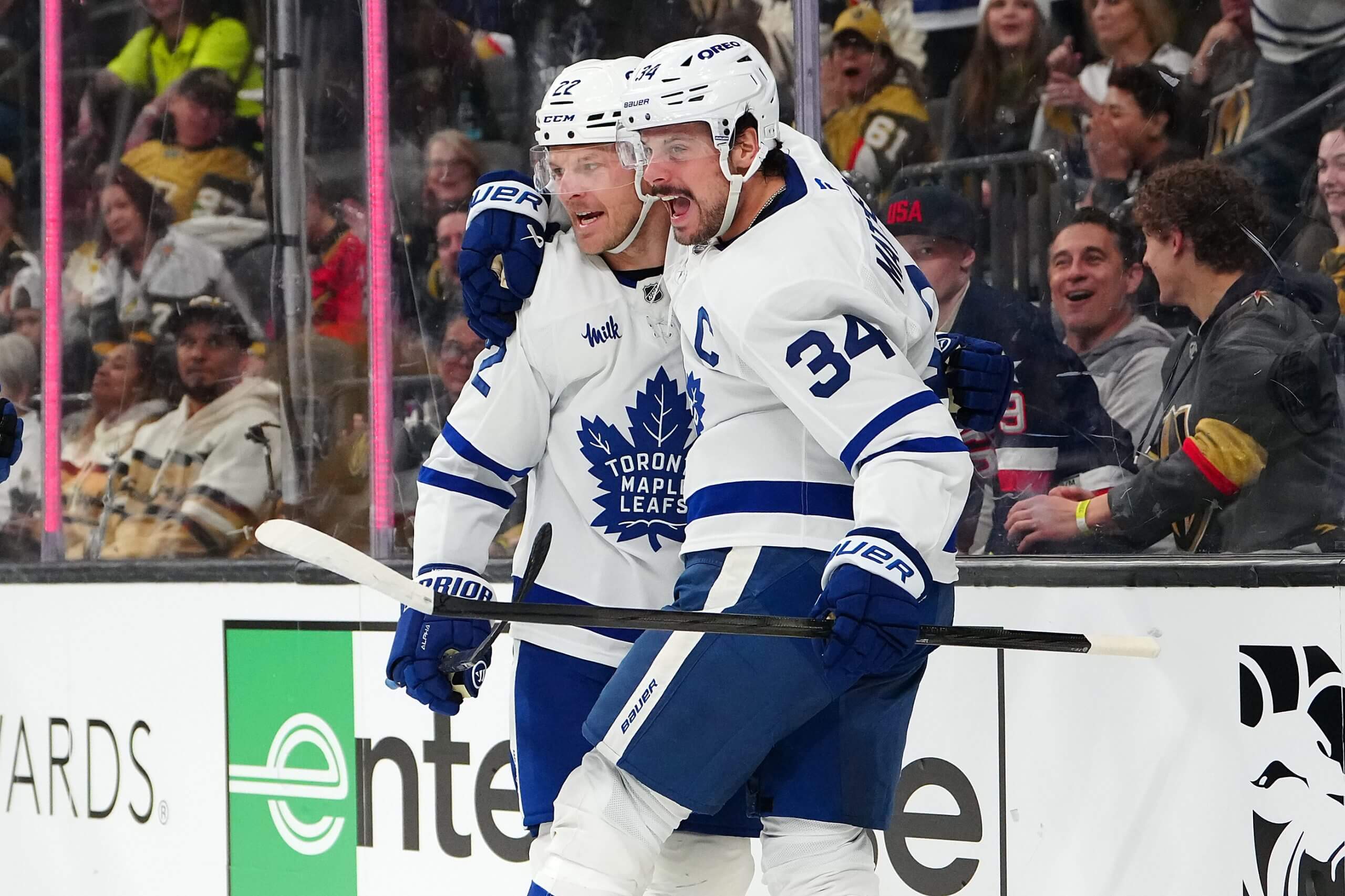
Jake McCabe and Auston Matthews are two integral parts of the Leafs roster. (Stephen R. Sylvanie-Imagn Images)
John Tavares has been overmatched in his second-line centre role as a 35-year-old, but he still hit 30 goals for the fourth time as a Leaf this season and should remain effective in a lesser role next season.
Joseph Woll’s performance has dipped of late, but he’s shown promise in goal this season. One or both of Oliver Ekman-Larsson and Brandon Carlo could be flipped this offseason or play a mid-tier role on next year’s defence. It’s also still possible the Leafs land a top-five pick in the draft, maybe even the No. 1 pick.
This roster isn’t in a great place due to years of mismanagement. There’s no doubt about that. However, it’s also not nearly as bad as it’s looked this year.
2. The power of a great coach
That’s the other thing that’s been underestimated here: The impact, for better or worse, that coaching can make.
If the consensus is correct, and Craig Berube has done a poor job behind the Leafs bench this season and might be replaced, then why would the Leafs need to tear down the roster? In other words, if coaching is primarily (though not singularly) to blame for what’s gone wrong, just changing the coach alone should be cause for major improvement next season.
Especially if it’s a top-tier coach like Bruce Cassidy. (The Leafs’ unwillingness to make a change with Berube has now cost the team a chance at Pete DeBoer, who became the Islanders coach on Sunday.)
Just look at what happened in Toronto around a decade ago when Mike Babcock, a top-notch coach, replaced the not-so-top-notch combo of Randy Carlyle/Peter Horachek.
Even with an intentionally worse collection of players, the 2015-16 Leafs possessed the puck a lot more and defended a lot better than the 2014-15 Leafs:
Leafs at 5-on-5 from Carlyle to Babcock
Per 60 mins2014-15 2015-16
xG for
2.1
2.3
xG against
2.6
2.3
Attempts for
51.2
57.3
Attempts against
61.8
56.6
Goals for
2.1
1.9
Goals against
2.7
2.5
The Leafs’ expected goals percentage leapt from an abysmal 44 percent, fourth-last in the NHL, to nearly 50 percent, good for middle of the pack.
The power play didn’t get better, but it wasn’t worse either — even with Phil Kessel elsewhere. The penalty kill, with Michael Grabner and Matt Hunwick leading the way, shuffled up to 13th best in the league from 22nd the previous season.
That ’15-16 team was still bad (and finished dead-last in the NHL) because the talent level was so low — the team couldn’t score and was led in scoring by Nazem Kadri’s 45 points. However, the coach clearly got the most out of the talent he had.
Maybe a more pertinent example, given the circumstances in Toronto currently, is the leap the Boston Bruins made when Cassidy took over for Claude Julien in February of the 2016-17 season.
Julien’s Bruins missed the playoffs entirely in both the 2014-15 and 2015-16 seasons and were veering in that direction again when Cassidy grabbed the reins and turned things around. Boston made the playoffs with the NHL’s fifth-best record after the change. Two seasons later, they were in the Stanley Cup final.
In just about every sport, we see what can happen with a transformational coach. The NFL’s New England Patriots went from four wins in 2024 under Jerod Mayo to 14 wins and an appearance in the Super Bowl under Mike Vrabel last season.
A great coach matters.
How long is this all gonna take, for the Leafs to retool if they get the front office and coaching hires right? That’s really not the right question. It takes what it takes, as there is no way to plug in Stanley Cup as a destination and come up with an ETA. How long would a rebuild take? All any team can do — from ownership to the front office to the coach — is put a strong process in place and follow it with one well-considered move after another.
Do that, and better results should follow.
–Stats and research courtesy of Hockey Reference, Puck Pedia and Evolving Hockey