
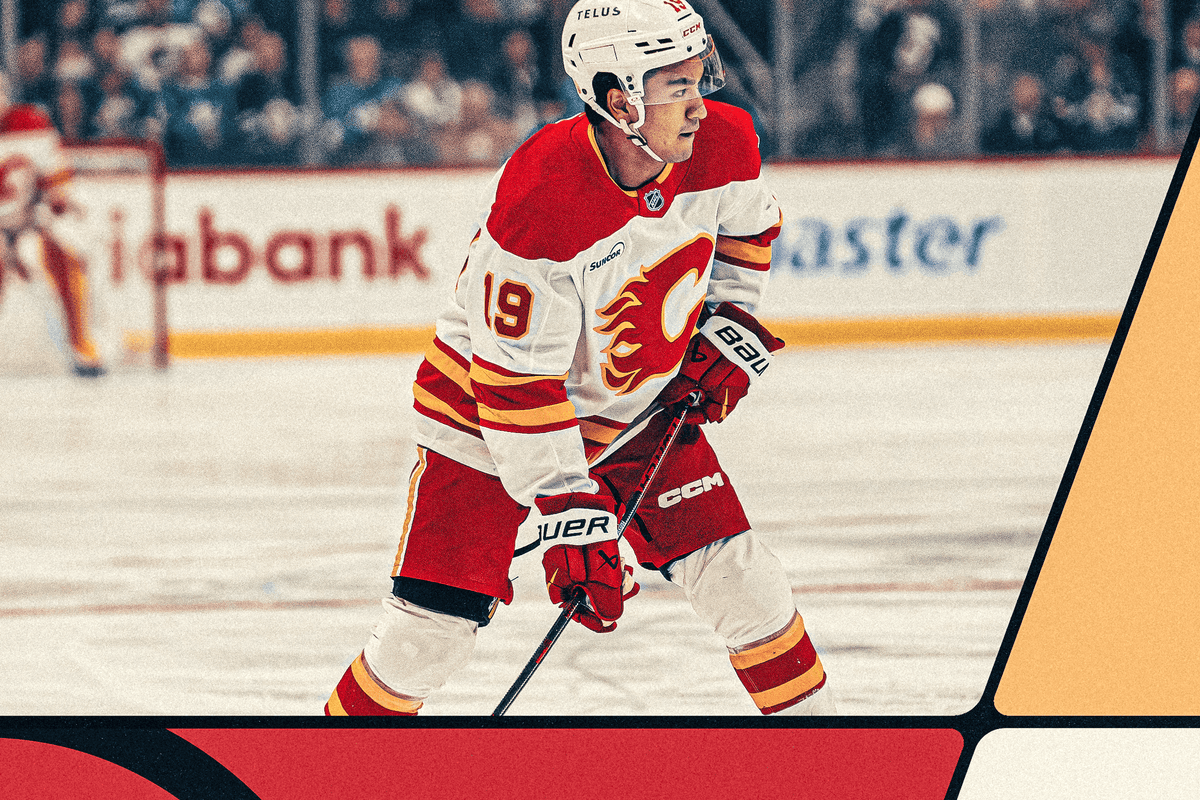
Welcome to Scott Wheeler’s 2026 rankings of every NHL organization’s prospects. You can find the complete ranking and more information on the project and its criteria here, as we count down daily from No. 32 to No. 1. The series, which includes evaluations on nearly 500 prospects, runs from March 9 to April 8.
The addition of two 2025 first-round picks, a 2025 fifth-rounder who was one of the breakout stars of the college season and two top college players via trade, plus the positive development of some holdovers, has helped push the Flames’ pool up this year’s list.
Worth noting: Pools Nos. 3-9 in this year’s countdown were a cluster, so this Flames group is closer to those behind it than to the two pools at the top.
2025 prospect pool rank: No. 13 (change: +10)
Tier 1 1. Zayne Parekh, RHD, 20, Flames (No. 9, 2024)
Parekh is one of the most talented prospects in the sport and has the potential to be an offensive game-changer. He might even be in a special tier offensively. Three seasons ago, despite playing in just 50 of Saginaw’s 68 games after missing three weeks due to injury from the end of February into March and another couple for the World Under-17 Hockey Challenge, he still broke the OHL’s all-time goals record by a U17 defenseman, scoring 21 times. An OHL Cup All-Star and first-round pick into the OHL before that, Parekh became the most talented offensive defenseman in junior hockey over his last two years of junior, winning the CHL’s defenseman of the year award and producing at an all-time great draft-year rate, breaking the 30-goal and 90-point mark as the leading scorer on the Memorial Cup hosts by more than 20 points. He was also extremely impactful against the three best teams in the CHL at the Memorial Cup, playing big minutes to help the Spirit to the championship; though he missed some playoff games due to an upper-body injury, he was still a difference-maker for Saginaw in the postseason.
He got off to a slow start last season after a very short summer due to the Memorial Cup, the draft, development camp, rookie tournament and the World Junior Summer Showcase, but he made plays with ease in the second half and still managed to somehow finish with 35 goals and 118 points in 66 combined regular-season and playoff games. This season, he would have benefited from next year’s rule change permitting select first-rounders to play in the AHL, but was still 19 and so had to play in the NHL, where he has played to fine results in sheltered usage but has at times struggled with the physicality — as all 19-year-old D do.
His World Juniors had the usual give-and-take that comes with Parekh’s game, but his play creation and swagger were also welcome additions to a team that really lacked that last year. He was running both of Canada’s PP units by the end of it and made several huge plays in important moments offensively. Turnovers and man-to-man D were issues at times, but he broke up his fair share of plays with an active stick and gave the team needed juice offensively. He was impressive in his four-game conditioning stint in the AHL as well, creating against men with ease there.
Parekh plays an aggressive and natural offensive style, where he looks to attack off the line into the slot or even the front of the net or below the goal line. He’ll also regularly involve himself in the rush much like a winger does, driving down the wall in control to challenge defenders and attack into his shot or create an odd-man rush. He’s extremely confident offensively and opens up his feet (where necessary) around the zone without going to his heel-to-heel by default. He has great hands and a casual-looking skating posture, which he uses to carry pucks with a visual ease and beat the first layer of pressure to get to his spots. He has excellent feet crossing over and falling onto his heels, but does lack pull-away speed in straight lines going forward. When the puck arrives on his stick, it just seems to stop and glue to him through his movements — a very rare quality that almost makes him look lackadaisical with the puck because it’s settled so easily into his pocket and upright stance.
He likes to roam, but he’s also learning to pick his spots better, and his head is constantly on a swivel to identify where he is in relation to his teammates. When he plays freely, which is almost always, you’re drawn to him whenever he touches the puck because he’s always a threat to make something happen, and he sees and identifies plays early. He protects the puck extremely well with players leaning on him, escaping situations you wouldn’t expect him to and often avoiding contact with deft little pre-planned plays, though he’ll also take a hit to make a play. He has great footwork and edges to manipulate across the line and stop up along the boards to change directions or maintain gaps.
I also believe he defends at a high enough level to be given free rein to go out there and be himself offensively. Though his defense has been a common criticism among scouts at times, I’d argue he has a great stick and reads the play at a high level in anticipation. I’ve liked what I’ve seen from him on the penalty kill, and even though he definitely doesn’t play a physical style and can get exposed for not being hard enough in engagements, I think he’s made important progress in his own zone. He’s also become a very chippy/mouthy/pest-like player, though his lack of discipline at times can get him in trouble. There are times when his posture will look disengaged and upright, and you’d like him to really get low and battle, but he’s playing to win pucks with his stick and does so quite well — though he’s never going to be a staunch defender and may be injury-prone because of his posture.
Add in that he’s a very good communicator (he’s constantly talking on the ice), has passes that are almost always tape-to-tape and perfectly flat, an ability to draw penalties escaping pressure as well as just about anyone in the draft class, and a want to have the puck and make a difference, and there’s a very high-end package. If he can defend at a reasonable level in the NHL, which I believe he’ll be able to, he has true star power offensively. I’m bullish on him becoming a top offensive defenseman.
Tier 22. Cole Reschny, C, 19, North Dakota (No. 18, 2025)
One of my favorites from the 2025 draft class, Reschny broke 90 points last season and was sensational for the Royals in the playoffs, taking his game to an entirely new level and finding the scoresheet in every game. This season, though he scored just six goals for North Dakota as a freshman, he played 18 minutes per game for them as an 18-year-old center, was a point per game, won 56 percent of his faceoffs, and even featured prominently on the penalty kill. Entering this week’s Frozen Four, his 35 points in 35 games are second-most on the team and one point back from the lead despite only shooting 8.8 percent. He also got better as the World Juniors went on and had a strong medal round, playing the bumper on the PP for Canada and making some plays at five-on-five in a depth role. I expect him to be a go-to guy on next year’s team.
He also impressed at U17 worlds and the Hlinka, and both Victoria and North Dakota have relied on him to create offense and carry the load. In both of his WHL seasons, his linemates had career years playing with him. Last season, he led the Royals in scoring while playing to team-best goal differential results (plus-42), really driving play at five-on-five and being a top penalty killer. Some were starting to question if he was a first-rounder after a slow start in the fall, but after a quiet first game at the CHL-USA Prospects Challenge, he went bar down for the series-clinching 3-2 goal with just over a minute left in the second game and was as hot as any player in the WHL down the stretch before stamping his season in the playoffs.
He’s a player I’ve really enjoyed watching over the last couple of years. He’s highly skilled but also highly competitive, and has driven both play and creation as a 5-foot-11 center who is strong, involved and committed in all areas of the ice. He has a motor and defensive zone know-how and commitment, but he’s also a natural playmaker, with soft skill under pressure and with limited time and space. He creates chances for himself and his linemates as a natural handler, capable finisher (he has a nose for the net and was owed more in the goal column this year) and passer (he sees it at a very high level). He will then work off the puck and takes pride in his play in all three zones. He’s one of the best 200-foot players in this class and also one of its smartest offensive players.
Though some scouts wonder about his first three steps, I think he’s a good skater and certainly a better one than he gets credit for, and I have no issues with his speed or pace whatsoever. He has very quick hands. He’s stronger on pucks and in battles than his height might suggest at a glance, with a thick lower half and an ability to protect pucks and shed contact low in the zone. He plays an excellent, trustworthy, dependable and consistent three-zone game. He has the IQ component on both sides of the puck. He has finesse on the puck and a natural shooter’s shot, with an ability to create angles around sticks and feet or place pucks through them into space for himself or his linemates. His hands and feet also move in unison, giving him dimension one-on-one, even if he’s not a burner out of the blocks.
I think he has a chance to be a heck of a top-nine player in the NHL, and I see a little Seth Jarvis/Nick Suzuki in him. I’m higher on him than most, though.
3. Matvei Gridin, RW/LW, 20, Wranglers/Flames (No. 28, 2024)
Gridin got off to one of the hottest starts in North American junior hockey as an import in the USHL in his draft year and continued to produce all year, leading the USHL in scoring with 83 points in 60 games. That’s pretty uncommon for a draft-aged player and is usually reserved for first-round locks. I didn’t quite have him there (he ranked No. 38 on my final board) but the Flames did, and he then made the move from Muskegon to Shawinigan last season. Though he got off to a bit of a slower start in the Q, his production took off as the year progressed, and he finished with 44 goals and 96 points in 72 combined regular-season and playoff games, as both the Cataractes’ leading scorer and goal-differential leader. He has exceeded expectations for a 20-year-old late-first-round pick in his first pro season as well, performing as one of the Wranglers’ top forwards in his time in the AHL and establishing himself as a top-nine, PP1 winger with the Flames.
Gridin has a desirable makeup, developing athleticism, skill on the puck as a 6-1 winger and a quick, NHL look to his release. He can play a north-south direct game and an east-west one with a little more poise. He regularly tries and pulls off difficult plays on the ice. He has shown he can snake his way out of trouble or play pucks through or past defenders, but he can also play off his linemates as more of a quick-strike option. Part of that is a credit to his ability to think and adapt quickly on the ice: I’ve seen him lift his head from a pass reception and make several instinctual, no-panic plays under immediate pressure in a split second. He has good size and good enough skating. He has also taken positive steps away from the puck to round out his game — his B game was once a concern, but no longer feels like one. He’s not going to be a first-line player on a contending team, but he has second-line skill and offense.
Tier 34. Cullen Potter, C, 19, Arizona State (No. 32, 2025)
One of the best-skating prospects in the world, the 5-10, 178-pound Potter is a smallish but talented player who uses his electric speed to put defenders on their heels, create opportunistic chances, get out in transition and jump onto loose pucks. He’s a fun player to watch with his ability to go inside-out and outside-in on players, round corners on them and his desire to attack off the rush and challenge D by turning on the jets and burning them wide or blazing into a quick stop-up. He’s tough to catch in straight lines or track in and out of cuts. He has some cleverness one-on-one. He can be creative with the puck on his stick, and can really get going in a hurry and has shown an ability to finish plays as well, with a great release.
His decision to leave the national development program to join Arizona State for his draft was a testy one, and some questioned whether he and his game were ready for the NCAA level, but while he was inconsistent at times in the first half, I felt he really popped late in the year with the Sun Devils before rejoining Team USA for U18 worlds. At U18s, he made some skill plays, drew some penalties with his speed, had a goal disallowed, had some third assists and had several chances around the net that he was probably owed from. But he also came and went a little too much for some, and didn’t take over like they wanted him to. This year, he got off to a bit of a slow start and wasn’t invited to play for Team USA at the World Juniors, but played at a high level in December and January before injuring his shoulder and ending his year. His post-draft season finished on Jan. 10 with 12 goals and 26 points in 24 games, which would have given him a chance at 20 goals and 40 points across ASU’s full season. His 1.08 points per game were third among all U19 skaters in college hockey this season behind only Gavin McKenna and the next name on this list; with Reschny, the Flames had three of the top four. He also played 20:27 per game.
He has regularly flashed and occasionally even thrilled with his speed and legit puck skill. His skating truly is on another level, both through his edges and through a uniquely wide straightaway base. There’s still some real learning of the game and how to deploy his speed that needs to happen, but there’s also a real draw/appeal/upside to his game. Proponents see Frank Nazar. Opponents see Fabian Lysell. I think Potter is somewhere in between — he’s an even better skater, too, which is saying something next to those two. He’s an exciting player to watch when he winds up, and while there’s some boom-or-bust to his profile and mixed opinions on him out there, the talent and speed are undeniable.
5. Ethan Wyttenbach, LW/RW, 19, Quinnipiac (No. 144, 2025)
The Flames’ selection of Wyttenbach was among the many recent signs that Calgary’s amateur scouting group isn’t as preoccupied as most teams are with size on draft day. That open-mindedness has paid huge dividends with him in particular. A late bloomer who was one of the USHL’s most productive players as a rookie last season, Wyttenbach, a 5-11 (up from 5-9.75 pre-draft), 185-pound winger, was one of the stories of the college hockey season this year after an offseason knee procedure and after he was supposed to return to the USHL’s Sioux Falls for this year before his rehab at Quinnipiac helped open the door. He led the country in scoring with 59 points (19 more than his nearest teammate) in 40 games and finishing tied for second in goals with 25. It’s not by accident either. Bobcats head coach Rand Pecknold has said he’s maybe in the No. 1 slot in his rink rat power rankings all-time.
Wyttenbach’s skating — which got an average grade pre-draft and is never going to be a separator — showed improvement this year, and while his play defensively still needs some work, he tracked and got back more pucks than I expected and cut down on how much he was gliding. And the offense didn’t just look legit this year; he created a lot of it himself. He can play the game at different paces with the puck, gets open off it, and has high-end skill as a handler, playmaker and shooter, with an ability to beat coverage, beat goalies one-on-one, and pick spots in the net off the flank with his curl-and-drag release. He’s also a highly intelligent offensive player who understands spacing, timing and execution on offense. He’s going to be an interesting case study in the NHL because of his makeup, but it’s hard to ignore what he accomplished this season. If he can repeat it next year as a sophomore, we could be seeing him in NHL games as early as spring 2027.
6. Hunter Brzustewicz, RHD, 21, Wranglers/Flames (No. 75, 2023)
Brzustewicz was a star in minor hockey growing up who really returned to that form in his final year of junior after a bit of a winding road. He spent two years at the program playing with the draft class in front of him due to his birthday (though he missed almost all of his U17 year due to a shoulder injury) and decommitted from the University of Michigan to play his draft year in the OHL so he could get more game action. That season, he led Kitchener’s defense in scoring and turned me into a believer, finishing 40th on my ranking but going 75th to the Canucks. In his post-draft season, he then found another level altogether as one of the most productive D in junior hockey, regularly showcasing high-end smarts, above-average skill and high-end spatial awareness on the ice to finish with 101 points in 77 combined regular-season and playoff games.
His rookie season in the AHL last year was a very respectable year for a 19/20-year-old defenseman as well, averaging a little more than 18 minutes per game and running one of the Wranglers’ power-play units while holding his own at five-on-five defensively. This year, I’ve quite liked his game in the NHL as well, even as his minutes have expanded from 14-15 to start to now regularly 17-20.
Brzustewicz is a mobile and strong player who has worked hard to fill out his frame (the lost season helped with that), defends the rush effectively and is now getting to show he has always had more offense to his game than his production at the program, where players like Seamus Casey and Lane Hutson were awarded greater opportunities offensively after his injury. He walks the line well, he’s comfortable, poised and patient in control of the puck in all three zones, and he will take and execute on what’s given to him. He plays and reads the game very tactically — he’s one of those players who makes the right calls with the puck pretty much whenever he has it and sees and processes the game at an advanced level. He’s also a strong athlete who impressed in testing at the CHL/NHL Top Prospects Game, was a high-end skater coming up and has been a better skater throughout (even when he lost half a step after the injury) than I think most gave him credit for.
He has become more and more active in transition. He can comfortably play his off-side. His on-ice intelligence gets high grades for how methodical and pinpoint accurate his execution is in the offensive zone. His head is always up, and he’s comfortably beating the first layer of pressure to make his plays even if he’s not a dynamic creator who will break multiple ankles in a sequence. He projects as a smart, offensively inclined but defensively capable No. 4 in the NHL.
7. Samuel Honzek, C/LW, 21, Flames (No. 16, 2023)
Injuries have affected Honzek’s development, but at 21, he still looks like he’s going to be a solid bottom-six piece for the Flames.
Honzek was on one of the steeper ascents in the 2023 draft when he suffered a leg injury in Slovakia’s second game of the World Juniors, which sidelined him through the middle third of it. Then, during a promising showing at Flames camp, he suffered an abdominal injury, which sidelined him until December to start his post-draft season, only to return and break his nose, requiring a full face mask. In between, he played in his third and final World Juniors in Gothenburg and was good but not dominant. The story was similar with the Giants in his final season of junior, too: he played to about a point per game and good on-ice results on a below .500 team without putting up gaudy totals or really cementing himself as someone who could create his own offense in bulk without much help.
Last season, his game has predictably fit better at the pro level surrounded by players he could play off and complement, resulting in decent rookie results in the AHL and some time in the NHL. This season, he had a good camp with the Flames and had stuck in the NHL through to the middle of November when he injured his shoulder and ended his season. He’s expected to be ready for camp next fall.
Honzek is a big forward who has played more wing than center but can and has played both. His game really fit right from the get-go on North American ice, quickly establishing himself as a go-to player in all situations for the Giants en route to being named captain; he was also an alternate captain for Slovakia in Gothenburg. He skates well for his size (6-3), has decent hands and dexterity, has some feel and sense for the pressures that exist on the ice and by all accounts is a great teammate who is coachable and pays attention to the details of the game. He gets onto pucks, tracks pucks off them, wins battles, holds onto pucks along the wall, will go to the front of the net, can penalty kill and has good positioning and awareness. There are times when he’s holding it with his back turned to the defender inside the offensive zone where I’d like to see him keep his feet moving instead of coming to a glide with it, but he still protects it well even at a slower pace.
I don’t think he has much NHL offense in his game, but he should become a well-rounded 30-40 point forward.
Tier 48. Henry Mews, RHD, 20, Michigan (No. 74, 2023)
Mews is one of a few Flames prospects who projects as an offensively inclined depth defenseman with PP2 potential behind PP1arekh™.
Mews is a player scouts weren’t quite sure what to make of ahead of his draft, but he’s someone I slotted as a second-rounder when the Flames drafted him early in the third round. Mews played an important role on one of the best teams in the OHL as a rookie and was a top prospect coming up. His draft year was up and down and a learning experience that included a lot of coaching, but he still finished near a point per game. He has been a staple of Canada’s blue lines in his age group across three different events now — first in a standout showing as the captain of the otherwise disappointing Canada White at the World Under-17 Hockey Challenge, tying for the team scoring lead with eight points in six games; then in another strong performance at the Hlinka Gretzky Cup, again leading Canada’s defense in scoring; and finally as a PP quarterback and more of a contributor than a top player on a blue line that was more by-committee at U18 worlds. He was going to be in the mix for Canada’s third pairing and PP2 job at this year’s World Juniors before suffering a season-ending knee injury just 10 (positive) games into his freshman year at Michigan this season.
There are times when he has looked sloppy and unsure of himself (or like he was reluctant to play his style with the 67’s) over the years, but he was one of the top offensive defensemen in the OHL, looked more like himself after a trade from Ottawa to Sudbury, and again looked himself early on at Michigan in a program that fits his style like a glove. His game could translate up levels on a team that involves its D, and I know others think that, but he’s going to have to hit some checkpoints post-injury and then prove it with the Wranglers post-college before he gets an NHL look.
Mews is an athletic right shot who is capable of consistently driving and tilting play from the back end. When he’s at his best, he dictates play by regularly looking to activate into the rush or off the line to use his skill and playmaking ability. He’s capable of defending hard, too, though sometimes I think he’s working harder than he is effectively. But he has struggled at times with his positioning and seems to get beaten one-on-one or on misreads a little too often: everything, as one scout said to me, is just a little too “chaotic” with him at times. He’s actually a good skater, too, so those things should be happening a little less than they do (and I thought were in college to start).
I love his attack and take-instead-of-give mentality offensively, and it’s complemented by NHL skill, an NHL shot and an ability to execute against coverage and pressure to the middle third of the ice as an impressive slot passer. His busyness inside the offensive zone, jumping in and out of the play, will occasionally catch him in a bad spot, but can also really affect play and offense when his team needs it. He still has some learning to do on how to mitigate risk and when to push or hold, but he has shown more signs that he’s learning how to apply his game.
His NHL projection will be determined by the consistency of his reads and choices. There are times when he can wait too long to make his decisions with the puck and others where he’ll move it too quickly, which speaks to immaturity in his game but also maybe confidence. I understand the concerns some have, but I have also remained intrigued.
9. Abram Wiebe, LHD, 22, North Dakota (No. 209, 2022)
Wiebe is a 6-3, 210-pound defenseman who has taken a bit of a winding road. He’s a late-August birthday who wasn’t on the radar in his actual draft year in 2021 because he was one of the youngest players in the class and behind the development curve. He was drafted in the seventh round out of Chilliwack as an overager. It’s rare for a drafted 19-year-old to return to the BCHL, but he went back post-draft as Chilliwack’s captain and played the long game, winning the league’s top D award that year. Now he’s a 22-year-old junior at North Dakota and he has caught up over the last couple of seasons, becoming a big-minutes defender and producing at a solid rate en route to this week’s Frozen Four.
He’s a big boy who has worked to turn his shot into a weapon from the point. He’s a competitor who moves well for his size and plays the game with intention; I like his mobility laterally and pivots for a bigger, heavier player. He has a good first pass and a good stick, but can also step up and close gaps in physical engagements. There’s some pro quality there, and he’s on a path to getting signed after this season. He should be good depth for the Flames and gives their pool a bit of a different look than Mews, Brzustewicz, Etienne Morin and company.
10. Jonathan Castagna, C, 20, Cornell/Wranglers (No. 70, 2023)
St. Andrew’s College, or SAC, has become a bit of a non-traditional draft factory in recent years, regularly producing one to two prospects who garner NHL interest. One of the final cuts for my 2023 draft board, Castagna is one of the latest examples and stepped right in at the NCAA level looking like he more than belonged. Most prep school players take a pit stop for a year in the USHL or Canadian Jr. A, but Castagna’s athletic tools allowed him to bypass that and jump directly into good production at Cornell as an 18-year-old freshman. That year, he posted 25 points in 35 games at Cornell, good for fourth on the team in scoring. Last year, though his production plateaued on a weaker team, Castagna continued to be a regular contributor at five-on-five and on both special teams as a teenager. And this year, he and Cornell took a step together, and he emerged as a point per game junior whose 34 points in 34 games led the Big Red and earned him an entry-level contract.
He’s a tremendous athlete, the kind of player who excels in on- and off-ice testing and does it in a 6-2, 200-pound pro frame. His game is defined by his skating (acceleration and top gear), versatility and drive. I’ve seen him consistently play to the middle of the ice in my viewings. He’s good in the faceoff circle. He plays north, forechecks, is proficient in the faceoff circle and looks like he’ll have a chance to slot in as a solid bottom-sixer.
Some weren’t surprised when the Coyotes took him in the third round, and teams had him circled for a round or two later on their lists. By all accounts, he was also special at SAC, where he excelled in the classroom, on the lacrosse field and also in theater, and then at Cornell.
Tier 411. William Strömgren, LW, 22, Wranglers/Flames (No. 45, 2021)
After an excellent draft year that included success across four different levels (two junior, two pro), Strömgren’s post-draft season four years ago was more of an up-and-down one that left scouts wanting more. The following season marked a nice bounce-back, though. After scoring a hat trick in his first game of the year with Rögle’s junior team, he joined Brynäs’ SHL team and stuck as a regular before making the jump to the AHL. As a rookie with the Wranglers two seasons ago he played mostly in a depth role, though his role really grew as the season went on, rising from 11 minutes to 18-20 near the end of the year. Last season, that important role continued, and he was one of the Wranglers’ better forwards. And this season, which has come with his NHL debut but only the three games, has been more of the same. Now it’s about taking that next step to win and hold a spot.
Stromgren is a 6-3 winger with skill that has consistently revealed itself at the AHL level. Despite his size, he doesn’t play the game you might expect, either. He’d rather play around you or shoot through you than push into you. He’s comfortable with the puck on his stick, which helps him carry the puck over the line and make plays in transition. I don’t think he’s ever going to be a driver on an NHL line, but he has a chance to be a complementary depth scorer if he can take that next step. There’s an outcome where he just tops out as a top-six AHLer/call-up option rather than carving out a specific NHL role, but I wouldn’t be surprised by either outcome.
12. Aydar Suniev, LW, 21, Wranglers/Flames (No. 80, 2023)
A force in the BCHL in his draft year, Suniev broke 50 goals and 100 points between the regular season and the playoffs with Penticton while playing a fair chunk of the season on its second line. He then followed that up with a really strong freshman season at UMass in which he finished second among forwards in scoring, after Harvard dropped his commitment due to visa issues, which he got sorted in time to attend the scouting combine and play in college after being denied entry into the U.S. when he played at SAC and in the BCHL. Last season, he took another step as a sophomore at 19/20 as well, going from 25 points in 36 games to 20 goals and 38 points in 35 games — and creating more of his own looks at NCAA pace. After turning pro, he has already made his NHL debut and scored 15-plus goals as a rookie in the AHL.
Outside of slowish feet, Suniev is the complete package as a player. He has pro size at 6-2 and 198 pounds. His wrister and one-timer both rip off his blade. He handles the puck and attacks at defensemen and into the slot with confidence. He can play on it or off coverage, complementing different types of linemates with similar effectiveness and fit. He’s good along the wall and on the power play. He just looks like a pro-quality player when he’s out there. He’s the real deal and a player I believe may even have secondary-scorer upside if he can continue to get a little quicker.
13. Trevor Hoskin, RW, 21, Merrimack (No. 106, 2024)
Hoskin was a late bloomer who was drafted directly out of the Jr. A OJHL in his third crack at the draft after he registered 128 points in 70 combined regular-season and playoff games with the Cobourg Cougars, lit up the World Jr. A Challenge with 12 points in six games to lead Canada East to a silver medal and won OJHL and CJHL MVP. He then skipped the major junior step that typically follows between Jr. A and the NCAA and hopped directly into Division I at Niagara University, leading the Purple Eagles in scoring with 39 points in 36 games as a 20-year-old freshman and winning AHA Rookie of the Year. After entering the transfer portal so he could play in a better conference with Merrimack, he helped the Warriors to their first-ever Hockey East title as a sophomore this season with 35 points in 34 games, tied for second on the team.
Hoskin is a 6-1, 190-pound winger with a pro release, offensive sense and skill, and decent skating that has improved over the years. Though he’s by all accounts a hard worker and driven off the ice, he has had to learn to play off the puck, be more competitive, win more battles and just play with a more go-getter mentality so that he can have the puck to play offense more. His game and his body have developed at their own pace, but both are in a good spot, and he has continued to produce in college. I expect the Flames to sign him after his junior year if he has another solid season. He may top out as a top-six AHLer, but he has proven people wrong before, so I won’t bet against him either.
14. Arseni Sergeyev, G, 23, Wranglers/Rapid City (No. 205, 2021)
Sergeyev’s results across three levels in five years before turning pro earned him his NHL deal. After getting drafted out of the NAHL — a league I don’t tend to watch as part of my routine unless I’m made aware of a player worth watching — Sergeyev won USHL goaltender of the year and then immediately became a good tandem goalie as a freshman at UConn. After playing again in a tandem at UConn as a sophomore, the second time with undrafted goalie Ethan Haider, Sergeyev transferred to Penn State last year, where he was the starter and played to a .919 save percentage, backstopping the Nittany Lions to their first Frozen Four appearance — and finishing his three seasons in the NCAA with a career .916.
This season, he has hovered around .920 in the ECHL and .900 in the AHL on a Wranglers team where all of the goalies have been in the .800s. He has the size (6-3/4, 205 pounds), and I like his control of it and athleticism. He has some power and quickness, and I like his technical ability. So the foundation is there. He has also worked to get into better shape. I don’t see any real red flags in his game anymore, and while he’s not a sure thing, he has a chance to become a No. 2/3.
15. Andrew Basha, LW, 20, Medicine Hat/Wranglers (No. 41, 2024)
Basha impressed me in his draft year, both early on while playing on a line with Cayden Lindstrom before his injury and in the second half when he continued to manufacture offense on his own in Lindstrom’s absence as a real driver. Though there were stretches in the second half where some felt his play tailed off, he was also dealing with a lower-body injury. He also grew a couple of inches to get to 5-11, which helps. He just looked really good, very consistently. Last season, he was named an alternate captain and got off to a good but not great start with the Tigers before being sidelined indefinitely at the end of December with a lower-body injury, returning in time for part of the playoff run and Memorial Cup, though he clearly wasn’t 100 percent for either. He then started this season in the AHL before returning to Medicine Hat again, which I think was the right call just to get him a healthy, confidence-building year. And while he only played in 32 games with the Tigers before the playoffs started this year, he played at a 106-point 68-game pace.
Basha is a good but not great skater (though his skating has come a long way in the last two to three years) who gets off the mark quickly and attacks in short bursts but isn’t a burner. And while he has quick hands, he doesn’t hold onto the puck too long, instead using a two-touch shot or a quick handle into a deft pass back against the grain to make the majority of his plays on the puck. His patience then becomes a utility rather than a crutch, only going to it when he needs to and relying on quick reads the rest of the time.
He’s an extremely competitive player who has a real willingness to forecheck, play through bumps and fight for positioning and possession, with skill and tenaciousness in the dirty areas. He also plays the game with a bit of a chip on his shoulder and can get under guys’ skin. He makes plays under sticks and through feet and into space, he thrives moving off the puck in and out of give-and-gos and he has good skill. I’ve really liked watching him play. There are questions about whether he’s going to top out as a good second-line AHLer rather than a complementary middle-six NHLer with some skill and drive, though, and the injuries have complicated his post-draft path.
Honorable mentionsEric Jamieson, LHD, 20, Denver (No. 177, 2024)
Jamieson was a late bloomer who was a ninth-round WHL draft pick and then became the captain of one of its top teams and a staunch, hard-to-play-against, what-you-see-is-what-you-get defender in the league with Everett, ultimately getting drafted in the sixth round as an overager. This year, he made the move to the NCAA with Denver, averaging 18:14 per game entering this week’s Frozen Four as a freshman to positive results and more offense from the back end than I expected (including seven goals), playing his way onto the NCHC’s All-Rookie Team. He’s a 6-2, 204-pound, lead-by-example left shot who competes hard and knows his identity as a firm defender on both sides of the puck. He’s going to play pro hockey, but his range could be anywhere from third-pairing AHLer to organizational depth as a No. 6-9 D.
Aidan Lane, LW/RW, 19, Harvard (No. 176, 2025)
Lane is another SAC alum who won a GTHL championship and registered four points in four games with the St. Michael’s Buzzers in the OJHL in his U16 year and was a top player for SAC across two seasons. He was immediately productive with the Brampton Steelheads once college eligibility was opened up to CHL players, and he signed in the OHL so that he could test himself against better competition late last year as well. He did have a tougher time creating in Brampton’s first-round series against a fast, veteran opponent in Oshawa, though. I thought he should have gone back to the OHL this year for one more season before jumping into college, but Harvard held a spot for him. He has the skill for college and registered 13 points in 34 games as a freshman post-draft this year on a low-scoring team, but there are some clear development areas as well, and I’m not sure his timeline aligns with his college timeline now, which could force an earlier-than-needed decision from the Flames.
Lane is a good-sized winger with some real puck skill, scoring touch, smarts, a level of physicality and competitiveness that puts him in the mix of everything that happens on the ice. He does the little things right, plays with drive and commitment and can penalty kill but also has handles and control, and makes his linemates better. He has touch and skill around the net and even from mid-range so he makes an impact on the power play and can finish and make plays at five-on-five. He’s a below-average skater, though, and work done to add some explosiveness and smoothen out his skating mechanics will determine whether he’s a top-end college player with a chance to get signed. We’ll see.
Theo Stockselius, C, 18, Djurgården (No. 54, 2025)
Stockselius is a good-sized center who is strong physically with a strong stride and plays between the dots. He was one of the most productive draft-eligible forwards at the J20 level last year despite being a late July birthday, and while he was more of a skill player with Djurgården’s junior team, he showed he could be productive and effective playing up and down the lineup with Sweden’s national team as well, often contributing in the bottom six. Djurgården has a crowd of young talent in front of him on the depth chart and just earned promotion to the SHL, which has limited his opportunity with the big club this year post-draft, but he still played regularly in the regular season and got into playoff games.
I do wonder if a HockeyAllsvenskan loan or a move to North America sooner rather than later would be best for his development, but his size, position and versatility should allow him to contribute in the pro ranks in Europe or North America in time. He has some secondary skill, with good hands and reflexes to complement his well-rounded tools and pro makeup.
Étienne Morin, LHD, 21, Wranglers/Rapid City (No. 48, 2023)
Morin was one of the best defensemen in the QMJHL over three seasons for the Wildcats. That began with him leading the Wildcats in scoring with 72 points and QMJHL defensemen in goals with 21 before capping off his draft year with an impressive 17-in-12 playoff run where he was the driving force on the team in all areas. It continued as a good team’s No. 1 D while playing to a point per game two years ago, and it continued again last year on a Moncton team that won the QMJHL title. This season, in his first year of pro hockey, there has also been an expected adjustment for him as a 20-year-old in the AHL (which included a stint in the ECHL), but he has settled in of late.
At his best, he plays an involved game built around good (though not high-end) skill, a good shot, a calm with the puck in all three zones, above-average skating (though I wouldn’t call it a strength and it can look a little upright at times) and a sound understanding of when and where he can affect play. He outlets the zone well, joins and supports the play effectively and reads and anticipates well. Defensively, his game is also competitive enough, engaged and won’t be a hindrance up levels, even if it’s not a standout quality that’s going to define him. Though he doesn’t produce his points in a super flashy way and doesn’t project as a go-to guy at either end, his precision, decent overall skill and shooting, and execution give him at least a chance to become a top-four AHL D who, in time, gets into the call-up mix.
Luke Misa, C, 20, Penn State (No. 150, 2024)
Misa is an excellent skater and was the Steelheads’ leading scorer in his draft year and one of the leaders in assists in the OHL. He was a predictable standout in testing at the CHL/NHL Top Prospects Game and at the scouting combine last year as well. He played four seasons in the OHL and was productive again last year despite spending much of the year playing away from the top line of Porter Martone and Carson Rehkopf in Brampton. This season, after waiting eight games for his first NCAA point and nine games for his first goal, he settled in as the year went on and filled in for some injuries, finishing his freshman year with 19 points in 37 games.
Misa wins races and can create with his feet, regularly beating his man wide and getting a step on defenders for partial breaks; he rounds corners particularly fast and tight. He’s not the biggest, and the knocks on him in his first two years in the OHL were that he needed to use his speed to get to the middle third of the ice more and play with a more competitive edge. He has made noticeable progress on both fronts in the last couple of years and has become more of a play-driver at both ends, but neither are strengths. He sees the ice well and processes the game quickly, even at speed, which can sometimes be a problem for faster skaters. I like the way he jumps into gaps and creates quick looks. He’s starting to play into the guts and find his way out more, making better choices about when to go wide and when to drive into teams, push them back and make the kick-out play. And when he’s feeling it, he has the puck a lot and passes it well to the weak side of coverage. His player type sometimes has a tougher time going from AHLer to NHLer, but I like his skating-vision combo and felt he warranted a mention here.
Kirill Zarubin, G, 20, Tula (No. 84, 2024)
Zarubin is a 6-3, 207-pound goalie who has spent the last four seasons with AKM Tula in the MHL and made his debut with their second-tier VHL pro club this year. They’re not a program with a history of developing NHL prospects, and some of the many small programs in Russia are treated differently than the giants, but Zarubin has a career .925 save percentage in the MHL across 139 regular-season games and was drafted on the back of his size and athleticism. He’s aging out of junior, so he’ll have to take that next step somewhere next season, but he has some real power in the net and a competitive spirit in the crease, which is a good starting point.
Max Curran, C, 19, Edmonton Oil Kings (No. 161, 2024)
Curran has been a good player with Czechia’s 2006 age group and had a very respectable World Juniors this year as a solid piece of the silver medalists’ second line after some strong play in July and August for them as well, playing more than 17 minutes per game and registering five points in seven games. He had a couple of pretty vanilla WHL seasons in Tri-City, but he has been a good player in major junior and has become an important player for the Oil Kings this season. He’s a 6-3 center who is strong in the faceoff circle, plays well off his linemates and has average offensive tools. He has begun to put it together over the last year or so and has a case to be signed, though that’s not a guarantee. He probably tops out as AHL depth, though.