
Marina Brown
| Special to the Tallahassee Democrat
In 2011, the Tallahassee Museum said “Hello kitty” to an injured Florida panther kitten. And this week, it had to say, goodbye.
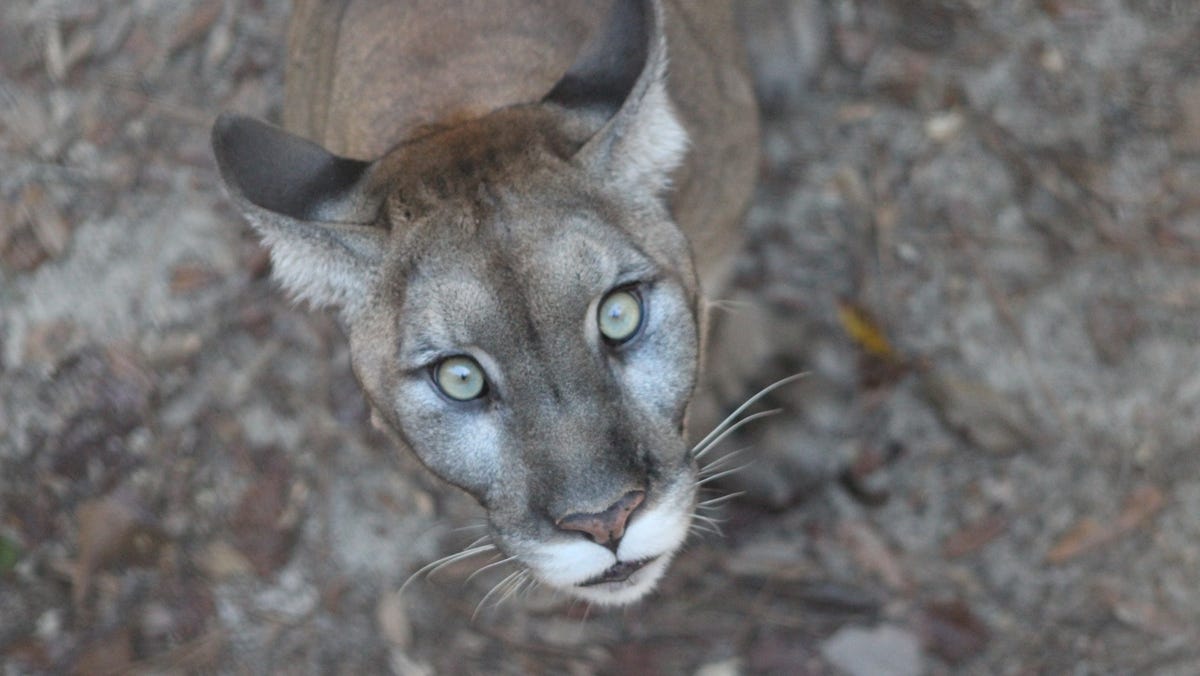
Buddha, one of fewer than 230 Florida panthers, was put to sleep at the Tallahassee Museum after his condition became incompatible with a humane life.
An act of love and mercy, those who had cared for and loved the solitary panther for well over a decade are mourning his loss, as are the many Tallahasseeans who fondly remember the furry ambassador.
The Florida Wildlife Association says that Florida panthers typically live around 12 years in the wild, and it may be that consolation that Buddha’s caregivers are drawing on now. Little Buddha had been born to a feline couple residing in a South Florida Wildlife Sanctuary and was a donation to the Museum.
Suzie Buzzo, the Museum’s Animal Curator, says that “we had always had two habitats, and we were looking for a panther to fill an empty one.”
From the first, Buzzo says, little Buddha was “talkative.”
“He was always purring, playing, rolling, chasing his tail.”
But his health had been complicated. He had had several “immature fractures of his humerus (upper arm bone) when he arrived. “Even at two years old, we would see him limp back after playing vigorously.”
The Museum, which collaborates with local, national, and even international medical personnel about their animals contacted Dr. Norm Griggs. He suggested a stem-cell transplant to promote bone regeneration and healing.
“It was the first such transplant in the United States,” says Buzzo. And little Buddha thrived following the procedure. “He had about ten years of no pain.”
But even though the panther’s days were filled with playing with his favorite ball, inspecting the surprises hidden by his caregivers in the form of “sheep wool, rabbit urine, curry powder” and other olfactory curiosities, his physical health began to change. Buddha developed osteoarthritis.
Though big cats spend up to 20 hours a day napping, getting around his enclosure was obviously no longer without discomfort. The Museum and its doctor began daily laser treatments to reduce his inflamed joints.
“He seemed to really look forward to those,” says Buzzo.
Leaning against the chain link fence, Buddha would purr as a technician moved the laser wand, and someone else scratched the big cat’s head. While the laser treatments were soothing, the Museum and its attending physician, Dr. Cassandra Manuel, consulted with other veterinarians around the country.
Soon, monoclonal antibody treatments were begun. “I would say that from around age 13 to 15, they seemed to help,” says Buzzo.
Until February of this year. That is when Buddha broke the “elbow” of his front leg, the same one that had troubled him since kittenhood.
Local veterinary surgeons Drs. Taylor Poppell and Jennifer Farmer collaborated to place a metal plate in the leg to stabilize it. But then the plate broke. Shortly after, in the same leg, the ulna (or forearm) broke as well.
Suzie Buzzo says that she was in contact with doctors from across the country and in the U.K. Their opinions suggested the only option was amputation of Buddha’s front leg, up to the scapula (i.e., shoulder area.)
Amazingly, the now mature panther weathered the surgery well and, says Bozzo, “was climbing up in his habitat and purring again.”
And then he fractured the other leg. This time, with broken hearts, the Museum family and doctors knew that it was time for the courageous panther to find peace.
“The whole team was around him when we finally said goodbye,” says Buzzo. “Seven or eight of us… full of tears and love.”
Buddha was known by the community for his personality and simple pleasures say his caregivers.
“Cardboard boxes of any size, his scratching posts and brushes, his giant pickle toy, and weekly knuckle bones. He loved lounging on his firehose bed and was incredibly vocal, always responding with his high-pitched meow or chirp. One of his favorite pastimes was ‘stalking people,’ hiding in the palmettos before sprinting out to surprise them at the fence, then flopping down with his unforgettable, loud purr that everyone who knew him will cherish.”
There will be no memorial or grave site for Buddha, says Buzzo, though his memory will rest with all who cared for him and visited him across a decade and a half. But she says that after some upgrading of the panther enclosure, it is likely that the Tallahassee Museum will begin an outreach to other facilities to let them know that there is an open habitat here.
In the meantime, there are other animals, and other wild lives to be admired and learned from at the Tallahassee Museum. Everyone is invited to listen to the purrs and the love.
How to honor BuddhaVisit tallahasseemuseum.org to make a gift to support the Animal Department in tribute to Buddha’s legacy, and select “Tribute to Buddha the Panther & Animal Dept.”
Marina Brown can be contacted at: mcdb100@comcast.net